
If you’re trying to figure out how many people Scott Stadium holds before you buy tickets, plan a tailgate, or just win a trivia argument, the short version is 61,500. That makes it one of the largest stadiums in the Atlantic Coast Conference and the undisputed home of University of Virginia Cavaliers football since 1931.
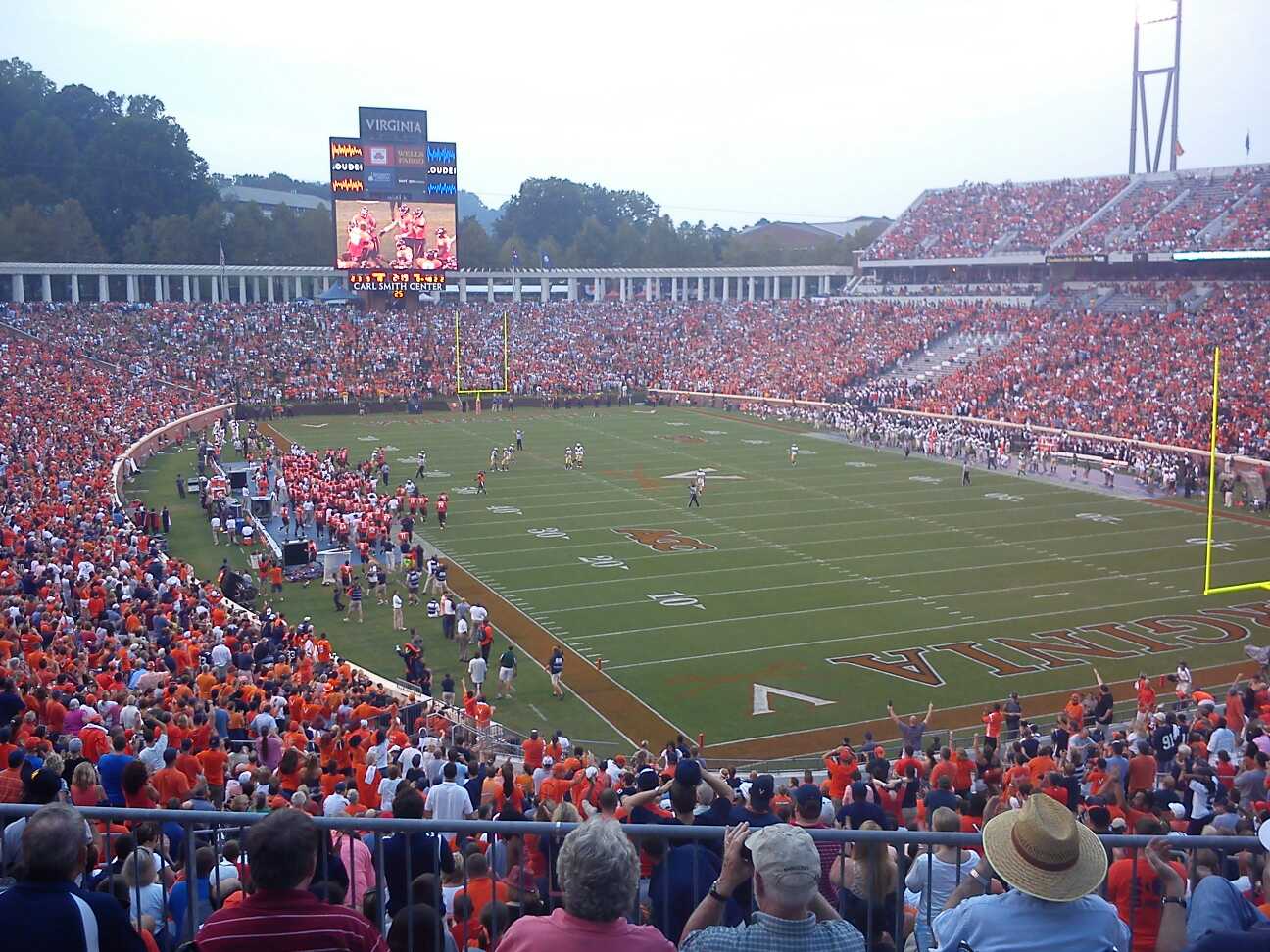
But capacity is only the start of the story. Scott Stadium has grown from a 22,000-seat bowl into a modern 61,500-seat venue set against the Blue Ridge Mountains, and it comes with its own set of rules on bags, water bottles, parking and tailgating, plus a seating layout that varies a lot depending on where you sit. This guide covers the numbers fans search for, a real seating breakdown, and the practical details you need for a smooth gameday in Charlottesville.
Quick Answer: How Many People Does Scott Stadium Hold?
Scott Stadium’s current capacity is 61,500, making it the home field of the Virginia Cavaliers (NCAA, ACC) in Charlottesville, Virginia. The stadium opened in 1931 with roughly 22,000 seats and reached its present size after a major 2000 renovation expanded the upper decks and enclosed the south end zone.
Scott Stadium Capacity and Seating History
Scott Stadium opened on October 15, 1931, replacing the Cavaliers’ earlier campus grounds. It’s named for Frederic William Scott, a donor and university rector, and it began life as a 22,000-seat venue — modest by today’s standards but typical for the era.
The stadium’s growth happened in stages. A 1981 upgrade added upper-deck seating, and the biggest change came with a 2000 renovation that expanded the bowl, added luxury suites and wider concourses, and pushed capacity to its current 61,500. The attendance record of roughly 64,947 was set on August 30, 2008, when USC visited for a nationally televised season opener — a crowd that exceeded the stadium’s listed capacity with standing-room additions.
The field itself carries its own name, David A. Harrison III Field, and a natural-grass surface dedicated in 1995. In 2024, the stadium unveiled the Ramon W. Breeden Jr. Videoboard, a 6,700-square-foot screen more than twice the size of the one it replaced. Beyond football, Scott Stadium has hosted NCAA lacrosse championships (including the 2026 NCAA Men’s Lacrosse Championship) and concerts by touring acts such as U2 and the Rolling Stones, plus the 2017 Concert for Charlottesville.
Scott Stadium Seating Chart: Where to Sit
Scott Stadium follows a horseshoe layout with a lower bowl (sections roughly 101–131), a middle tier of suites and club seats, and an upper deck that wraps most of the stadium except the open north end. The lower bowl’s sideline sections are the premium real estate: Virginia’s bench sits in front of sections around 122–128 on the south side, while the visiting team lines up near sections 104–110 on the north side, and both areas run 45-plus rows deep, so lower numbers and letters closer to the front put you nearest the field.
Student seating is concentrated at the northwest corner, mainly sections 101–103 and 105, closest to The Hill — the general-admission student standing section at the open north end of the stadium that’s famous for setting the tone on third downs. If shade matters to you, note that the east-end-zone upper sections (roughly 517–523) face the videoboard head-on but also get hit hardest by afternoon sun, so bring sunscreen or a hat for early kickoffs.
For families or fans who want a quieter sightline, the upper-deck sideline sections offer a fuller view of the Blue Ridge Mountains beyond the open end zone and tend to be less rowdy than The Hill or the student sections below it. Accessible seating and companion seats are available throughout the bowl — ask Virginia Athletics ticket services to place you near the entry ramps you need.
Planning Your Visit: Tickets, Hours and Prices
Tickets for Virginia Cavaliers home games are sold through UVATix.com and the Virginia Sports app, with season ticket and premium access tied to Virginia Athletics Foundation (VAF) giving levels — roughly a Sabre-Cavalier Club tier for general-admission parking and seating perks, and a Coaches Club tier for reserved parking and premium seating. Single-game prices and exact gate times shift from season to season and by opponent, so always confirm current details on the official Scott Stadium page before you go.
As a general pattern, gates open about 1.5 hours before kickoff, all tickets are mobile-only, and the stadium is cashless — plan to have a phone wallet and a card ready rather than cash.
Scott Stadium Bag Policy and What You Can Bring In
Virginia Athletics uses a clear-bag policy. Permitted bags are clear plastic, vinyl or PVC bags no larger than 12″ x 6″ x 12″; clear one-gallon plastic freezer bags (Ziploc or similar); and small clutches or wallets no larger than 4.5″ x 6.5″, with or without a strap. Everything else — backpacks, purses, coolers, briefcases, fanny packs, cinch bags, diaper bags, luggage, camera bags and computer bags over the size limit — is prohibited. So are artificial noisemakers, balls, Frisbees, lacrosse sticks, glass containers, outside food and drink, strollers (except umbrella strollers), umbrellas, folding chairs and drones.
Water bottle rules have loosened in recent seasons: clear, see-through reusable plastic water bottles under 40 ounces are now permitted inside Scott Stadium, as long as they’re empty when you pass through security — fill up at a concourse station once you’re inside. Medically necessary bags are allowed at any gate after a secondary search, though diaper bags don’t qualify for that exception. Blankets can be carried outside a bag, and seat cushions without pockets or zippers are fine.
Entry runs through walk-through metal detectors at every gate; fans who can’t use them can request a hand-held wand check, and you can generally keep your phone, keys and wallet in your pockets. Re-entry isn’t allowed except after an emergency evacuation, so plan bathroom and concession runs accordingly.
Parking and Tailgating at Scott Stadium
Free parking is available at Fontaine Research Park, North Grounds and the lots around John Paul Jones Arena, with free shuttles running fans to the stadium’s east and west gates. Paid garage options near campus — Central Grounds Garage, Hospital South Garage and Culbreth Garage — typically run in the $25–$30 range per game, though you should check current pricing on the official site.
VAF members get access to additional lots tied to their giving level, from general-admission spaces at the Sabre-Cavalier Club tier up to reserved, numbered spots for Coaches Club members. A notable change in recent seasons: VAF lot parking passes are digital, issued through UVATix.com and the Virginia Sports app and scanned by an attendant at the lot entrance — screenshots aren’t accepted, so have the pass loaded and ready.
Tailgating is permitted, including propane grills, but charcoal grills are banned and no grilling of any kind is allowed in or on the parking garages. Keep your setup within your vehicle’s footprint so the lot’s traffic lane stays clear. If you’d rather not haul your own gear, REVELxp runs full-service tailgates with tents, catering and setup/cleanup at Observatory Hill.
Getting There: Address, Gates and Shuttles
Scott Stadium is located at 1815 Stadium Road, Charlottesville, Virginia 22903, on the University of Virginia’s grounds. Gates open about 1.5 hours before kickoff, and all tickets are mobile — download yours before you leave the house, since cell service around a packed stadium can be unreliable.
Free shuttle routes (color-coded Red, Purple and Blue) connect the free parking lots to the stadium’s east and west gates before kickoff and reverse afterward, so plan to arrive early enough to park, ride the shuttle and clear security with time to spare.
Photos
For upper-deck seats. Watch line play at the stadium, or the far side of the park from the top of a lift hill.
Sherpa-lined and windproof, with a waterproof back for wet bleachers. Folds into its own pouch.
For late-season football, outdoor hockey and October park nights. Shake, pocket, and stay warm for hours.
Scott Stadium capacity and gameday guide FAQs
What is the seating capacity of Scott Stadium?
Scott Stadium’s official capacity is 61,500, set after the 2000 renovation that expanded the bowl and enclosed the south end zone.
What is the largest crowd ever at Scott Stadium?
The attendance record is roughly 64,947, set on August 30, 2008, for Virginia’s season-opening game against USC — a crowd that exceeded listed capacity with standing-room additions.
Can you bring a water bottle into Scott Stadium?
Yes. Clear, see-through reusable plastic water bottles under 40 ounces are permitted, but they must be empty when you go through security; you can refill at concourse stations inside.
What bags are allowed at Scott Stadium?
Clear plastic, vinyl or PVC bags no larger than 12″ x 6″ x 12″, clear one-gallon freezer bags, or small clutches/wallets no larger than 4.5″ x 6.5″. Backpacks, purses, coolers and other non-clear bags over those sizes are not allowed.
Where is student seating at Scott Stadium?
Most student sections are at the northwest corner, around sections 101–103 and 105, next to The Hill, the general-admission student section at the stadium’s open north end.
Is there free parking at Scott Stadium?
Yes. Free parking is available at Fontaine Research Park, North Grounds and the lots around John Paul Jones Arena, with free shuttles to the stadium’s east and west gates.
What is the address of Scott Stadium?
Scott Stadium is at 1815 Stadium Road, Charlottesville, Virginia 22903, on the University of Virginia campus.
Get More from Scott Stadium capacity and gameday guide
Log the coasters, stadiums, and venues you’ve experienced, rate Scott Stadium capacity and gameday guide, and see what your friends thought. Get the ThrillZing app.
Want the day’s theme park news in your inbox? Subscribe to ThrillZing Daily — free.