
Aviva Stadium rises on the banks of the River Dodder in Dublin 4, its curved translucent facade a striking departure from the terraced stands that once stood on the same site. Built on the footprint of the historic Lansdowne Road grounds, the stadium opened in May 2010 as a shared home for Irish rugby and football, replacing a venue that had staged internationals since 1878.
The €410 million project, funded by the Irish Rugby Football Union and the Football Association of Ireland with €191 million from the Irish government, was designed by Populous and Scott Tallon Walker to meet UEFA’s highest stadium classification. Since opening, it has hosted Ireland’s national rugby and football teams, Leinster Rugby, and two UEFA Europa League finals, cementing its place as one of Europe’s premier multi-sport venues.
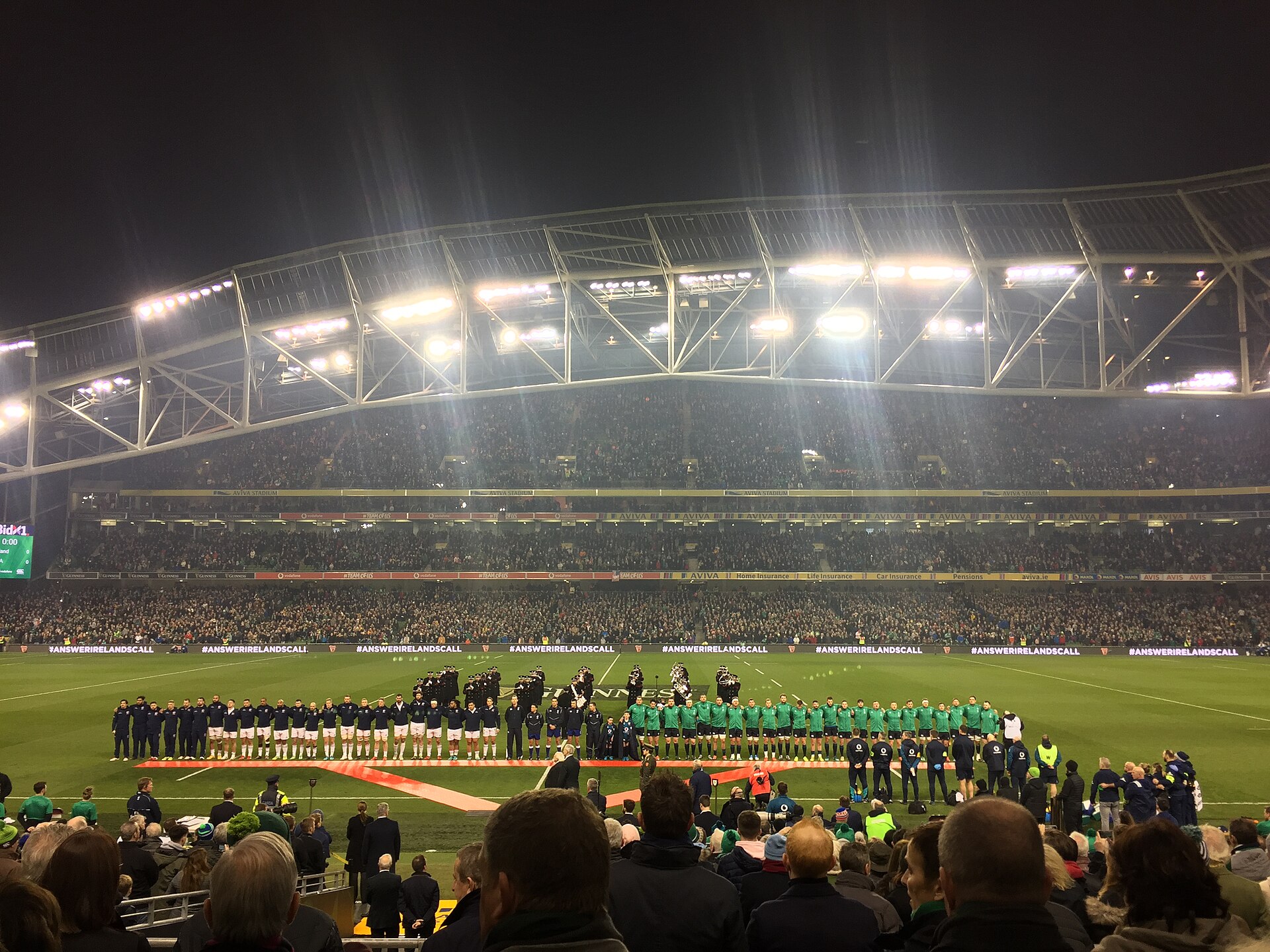
Stats at a Glance
- Team(s): Ireland national rugby union team, Republic of Ireland national football team; also hosts Leinster Rugby’s bigger matches
- Location: Dublin 4, Ireland
- Opened: May 14, 2010
- Capacity: About 51,700 (seated)
- Notable fact: First UEFA Category 4 stadium in Ireland; hosted the 2011 and 2024 UEFA Europa League finals
A Stadium Built on History
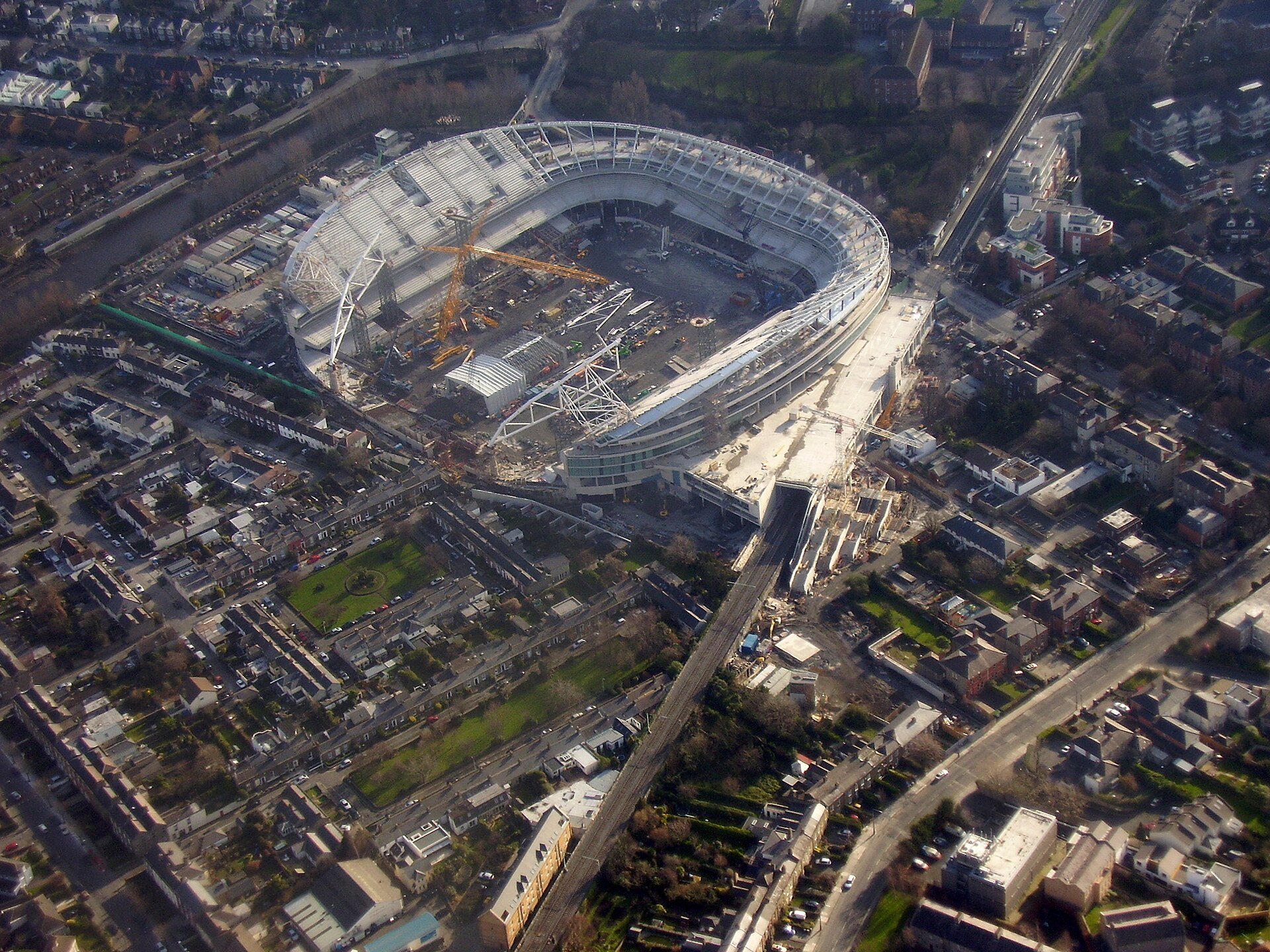
Aviva Stadium occupies the same ground as the original Lansdowne Road, a venue that opened in 1872 and served as one of the world’s oldest international rugby grounds before its demolition in 2007. Rather than build elsewhere, the IRFU and FAI chose to redevelop the site, preserving over a century of sporting heritage while delivering a thoroughly modern arena in its place.
The stadium’s design, led by Populous alongside Irish firm Scott Tallon Walker, features a distinctive curving roofline that wraps around the pitch in a continuous wave, a shape partly dictated by the tight urban site bordered by residential streets and a railway line.
Shared Home for Ireland’s Biggest Teams
Unlike many national stadiums built around a single sport, Aviva Stadium was purpose-built as a shared venue under a 50:50 arrangement between rugby’s IRFU and football’s FAI. That partnership means the pitch hosts Six Nations rugby internationals one weekend and World Cup qualifying football matches the next, alongside Leinster Rugby’s bigger fixtures.
The venue’s international standing was underscored when it hosted the UEFA Europa League final twice, in 2011 and again in 2024, drawing clubs and supporters from across the continent to Dublin.
Explore more: Explore more iconic stadiums.
Team-color face paint in a twist-up stick — no brushes, no mess in the car.
Sized to the NFL's 12x6x12 clear-bag rule. Fits snacks, a jacket and a rally towel.
A see-through purse that looks like a purse. Works for most stadium, arena and concert bag policies.
Aviva Stadium FAQs
What replaced Lansdowne Road to become Aviva Stadium?
The original Lansdowne Road stadium, in use since 1872, was demolished in 2007, and Aviva Stadium was built on the same site, opening in May 2010.
What is the capacity of Aviva Stadium?
Aviva Stadium seats about 51,700 spectators for rugby and football, with concert configurations accommodating larger crowds.
Which teams play home matches at Aviva Stadium?
The Ireland national rugby union team and the Republic of Ireland national football team play their home fixtures at Aviva Stadium, and Leinster Rugby stages its bigger matches there.
Get More from Aviva Stadium
Log the coasters, stadiums, and venues you’ve experienced, rate Aviva Stadium, and see what your friends thought. Get the ThrillZing app.
Photo: Arne Müseler / CC BY-SA 3.0 de, via Wikimedia Commons.