
Maverick doesn’t look like much on paper. At 105 feet, it’s dwarfed by nearly every other major coaster at Cedar Point — yet ask enthusiasts to rank the park’s best rides and Maverick almost always lands near the top, often ahead of coasters twice its height. That gap between modest stats and outsized intensity is the whole story of this ride.
Below is everything you need on Maverick’s height, drop, speed, g-forces, trains, and height requirement, plus where to find it in the park, the records it holds, practical tips for riding it, and a full FAQ.
Quick Answer
Maverick stands 105 feet (32 m) tall in Cedar Point’s Frontier Town section, with a 100-foot drop angled at a beyond-vertical 95 degrees and a top speed of 70 mph reached off its second LSM launch. Riders must be between 52 and 78 inches tall. The ride uses two launches and a twisted horseshoe roll — the first ever built — for its two inversions, and it’s widely regarded as one of the most intense coasters at Cedar Point despite being one of the shortest.
How Tall Is Maverick at Cedar Point?
Maverick’s lift hill and overall structure reach 105 feet (about 32 meters) — roughly the height of a 9- or 10-story building. That figure covers the full climb of the initial LSM launch section, which is the tallest point on the ride’s layout.
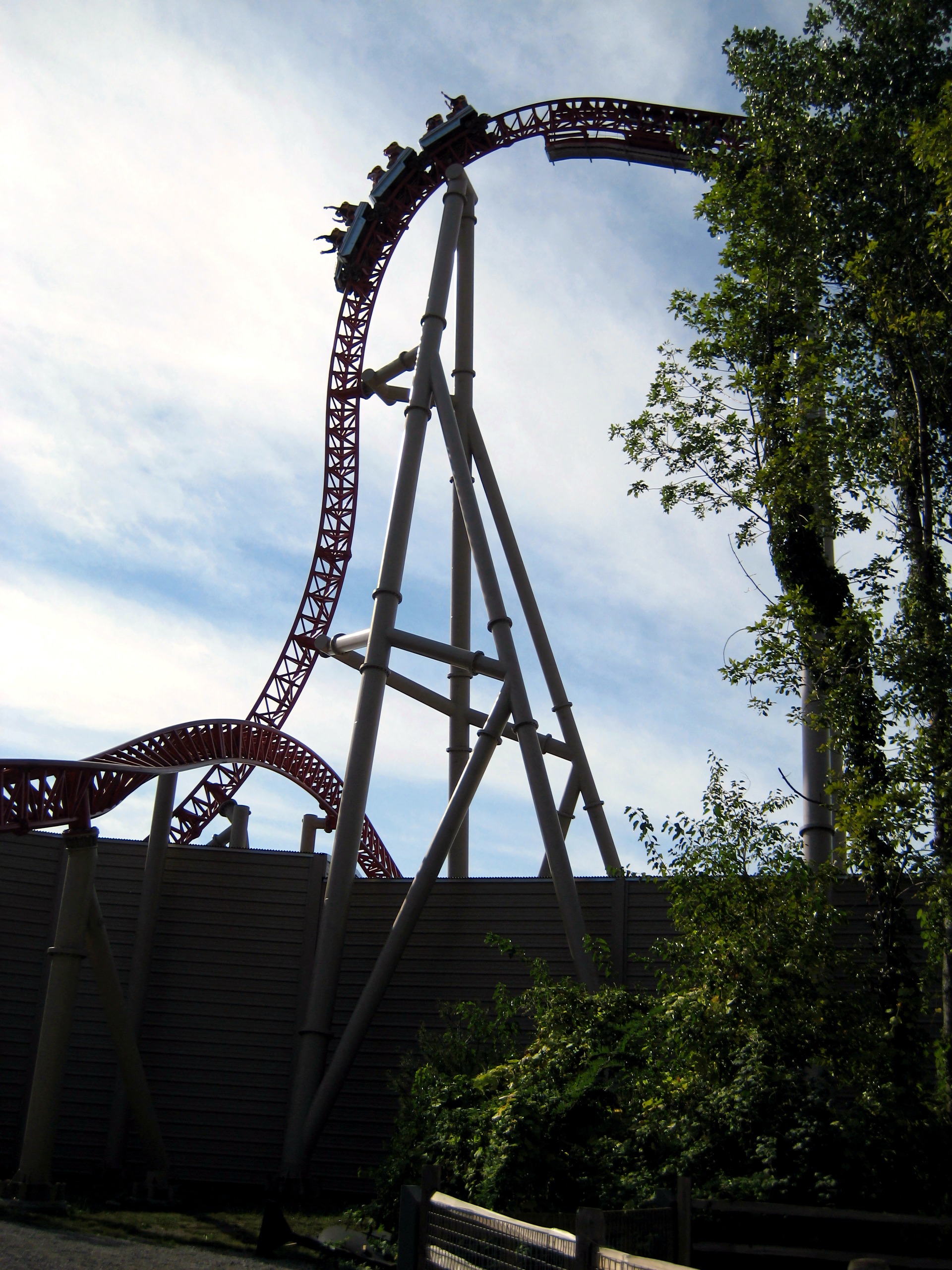
The 105-foot height is deceptive, though. From that peak, Maverick doesn’t simply fall — it tips riders over a 100-foot drop angled at 95 degrees, meaning the track actually leans past straight-down before leveling out. Combined with a top speed of 70 mph, that steep, low, whip-fast profile is why Maverick feels far more intense than its modest stats suggest.
For context, 105 feet makes Maverick one of the shorter coasters at Cedar Point — well below giants like Top Thrill 2 (420 feet), Millennium Force (310 feet), Valravn (223 feet), Steel Vengeance and Magnum XL-200 (around 205 feet each), and GateKeeper (170 feet). Only a handful of Cedar Point’s coasters, such as Raptor (137 feet) and Gemini (125 feet), come closer to Maverick’s height. That gap is part of Maverick’s reputation: it proves a coaster doesn’t need extreme height to deliver an extreme ride.
Stats at a Glance
Park: Cedar Point, Sandusky, Ohio. Manufacturer: Intamin. Designer: Werner Stengel. Opened: May 26, 2007. Height: 105 ft (32 m). Drop: 100 ft (30 m) at 95°. Top Speed: 70 mph (113 km/h), reached in about 3 seconds off the second launch. Length: 4,450 ft (1,360 m). Duration: about 2 minutes 30 seconds.
Inversions: 2 (twisted horseshoe roll). Launches: 2 (LSM). Trains: 6, with 3 cars each. Capacity: 12 riders per train, 2 across in 2 rows per car, with a theoretical throughput of roughly 1,200 riders per hour. Minimum height to ride: 52 inches; maximum height: 78 inches.
Where Is Maverick Located at Cedar Point?
Maverick sits in Cedar Point’s Frontier Town section, on the site formerly occupied by the White Water Landing flume ride and the Swan Boats. It’s on the peninsula’s west side, an easy walk from Steel Vengeance and Cedar Downs — enthusiasts commonly pair the two big launch/hyper coasters into a single rope-drop run at park opening.
The ride’s low, ground-hugging layout (rather than a single towering lift hill) means Maverick is easy to spot by its twisting orange-and-black track and dark launch tunnel rather than by height alone, unlike most of Cedar Point’s skyline-dominating coasters.
Records, Awards & Fun Facts About Maverick
Maverick opened May 26, 2007 at a reported cost of around $21 million, after its debut was pushed back from an original mid-May date so Intamin could re-engineer one element for safety. That element — a heartline roll — produced excessive g-forces in pre-opening testing and was replaced with the S-curve transition riders experience today.
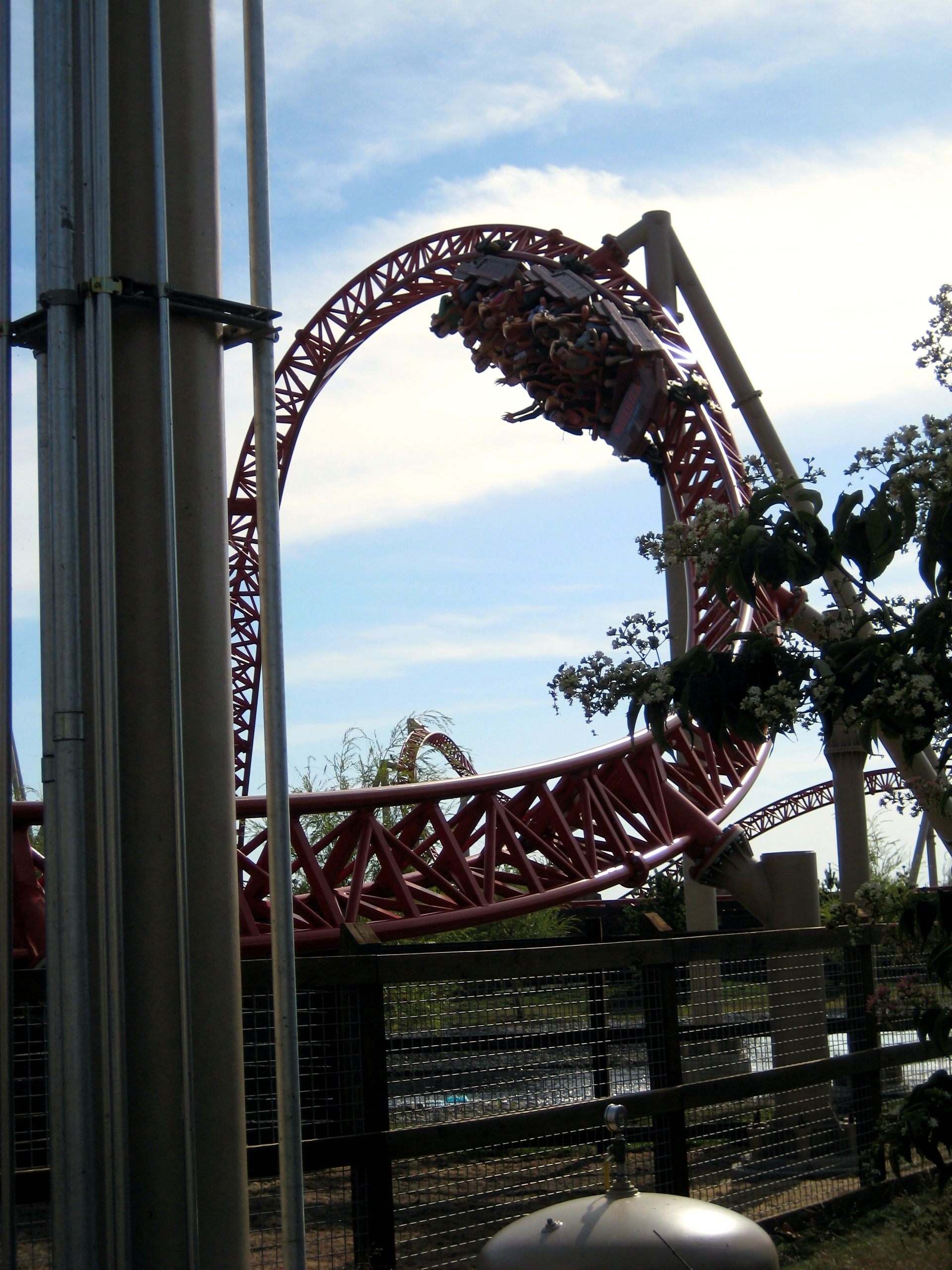
The ride went on to win the Golden Ticket Award for Best New Ride of 2007 and a NAPHA (National Amusement Park Historical Association) award for Best New Attraction the same year. Its twisted horseshoe roll — two 360-degree corkscrews executed back-to-back — was the first element of its kind ever built, designed by veteran roller coaster engineer Werner Stengel.
How Strong Are Maverick’s G-Forces?
Cedar Point doesn’t publish an official maximum g-force figure for Maverick, but riders and coaster enthusiasts consistently describe it as one of the most forceful rides in the park relative to its size. The 95-degree first drop delivers a strong burst of ejector-style airtime right out of the gate, the low-to-the-ground transitions between elements pile on lateral forces in quick succession, and the twisted horseshoe roll stacks its two corkscrews back-to-back with almost no breathing room between them.
It’s worth knowing that Maverick’s original heartline roll element was scrapped during pre-opening testing because it produced excessive g-forces, and Intamin swapped in the S-curve transition riders experience today. That history is a good reminder that even the version that made it to the public was tuned specifically to sit right at the edge of comfortable intensity — which is exactly why the ride has such a reputation for punching above its height.
Trains, Seating & Capacity
Maverick runs six three-car trains, each seating 12 riders — 2 across in 2 rows per car — for a theoretical capacity of roughly 1,200 riders per hour, which keeps the line moving briskly even during Cedar Point’s busiest summer days. The trains use a hydraulic over-the-shoulder harness paired with an interlocking lap belt; the original hard restraints were swapped for a softer, more form-fitting vest-style design in 2015 to improve rider comfort without changing the ride’s intensity.
Seat placement matters more on Maverick than on most coasters. The front row gives the clearest view into the 95-degree drop and the dark launch tunnel ahead, while the back seats amplify the whip-crack feeling through the twisted horseshoe roll and the low-to-the-ground turns, since the rear of the train follows a slightly wider, faster arc through each transition.
The Ride Experience
Maverick begins with a 105-foot LSM lift hill before plunging riders down a 100-foot drop angled at a stomach-dropping 95 degrees — technically beyond vertical. Watch for a small airtime hill right before the first launch section; it’s brief but catches a lot of first-time riders off guard. The first launch accelerates the train through a twisting, low-to-the-ground layout packed with aggressive transitions and into the signature twisted horseshoe roll — back-to-back 360-degree corkscrews executed in rapid succession — before a second hidden launch inside a 400-foot tunnel rockets the train up to 70 mph for the ride’s closing stretch.
The entire run clocks in at around two and a half minutes of near-constant intensity. It’s a pacing style that’s unusual for Cedar Point, which is better known for out-and-back giants — Maverick instead crams its thrills into a compact, twisting footprint with barely a lull between elements.
Height Requirement: Who Can Ride Maverick?
Riders must be between 52 and 78 inches tall to ride Maverick — both a minimum and a maximum, which is unusual among Cedar Point coasters and reflects how the shoulder restraints are sized for the ride’s aggressive forces. Guests near the upper height limit should expect a snugger fit than on Cedar Point’s larger hypercoasters, and it’s worth having taller riders test the restraint at the entrance if there’s any doubt, since Maverick’s team enforces the 78-inch cap strictly for safety.
Wait Times, Fast Lane & Tips for Riding Maverick
Maverick is consistently one of the most popular rides at Cedar Point, and standard Fast Lane doesn’t grant line-jumping access to it — it’s grouped with a small set of top-tier rides (alongside Steel Vengeance and Millennium Force) that require the pricier Fast Lane Plus pass. Cedar Point no longer runs a dedicated single-rider queue, but if you’re riding solo it’s worth asking a team member near the boarding platform — attendants will often pull single riders forward to fill an empty seat in a nearly full train.
The most reliable way to minimize waiting is timing: head straight for Maverick at rope drop, or ride during the last hour before close when crowds thin out. Because the line is largely uncovered along parts of the switchbacks, an early-morning or evening ride also means less time standing in direct sun during peak summer visits.
Maverick Photo Archive: 2007–2023
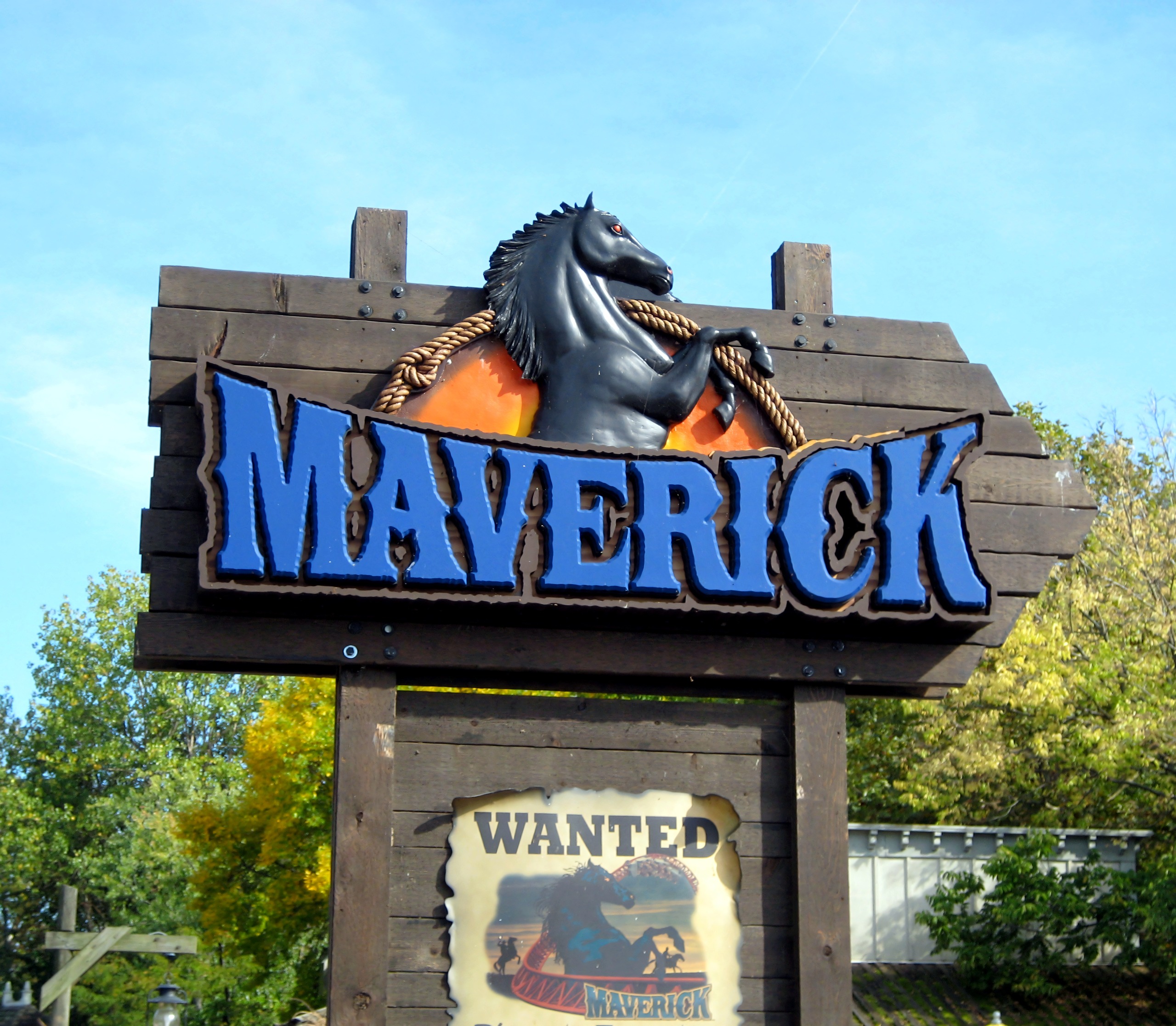
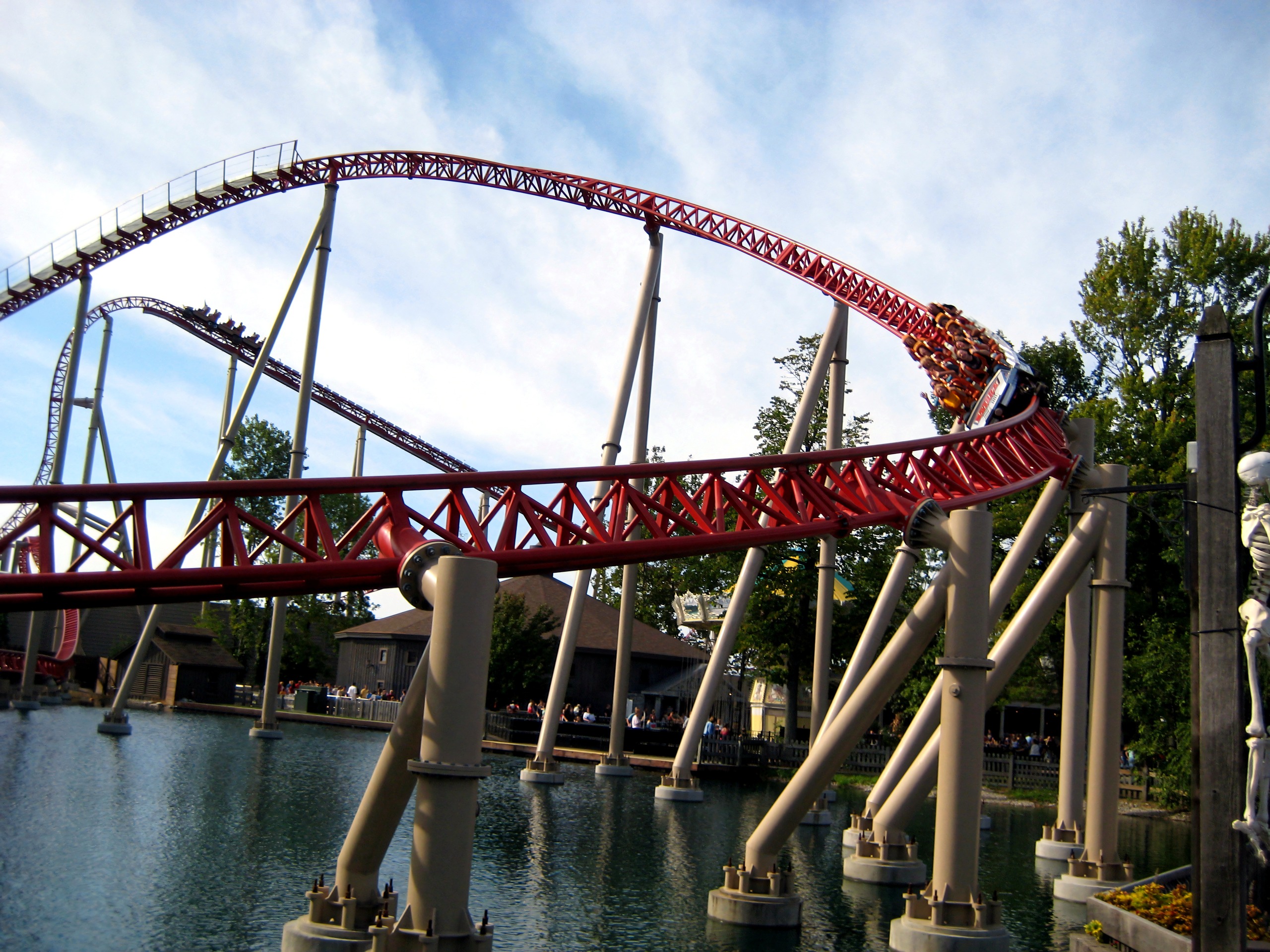
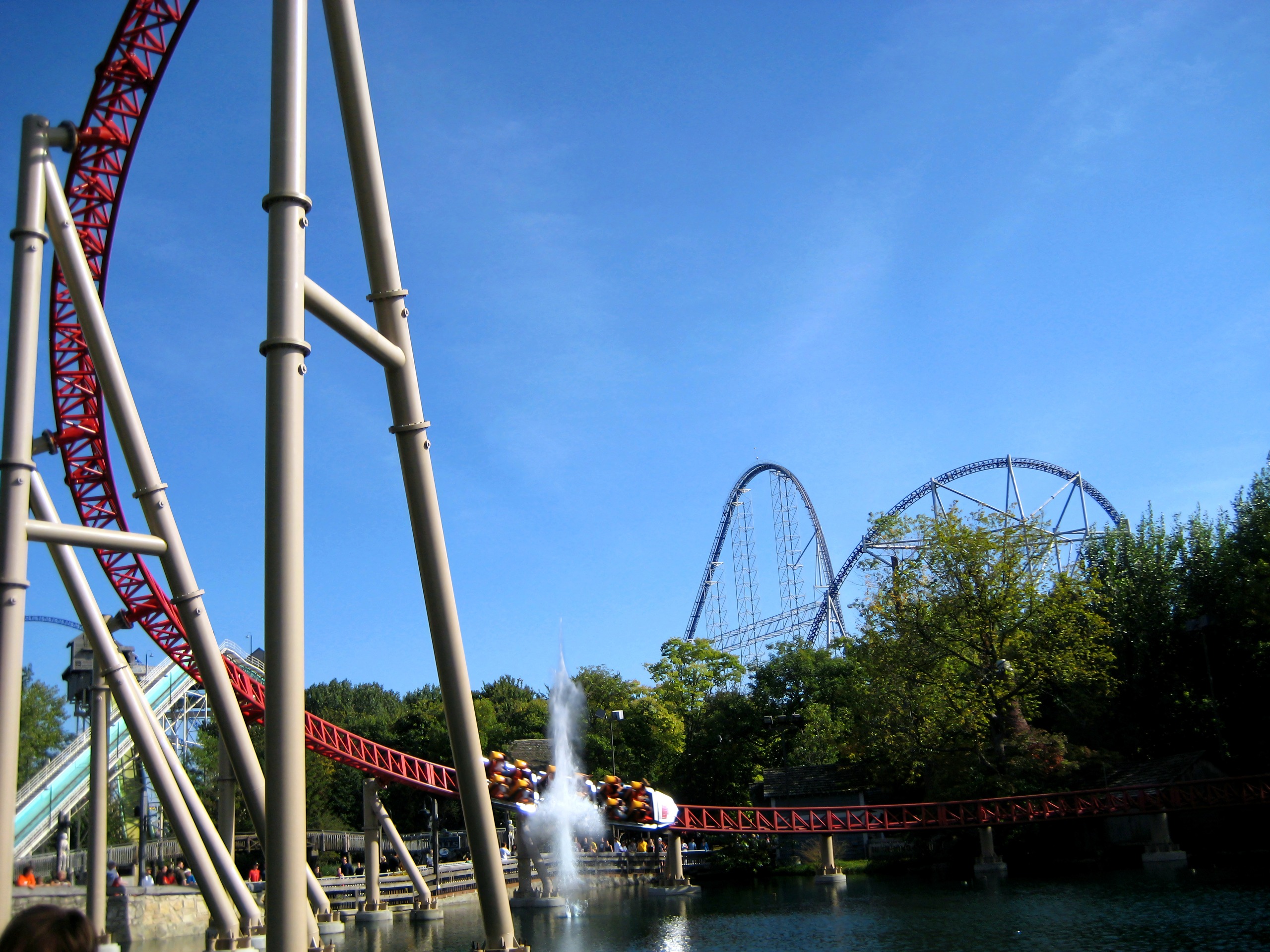
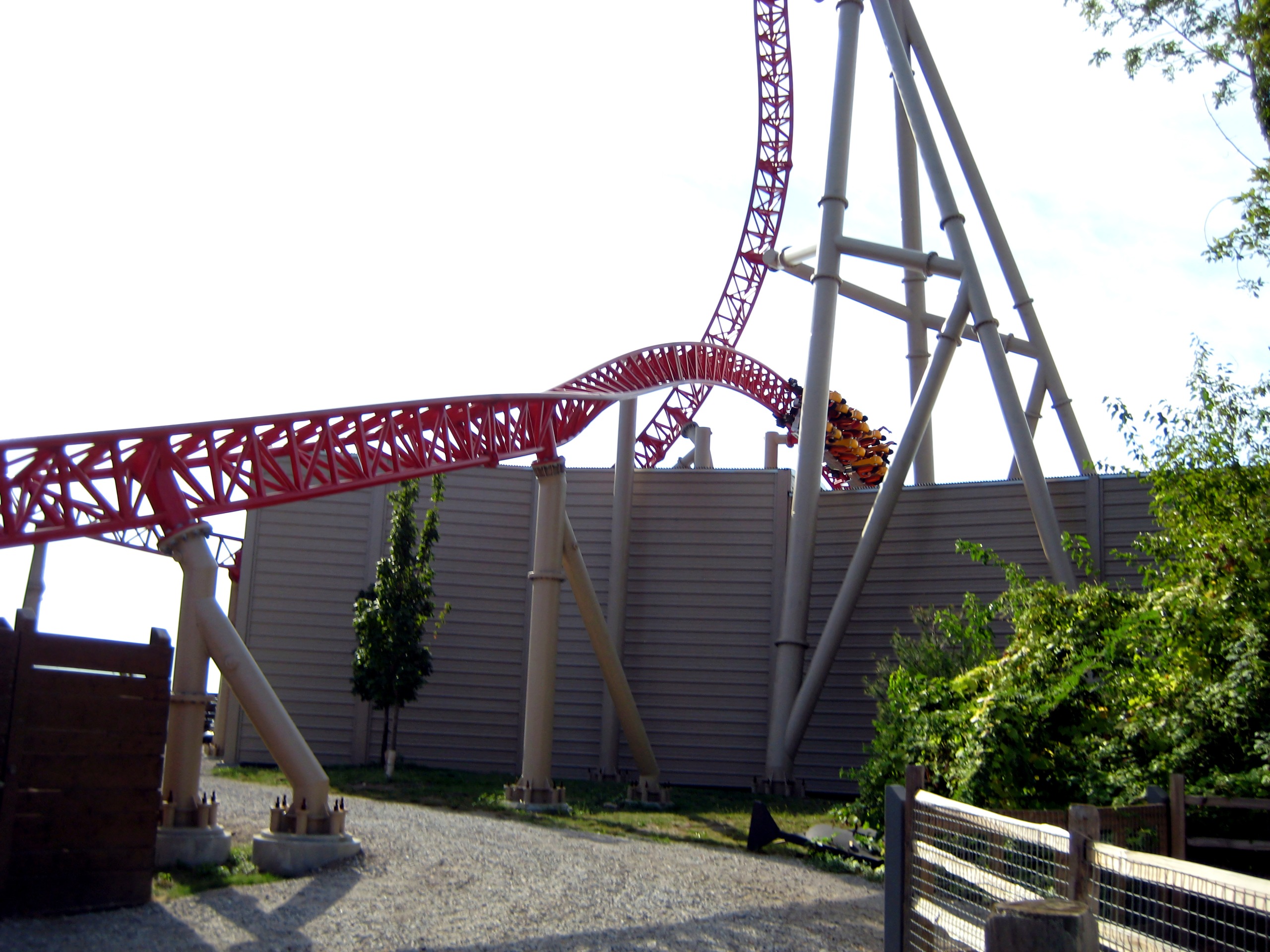
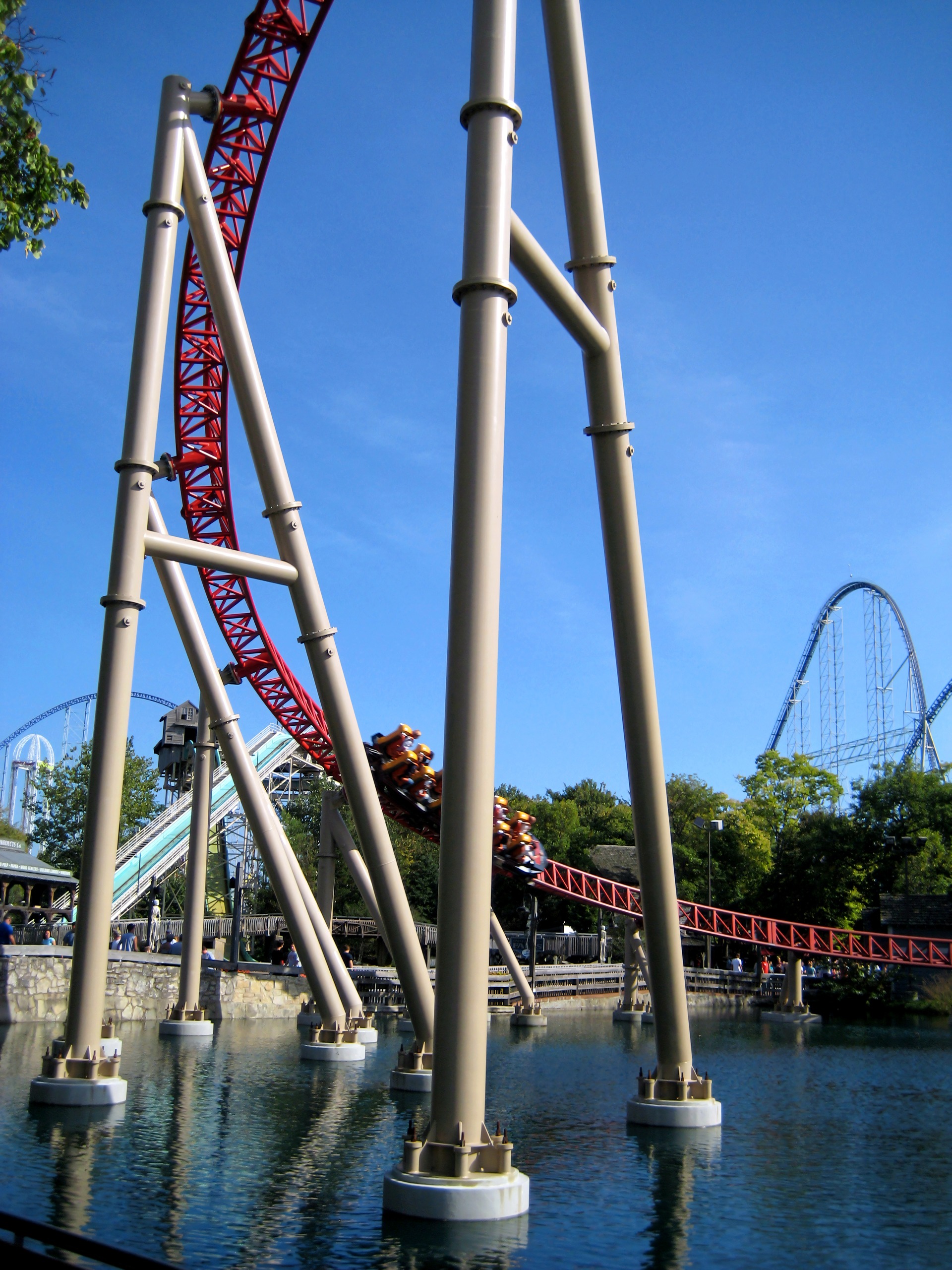
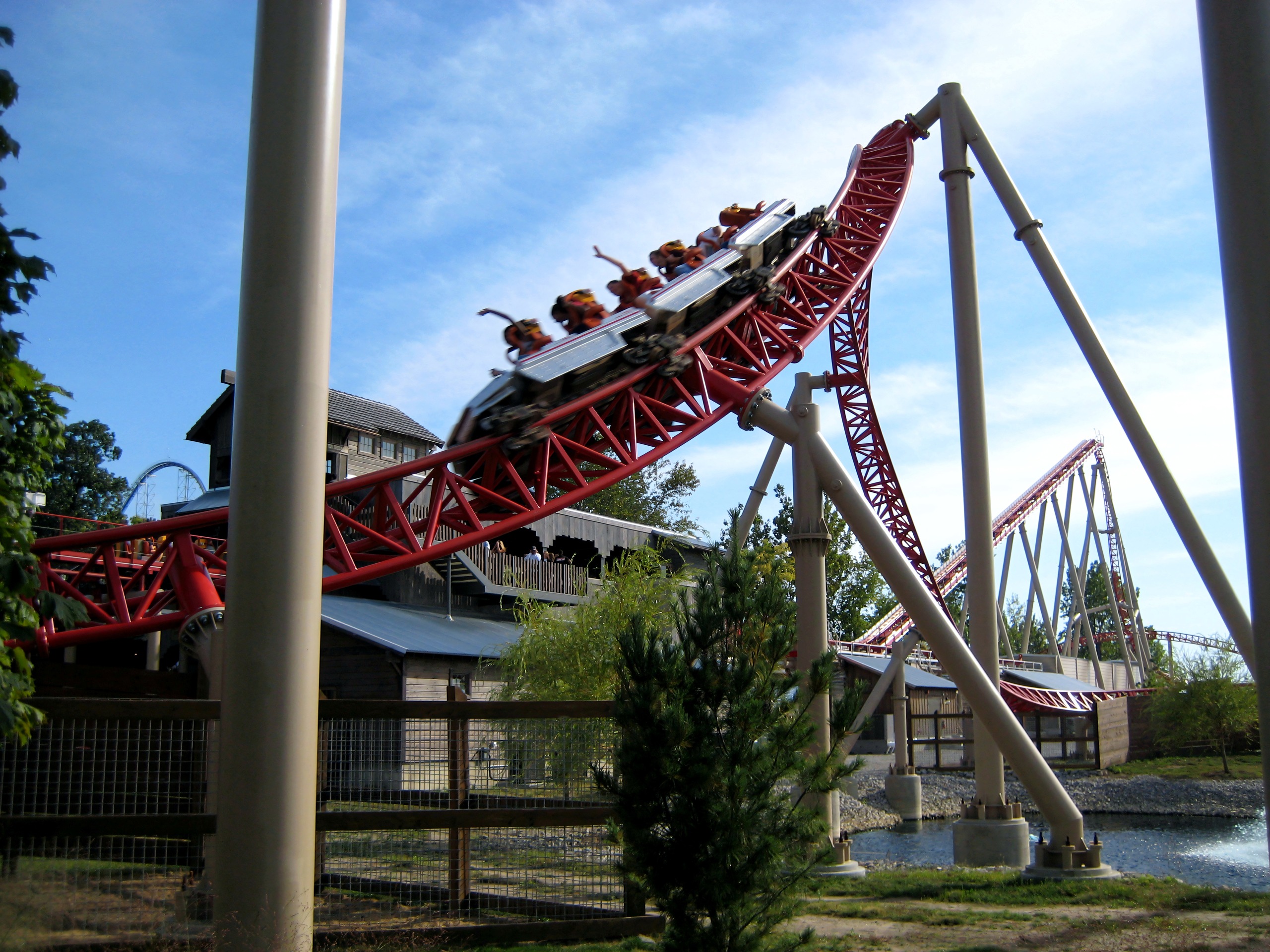
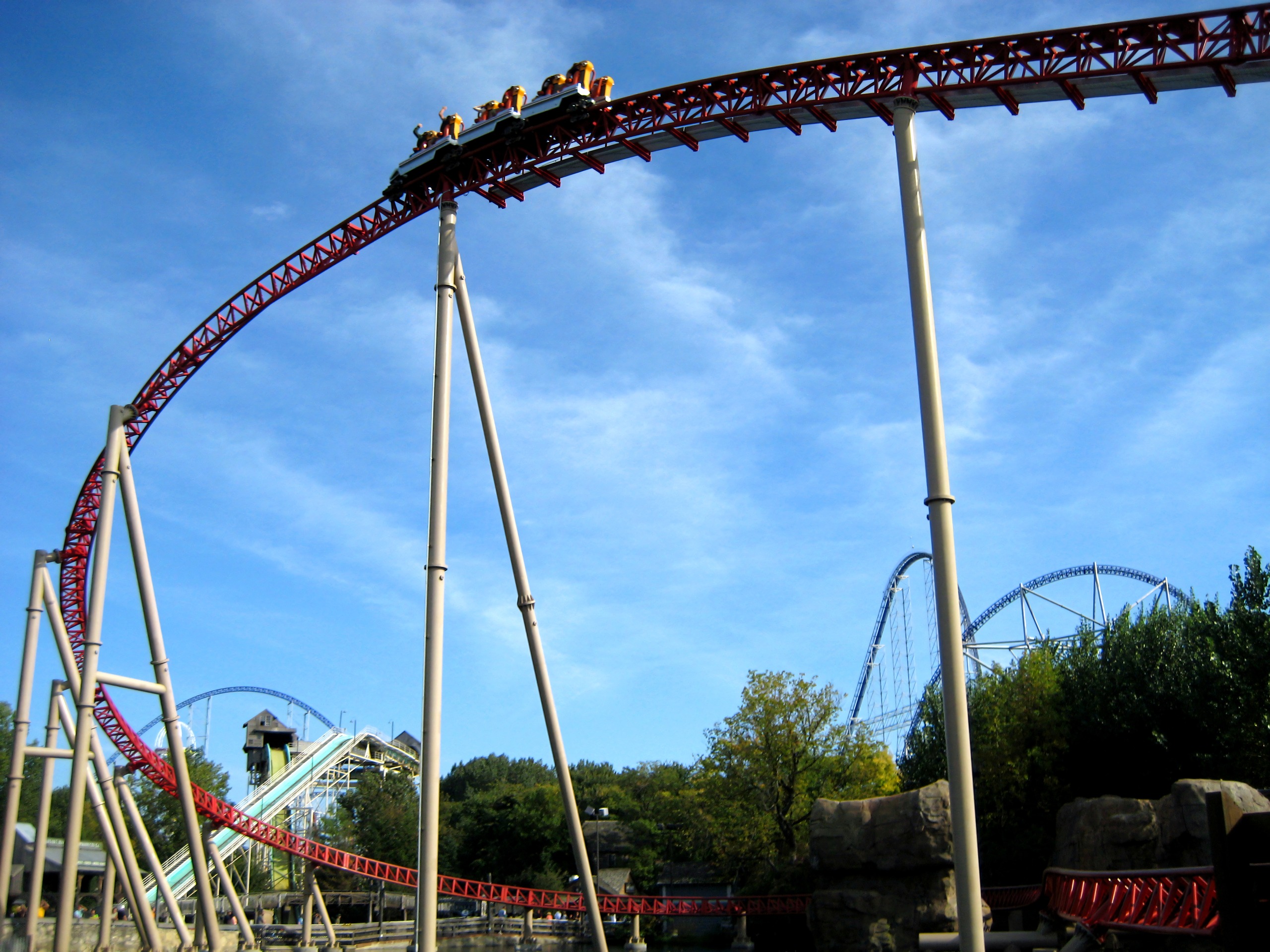
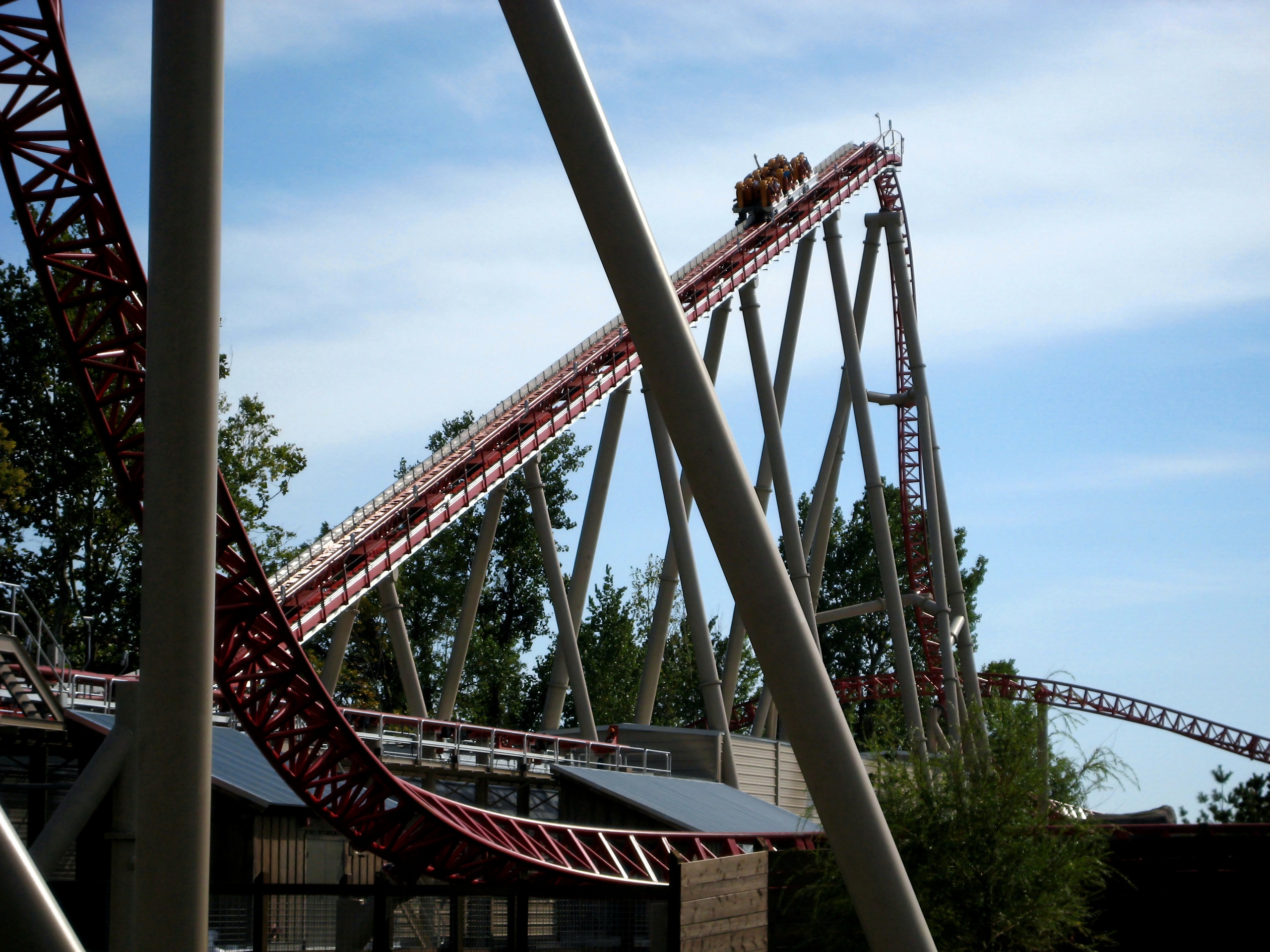
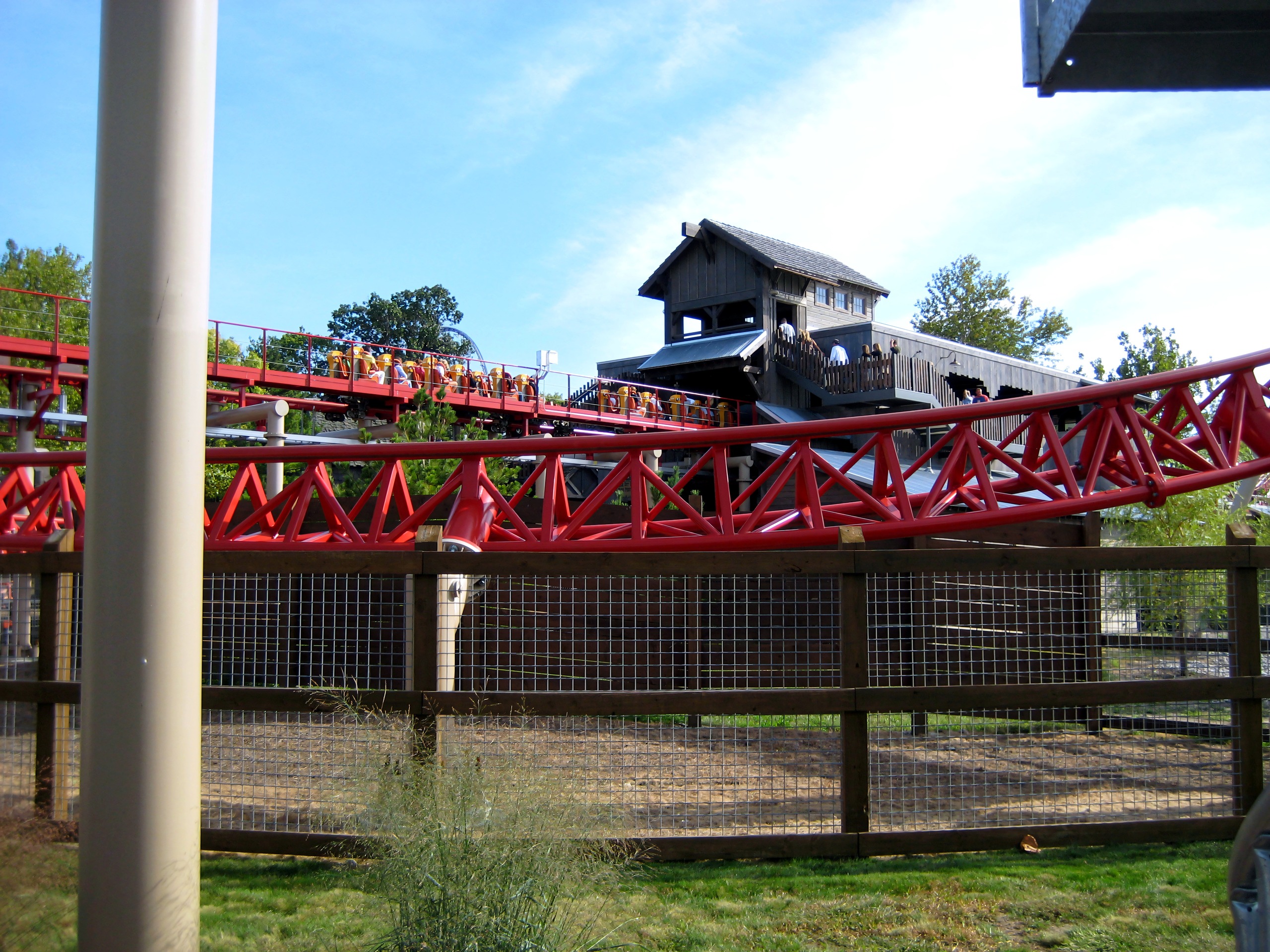
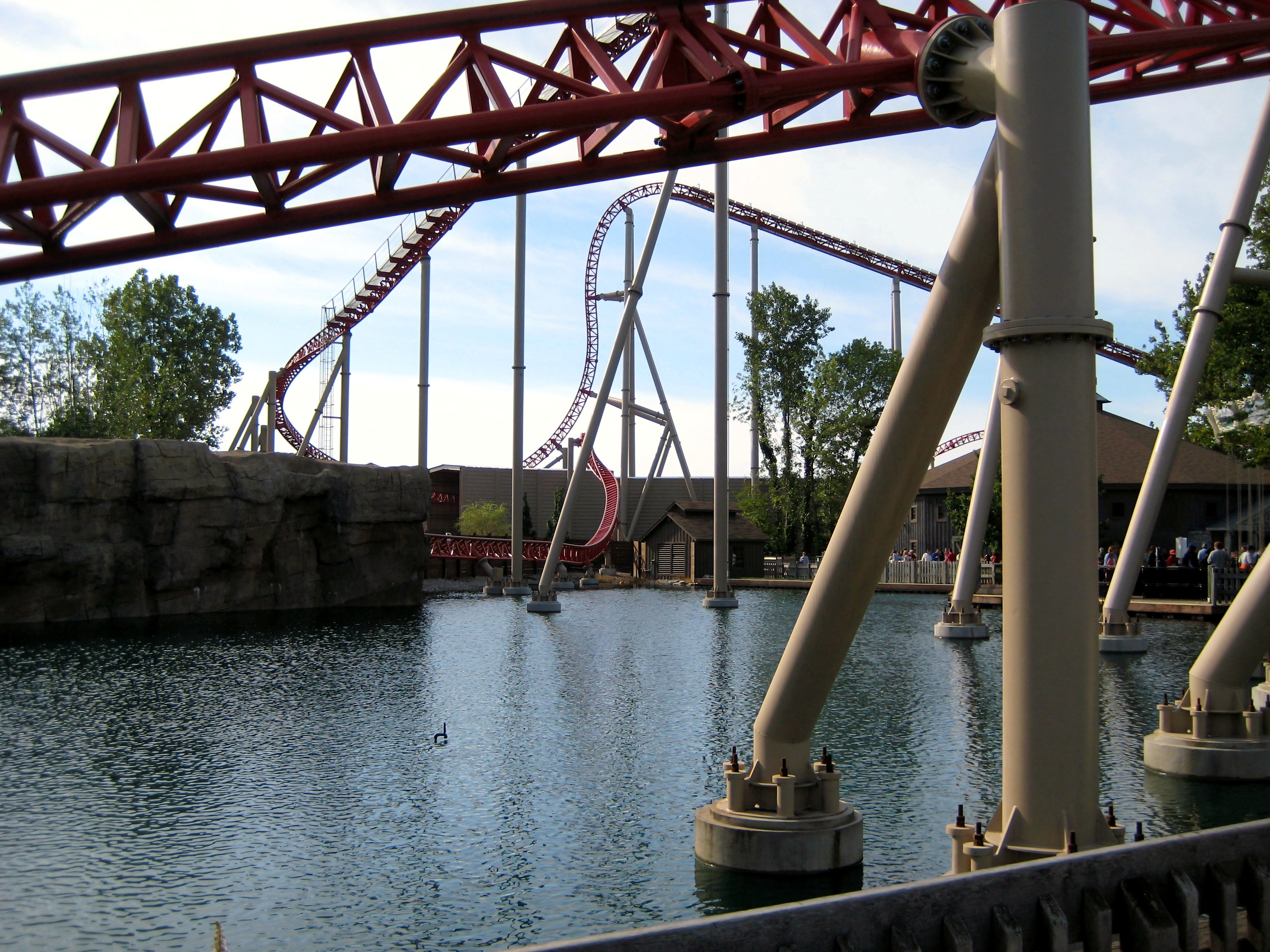
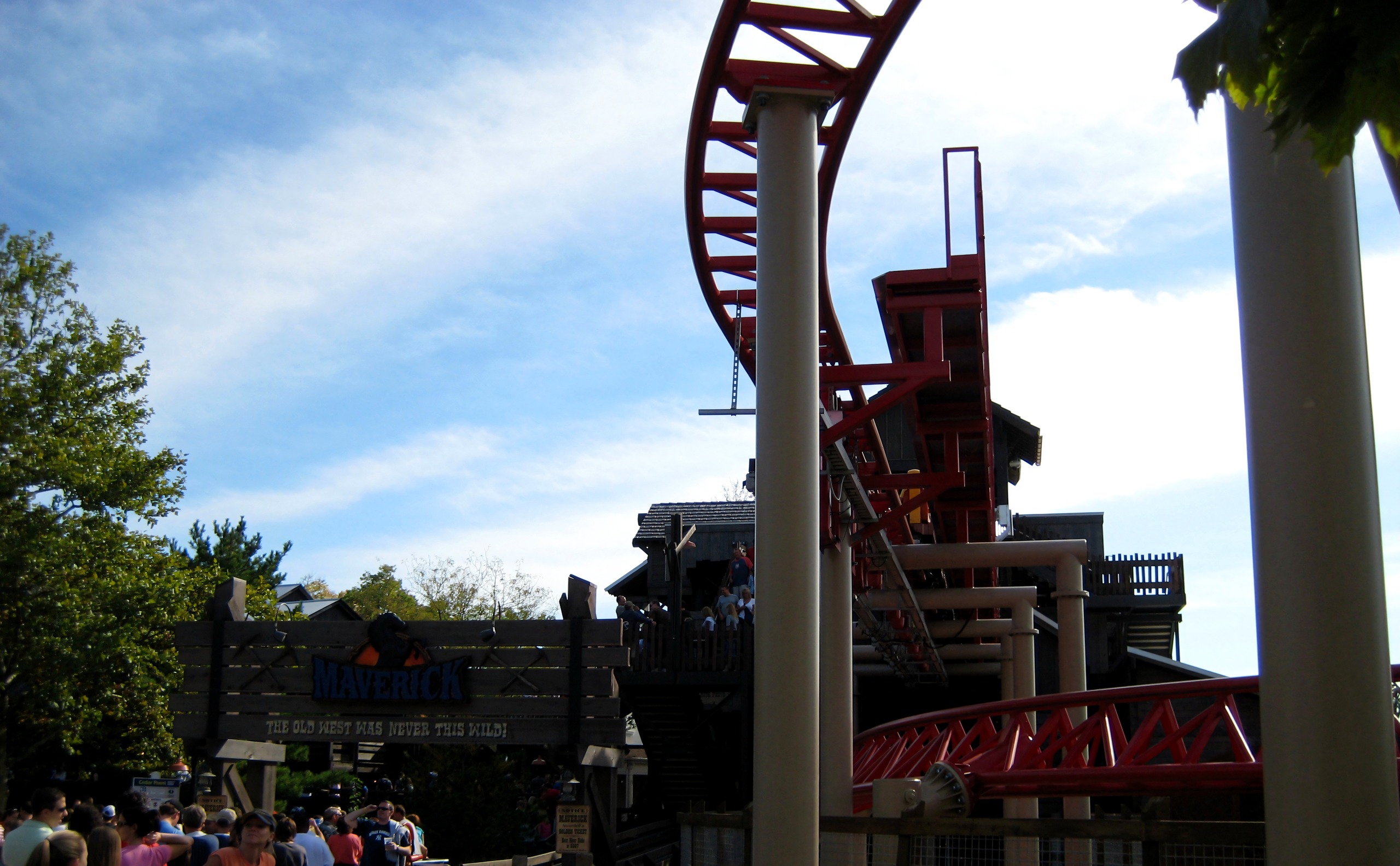
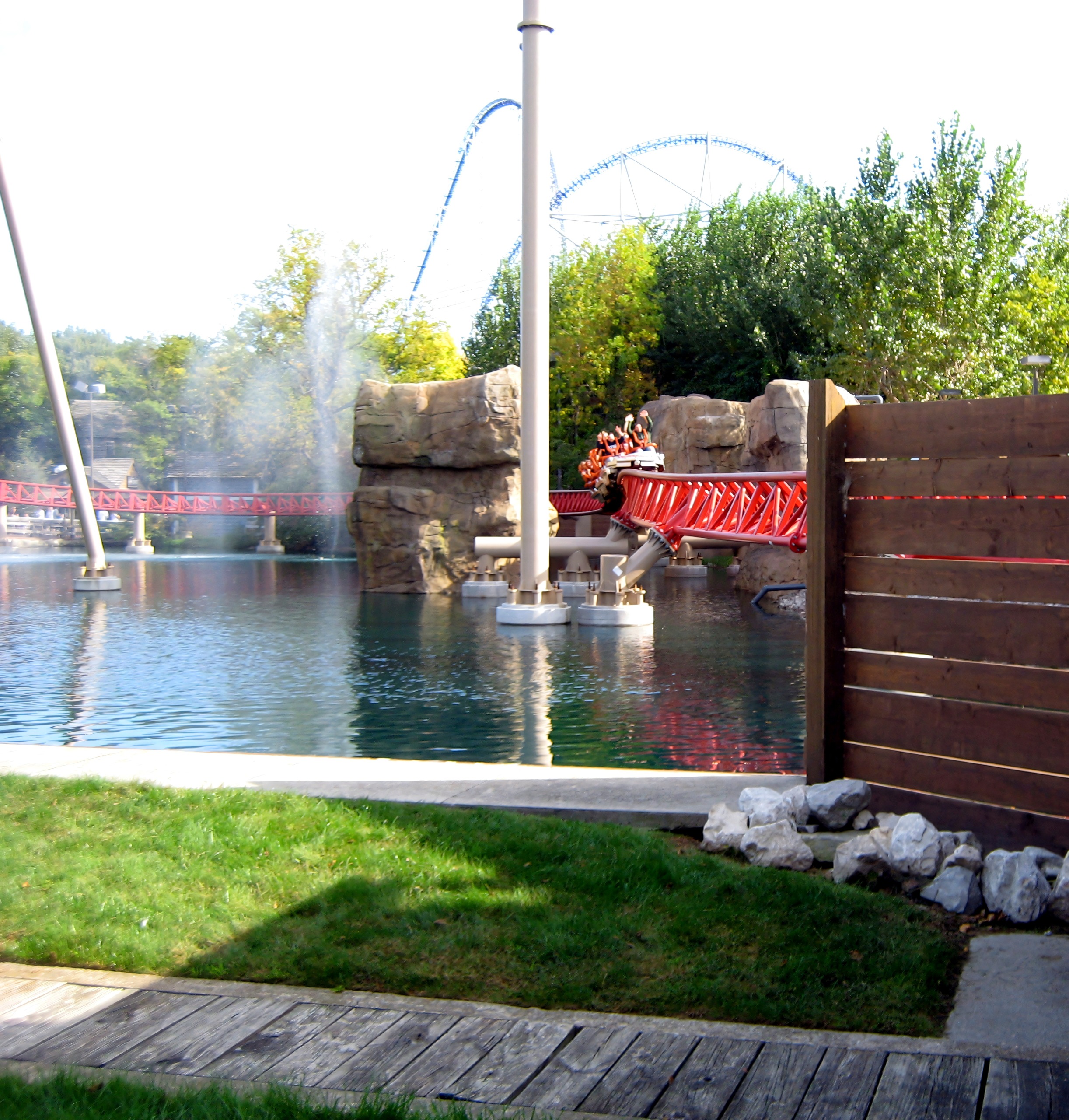
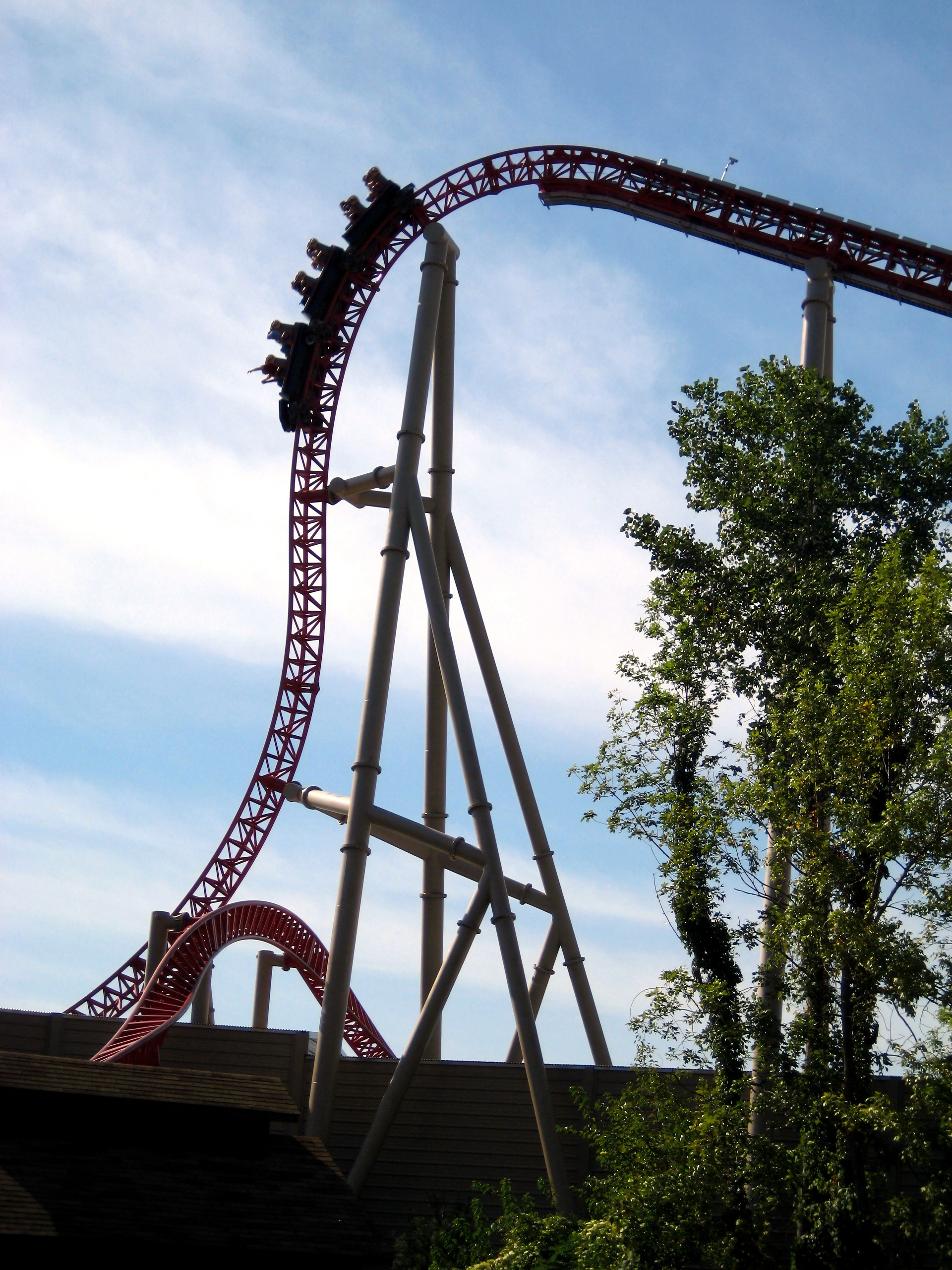
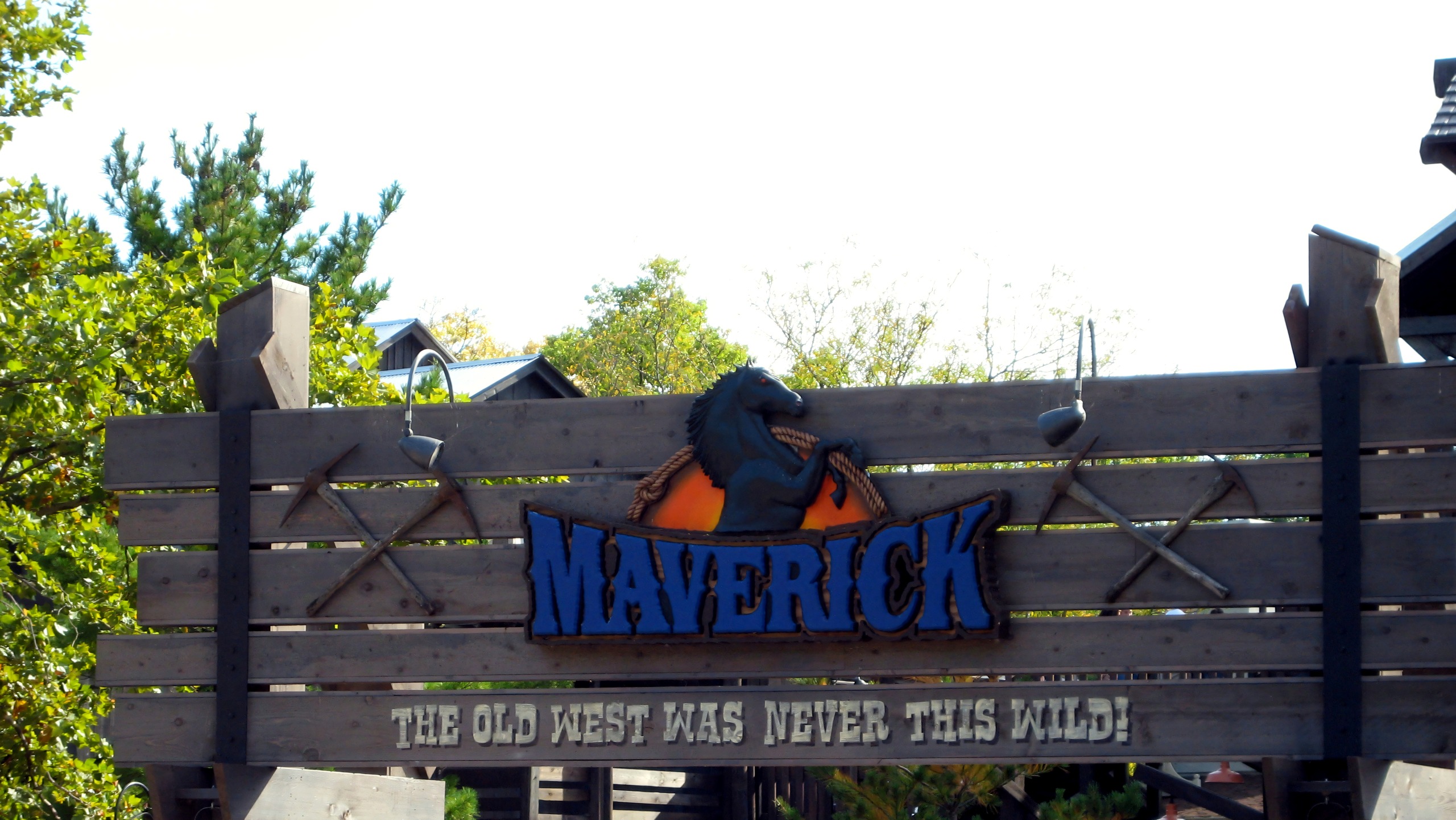
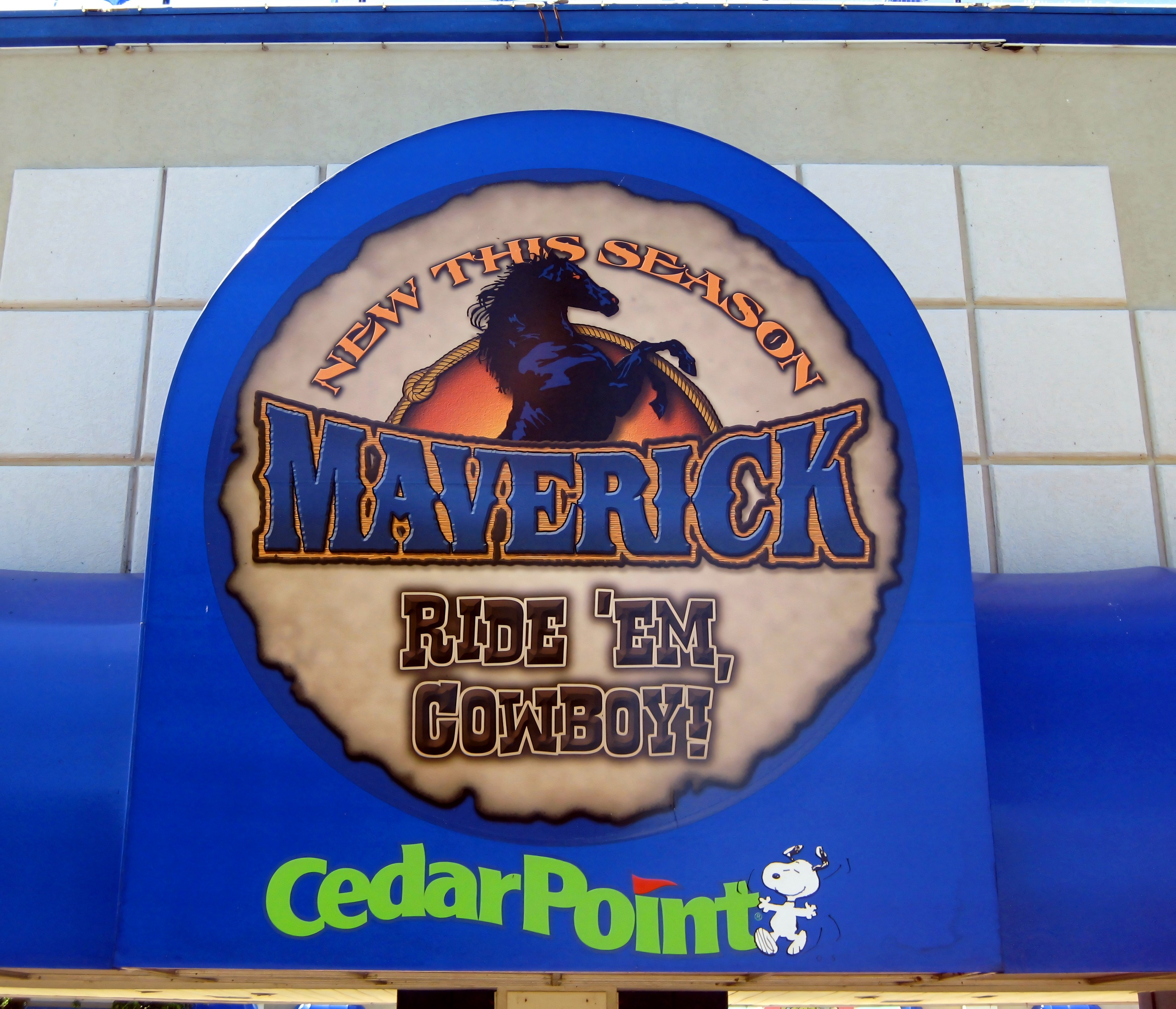
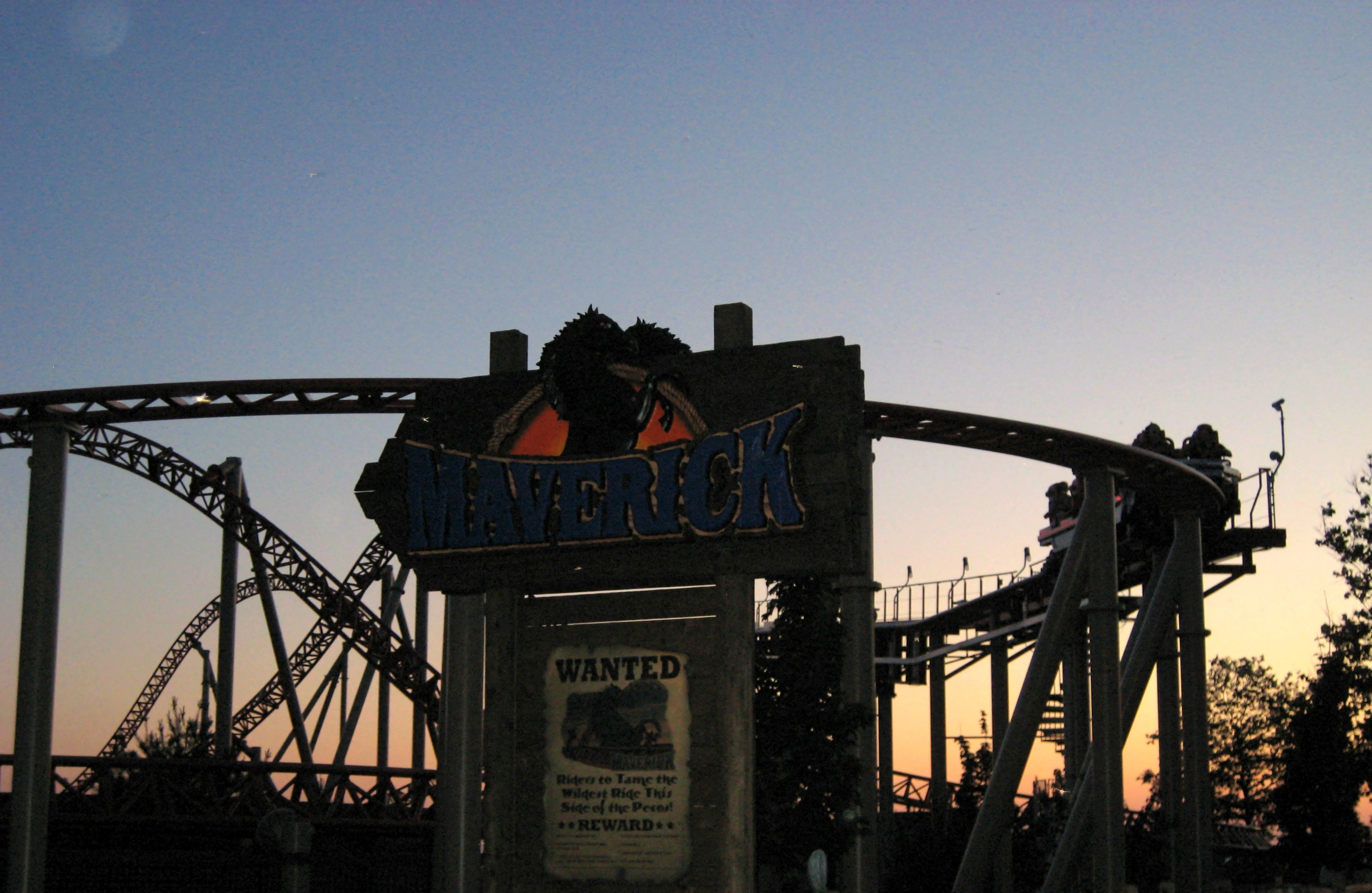
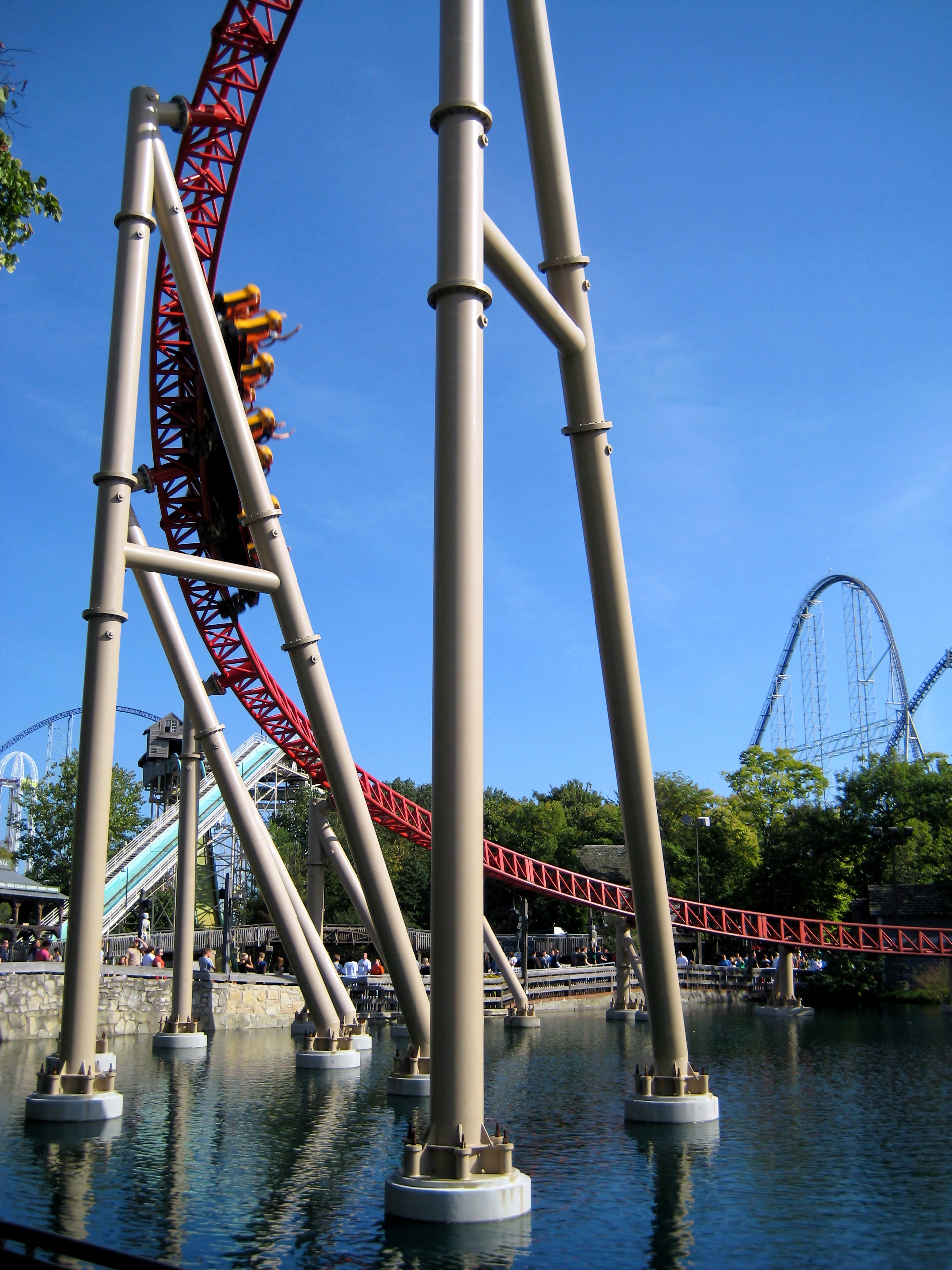
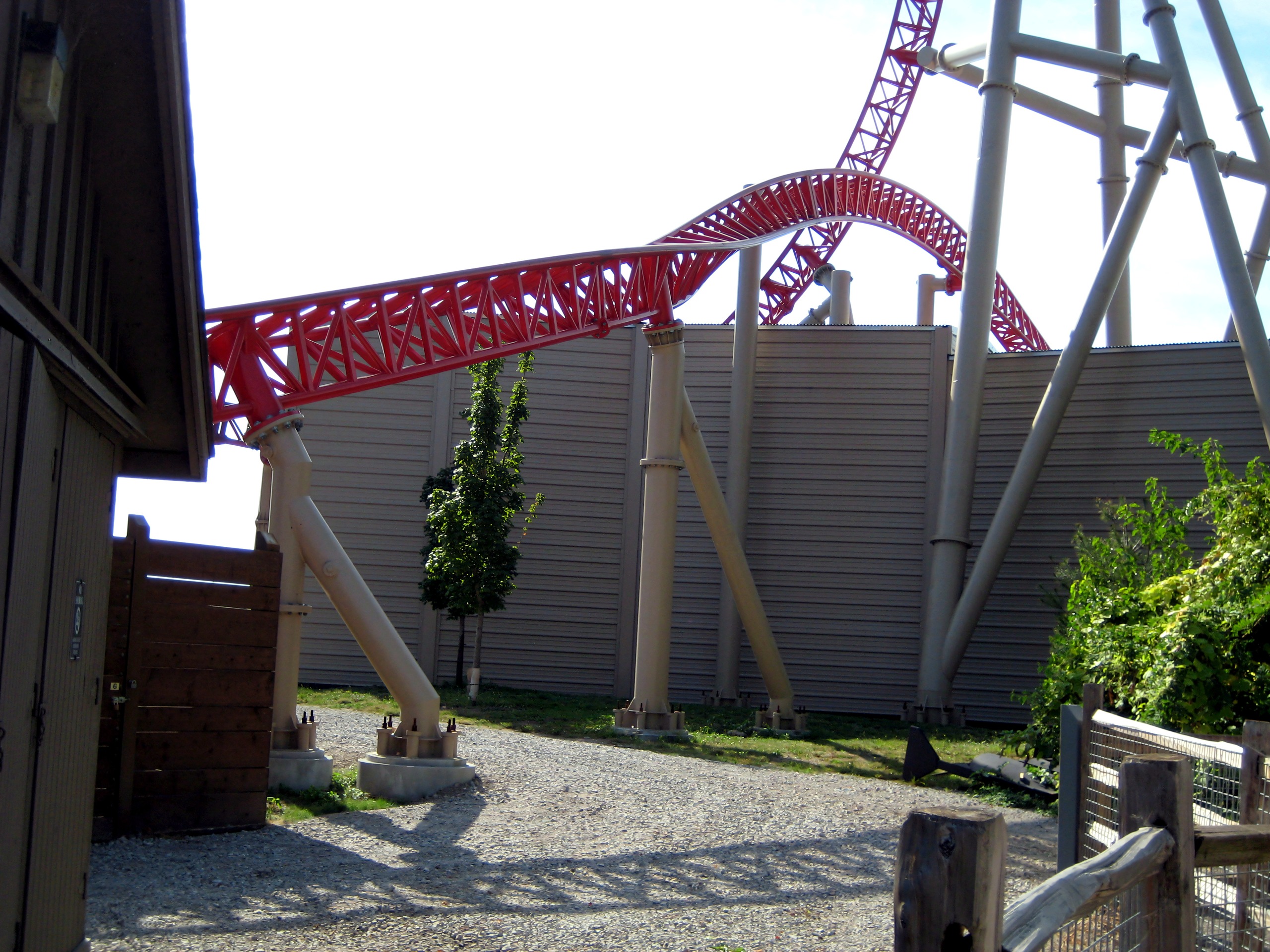
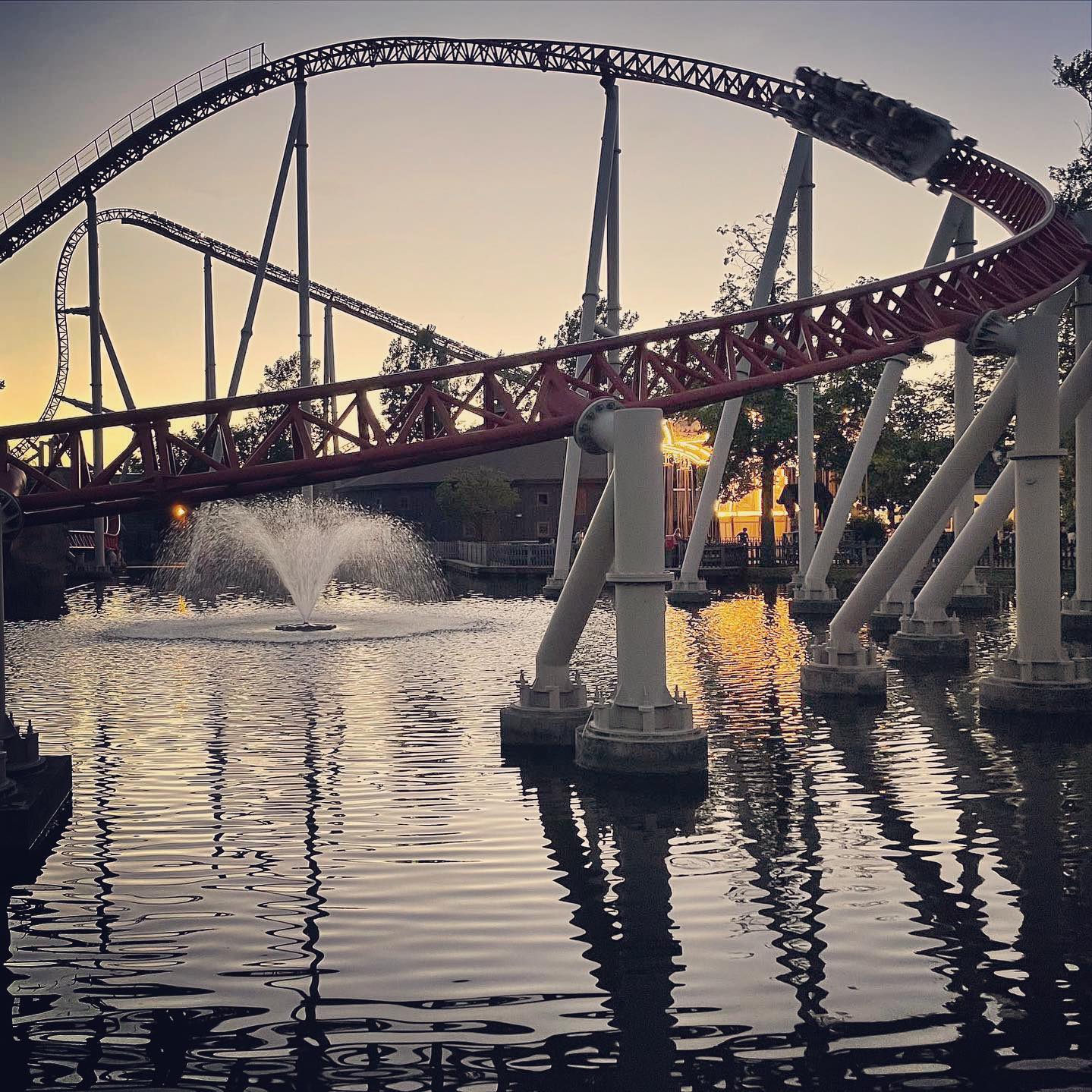
These are original ThrillZing photos of Maverick taken at Cedar Point on June 9 and September 29, 2007, its opening season, restored and upscaled from the original camera files, plus a 2023 shot of the banked turn over the water at dusk. They show the Intamin launched coaster brand new: the entrance signs, trains crossing the water and cresting the hills, the twisted first drop, the track across the pond with Millennium Force behind, and the station at dusk. All photos are free to reuse under a CC BY 4.0 license with credit to ThrillZing and a link to this page.
Build a working coaster on the kitchen table and learn why the first drop has to be the tallest. A good gift for young coaster fans.
Over 3,700 pieces, a real vertical loop and a working chain lift. Display it on a shelf in the coaster room.
Rub-on sunscreen that fits in a pocket — reapply in the queue without greasy hands on the lap bar.


cedar point maverick guide FAQs
How tall is Maverick at Cedar Point?
Maverick’s structure reaches 105 feet (32 m), making it one of the shorter coasters at Cedar Point — but its 95-degree first drop and twin LSM launches make it feel far more intense than its height suggests.
How fast does Maverick go?
Maverick reaches a top speed of 70 mph (113 km/h), hitting that speed in roughly three seconds off its second launch, which fires inside a 400-foot dark tunnel.
Where is Maverick located at Cedar Point?
Maverick is in the Frontier Town section of Cedar Point, near Steel Vengeance and Cedar Downs, on the site of the former White Water Landing flume ride.
What is the height requirement for Maverick?
Riders must be between 52 and 78 inches tall. The maximum is enforced because the over-the-shoulder harnesses are sized specifically for the ride’s aggressive forces.
Who manufactured Maverick, and when did it open?
Maverick was built by Intamin and designed by Werner Stengel. It opened on May 26, 2007, after a short delay to re-engineer one element for safety.
Does Maverick have Fast Lane access?
Standard Fast Lane does not cover Maverick. It’s one of a handful of top-tier Cedar Point coasters that require the higher-tier Fast Lane Plus pass for expedited access.
Why is Maverick considered one of Cedar Point’s best coasters despite being so short?
Maverick packs a beyond-vertical 95-degree drop, two full-speed launches, and the first-ever twisted horseshoe roll into a compact, low-to-the-ground layout with almost no downtime between elements — a pacing style very different from Cedar Point’s taller out-and-back giants, which is why enthusiasts consistently rank it near the top of the park.
Get More from cedar point maverick guide
Log the coasters, stadiums, and venues you’ve experienced, rate cedar point maverick guide, and see what your friends thought. Get the ThrillZing app.
Want the day’s theme park news in your inbox? Subscribe to ThrillZing Daily — free.