
Nitro is the steel hyper coaster at Six Flags Great Adventure in Jackson, New Jersey, built by Bolliger & Mabillard and opened April 7, 2001. It set the East Coast height record and New Jersey speed record on debut, and more than two decades later it’s still one of the park’s flagship rides.
Below is the complete stat sheet — height, drop, speed, length, trains, capacity, cost, and every number riders and enthusiasts ask about — plus the answers to Nitro’s two most-searched questions: how many cars are on a train, and how many camelback hills the layout has.
Quick Answer
Nitro stands 230 feet tall, drops 215 feet at 68 degrees, and hits a top speed of 80 mph across 5,394 feet of track — a 2-minute-20-second ride with zero inversions, a 540-degree helix, and seven camelback hills. Each of its three trains has nine cars seating four across, for 36 riders per train and a capacity of roughly 1,800 riders per hour.
Nitro Stats at a Glance
Park: Six Flags Great Adventure, Jackson, New Jersey. Manufacturer: Bolliger & Mabillard (B&M). Model: Hyper Coaster. Opened: April 7, 2001. Cost: approximately $20 million. Track manufacturer: Clermont Steel Fabricators.
Height: 230 ft (70 m). Drop: 215 ft (66 m) at 68 degrees. Top Speed: 80 mph (130 km/h). Length: 5,394 ft (1,644 m). Inversions: 0. Duration: 2 min 20 sec. Max G-force: 4.3 G.
Trains: 3, each with 9 cars in a row. Seating: 4 across per car, 36 riders per train. Restraints: individual lap bars, no shoulder harness. Hourly capacity: about 1,800 riders. Height requirement: 54 inches (137 cm).
Camelback hills: 7. Helix: 540-degree double helix, positioned mid-course. Layout: out-and-back with a hammerhead turn and an S-curve leading into the helix, followed by a mid-course brake run and a final stretch of camelbacks before the finish brake run.
How Many Cars Does Nitro Have in a Row?
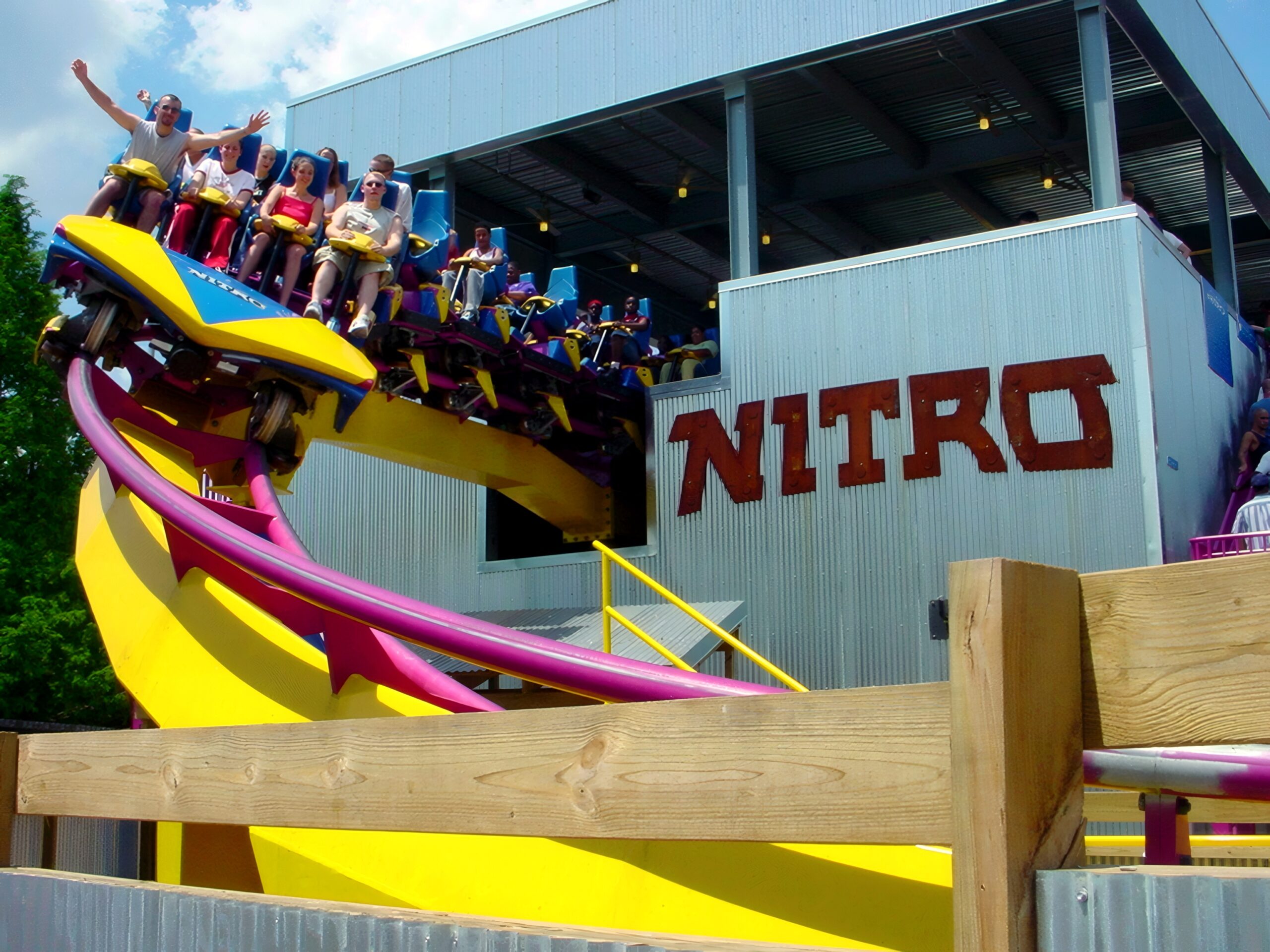
Nitro runs three trains, and each train is made up of nine cars coupled in a single row — a longer train than most steel coasters use, which is part of why the ride can move roughly 1,800 riders per hour despite its mile-plus length. Every car seats riders four across in a single row, so a fully loaded train carries 36 passengers at once (9 cars x 4 across).
Running three of these 36-passenger trains simultaneously keeps the line moving even on Great Adventure’s busiest summer days, and it’s a big reason Nitro has stayed one of the park’s higher-throughput coasters for more than two decades. Riders are secured with individual lap bars rather than over-the-shoulder harnesses, which is standard for B&M hyper coaster trains and keeps the forces feeling open rather than restrictive.
How Many Camelback Hills Does Nitro Have?
Nitro’s out-and-back layout features seven camelback hills in total, the first cresting immediately after the first drop and each one progressively smaller as the train works its way around the course. They aren’t strung together back-to-back into the helix — the hills are split by a hammerhead turn, an S-curve, the 540-degree helix, and a mid-course brake run, so the airtime comes in bursts spread across the whole ride rather than one continuous run of hills.
After the opening camelbacks, Nitro banks into a hammerhead turn and then an S-curve that carries the train into the 540-degree double helix. A mid-course brake run follows, after which the coaster clears its remaining camelback hills before the final brake run and return to the station — a layout that spreads the airtime and G-force moments across the entire ride rather than front-loading them.
The Ride Experience
Nitro’s chain lift climbs to 230 feet before releasing riders into a 68-degree first drop that accelerates the train to 80 mph, a peak force of about 4.3 G. The out-and-back layout then weaves its seven camelback hills through a hammerhead turn, an S-curve, the 540-degree helix, and a mid-course brake run, each hill generating sustained floater airtime that lifts riders clear of their seats.
The 540-degree helix itself lands roughly midway through the layout, bleeding off speed with sustained G-forces before a mid-course brake run and a final stretch of camelback hills that lead into the last brake run and back to the station. B&M’s signature smooth ride quality means the forces feel powerful rather than punishing, making Nitro equally accessible to first-time thrill-seekers and seasoned enthusiasts.
Records and Legacy
When Nitro opened in spring 2001 at a reported cost of around $20 million, it was the tallest coaster on the East Coast and New Jersey’s fastest. While taller rivals have since arrived at other parks, Nitro has remained one of the most celebrated examples of B&M’s hyper coaster formula, peaking at third place among all steel coasters worldwide in Amusement Today’s Golden Ticket Awards and holding that ranking from 2007 through 2012.
The coaster’s opening ceremony on April 11, 2001 featured former WWE superstar Mick Foley, who triggered a fireworks display above the queue — an early sign of the pop-culture cachet Six Flags attached to the ride. More than two decades on, Nitro is still considered a flagship attraction at Great Adventure and a benchmark against which newer hyper coasters are measured. For current hours, ticket pricing, and any ride closures, check the official Six Flags Great Adventure Nitro page.
Nitro Photo Archive: July 2001, Opening Season
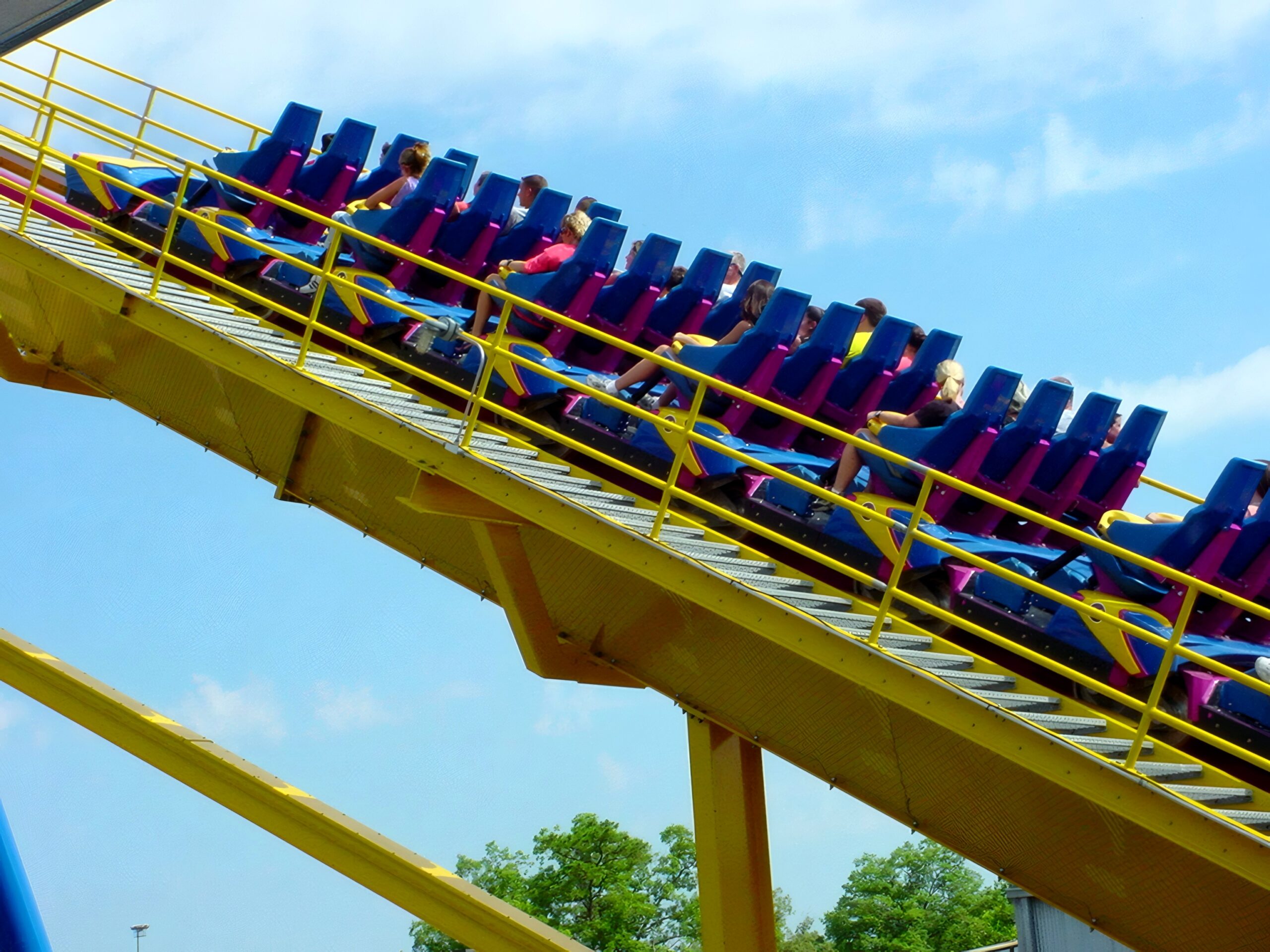
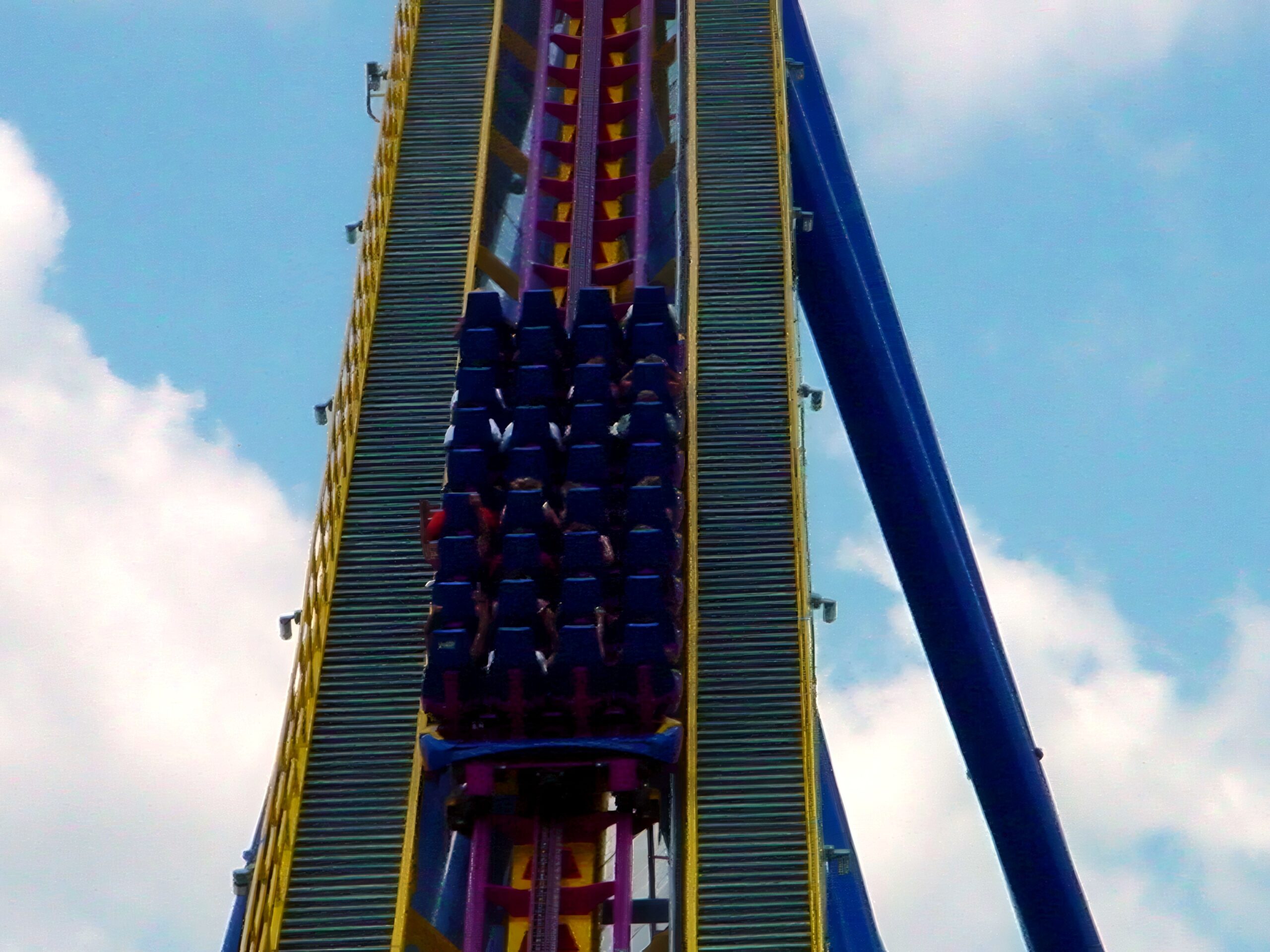
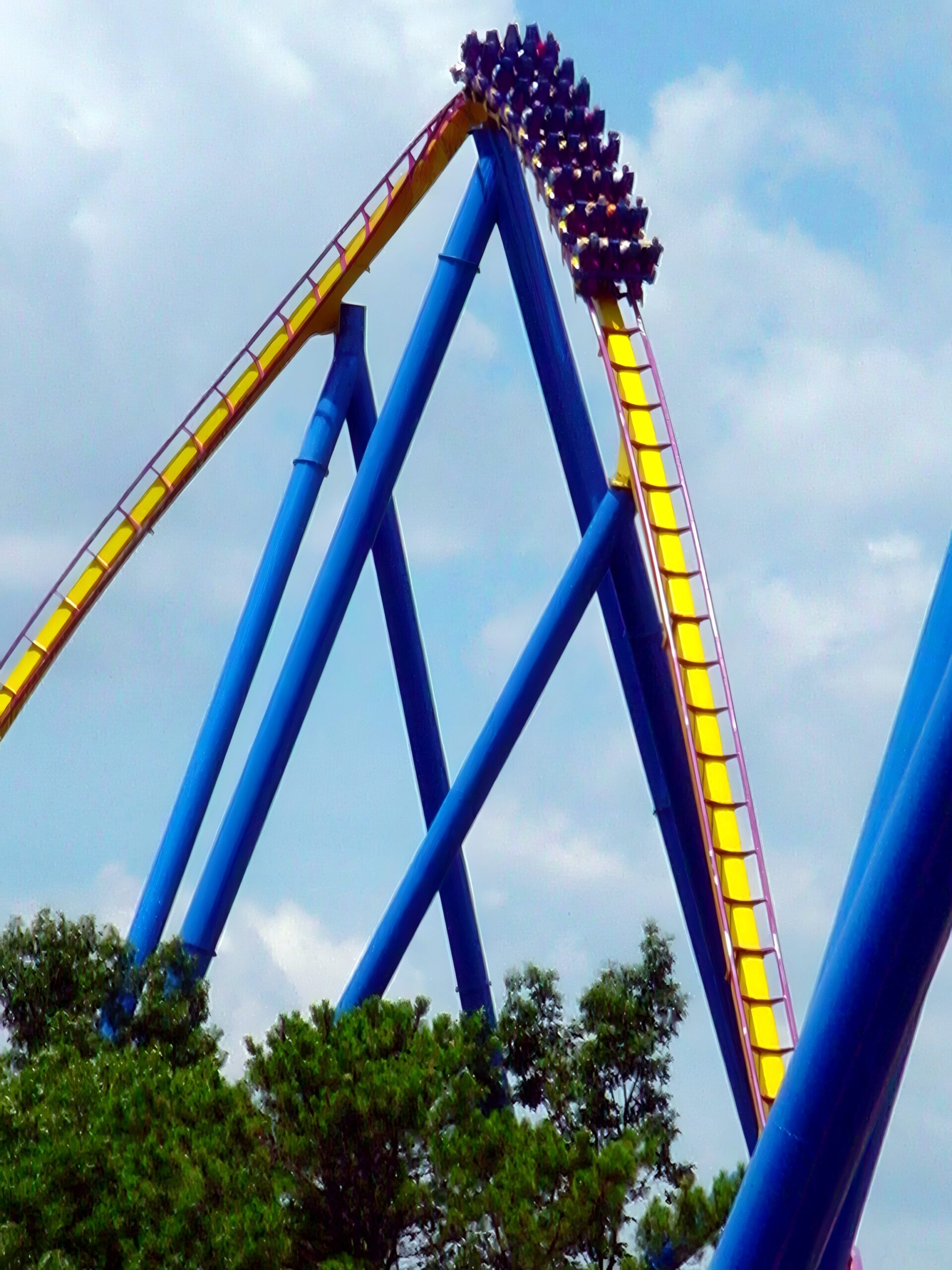
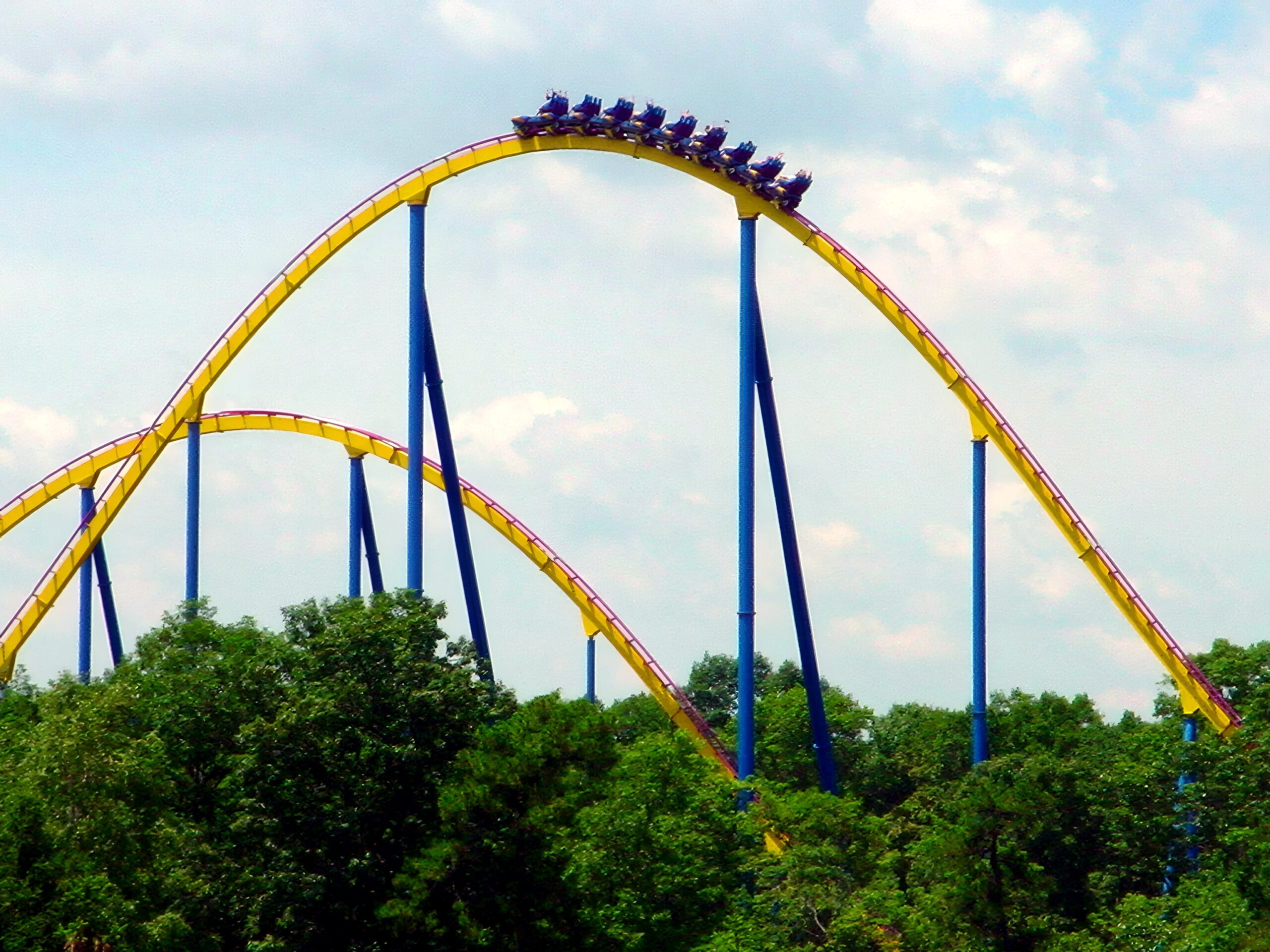
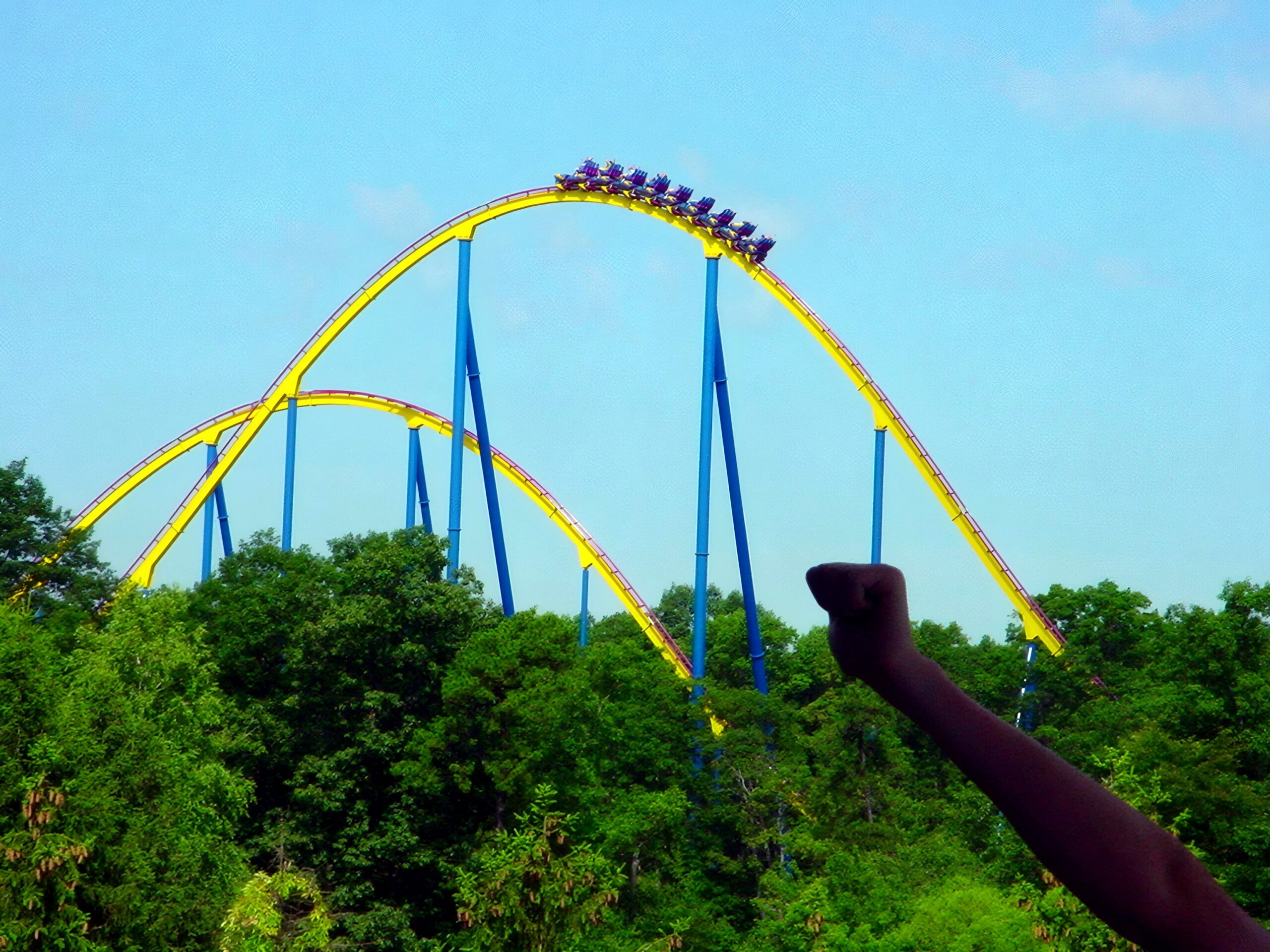
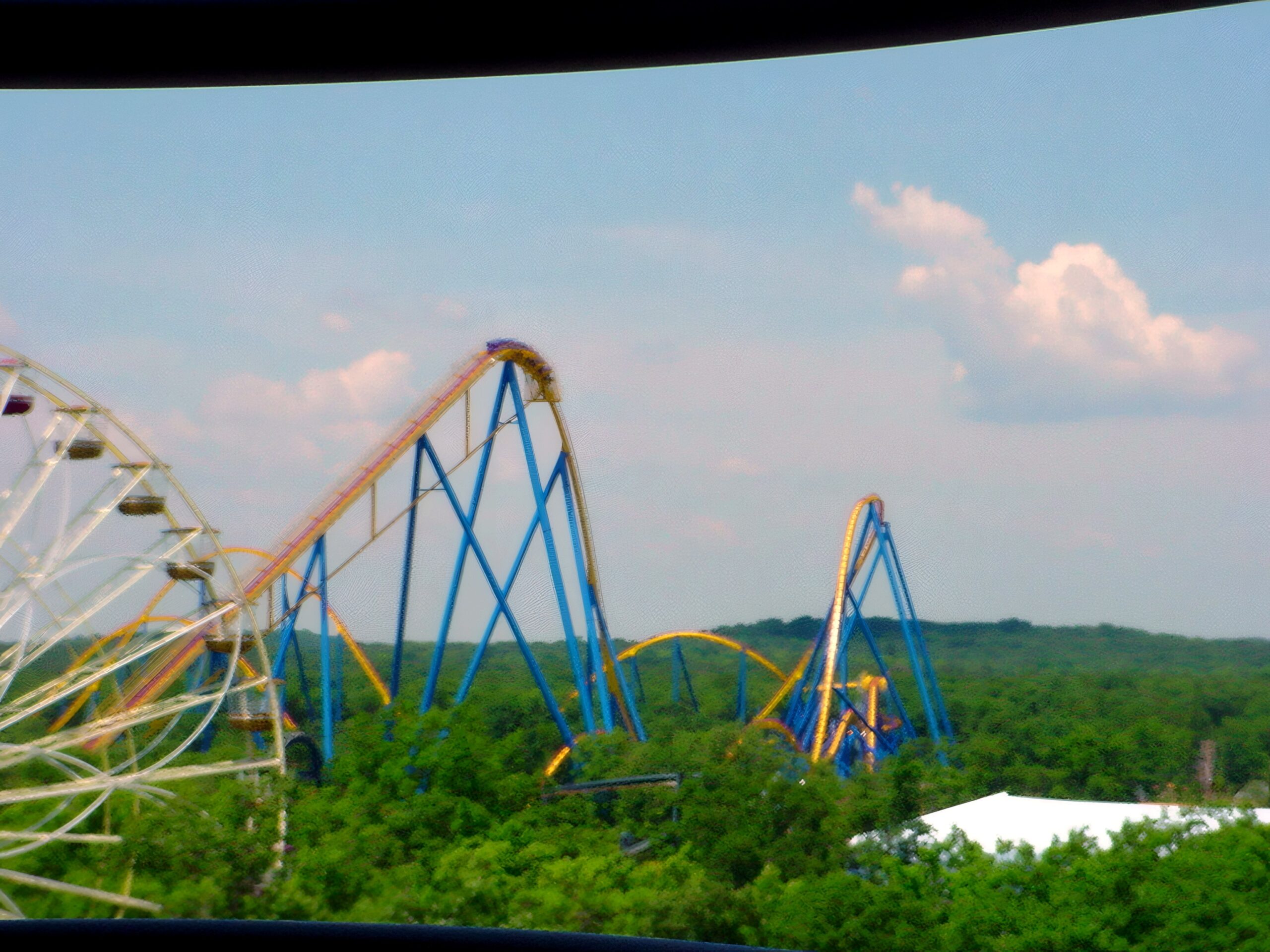
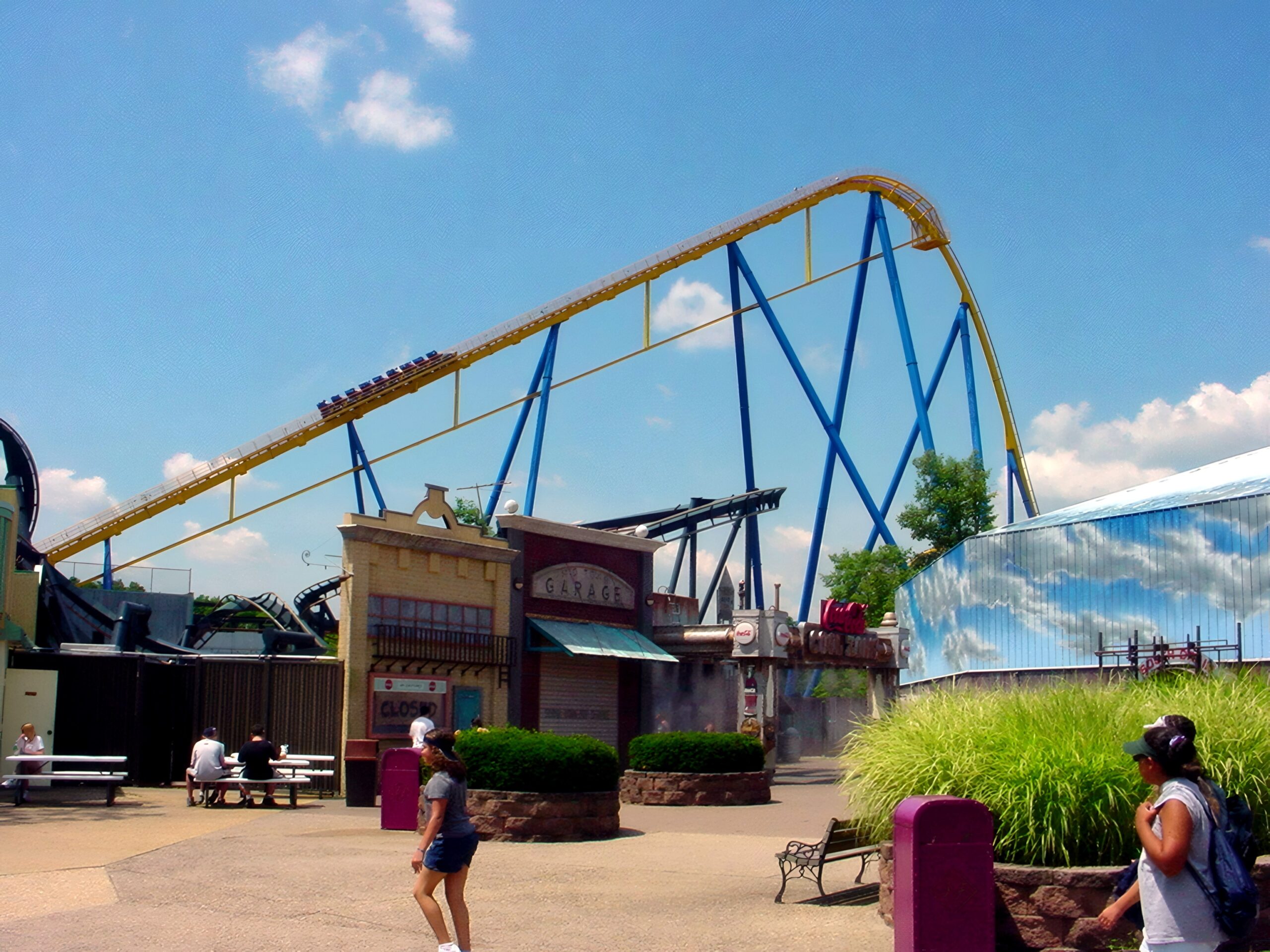
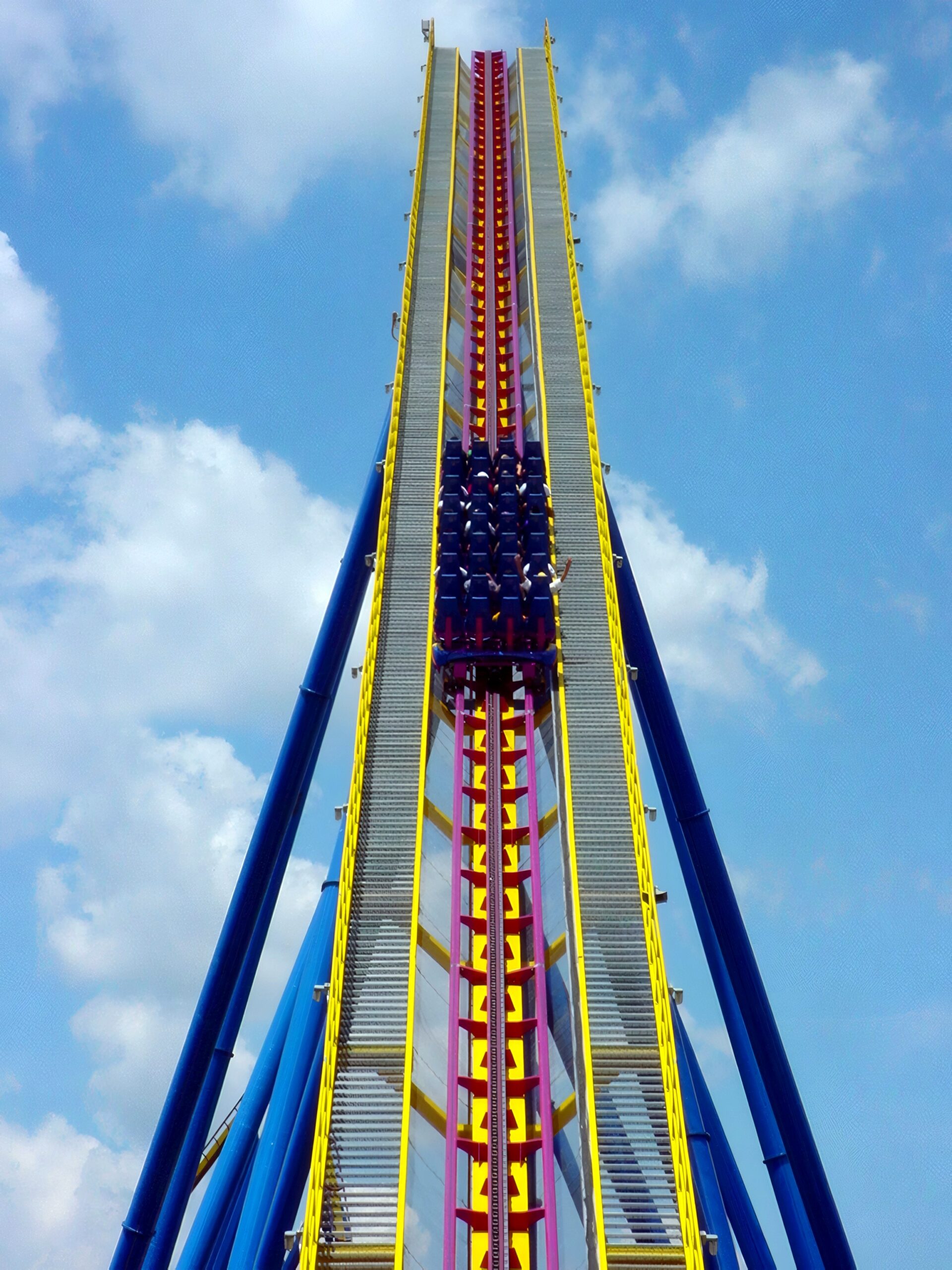
These are original ThrillZing photos of Nitro taken on July 15 and 16, 2001, three months after the ride opened, restored and upscaled from the original camera files. They show the Bolliger & Mabillard hyper coaster in its first season: the original entrance sign, trains on the 230-foot lift hill and first drop, the camelback hills, and the layout seen from across the lake. All photos are free to reuse under a CC BY 4.0 license with credit to ThrillZing and a link to this page.
Nitro Stats at Six Flags Photos from the ThrillZing Archive
Original photos from the ThrillZing archive. Free to reuse under a CC BY 4.0 license with credit to ThrillZing and a link to this page.
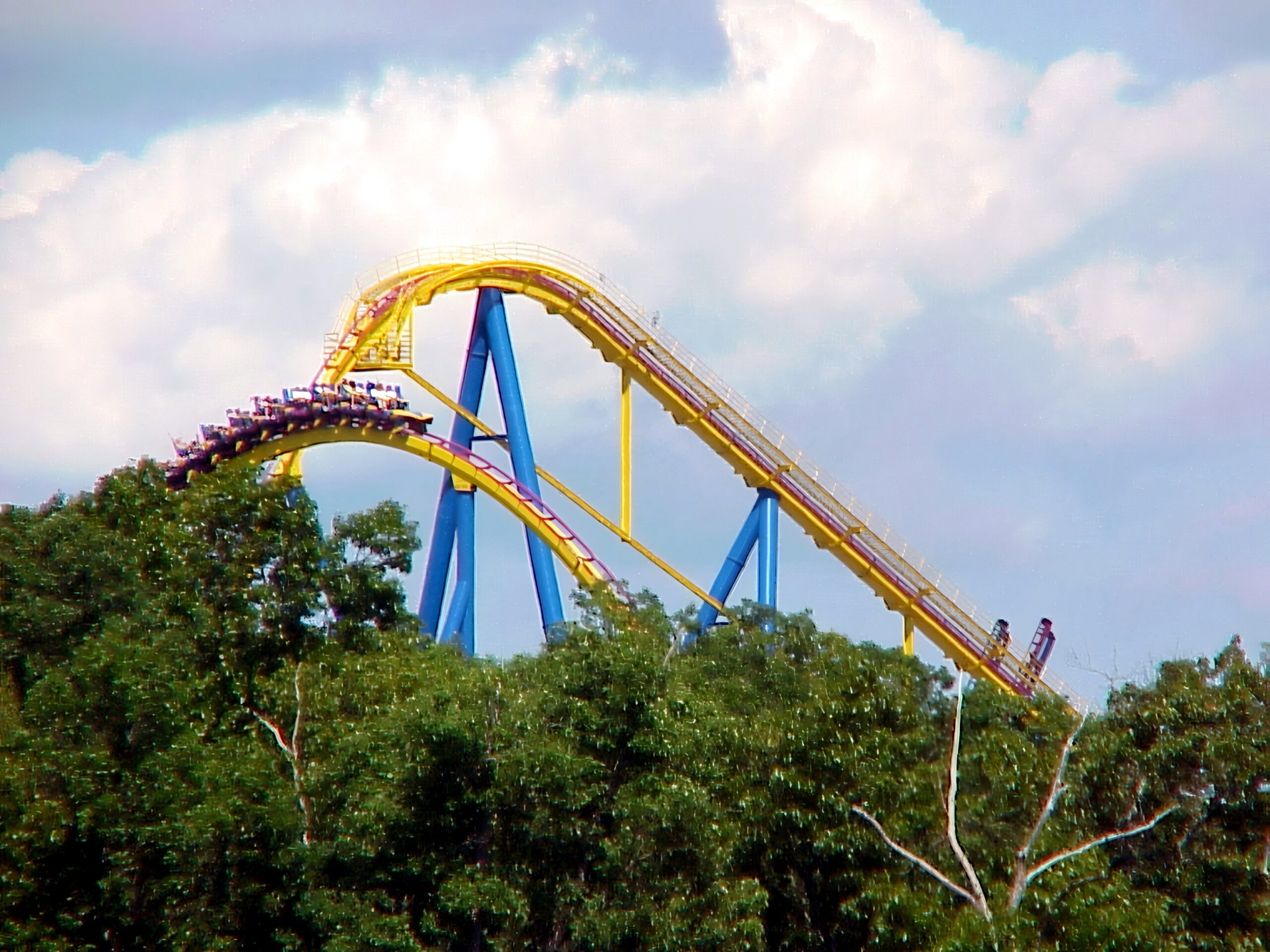
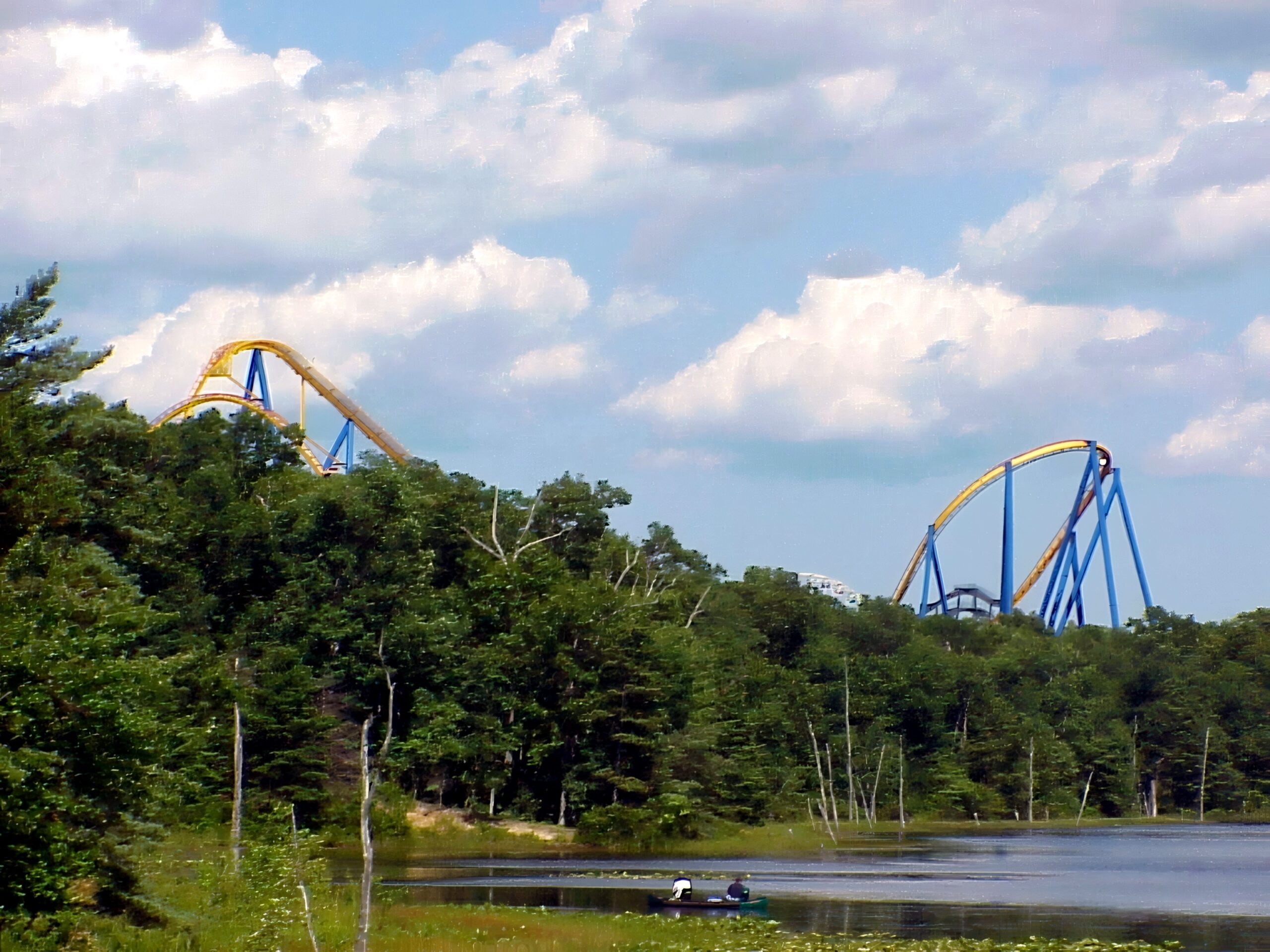
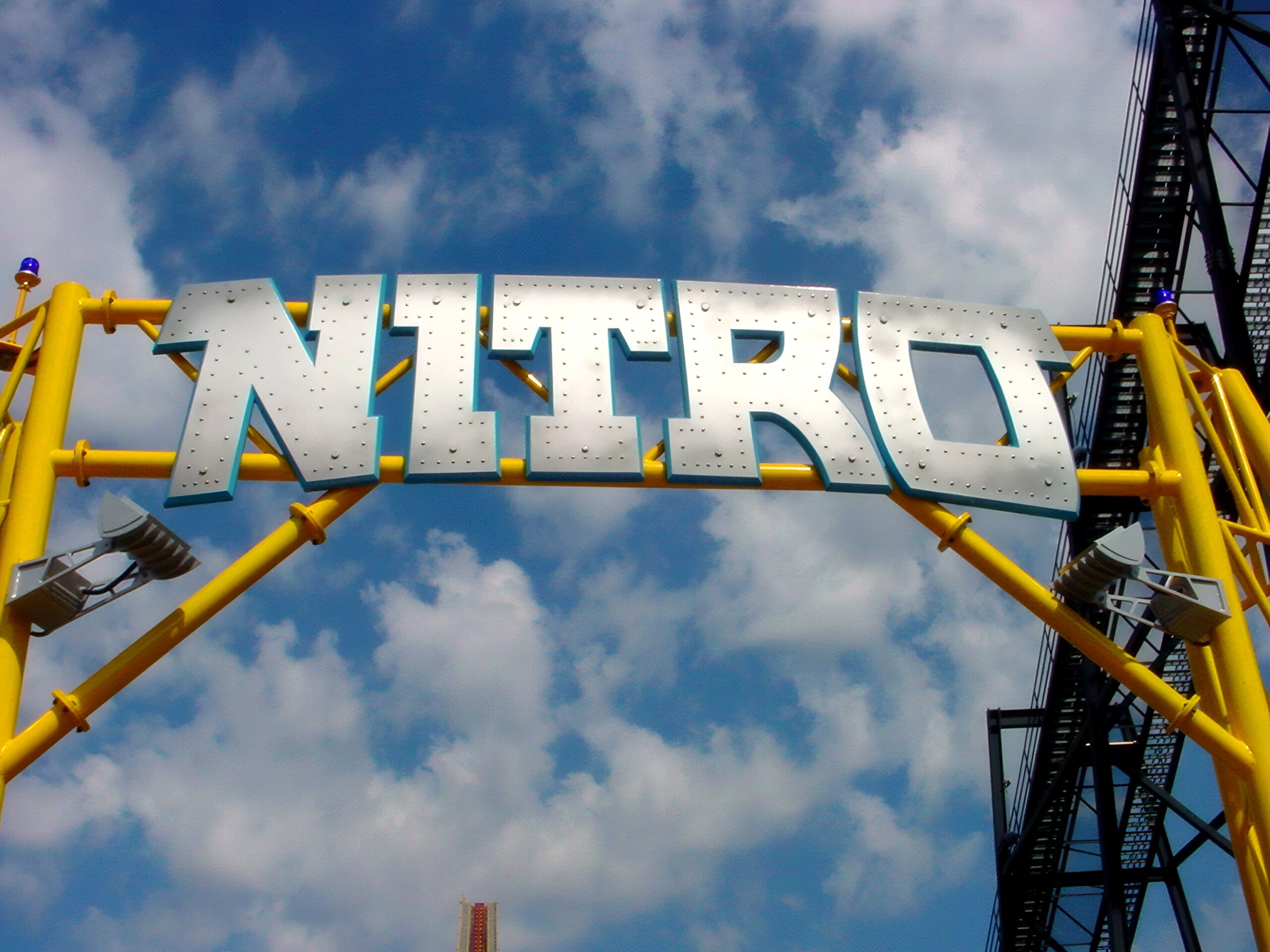
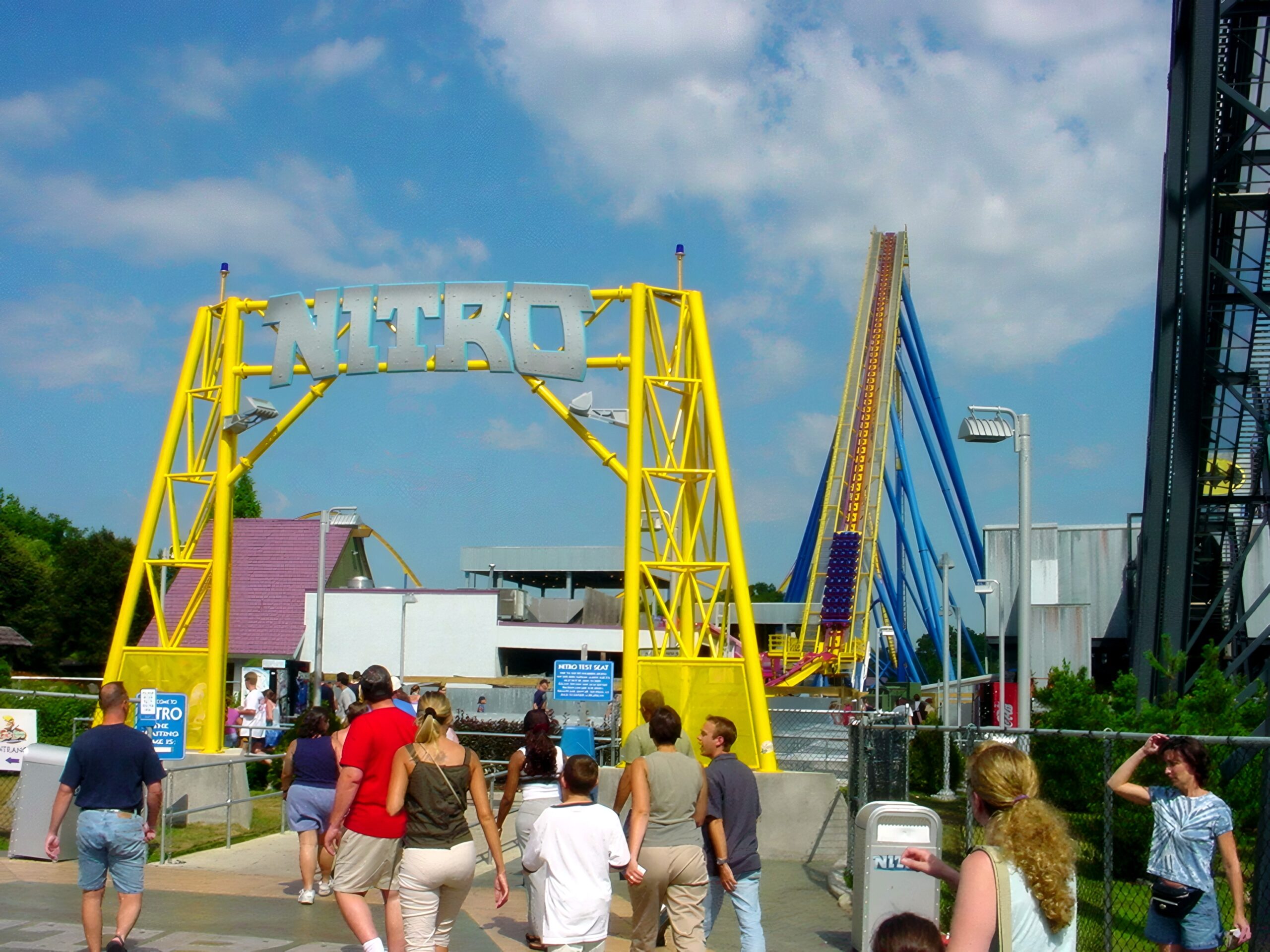
Nitro Photo Archive: July 2001, Opening Season
These are original ThrillZing photos of Nitro taken on July 15 and 16, 2001, three months after the ride opened, restored and upscaled from the original camera files. They show the Bolliger & Mabillard hyper coaster in its first season: the original entrance sign, trains on the 230-foot lift hill and first drop, the camelback hills, and the layout seen from across the lake. All photos are free to reuse under a CC BY 4.0 license with credit to ThrillZing and a link to this page.
Build a working coaster on the kitchen table and learn why the first drop has to be the tallest. A good gift for young coaster fans.
Over 3,700 pieces, a real vertical loop and a working chain lift. Display it on a shelf in the coaster room.
Rub-on sunscreen that fits in a pocket — reapply in the queue without greasy hands on the lap bar.


Nitro roller coaster stats FAQs
How tall is Nitro at Six Flags Great Adventure?
Nitro stands 230 feet tall, with a 215-foot first drop taken at a 68-degree angle.
How fast does Nitro go?
Nitro reaches a top speed of 80 mph, generating a peak force of about 4.3 G on the first drop.
How long is the Nitro ride?
The layout runs 5,394 feet of track, and the full ride lasts about 2 minutes 20 seconds.
How many trains and cars does Nitro have?
Nitro runs three trains, each with nine cars seating four riders across, for 36 riders per train and an hourly capacity of roughly 1,800 riders.
How many camelback hills does Nitro have?
Nitro has seven camelback hills split across both sides of the layout, separated by a hammerhead turn, an S-curve, a 540-degree helix, and a mid-course brake run.
Does Nitro have any inversions?
No. Nitro has zero inversions — it’s a non-inverting hyper coaster that relies on airtime hills, a hammerhead turn, and a 540-degree helix rather than loops.
What is the height requirement for Nitro?
Riders must be at least 54 inches (137 cm) tall to ride Nitro.
When did Nitro open and how much did it cost?
Nitro opened on April 7, 2001, with an opening ceremony on April 11 featuring Mick Foley. It reportedly cost around $20 million to build.
Get More from Nitro roller coaster stats
Log the coasters, stadiums, and venues you’ve experienced, rate Nitro roller coaster stats, and see what your friends thought. Get the ThrillZing app.
Want the day’s theme park news in your inbox? Subscribe to ThrillZing Daily — free.