Every B&M coaster you’ve ever ridden — from Batman: The Ride to the newest hypercoaster at your local Six Flags — traces back to one ride in Gurnee, Illinois. Iron Wolf, which opened in 1990 at Six Flags Great America, was Bolliger & Mabillard’s first-ever project as a coaster manufacturer.
The physical ride outlived its original home by over a decade, moving to Six Flags America in Maryland and changing names twice before that park itself closed for good in November 2025. Here’s the full story of Iron Wolf: what it was like to ride, the records it set, how it became B&M’s springboard to industry dominance, and where pieces of it survive today.
Quick Answer
Iron Wolf, which opened April 28, 1990, at Six Flags Great America in Gurnee, Illinois, was the first roller coaster ever manufactured by Bolliger & Mabillard (B&M) — the Swiss company that went on to build many of the world’s best-known steel coasters. It ran as a record-setting stand-up coaster for 21 years, then relocated to Six Flags America in Maryland, where it became Apocalypse in 2012 and later the floorless Firebird in 2019, operating until that park’s permanent closure on November 2, 2025.
Iron Wolf at a Glance
Park: Six Flags Great America (Gurnee, IL). Manufacturer: Bolliger & Mabillard — their first-ever coaster. Design engineering: Ingenieur-Büro Stengel, Werner Stengel’s firm and B&M’s frequent design partner in this era. Opened: April 28, 1990. Closed at Great America: September 5, 2011.
Height: 100 ft. First drop: 90 ft. Top speed: 55 mph. Length: 2,900 ft. Inversions: 2 (vertical loop and corkscrew). Ride time: about 2 minutes. Trains: two 7-car stand-up trains carrying 4 riders per car (28 riders per train). Hourly capacity: roughly 1,220 riders.
Why Iron Wolf Mattered: The Coaster That Started B&M
Walter Bolliger and Claude Mabillard, both former engineers at the Swiss firm Giovanola, founded Bolliger & Mabillard in 1988. Iron Wolf, commissioned by Six Flags Great America, was the brand-new company’s first completed coaster, opening two years later in 1990.
Its success mattered far beyond one park: it proved the fledgling manufacturer could deliver a reliable, record-setting ride, which helped B&M land its next big contract — the inverted coaster Batman: The Ride in 1992. That ride, in turn, launched an entire genre of inverted coasters and set B&M on course to become one of the most trusted names in the industry, eventually producing floorless, flying, dive, hyper, and giga coasters at parks on nearly every continent.
The Ride Experience: What Made the Stand-Up Format Different
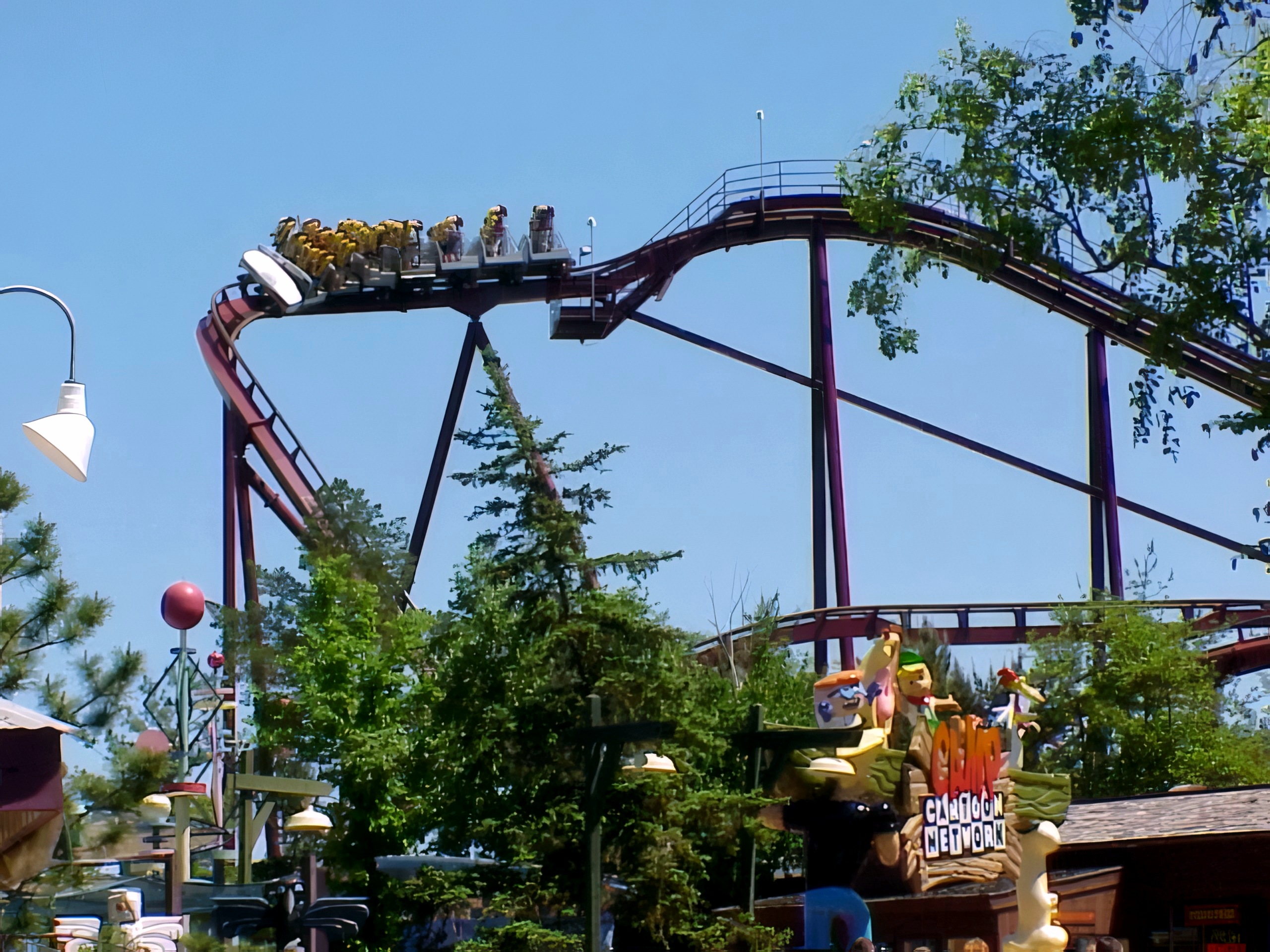
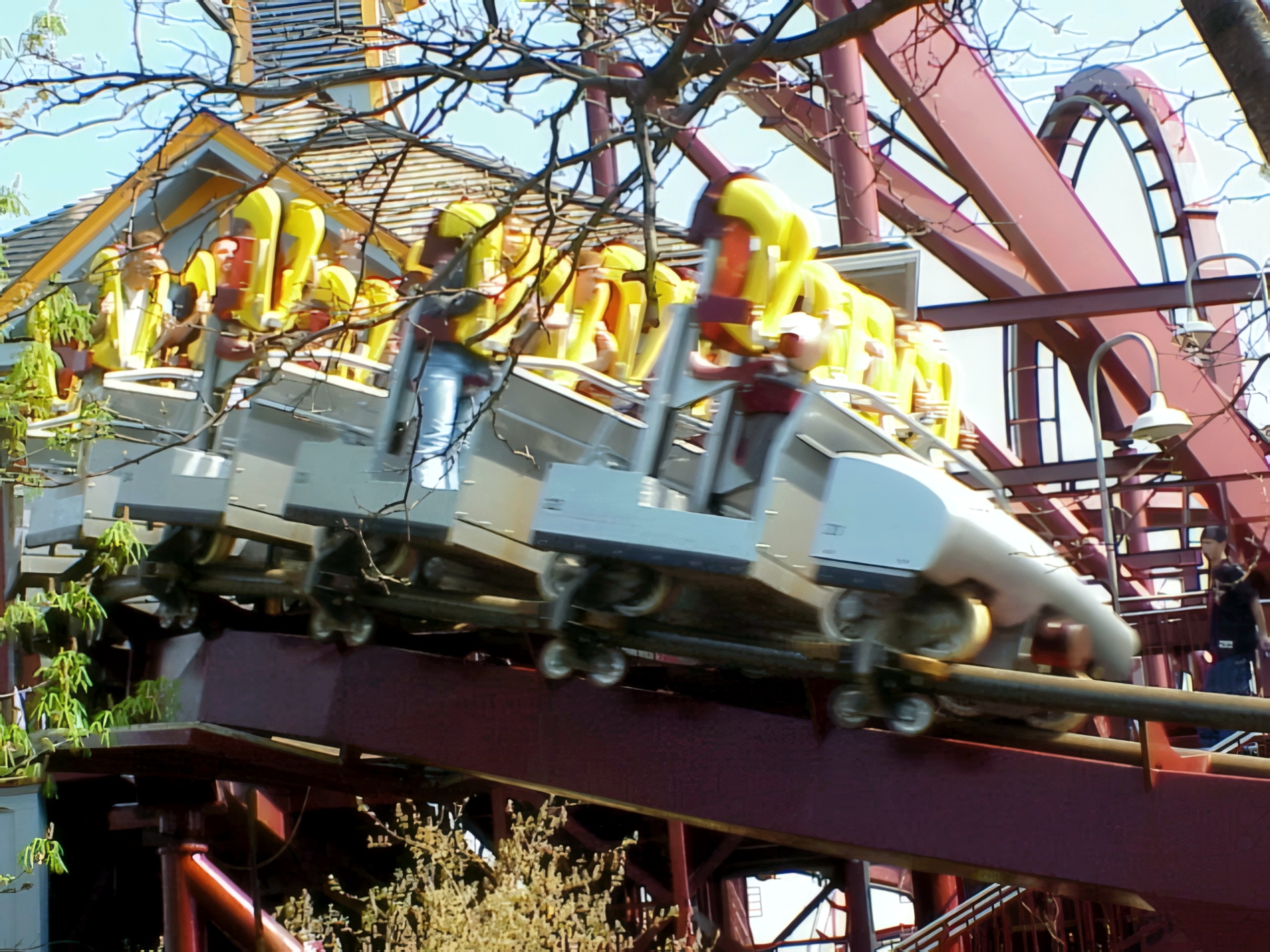
Iron Wolf locked riders into B&M’s signature stand-up trains using a bicycle-seat-style perch with an over-the-shoulder restraint, keeping them on their feet through the entire layout. After a chain lift to 100 feet, the train dropped 90 feet before hitting a vertical loop and a corkscrew inversion, all in a ride that lasted about two minutes.
Standing through the inversions intensified the forces in a way seated coasters of the era couldn’t match, since riders had no seat cushioning the loop’s pull. That novelty made Iron Wolf a signature attraction in Great America’s County Fair section for more than two decades.
The Records Iron Wolf Set — and How Long They Lasted
At its 1990 debut, Iron Wolf was the tallest and fastest stand-up coaster in the world. Its height record stood for about two years, until Milky Way opened at Mitsui Greenland in Japan in 1992 at 125 feet. Its speed record lasted longer — until 1996, when Cedar Point’s Mantis opened as a taller, faster, and longer stand-up coaster.
B&M ultimately built only seven stand-up coasters before moving away from the format entirely: Iron Wolf (1990, Six Flags Great America), Vortex (1991, California’s Great America), Vortex (1992, Carowinds), Mantis (1996, Cedar Point), Chang (1997, Six Flags Kentucky Kingdom), Riddler’s Revenge (1998, Six Flags Magic Mountain), and Georgia Scorcher (1999, Six Flags Over Georgia). Three of those seven, including Iron Wolf, were later re-fitted with floorless trains, since the stand-up format proved harder on riders and maintenance crews than B&M’s later designs.
From Iron Wolf to Apocalypse to Firebird: A Timeline
Six Flags Great America closed Iron Wolf on September 5, 2011, to clear its County Fair site for the RMC hybrid coaster Goliath, which opened in 2014. Rather than being scrapped, Iron Wolf’s track and stand-up trains were shipped to Six Flags America in Maryland and reopened in 2012 under a new name, Apocalypse, with the same layout.
In August 2018, the park announced it would retire the Apocalypse name; the ride closed on September 8, 2018, and reopened on May 17, 2019, as Firebird — the same steel track fitted with new B&M floorless trains and a fresh orange, red, and gray paint scheme. Firebird operated as Maryland’s only floorless coaster until Six Flags America’s permanent closure on November 2, 2025.
What Happened to Iron Wolf After Six Flags America Closed
Six Flags announced in May 2025 that it would close Six Flags America at the end of that season, ending 51 years of operation. In April 2026, the park’s 515-acre property was sold to a redevelopment group backed by NBA star Kevin Durant for a decade-long mixed-use project. As of this writing, the fate of Firebird and the park’s other rides, including the historic wooden coaster The Wild One, remains unresolved, with no publicly confirmed relocation or preservation plans for the coaster itself.
One piece of the original ride has already been preserved: the lead car from Iron Wolf’s original stand-up trains was restored to its 1990s Six Flags Great America livery and went on public display at the National Roller Coaster Museum and Archives in Plainview, Texas, with the restoration completed in March 2026.
Iron Wolf in Pop Culture
Iron Wolf made a brief big-screen appearance in the 1994 film Richie Rich, standing in as the eccentric title character’s personal backyard roller coaster.
Iron Wolf Photo Archive: 2000–2005
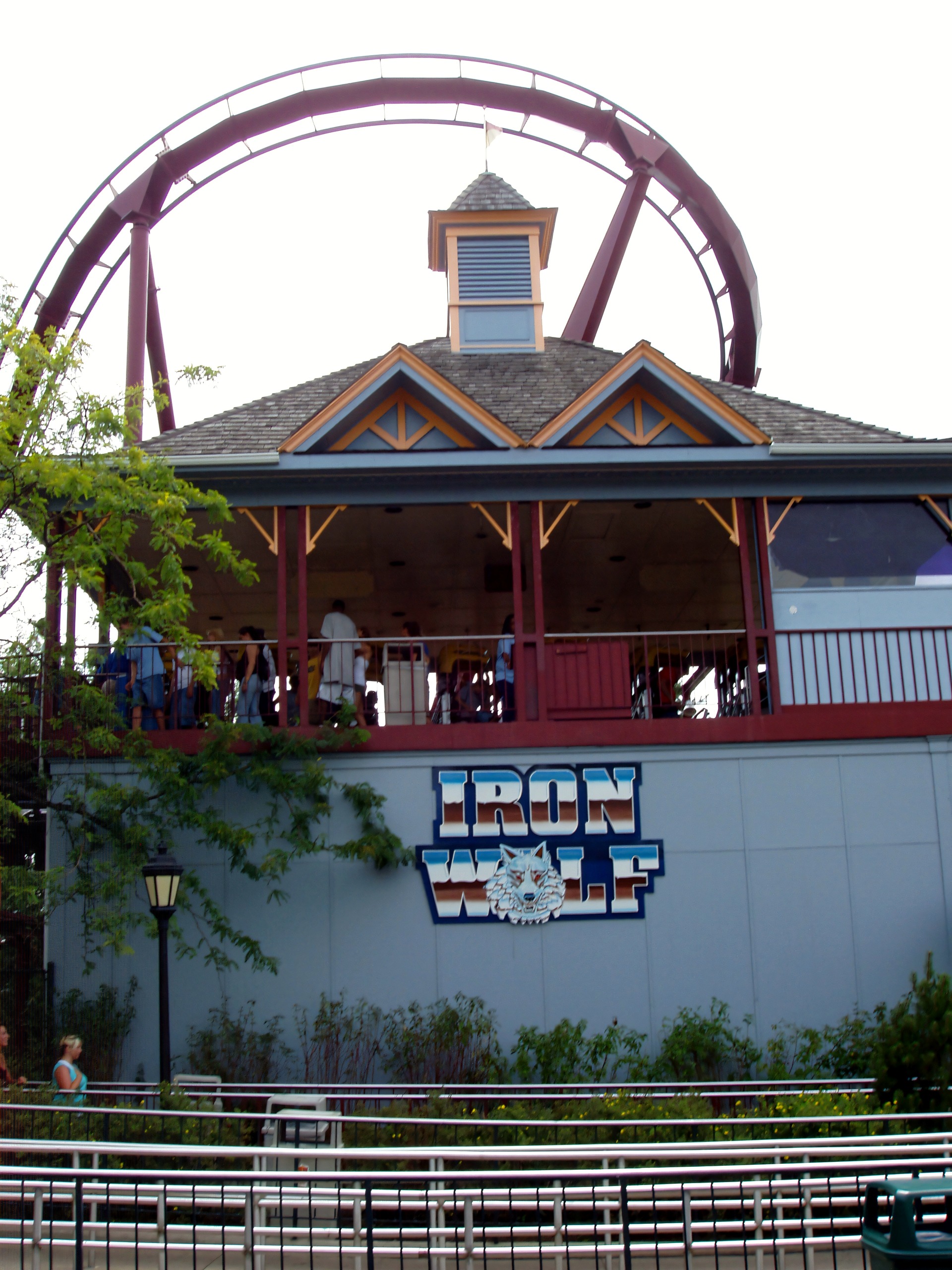
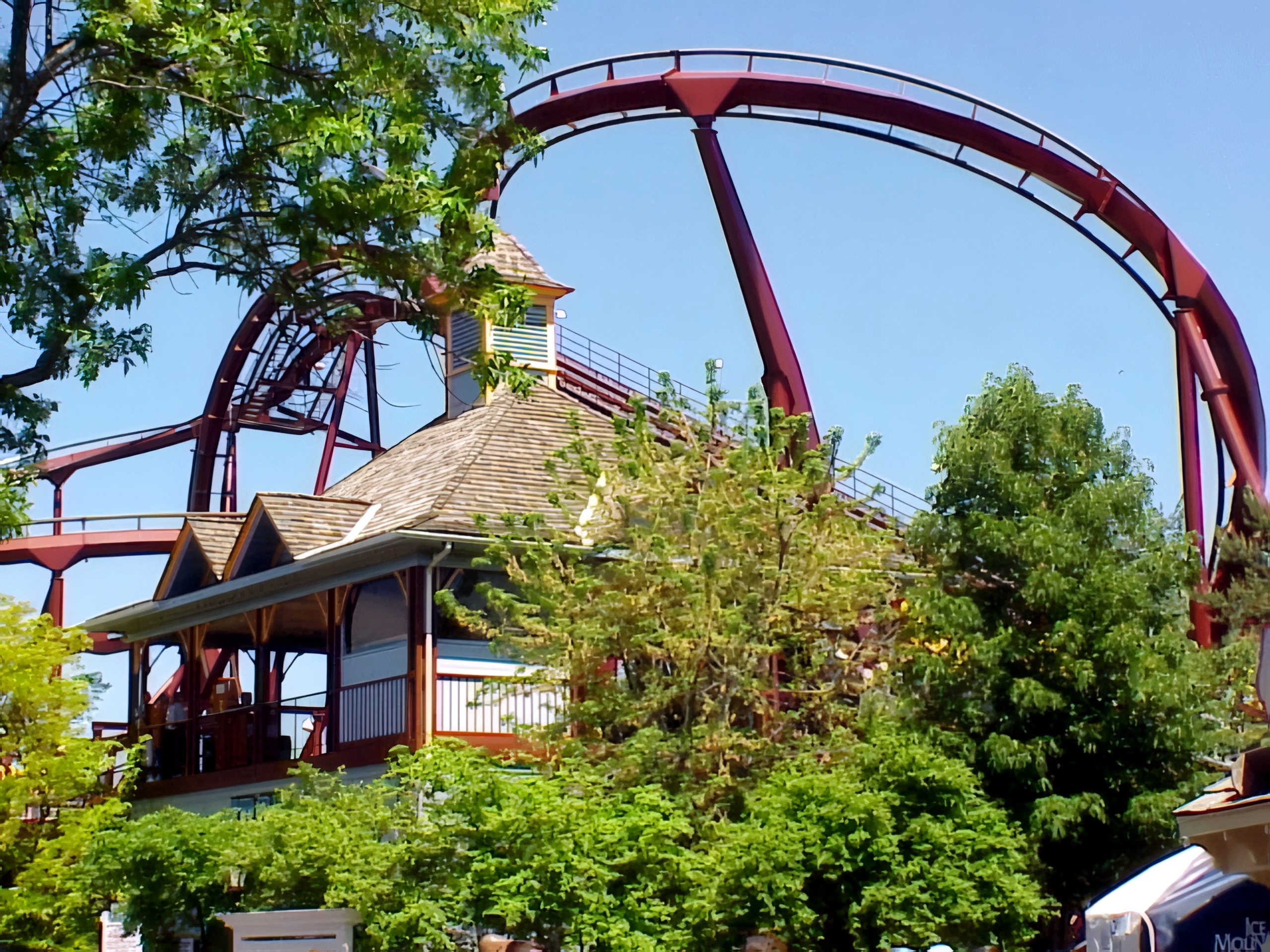
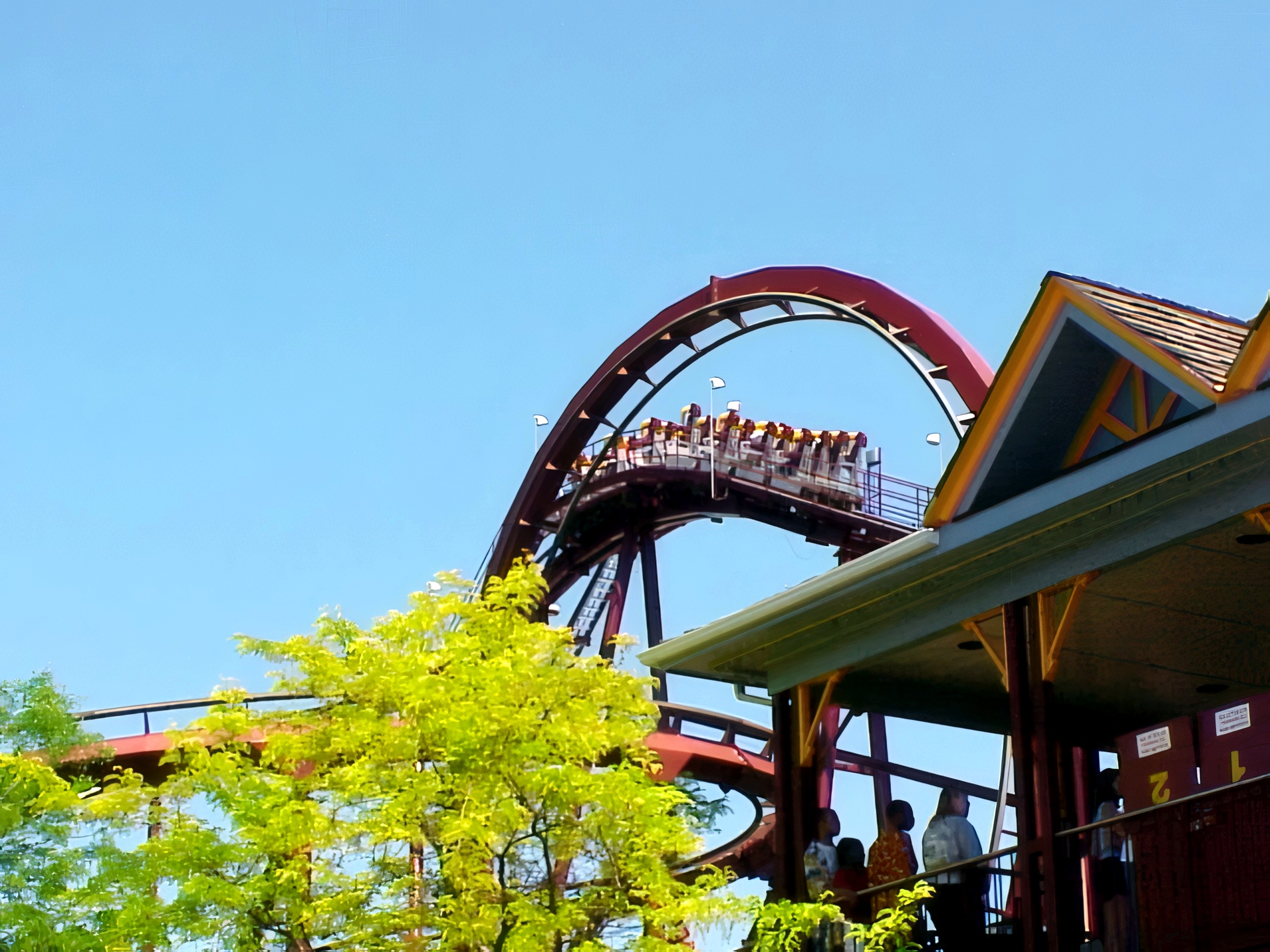
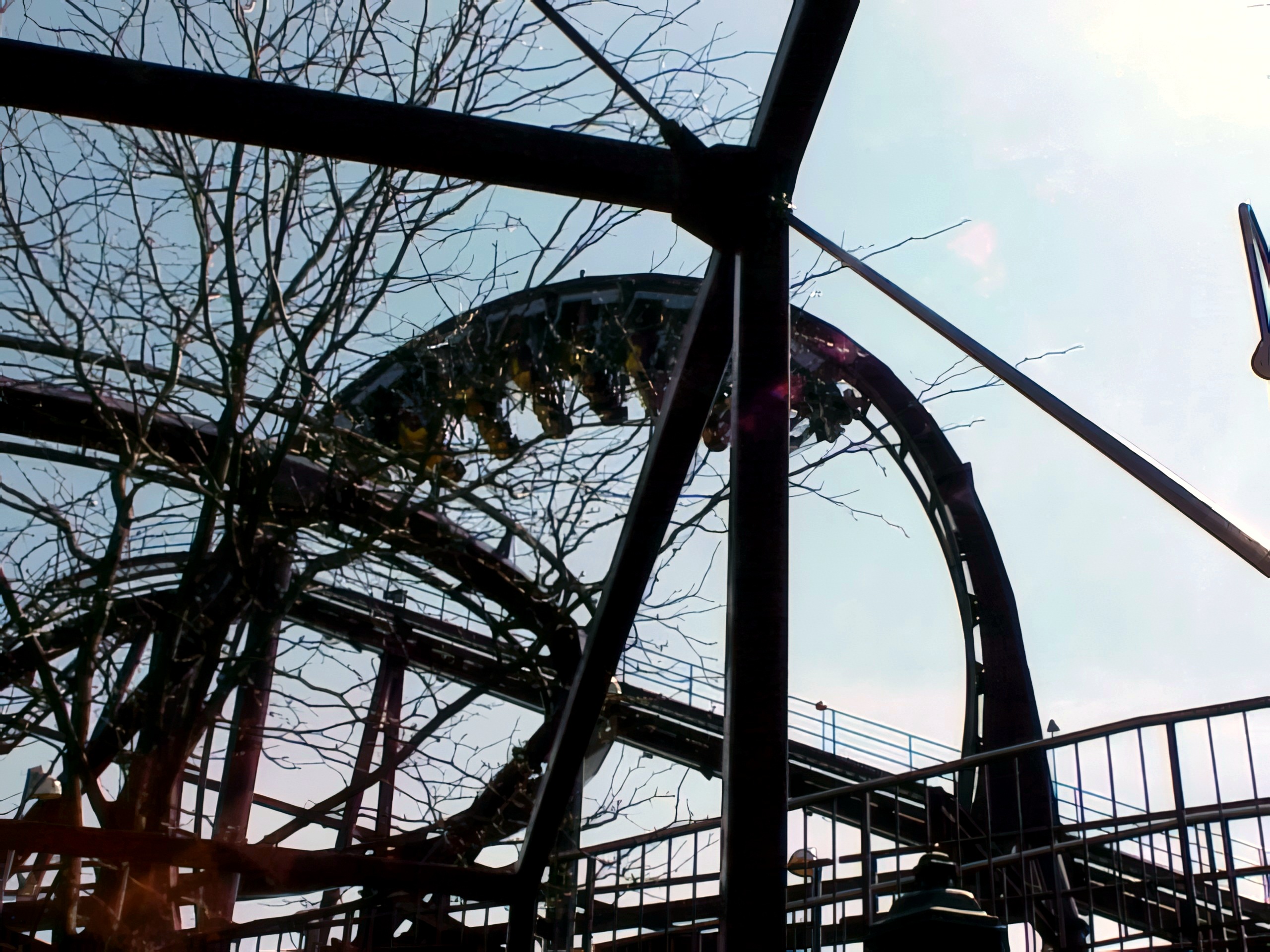
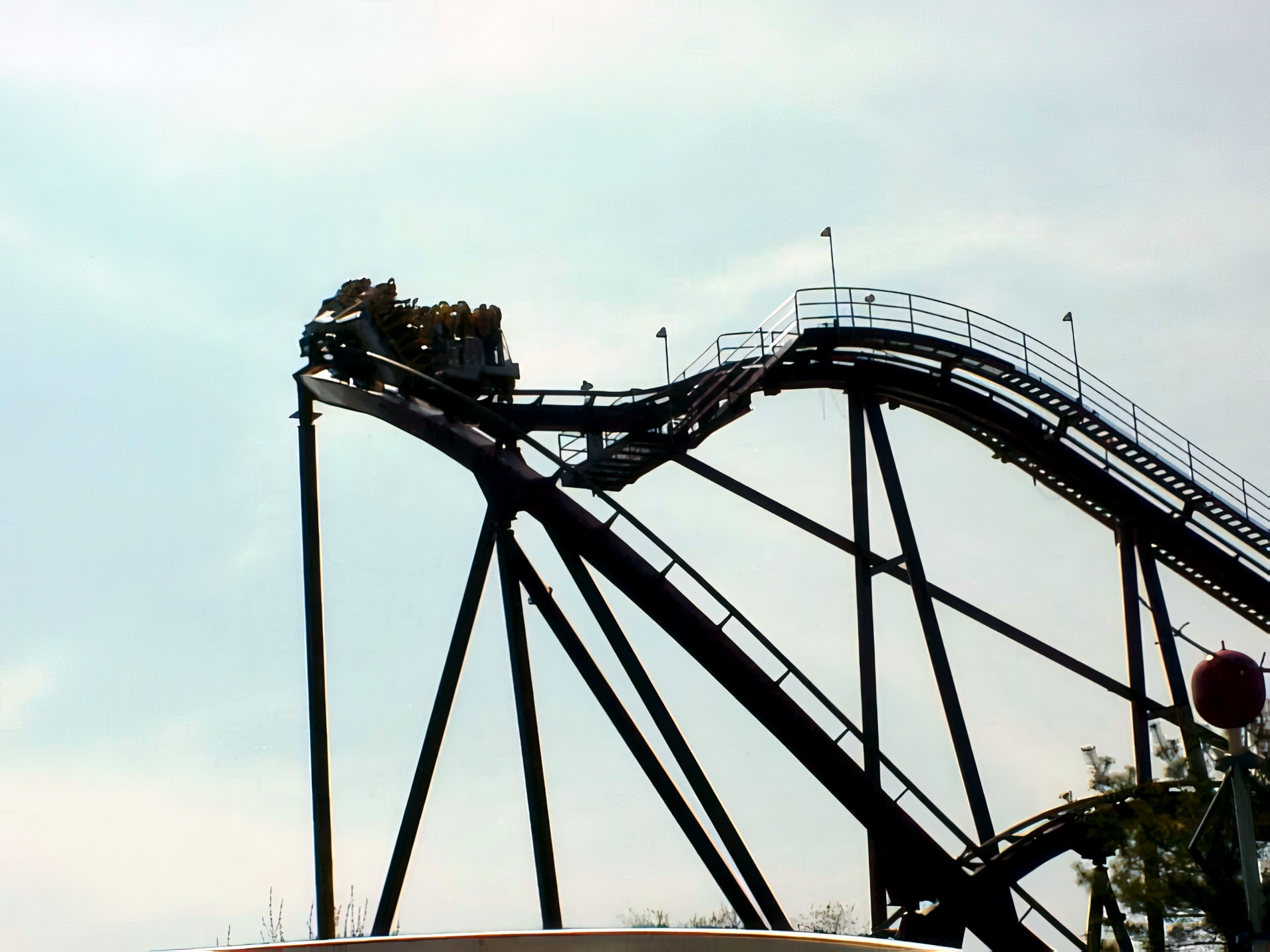
These are original ThrillZing photos of Iron Wolf taken at Six Flags Great America in 2000, 2001 and 2005, restored and upscaled from the original camera files. They show B&M’s first stand-up coaster’s maroon track and purple supports, riders standing through the loop, and the station with its Iron Wolf sign before the ride moved to Six Flags America in 2012. All photos are free to reuse under a CC BY 4.0 license with credit to ThrillZing and a link to this page.
Keeps your phone strapped to you, not in a loose-article bin. Zip it before the lift hill and walk straight off the exit ramp.
Rapids, log flumes and splash zones without the rice-bag aftermath. The touchscreen still works through the window, so you can still take photos.
Cheaper than the $15 poncho at the gift shop and you get a whole bag. Toss one in every backpack for water rides and pop-up storms.


Iron Wolf (B&M’s first roller coaster) FAQs
Is Iron Wolf still open anywhere?
No. Iron Wolf closed at Six Flags Great America in 2011. Its track and trains moved to Six Flags America in Maryland, where it ran as Apocalypse and then Firebird until that park permanently closed on November 2, 2025.
Why was Iron Wolf historically important?
It was the first roller coaster ever manufactured by Bolliger & Mabillard (B&M), the company behind Batman: The Ride and many of the world’s best-known steel coasters today.
What records did Iron Wolf set?
At its 1990 opening, it was the tallest (100 ft) and fastest (55 mph) stand-up coaster in the world. The height record lasted about two years; the speed record held until 1996.
What replaced Iron Wolf at Six Flags Great America?
The RMC hybrid wood-and-steel coaster Goliath was built on Iron Wolf’s former site in the County Fair section and opened in 2014.
Who designed Iron Wolf?
It was manufactured by Bolliger & Mabillard, with design engineering handled by Werner Stengel’s firm, Ingenieur-Büro Stengel, a frequent B&M collaborator in that era.
Can I still see any part of the original Iron Wolf?
Yes. A restored lead car from Iron Wolf’s original stand-up trains, repainted to its 1990s Six Flags Great America colors, is on display at the National Roller Coaster Museum and Archives in Plainview, Texas.
Get More from Iron Wolf (B&M’s first roller coaster)
Log the coasters, stadiums, and venues you’ve experienced, rate Iron Wolf (B&M’s first roller coaster), and see what your friends thought. Get the ThrillZing app.
Want the day’s theme park news in your inbox? Subscribe to ThrillZing Daily — free.