Germany’s coaster scene splits into a handful of flagship parks that build genuinely original rides — multi-launch coasters, a flying launch coaster, a tower coaster with a backward free-fall drop — and a second tier of smaller, regional parks that build one or two very good coasters and little else. The best overall ride is Taron at Phantasialand, a multi-launch coaster that strings together two catapult launches with almost no dead time between them.
This ranking judges ride experience first: pacing, airtime, intensity, and how a coaster holds up on a second or third ride, not raw height or speed numbers. It covers 13 verified, currently operating coasters across six parks, a side-by-side comparison table, honest advice on which park fits which kind of trip, and a road-trip plan for visiting more than one.
Stats at a Glance
- Top Pick: Taron — Phantasialand
- Tallest: Silver Star & Der Schwur des Kärnan, 240 ft (73 m)
- Fastest: Silver Star & Der Schwur des Kärnan, 79 mph (127 km/h)
- Best Park for Coasters: Europa-Park
- Best Time to Go: Late May–June or September
The Ranking: Best Roller Coasters in Germany
These are ranked by what the ride actually feels like, best first, not by height or top speed alone.
1. Taron — Phantasialand
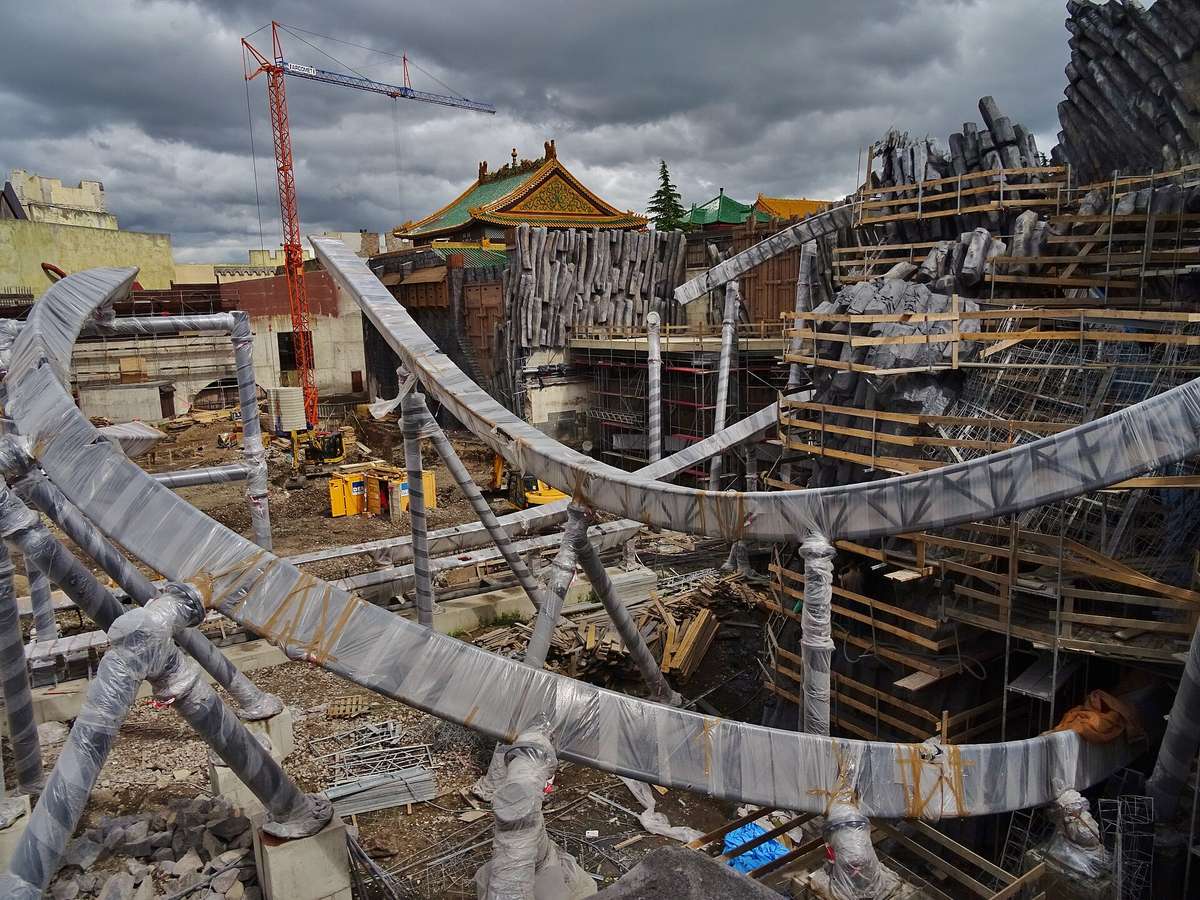
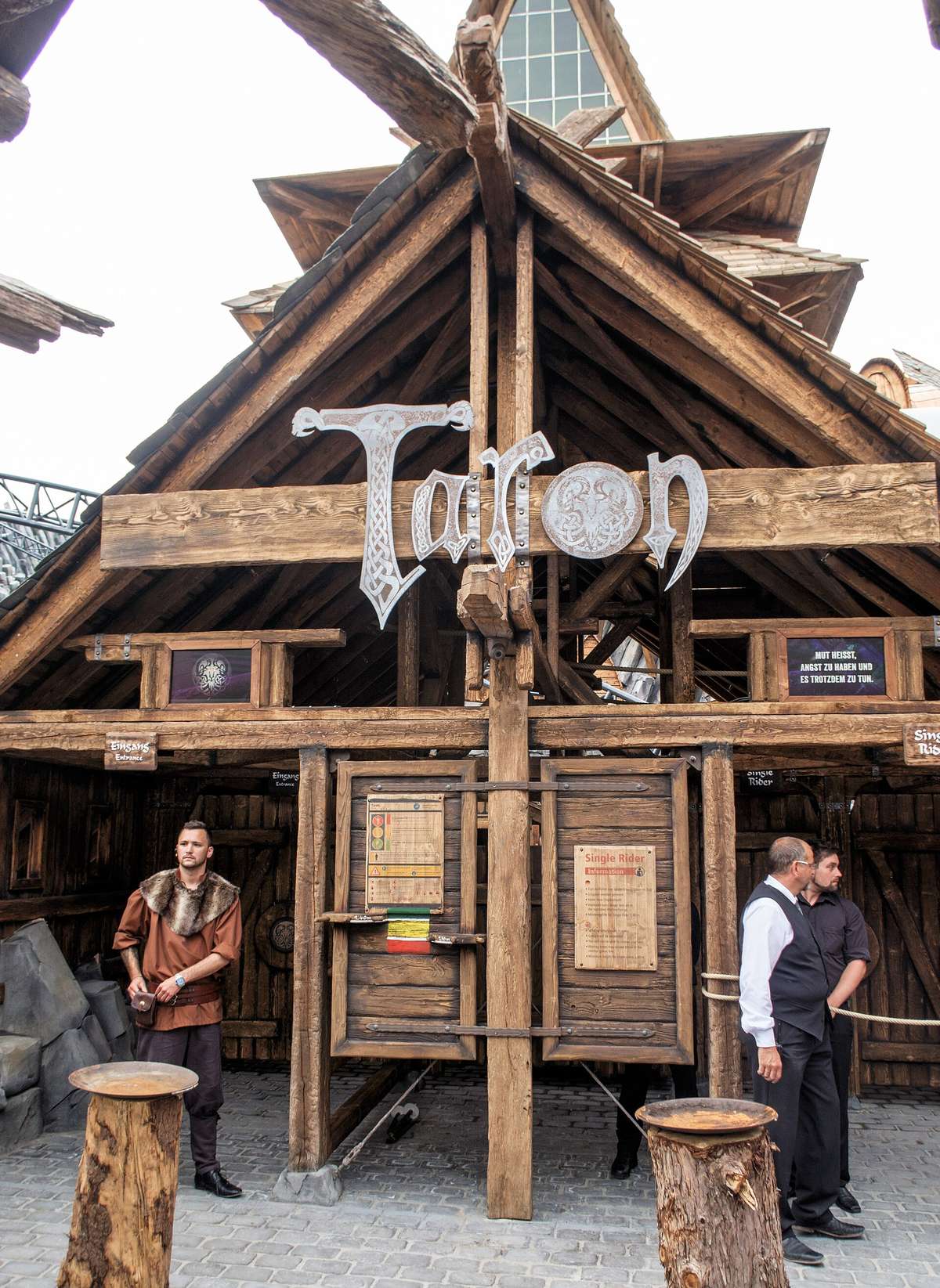
Taron is a steel multi-launch coaster built by Intamin that opened in 2016 inside Phantasialand’s Klugheim area. It stands 98 ft (30 m) tall and reaches a top speed of 73 mph (117 km/h) through two linear synchronous motor launches rather than a single lift hill. The ride’s signature moment is a launch straight into a dark tunnel built into a mountain, followed by a sweeping drop that carries riders out over the park.
The pacing is relentless even with only two launches: low-to-the-ground turns, tight terrain-hugging curves, and almost no dead time between elements. It rewards riders who want speed and precision over one big drop, and the lap-bar-only restraint makes the airtime moments feel more exposed than on coasters with over-the-shoulder harnesses. Enthusiasts in Germany consistently point to Taron first when asked for the country’s best ride, and the layout holds up on repeat rides better than almost anything else here.
2. Black Mamba — Phantasialand
Black Mamba is a steel inverted coaster built by Bolliger & Mabillard (B&M) that opened in 2006 in Phantasialand’s Deep in Africa area. It reaches a height of 85 ft (26.0 m) and a top speed of 50 mph (80 km/h) across four inversions, with riders seated below the track rather than on top of it. The defining sequence comes right off the lift hill: a vertical loop followed by a zero-g roll and the Jr. Immelmann, a non-inverting element first built on this ride before appearing elsewhere, with two corkscrews closing out the layout.
Because the trains hang from the track, every turn pulls riders’ legs outward, and the pacing barely lets up between inversions. It’s one of the more physically forceful rides in this ranking, a better fit for riders who already like loops and corkscrews than for first-timers. It still holds up against newer inverted coasters elsewhere in Europe two decades after opening, which is why it ranks this high.
3. Voltron Nevera — Europa-Park
Voltron Nevera is a steel launch coaster built by Mack Rides that opened in April 2024 in Europa-Park’s Croatia-themed area. It reaches 107 ft (32.5 m) and a top speed of 62 mph (100 km/h), with four LSM launches, one of them reversing direction, sending riders through seven inversions. Its steepest launch track sits at a 105-degree angle, past vertical, which is the detail most riders remember afterward.
The ride packs a reverse launch, a steep-angle launch, and a run of inversions into 1,385 m of track, leaving barely a moment to reset between elements. It’s more aggressive than Europa-Park’s other coasters, with real negative-G moments rather than just speed. As the newest coaster on this list, built specifically to be intense rather than scenic, it earns its spot near the top.
4. Blue Fire Megacoaster — Europa-Park
Blue Fire Megacoaster is a steel launch coaster built by Mack Rides that opened in 2009 in Europa-Park’s Iceland area. It stands 125 ft (38 m) tall and launches to a top speed of 62 mph (100 km/h) in about 2.5 seconds, including a launch segment that feels like it’s pulling backward. The ride has four inversions, among them a twisted horseshoe roll that was new to Europe when it debuted.
What stands out is the airtime after the launch — the first drop and the hills that follow produce a floating sensation rather than just speed, which is unusual for a launch coaster this size. It suits riders who like a ride that keeps surprising them rather than one with a single big moment, and it’s held its reputation for over fifteen years without a redesign.
5. F.L.Y. — Phantasialand
F.L.Y. is a steel flying launch coaster built by Vekoma that opened in 2020 in Phantasialand’s Rookburgh area. Riders lie face-down in a prone position; the ride stands 64 ft (19.5 m) tall and launches to a top speed of 49 mph (78 km/h) across two inversions over a 4,055 ft (1,236 m) track, the longest layout of its type anywhere. It was also the first flying coaster built with a launch rather than a standard lift hill.
The flying position changes how every turn feels — banks and dips translate into a falling sensation that an upright coaster doesn’t produce at the same speed. It’s less raw-intensity than the coasters ranked above it, but it’s the only ride of its kind in the country. The novelty is genuine even if the top speed is the lowest in this list’s top five.
6. Der Schwur des Kärnan (The Oath of Kärnan) — Hansa-Park
Der Schwur des Kärnan, marketed in English as The Oath of Kärnan, is a steel coaster with one inversion built by Gerstlauer that opened in 2015 at Hansa-Park. It stands 240 ft (73 m) tall, the tallest structure in this ranking, and reaches a top speed of 79 mph (127 km/h) along a 1,235 m track. Instead of a chain or a launch, the train is hauled up a vertical cable lift inside a fully enclosed tower, and partway up it is released into a brief 98 ft (30 m) backward free fall before being caught and lifted the rest of the way.
Most of the layout is built around height rather than inversions — the one inversion is a heartline roll, taken at speed in the dark near the end of the ride, more of a disorienting coda than a centerpiece — so apart from the tower moment, the ride plays out as a series of drops and turns rather than a dense run of elements. The backward free fall inside the dark tower is genuinely disorienting, which makes this a ride for people who don’t mind not seeing what’s coming next. That single element is unlike anything else on this list, even though the rest of the layout is less dense than the rides ranked above it.
7. Silver Star — Europa-Park
Silver Star is a steel hyper coaster built by Bolliger & Mabillard that opened in 2002 and stands in Europa-Park’s Monaco-themed area, which opened in 2026 between the park’s France and Germany-themed areas. It is 240 ft (73 m) tall and reaches a top speed of 79 mph (127 km/h), tied with Der Schwur des Kärnan for the fastest coaster in this ranking, climbing a conventional chain lift rather than a launch. The first drop, down 67 m (220 ft), is still one of the longest sustained drops in the country.
Because it’s a hyper coaster with no inversions, the appeal is sustained speed and airtime hills rather than looping elements, which makes it a good fit for riders who get queasy on inverted coasters but still want intensity. The later hills lose some punch compared to the first drop. It’s a very good traditional coaster rather than an unusual one — reliable, but no longer the most memorable ride at its own park.
8. Krake — Heide Park
Krake is a steel dive coaster built by Bolliger & Mabillard that opened in 2011 at Heide Park. It stands 135 ft (41 m) tall and reaches a top speed of 64 mph (103 km/h), with its defining moment being a near-vertical 87-degree drop after a pause at the top of the lift. It was the first dive coaster built in Germany.
The hold at the top before the drop is the whole point — riders sit facing straight down for a few seconds before the track releases, and that pause is more unsettling than anything later in the ride. After the drop, the layout is comparatively short and doesn’t try to top that first moment. The drop itself is genuinely one of the more intense single elements in the country, even if the rest of the ride is ordinary by comparison.
9. Expedition GeForce — Plopsaland Deutschland
Expedition GeForce is a steel mega coaster built by Intamin that opened in 2001 at what is now Plopsaland Deutschland (formerly Holiday Park) in Haßloch. It stands 174 ft (53 m) tall and reaches a top speed of 75 mph (120 km/h), climbing a cable lift hill — similar to the system used on Millennium Force — before an 82-degree first drop that was among the steepest in the world when it opened. The layout has no inversions; it relies on airtime hills instead.
The hills after the drop produce several moments of real floating airtime rather than just speed, which is why the ride has held its reputation among enthusiasts for over two decades without changes. It sits in a smaller park built mainly around younger kids’ attractions, so anyone visiting just for this coaster will find less to do around it than at the bigger parks ranked above it. The pacing on the ride itself still holds up well against coasters built twenty years later.
10. Wodan Timburcoaster — Europa-Park
Wodan Timburcoaster is a wooden coaster built by Great Coasters International (GCI) that opened in 2012 in Europa-Park’s Iceland area. It stands 131 ft (40 m) tall and reaches a top speed of 62 mph (100 km/h) along a 1,050 m track, with a layout built around sharp direction changes rather than one tall drop.
The ride’s character comes from GCI’s signature out-and-back twists, producing repeated small pops of airtime rather than one big moment — a gentler, more rhythmic kind of wooden-coaster intensity than Colossos further north. It’s well built and smooth for a woodie, but it doesn’t have a single standout element the way the coasters ranked above it do.
11. Colossos — Heide Park
Colossos – Kampf der Giganten is a wooden coaster built by Intamin that opened in 2001 at Heide Park and reopened in 2019 after a multi-year refurbishment. It stands 164 ft (50 m) tall and reaches a top speed of 68 mph (110 km/h) along a 1,344 m (4,409 ft) track, and was among the tallest and fastest wooden coasters in the world when it debuted.
The size shows: the drops are longer and the ride is rougher than the newer wooden coasters in this ranking, in the way older wood coasters of its era often are. It’s a better fit for riders who like that rawer, more physical style than for anyone wanting a smooth ride. The scale is still impressive, but the rest of the field has caught up on comfort and pacing since 2001.
12. Karacho — Tripsdrill
Karacho is a steel launch coaster built by Gerstlauer that opened in 2013 at Erlebnispark Tripsdrill. It stands 98 ft (30 m) tall and launches from 0 to 62 mph (100 km/h) in about 1.6 seconds, then runs through four inversions in a layout that’s short by this ranking’s standards.
What it lacks in length it makes up for in how hard the launch hits — the acceleration is noticeably sharper than Blue Fire’s or Taron’s, even though the top speed is lower. It’s a ride for people who want one concentrated hit of intensity rather than a long layout, and it suits Tripsdrill’s smaller, family-oriented park well. It ranks lower mainly because the ride is over quickly, not because the launch itself is weak.
13. Mammut — Tripsdrill
Mammut is a wooden coaster built with trains from Gerstlauer and track from Ingenieur-Holzbau Cordes that opened in 2008 at Erlebnispark Tripsdrill, the first wooden coaster designed and built entirely in Germany. It stands 98 ft (30 m) tall and reaches a top speed of 56 mph (90 km/h) along an 860 m track themed around a giant sawmill, with saw-blade decals on the front car.
It’s a milder wooden coaster than Colossos or Wodan, with smaller drops and gentler pacing, which makes it a reasonable first wooden coaster for someone who hasn’t ridden one before. The theming is more memorable than the forces involved, and Tripsdrill’s combined zoo-and-village setting makes it an easy add-on rather than a destination coaster by itself. It closes out this ranking as the gentlest ride on the list.
Quick Comparison
All figures match the stats cited in each entry above.
| Rank | Coaster | Park | Type | Height | Top Speed |
|---|---|---|---|---|---|
| 1 | Taron | Phantasialand | Launch coaster | 98 ft (30 m) | 73 mph (117 km/h) |
| 2 | Black Mamba | Phantasialand | Inverted coaster | 85 ft (26 m) | 50 mph (80 km/h) |
| 3 | Voltron Nevera | Europa-Park | Launch coaster | 107 ft (32.5 m) | 62 mph (100 km/h) |
| 4 | Blue Fire Megacoaster | Europa-Park | Launch coaster | 125 ft (38 m) | 62 mph (100 km/h) |
| 5 | F.L.Y. | Phantasialand | Flying launch coaster | 64 ft (19.5 m) | 49 mph (78 km/h) |
| 6 | Der Schwur des Kärnan | Hansa-Park | Coaster with vertical cable lift | 240 ft (73 m) | 79 mph (127 km/h) |
| 7 | Silver Star | Europa-Park | Hyper coaster | 240 ft (73 m) | 79 mph (127 km/h) |
| 8 | Krake | Heide Park | Dive coaster | 135 ft (41 m) | 64 mph (103 km/h) |
| 9 | Expedition GeForce | Plopsaland Deutschland | Mega coaster | 174 ft (53 m) | 75 mph (120 km/h) |
| 10 | Wodan Timburcoaster | Europa-Park | Wooden coaster | 131 ft (40 m) | 62 mph (100 km/h) |
| 11 | Colossos | Heide Park | Wooden coaster | 164 ft (50 m) | 68 mph (110 km/h) |
| 12 | Karacho | Tripsdrill | Launch coaster | 98 ft (30 m) | 62 mph (100 km/h) |
| 13 | Mammut | Tripsdrill | Wooden coaster | 98 ft (30 m) | 56 mph (90 km/h) |
Which Germany Park Should You Pick?
Serious riders should make Phantasialand the priority. It packs three of this list’s top five rides — Taron, Black Mamba, and F.L.Y. — into a park that’s smaller and easier to walk than Europa-Park, so lines move and re-rides come faster across a single day.
Families with younger kids are better off at Plopsaland Deutschland in Haßloch. Expedition GeForce is there for anyone over the height limit who wants one big coaster, but the rest of the park is built around Studio 100 characters and rides sized for small children, so there’s no pressure to ride the big one.
For a mixed group with a range of ages and risk tolerances, Europa-Park is the easiest single choice. It has four coasters on this list spanning gentle (Silver Star has no inversions) to extreme (Voltron Nevera’s seven inversions), plus enough non-coaster rides, themed areas, and the attached Rulantica water park to keep non-riders occupied for a full day.
Planning a Germany Coaster Road Trip
Most of Germany’s coaster parks cluster in the southwest, with Phantasialand as the outlier to the north. A sensible loop starts at Phantasialand in Brühl, near Cologne, continues south to Europa-Park in Rust (about 3 hours), then on to Tripsdrill near Stuttgart (about 1.5 hours further), and finishes at Plopsaland Deutschland in Haßloch (roughly 2 hours from Tripsdrill, back toward the Rhine). Heide Park and Hansa-Park sit far to the north near Hamburg and the Baltic coast, roughly 5 hours from the southwestern cluster, so they work better as a separate two-park trip, with about 2 hours between them.
These parks run a seasonal schedule, open roughly from Easter through early November, with Phantasialand’s winter event, Wintertraum, extending its own season into the Christmas and New Year period; Hansa-Park and Heide Park close completely over winter. July and August line up with German school summer holidays and are the most crowded weeks everywhere, while late May, June, and September give shorter lines with reliably warm weather for the outdoor launch and wooden coasters. A practical tip for 2026: booking park tickets online in advance is consistently cheaper than buying at the gate at every park on this list, so buy before you go rather than planning to pay at the entrance.
Explore more: Roller Coasters guide.
Park apps, mobile ordering and photos kill a battery by 3 p.m. This one snaps on magnetically, so there's no cable to snag on a restraint.
Ride with your glasses on and keep them. Many parks allow glasses on rides if they're strapped, so check the ride rules first.
Small enough to ride with on most coasters, big enough for a phone, card and keys. Two zippers mean nothing falls out upside down.
Best Roller Coasters in Germany FAQs
What is the best roller coaster in Germany?
Taron at Phantasialand is the best roller coaster in Germany. It’s a multi-launch coaster that strings together two LSM launches with almost no downtime between elements, and it remains the ride enthusiasts cite most often when asked for Germany’s best, a decade after it opened in 2016.
What is the tallest roller coaster in Germany?
Silver Star at Europa-Park and Der Schwur des Kärnan (The Oath of Kärnan) at Hansa-Park are tied as the tallest roller coasters on this list, both standing 240 ft (73 m).
Which park in Germany has the most roller coasters?
Europa-Park in Rust has the deepest roller coaster lineup of any single park in this ranking, with four coasters making the list — a launch coaster with seven inversions, a launch megacoaster, a wooden coaster, and a non-inverting hyper coaster. Phantasialand packs comparably intense rides into a smaller footprint, but Europa-Park’s overall lineup, spread across its larger grounds, is harder to match.
When is the best time to visit Germany theme parks?
Late May through June, or September, are the best months to visit Germany’s theme parks. Crowds are lighter than during the July-August school holidays, the weather is usually warm enough for the outdoor launch and wooden coasters to run at full capacity, and lines move faster across the board.
Get More from Best Roller Coasters in Germany
Log the coasters, stadiums, and venues you’ve experienced, rate Best Roller Coasters in Germany, and see what your friends thought. Get the ThrillZing app.
Want the day’s theme park news in your inbox? Subscribe to ThrillZing Daily — free.
Photo: Stefan Scheer / CC BY-SA 4.0, via Wikimedia Commons.