
The Primorsky Oceanarium sits on Russky Island off Vladivostok, at Russia’s far southeastern edge, where the country meets the Sea of Japan. Officially opened on September 3, 2016 — with President Vladimir Putin cutting the ribbon — and welcoming its first visitors three days later, it holds nearly 25 million litres of water, making it one of the two largest aquariums in Russia and among the biggest anywhere on Earth.
It ranks ninth on the list of the largest aquariums in the world, in a statistical dead heat with Moscow’s Moskvarium — and unlike most mega-aquariums, it doubles as a working research institute of the Russian Academy of Sciences.
Key Stats
| Total water volume | Nearly 25 million litres (25,000 m³) |
| Opened | September 3, 2016 (first visitors September 6) |
| Location | Russky Island, Vladivostok, Russia |
| Species | 135 aquariums housing around 500 species of fish and marine mammals |
| Signature exhibit | Main tank with a 70-metre underwater tunnel |
A Seashell on Russky Island
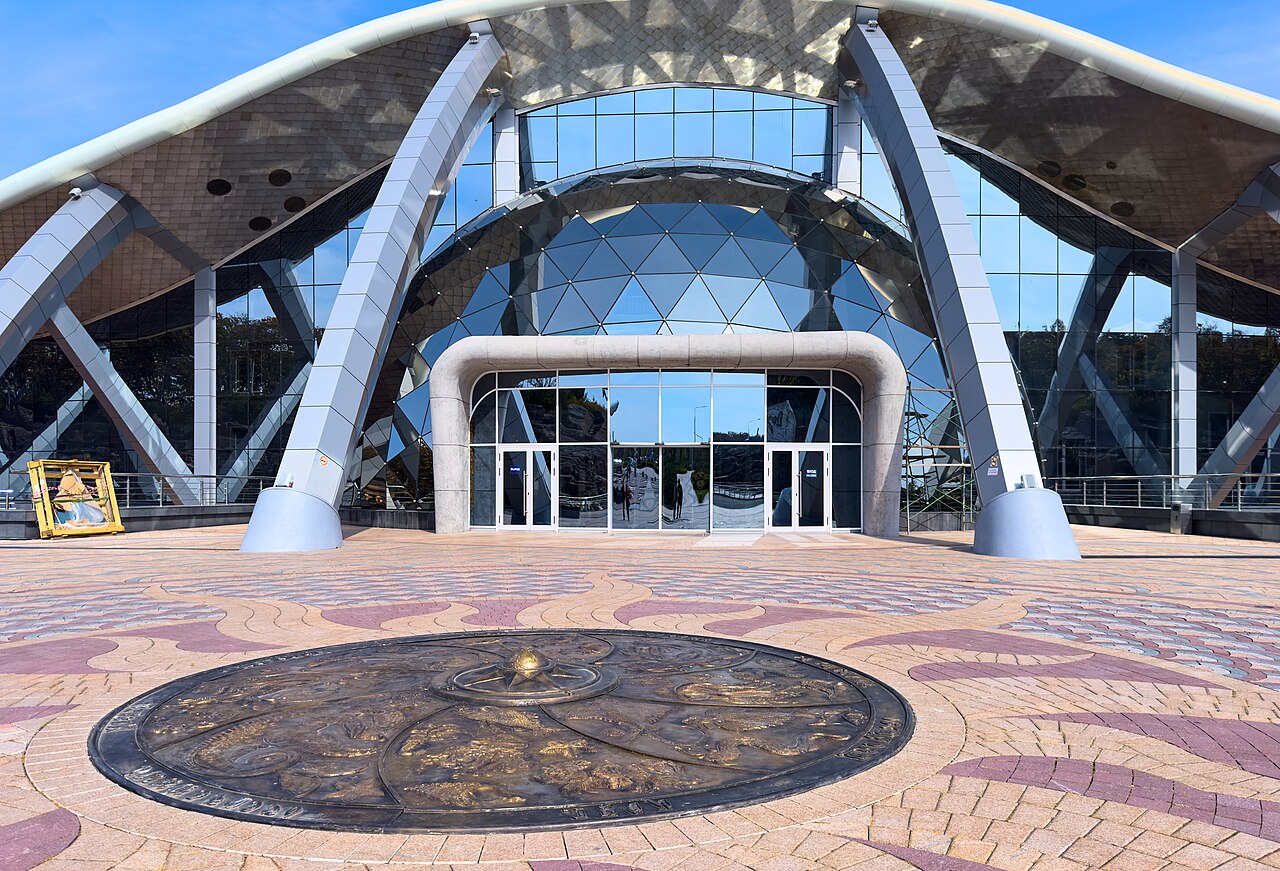
The main building is designed to resemble a giant white clamshell rising out of blue sea waves, spread across 37,000 square metres of exhibition halls and scientific laboratories on the Zhitkov Peninsula. The left wing houses the main tank with its 70-metre underwater tunnel — one of the longest in Russia — while the eastern wing holds a dolphinarium with an arena and grandstands for marine-mammal presentations. The complex is so remote-ready that it runs on its own mini power station.
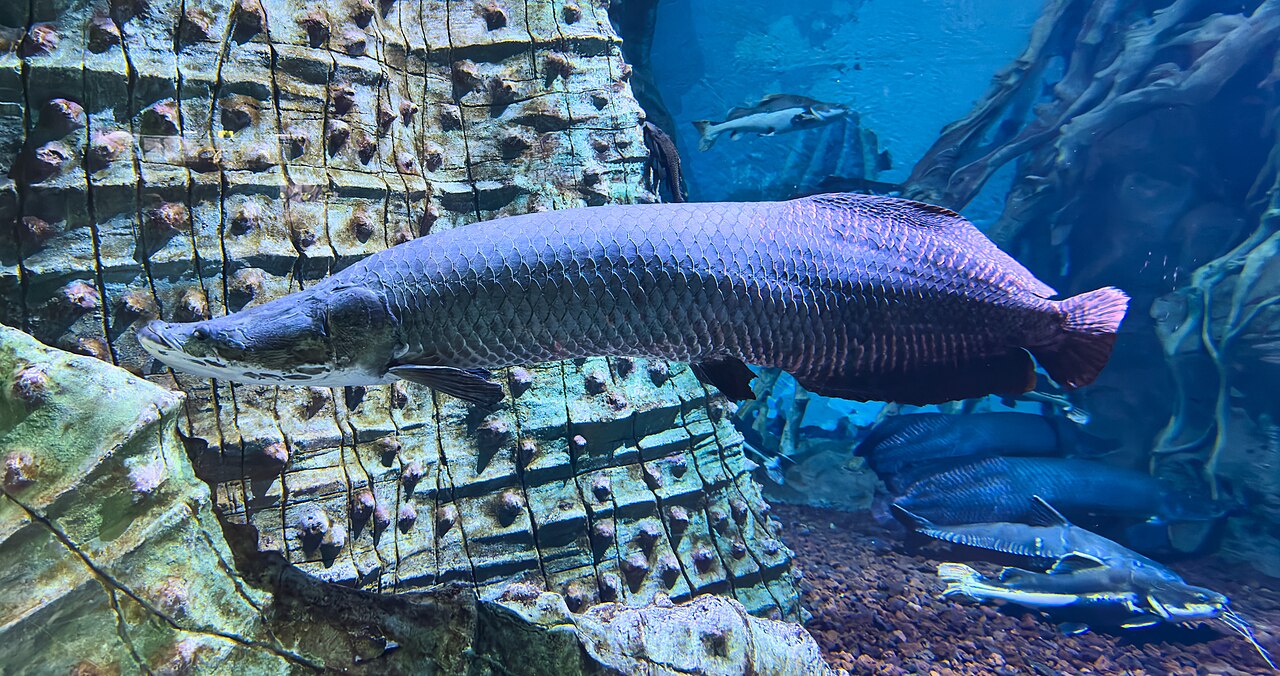
Inside, 135 aquariums trace the waters of the world with an emphasis on the Russian Far East: many of the first residents — belugas, bottlenose dolphins, walruses, fur seals, Steller sea lions, and Baikal seals — were collected in Peter the Great Gulf, right outside the windows.
The Long Road to Opening Day
Few aquariums have had a more drawn-out birth. First promised for the APEC summit that Vladivostok hosted in 2012, the project slipped year after year — 2013, 2014, 2015, even a countdown clock on the construction site — before animals finally moved in during spring 2016 and the doors opened that September. The wait didn’t dent demand: about a million visitors from more than thirty countries came through in the first two years.
Science on the Pacific
The oceanarium operates as a branch of the A.V. Zhirmunsky National Scientific Center of Marine Biology, part of the Far Eastern Branch of the Russian Academy of Sciences, and its breeding record shows it. In 2019 it recorded the world’s first spotted seal (larga) conceived, carried, and raised in human care; 2020 brought first-time offspring from zebra sharks, giant Pacific octopuses, and cuttlefish.
Easier on your back than carrying in arms all day at the zoo.
Cheap insurance for splash zones, water rides and surprise showers.
Rubber-armored for small hands, so kids can find the snow leopard before the adults do.
FAQ
Is the Primorsky Oceanarium the largest aquarium in Russia?
It shares the title with Moscow’s Moskvarium — both hold about 25 million litres, placing them eighth and ninth among the world’s largest aquariums.
When did the Primorsky Oceanarium open?
It was officially opened by Vladimir Putin on September 3, 2016, and received its first visitors on September 6, 2016, after years of construction delays.
What is the Primorsky Oceanarium famous for?
Its clamshell-shaped building on Russky Island, a 70-metre underwater tunnel, and its role as a Russian Academy of Sciences research center with world-first breeding successes.
Get More from the Primorsky Oceanarium
Log the parks, coasters, and aquariums you’ve experienced, rate the Primorsky Oceanarium, and see what your friends thought. Get the ThrillZing app.
Photo: I13Robin / CC BY 4.0, via Wikimedia Commons.