
The Port of Nagoya Public Aquarium opened in 1992 on the waterfront of Japan’s busiest port, in Minato Ward, Nagoya. Three decades on, it is the largest aquarium in Japan by both total tank capacity and floor area — roughly 27 million litres of water — and the only place in the country where you can watch orcas glide past an underwater viewing wall.
That volume puts it seventh on the list of the largest aquariums in the world, and first in Japan, ahead of the more famous Osaka Kaiyukan and Okinawa Churaumi. Around 99% of the seawater in its tanks is pumped straight from the sea at the Port of Nagoya.
Key Stats
| Total water volume | About 27 million litres — the largest in Japan |
| Opened | 1992 (North Building added 2001) |
| Location | Minato Ward, Nagoya, Aichi Prefecture, Japan |
| Annual visitors | Over 2 million (about 55 million total by 2021) |
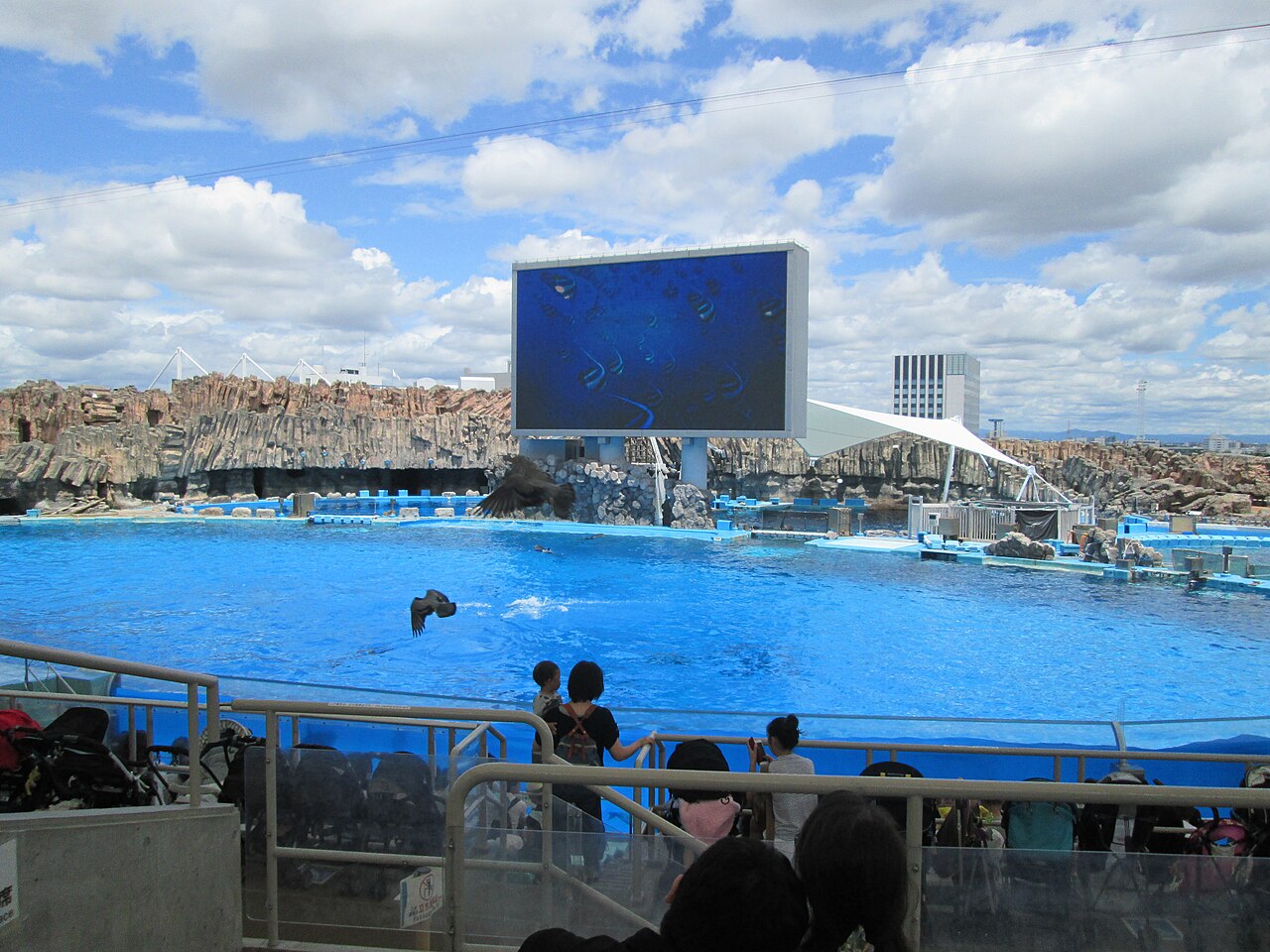
| Signature tank | Main show pool — about 13.5 million litres, 60 m wide and 12 m deep, the world’s largest dolphin show tank when it opened |
From Japan to Antarctica
The aquarium’s original South Building is themed as a “Journey from Japan to Antarctica,” tracing the route of the Antarctic research ship Fuji — permanently moored nearby in the port — through five bodies of water: the Sea of Japan, the Japanese deep sea, the equatorial sea, Australian waters, and the Antarctic Ocean. Exhibits run from a huge Kuroshio Current sardine tank to sea turtles, penguins, and a deep-sea gallery.
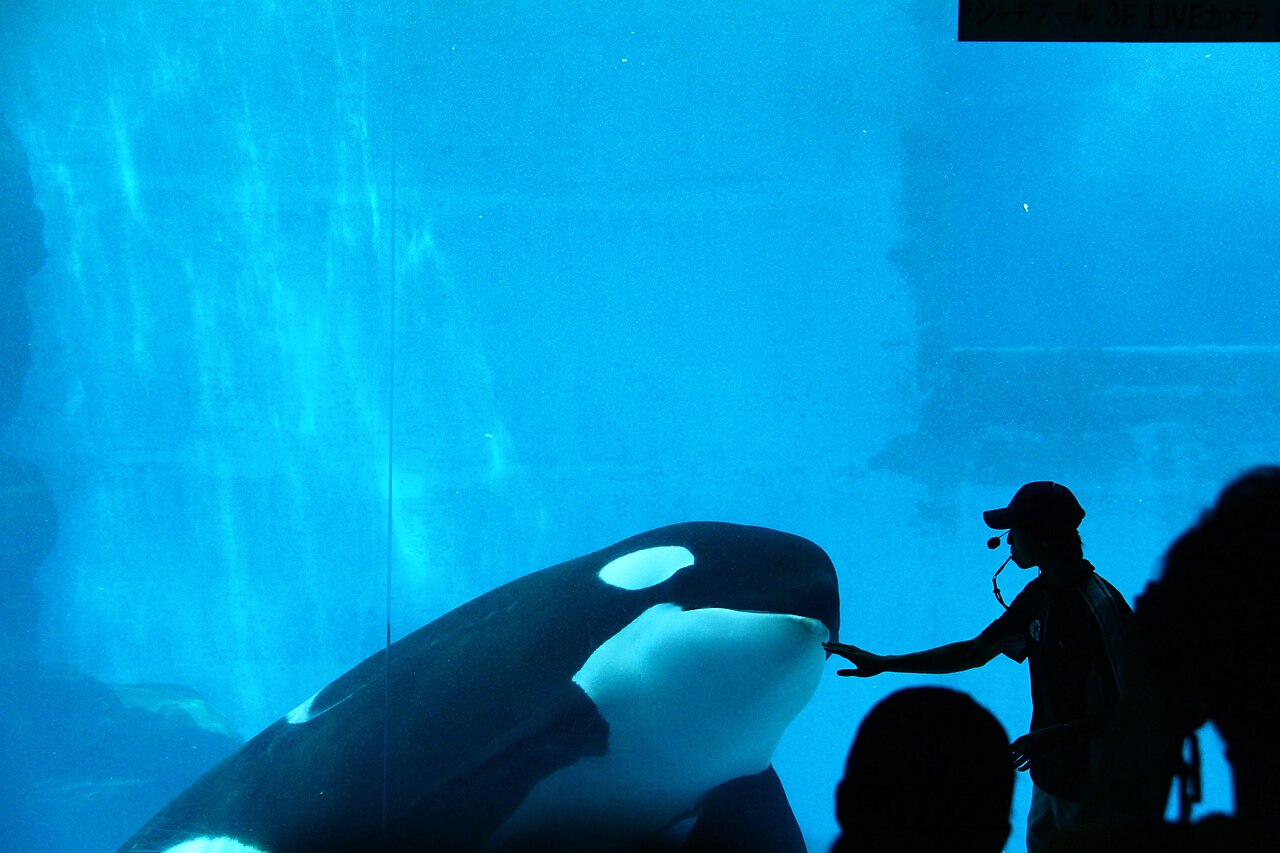
In 2001 the aquarium added the North Building, themed “A 3.5-Billion-Year Journey,” which follows the evolutionary story of animals that returned to the sea. Its centrepiece is the enormous outdoor main pool — about 13.5 million litres, 60 metres wide and 12 metres deep — with underwater bleachers where visitors watch dolphins, belugas, and orcas from below. The second floor houses Japan’s largest collection of whale fossils and skeletal specimens.
Orcas, Belugas, and Breeding Firsts
Orcas have lived here since 2003, and on November 13, 2012, the aquarium celebrated its first orca birth when Stella delivered a calf named Lynn. Today Lynn and Earth — the largest living orca in captivity in Japan — represent the country’s only killer whales on public view alongside Kobe’s Suma facility, where matriarch Stella now lives. The aquarium also recorded Japan’s first captive beluga whale birth in 2004.
Behind the scenes it is one of Japan’s most decorated breeding institutions, with multiple awards from the Japanese Association of Zoos and Aquariums for successes spanning emperor and Adélie penguins, loggerhead sea turtles — bred here across two generations and tracked with NOAA by satellite — and Antarctic species few facilities can keep.
Visiting the Aquarium
The aquarium anchors Nagoya’s Garden Pier waterfront district, steps from Nagoyako Station on the subway’s Meiko Line, and shares the harbor with the icebreaker Fuji museum ship and an observation tower. Plan around the daily schedule in the main pool stadium — the dolphin performances in the world-class show tank are the signature experience, with underwater viewing before and after.
Rubber-armored for small hands, so kids can find the snow leopard before the adults do.
A field guide that keeps the animal spotting going on the drive home and at home.
Zoo days are long and the shade isn't always where the animals are.
FAQ
Is the Port of Nagoya Public Aquarium the largest aquarium in Japan?
Yes — with about 27 million litres of total tank capacity, it is Japan’s largest aquarium and ranks seventh on our world’s largest aquariums list.
Does the Port of Nagoya Public Aquarium have orcas?
Yes. It is home to orcas Lynn — born at the aquarium in 2012 — and Earth, and features Japan’s largest dolphin and orca show pool with underwater viewing.
When did the Port of Nagoya Public Aquarium open?
It opened in 1992; the North Building with the giant show pool followed in 2001.
Get More from the Port of Nagoya Public Aquarium
Log the parks, coasters, and aquariums you’ve experienced, rate the Port of Nagoya Public Aquarium, and see what your friends thought. Get the ThrillZing app.
Photo: Tomio344456 / CC BY-SA 4.0, via Wikimedia Commons.