
When Osaka Aquarium Kaiyukan opened on the Tempozan waterfront in 1990, it was the largest public aquarium on the planet. More than three decades later, the building with the fish-mosaic facade is still one of Japan’s defining aquariums — a vertical journey that starts in a rooftop forest and spirals eight floors down around a single colossal tank holding whale sharks.
Kaiyukan means “playing in the sea pavilion,” and the name was chosen by the general public before opening. The public responded in kind: the aquarium logged 5.6 million visitors in its first year — the fastest attendance record in Japan at the time — and passed 50 million total visitors by 2008.
Key Stats
| Total water volume | 10,941 tons (~10.9 million liters) across 27 tanks |
| Opened | 1990 |
| Location | Tempozan, Minato ward, Osaka, Japan |
| Signature tank | Pacific Ocean tank — 5,400 m³, 9 m deep, 34 m long |
| Exhibits | 16 main exhibits themed on the Pacific Ring of Fire |
| Star animals | Whale sharks, reef manta rays, ocean sunfish |
A Journey Around the Ring of Fire
Kaiyukan’s layout is a geography lesson disguised as a building. Visitors ride an escalator to the eighth floor, pass through the Aqua Gate tunnel tank, and enter the Japan Forest — a recreated mountain woodland with otters and giant salamanders. From there the path spirals downward through habitats ringing the Pacific: the Aleutian Islands, Monterey Bay, the Gulf of Panama, an Ecuadorian rainforest, Antarctica, the Tasman Sea, and the Great Barrier Reef, all the way to the Japan Deeps with its giant spider crabs and a hypnotic jellyfish gallery.
Because every floor circles the same central tank, you see its inhabitants again and again from different depths — surface-skimming mackerel at the top, cruising hammerheads in the middle, and rays gliding over the bottom near the end of the route.
The Pacific Ocean Tank
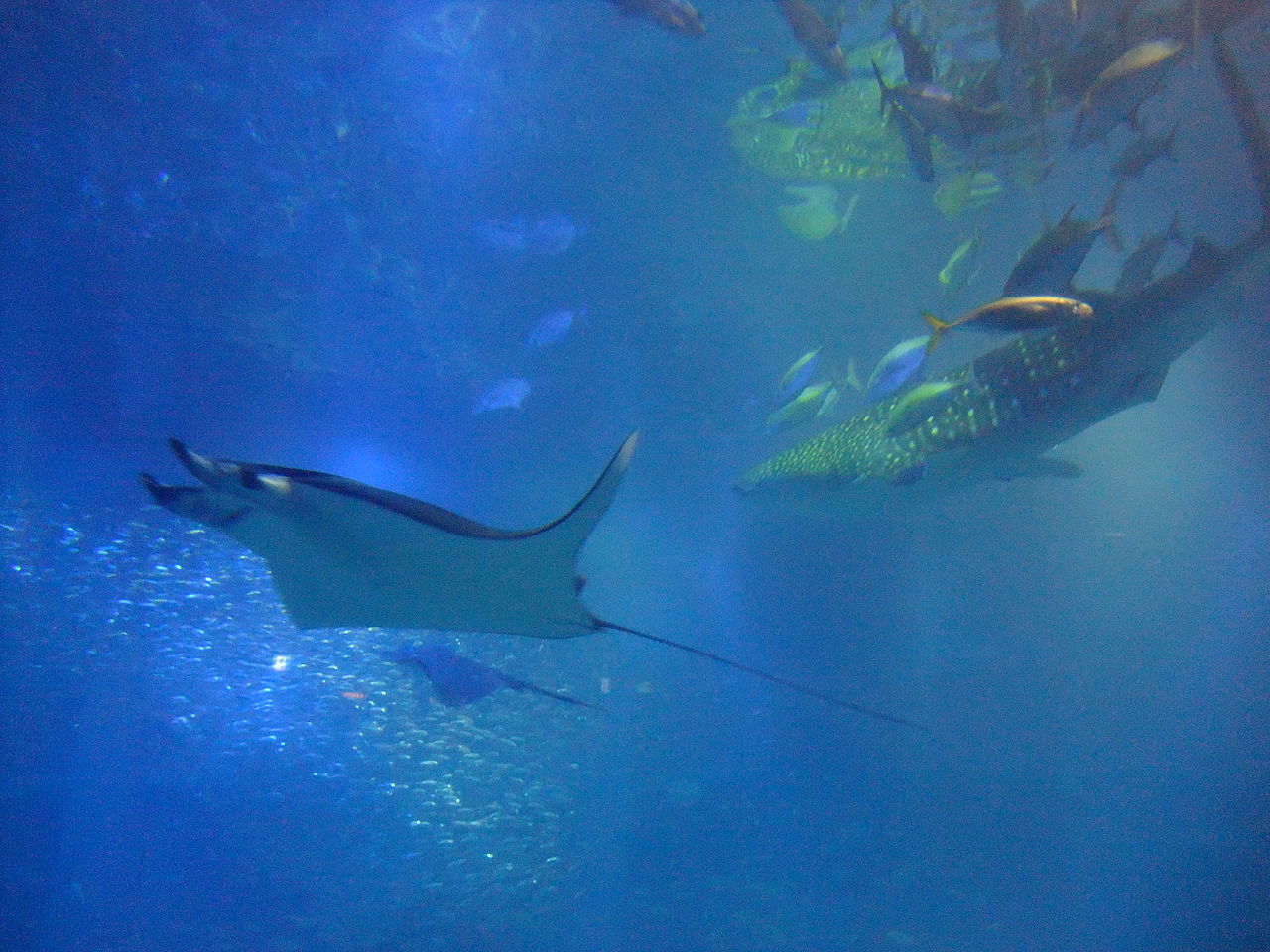
The heart of the aquarium is the Pacific Ocean tank: 34 meters across at its widest, 9 meters deep, and holding 5,400 cubic meters of water. Whale sharks share it with reef manta rays, scalloped hammerhead sharks, and schooling Pacific bluefin tuna. Kaiyukan was only the second aquarium in the world — after Okinawa’s Ocean Expo Aquarium — to keep whale sharks at all.
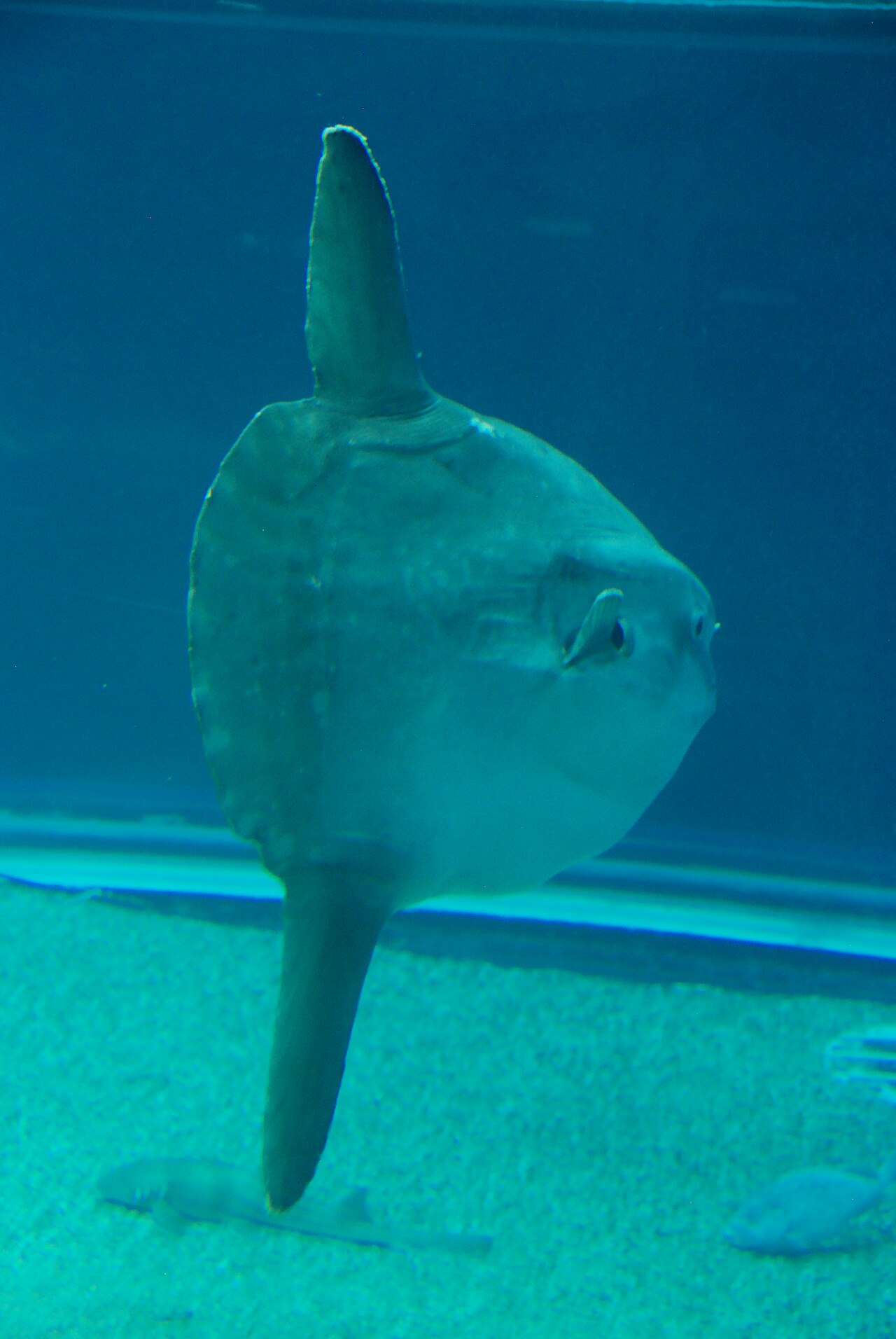
Surprisingly, the whale sharks are not always the headliners. Kaiyukan’s ocean sunfish, one of the few kept anywhere, is reported to be an even more popular exhibit thanks to its comically enormous, dinner-plate-on-end silhouette.
Records and Research
The engineering behind the viewing windows was record-setting in its own right: the tanks use 314 tons of acrylic glass, and the largest single pane measures six meters by five meters, thirty centimeters thick, weighing roughly 10 tons. At those thicknesses, ordinary glass would be neither strong enough nor clear enough.
Kaiyukan is also a serious research institution. It successfully kept a manta ray in 1994 (the second aquarium in the world to do so), and by 2016 its team had kept or bred 85 species of sharks and rays. In 2022 it recorded the world’s first pregnancy of a giant devil ray in captivity. Long superseded in size — it now sits around 20th among the largest aquariums in the world — Kaiyukan remains one of the most influential aquariums ever built.
Rubber-armored for small hands, so kids can find the snow leopard before the adults do.
A field guide that keeps the animal spotting going on the drive home and at home.
Zoo days are long and the shade isn't always where the animals are.
FAQ
How big is Osaka Aquarium Kaiyukan?
The aquarium holds about 10,941 tons of water across 27 tanks in 16 main exhibits. Its largest tank, the Pacific Ocean tank, contains 5,400 cubic meters of water and is 9 meters deep. It was the world’s largest aquarium when it opened in 1990.
Does Kaiyukan still have whale sharks?
Yes. Whale sharks remain the residents of the central Pacific Ocean tank, alongside manta rays, hammerhead sharks, and bluefin tuna. Kaiyukan was the second aquarium in the world to keep the species.
Where is Kaiyukan located?
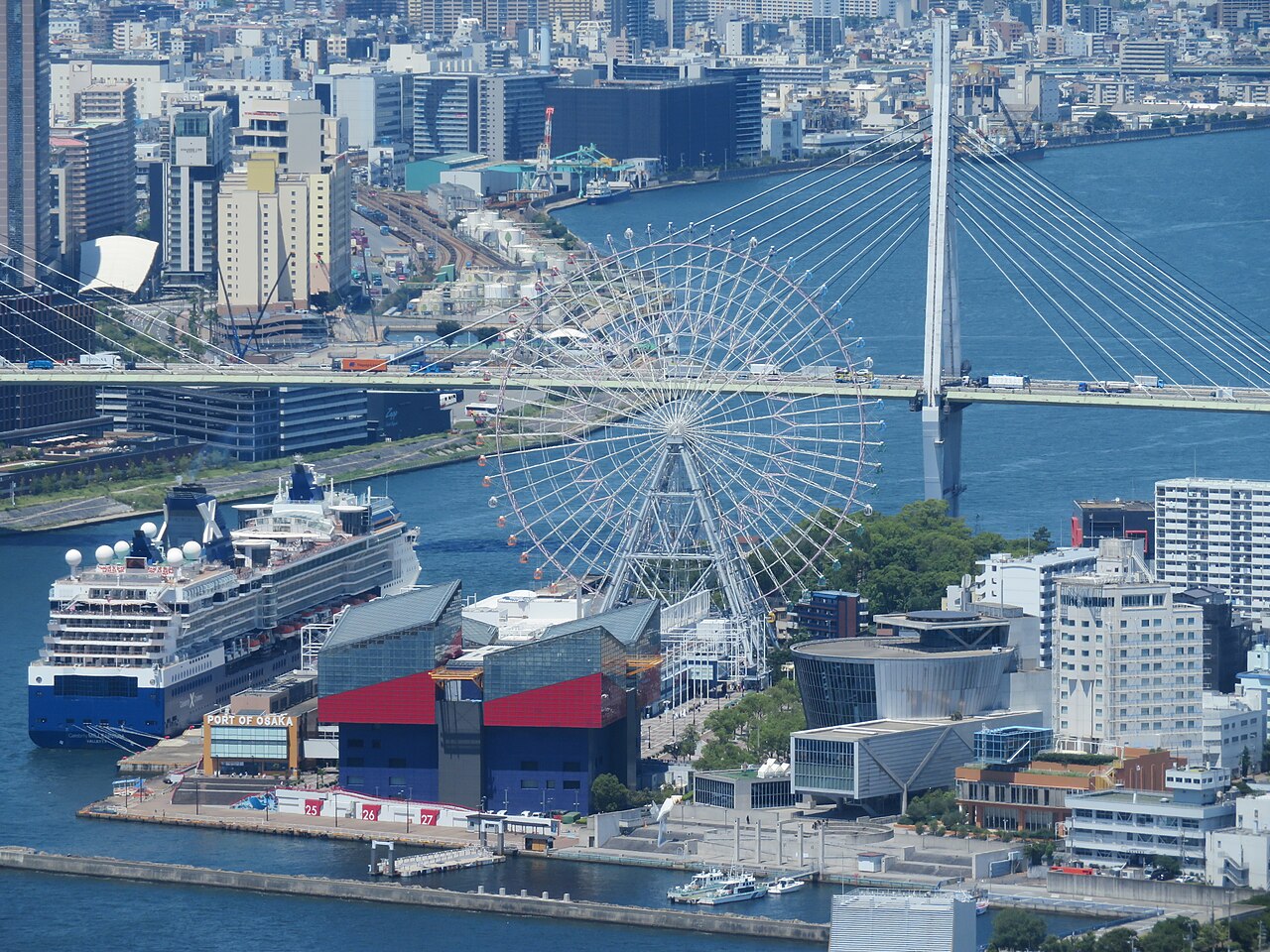
Kaiyukan sits in the Tempozan Harbor Village area of Osaka’s Minato ward, next to the Tempozan Ferris Wheel and about five minutes on foot from Osakako Station on the Chuo subway line.
Photo: 663highland via Wikimedia Commons (CC BY 2.5)