
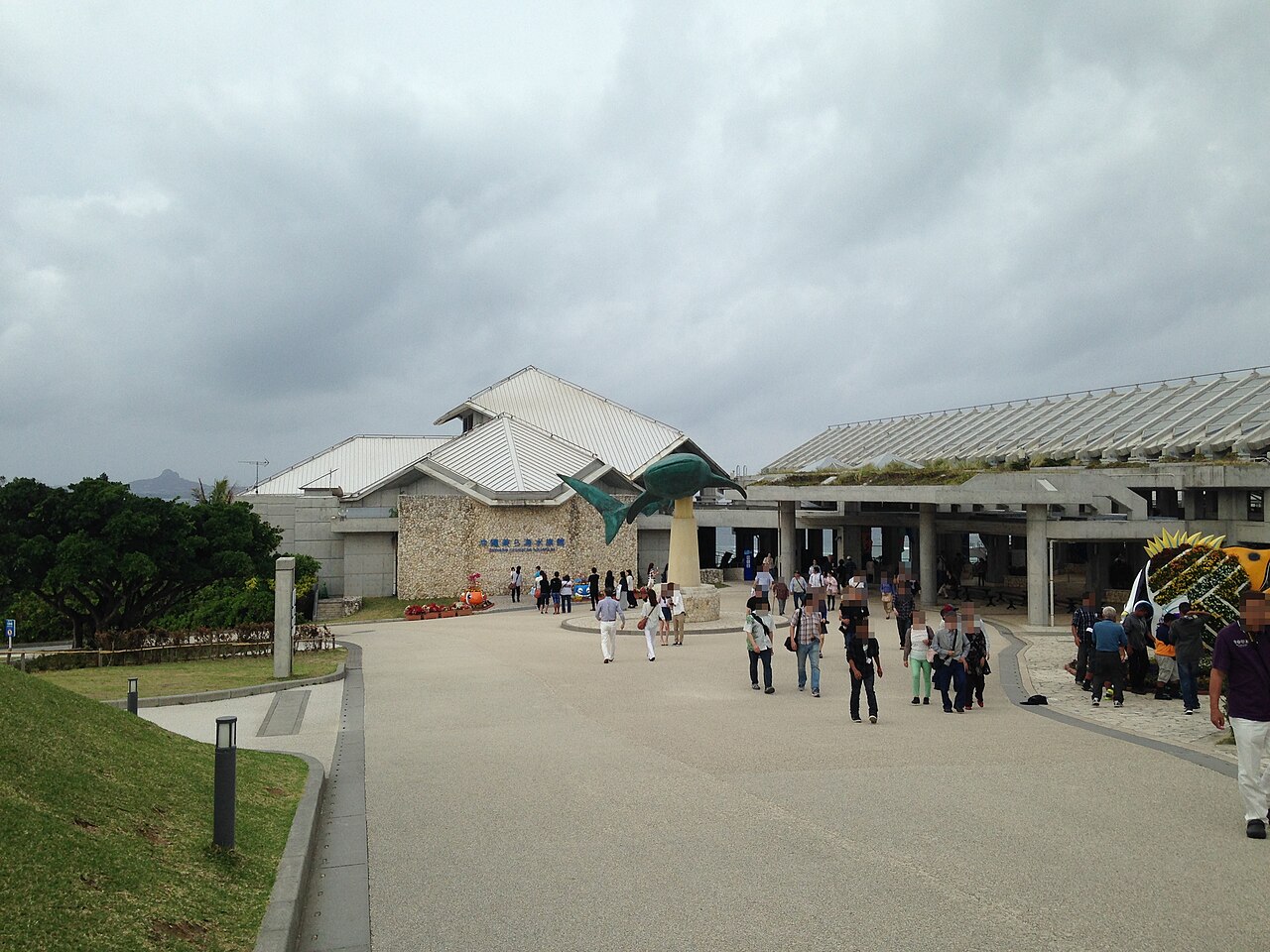
On a headland in Ocean Expo Park on Okinawa’s Motobu Peninsula stands the aquarium that taught the world how to keep whale sharks. Okinawa Churaumi Aquarium — chura means “beautiful” in the Okinawan language, umi means “sea” — opened in 2002 as the successor to the pioneering Ocean Expo Aquarium, and its Kuroshio Sea tank was the largest aquarium tank on Earth until the Georgia Aquarium arrived in 2005.
The whole facility is engineered around authenticity: seawater is pumped in around the clock from a source 350 meters offshore, sunlight pours directly onto a living coral tank with no roof, and the star residents are the giants of the actual Kuroshio Current flowing past Okinawa.
Key Stats
| Total water volume | ~10,000 m³ (10 million liters) across 77 tanks |
| Opened | November 1, 2002 (site’s first aquarium opened 1976) |
| Location | Ocean Expo Park, Motobu, Okinawa, Japan |
| Signature tank | Kuroshio Sea — 7.5 million liters; 35 m × 27 m, 10 m deep |
| Viewing panel | 8.2 m × 22.5 m acrylic, 60 cm thick — world’s largest at opening |
| Star animals | Whale sharks, manta rays |
From Expo ’75 to Churaumi
The story begins with Expo ’75, the ocean-themed world’s fair held on this exact site. The Okinawa Ocean Expo Aquarium that followed in 1976 held what was then the world’s largest tank at 1.1 million liters, and in 1980 it became the first aquarium anywhere to attempt keeping whale sharks. By 2002 the aging facility was replaced by the current building, its new name chosen by national public vote.
That head start in big-animal husbandry still shows. The record for a whale shark in captivity belongs to Churaumi: one individual has lived here for more than 29 years, carried over from the old aquarium to the new one.
The Kuroshio Sea
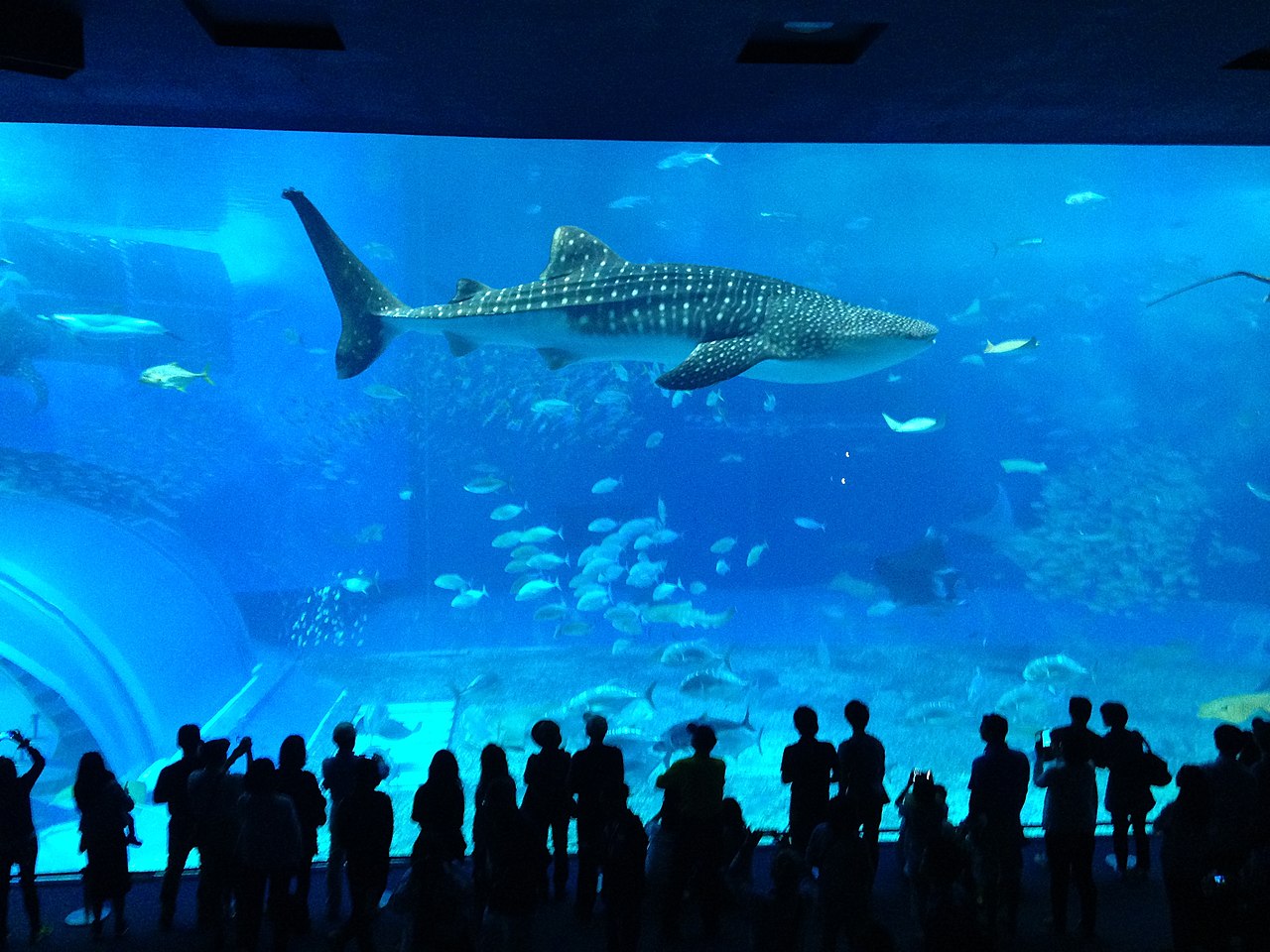
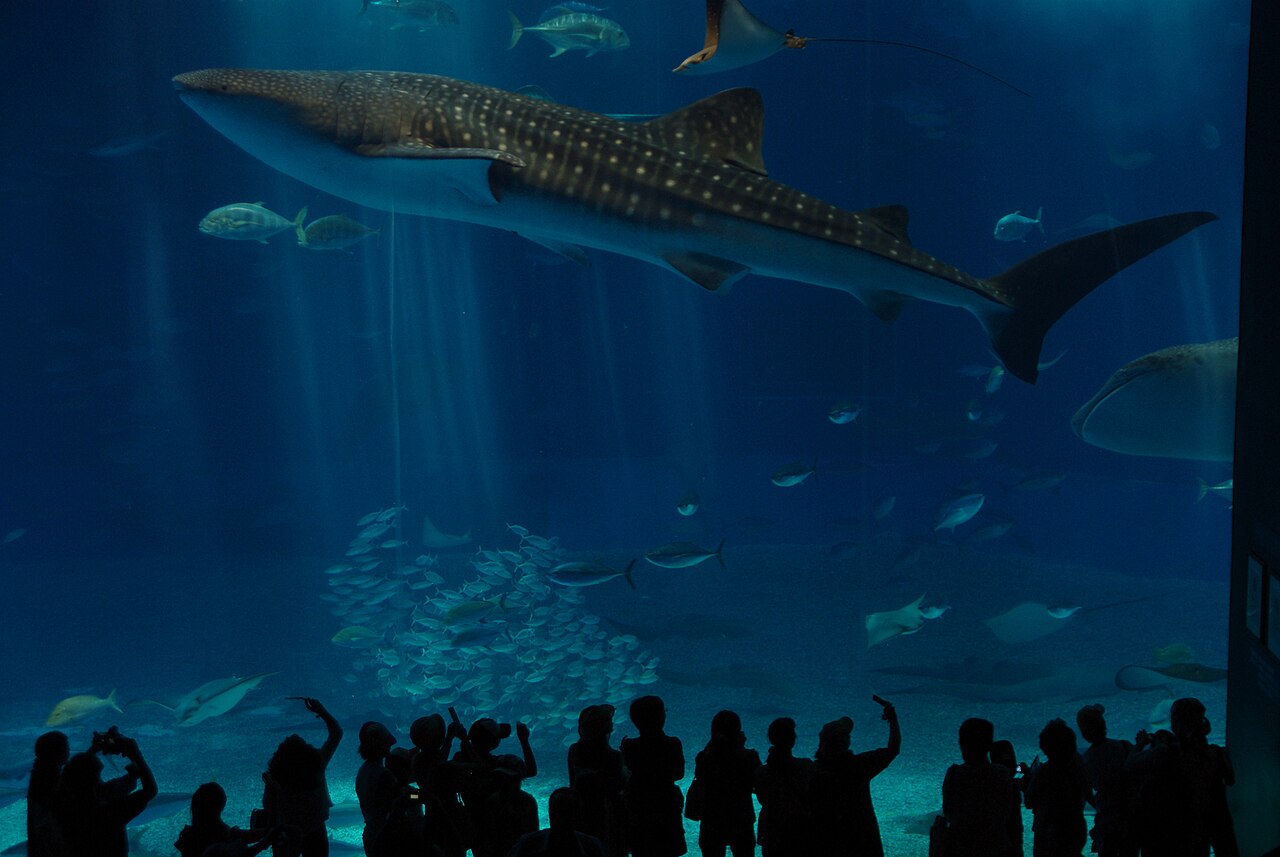
The main tank is a room-sized piece of ocean: 35 meters long, 27 meters wide, and 10 meters deep, holding 7.5 million liters. Its great acrylic window — 8.2 meters tall, 22.5 meters wide, and 60 centimeters thick — was the largest such panel in the world when the aquarium opened, and standing before it as whale sharks pass overhead remains one of the great aquarium moments anywhere. Churaumi ranks around 21st among the largest aquariums in the world by total volume, but few facilities anywhere concentrate so much of their water in a single, overwhelming exhibit.
Breeding Firsts
Churaumi’s scientific résumé is arguably unmatched among aquariums. The world’s first manta ray born in captivity arrived here in 2007, and in August 2024 a female all-black manta gave birth — the first recorded birth of a melanistic manta anywhere. The aquarium keeps four mobula species, breeds corals at scale (450 colonies of about 80 species in its open-air Coral Sea tank), and has described multiple new deep-sea species collected from waters around Okinawa, from squat lobsters to a starfish named Churaumiastra hoshi.
Its long-term goal is grander still: breeding whale sharks in captivity, something no aquarium has ever achieved. Researchers monitor hormone levels and behavior in hopes of a world first.
A stick means no greasy hands. Reapply quickly between the penguins and the giraffes.
Let them photograph their own favorite animals — and keep your phone in your pocket.
Hauls kids, coolers and souvenirs across a big zoo or park, folds flat for the trunk.
FAQ
What is the main tank at Okinawa Churaumi Aquarium?
The Kuroshio Sea tank holds 7.5 million liters of water and measures 35 by 27 meters with a depth of 10 meters. It was the largest aquarium tank in the world from 2002 until the Georgia Aquarium opened in 2005.
How many whale sharks does Churaumi have?
Whale sharks remain the aquarium’s centerpiece, with individuals kept both on display and in reserve tanks for a long-running breeding program. One male has lived at the aquarium for more than 29 years — the captivity record for the species.
Where is the aquarium?
Okinawa Churaumi Aquarium is inside Ocean Expo Park in Motobu, on the northwest coast of Okinawa’s main island, roughly two hours by car from Naha.
Photo: Derek Mawhinney via Wikimedia Commons (CC BY-SA 2.5)