
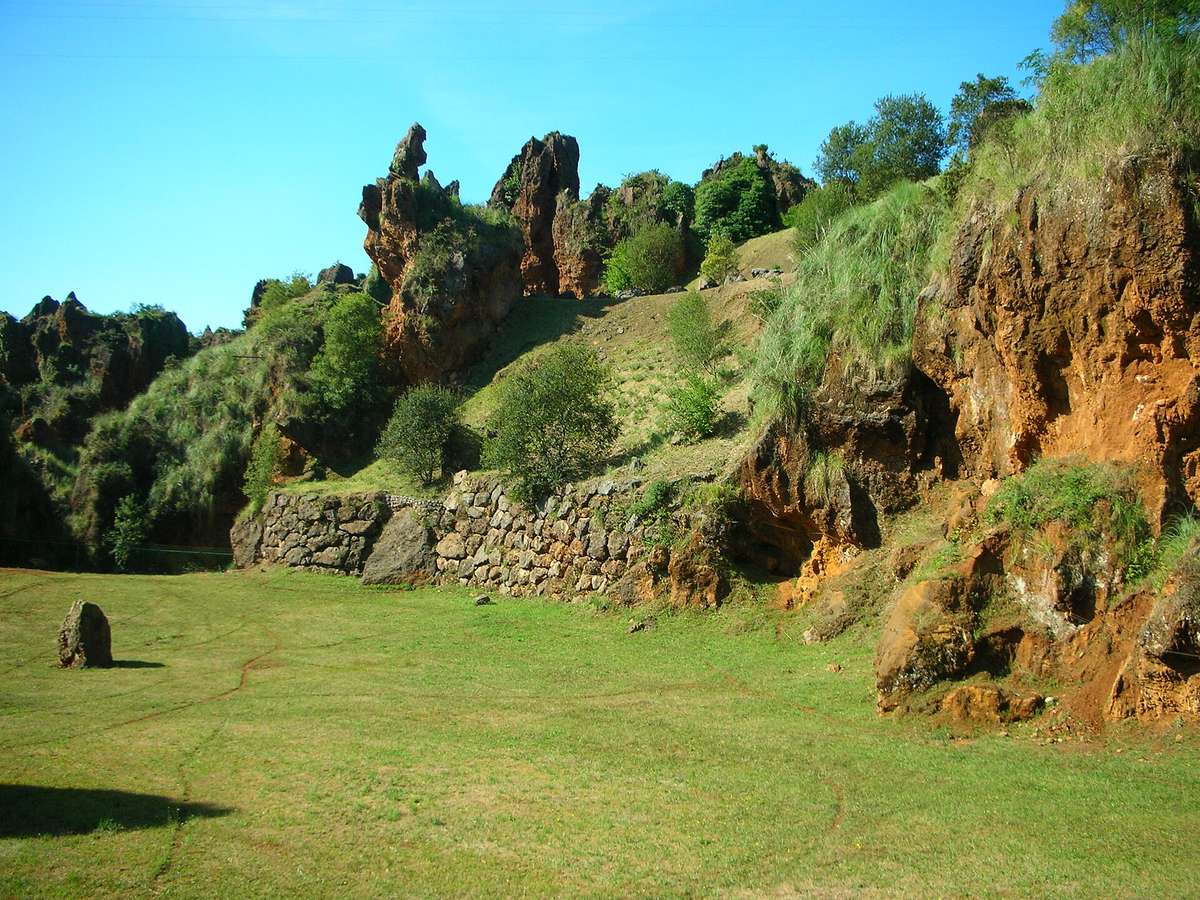
Cabárceno Natural Park sits in the town of Penagos, about 11 miles south of Santander in the Cantabria region of northern Spain. The park occupies roughly 750 hectares of dramatic karstic terrain, with animals living in large open-air enclosures carved into the landscape rather than traditional cages.
What makes Cabárceno unusual is its origin story: the land was an open-pit iron mine worked for centuries before closing in 1989. Rather than abandon the exhausted quarry, Cantabria’s regional government replanted it and opened it as a nature park in 1990, turning old mining pits into naturalistic habitats for elephants, rhinos, lions, and more.
Stats at a Glance
- Location: Penagos, Cantabria, Spain
- Opened: 1990
- Size: About 750 hectares (1,900 acres)
- Species: About 100 animal species
- Annual Visitors: About 600,000
- Famous for: Wildlife park built in a former open-pit iron mine
From Iron Mine to Wildlife Park
The ground beneath Cabárceno was mined for iron ore for roughly 2,000 years, with large-scale open-pit extraction continuing into the 20th century. When mining operations ceased in 1989 after the mineral deposits were exhausted, the Cantabrian government chose to rehabilitate the scarred landscape rather than leave it derelict.
Extensive replanting of native trees and shrubs transformed the quarry’s dramatic limestone cliffs and craters into a setting well suited for naturalistic animal habitats. The park opened the following year, repurposing the mine’s rugged topography as a backdrop for enclosures far larger than those found in conventional zoos.
Open-Air Enclosures and Wildlife
Cabárceno is organized around large, open enclosures where animals have room to roam across the park’s hilly, rocky terrain. Species on site have included African elephants, giraffes, lions, tigers, rhinoceroses, bears, and zebras, among others, with the park emphasizing conservation of endangered species alongside environmental education.
Visitors typically explore the park by car, bus, or cable car given its size, passing between habitats that follow the natural contours of the former mine. The scale of the site, combined with its unusual mining history, has made it one of the most-visited attractions in Cantabria.
Explore more: More Zoos & Aquariums.
Clips to a stroller, wagon or backpack strap. Quiet enough that it won't wake a napping toddler.
Cold water for the whole loop around the zoo, with a straw lid that doesn't leak in the bag.
A stick means no greasy hands. Reapply quickly between the penguins and the giraffes.


Cabárceno Natural Park FAQs
Where is Cabárceno Natural Park located?
It is located in the town of Penagos, Cantabria, in northern Spain, about 11 miles south of the city of Santander.
Why was Cabárceno built on a former mine?
The site had been worked as an open-pit iron mine for centuries. When mining ended in 1989, the regional government replanted the exhausted quarry and converted its cliffs and craters into a wildlife park, which opened in 1990.
How big is Cabárceno Natural Park?
The park covers about 750 hectares (roughly 1,900 acres) of karstic terrain, making its enclosures considerably larger than those at a typical zoo.
Get More from Cabárceno Natural Park
Log the coasters, stadiums, and venues you’ve experienced, rate Cabárceno Natural Park, and see what your friends thought. Get the ThrillZing app.
Photo: Samu / CC BY 2.0, via Wikimedia Commons.