
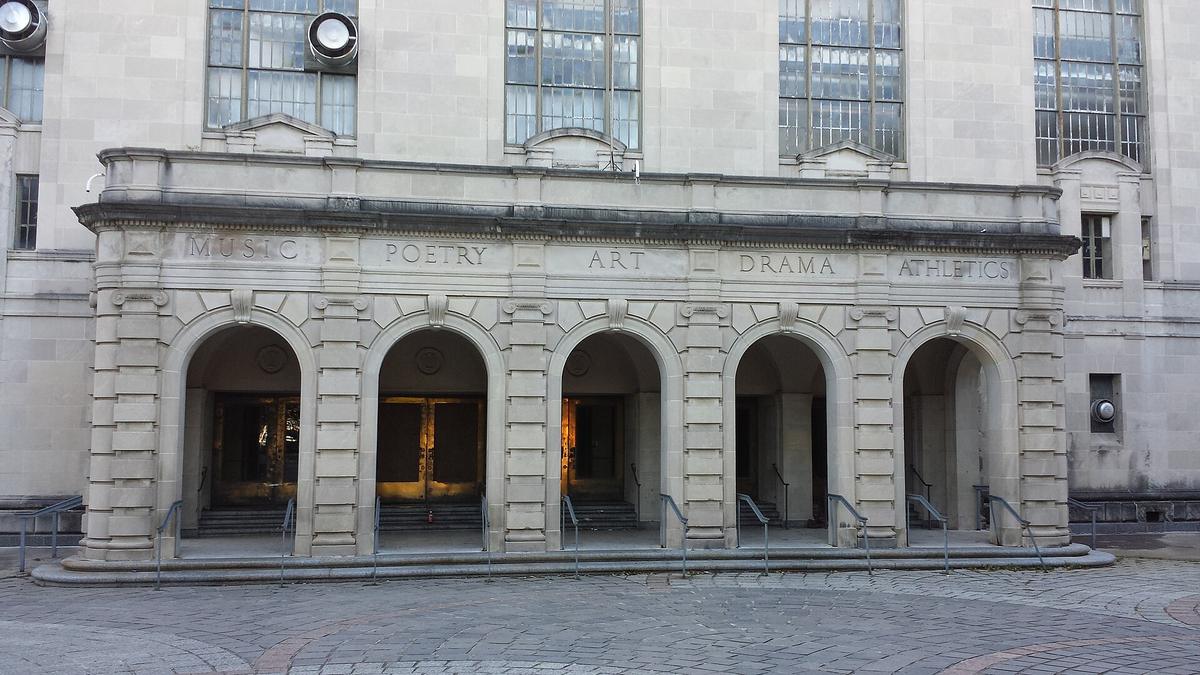
The Municipal Auditorium opened on May 30, 1930, at 1201 St. Peter Street in the Tremé neighborhood, within what is now Louis Armstrong Park. Designed by Favrot and Livaudais Architects and built by contractor George A. Caldwell for about $2 million, the 75,000-square-foot hall was officially dedicated as a memorial to World War I veterans, though its arena floor and dividable layout were built with New Orleans’s famous Carnival balls clearly in mind.
For decades the auditorium was a civic workhorse, splitting into separate St. Ann Street and St. Peter Street halls so two Mardi Gras krewe balls could run at once, while also hosting boxing title fights and professional wrestling. It briefly housed the NBA’s New Orleans Jazz during their 1974-75 inaugural season and later the ABA’s Buccaneers and ECHL’s Brass, and in 1970 it hosted the first New Orleans Jazz & Heritage Festival. Hurricane Katrina’s 2005 flooding shuttered the building, and it has remained closed and awaiting restoration ever since.
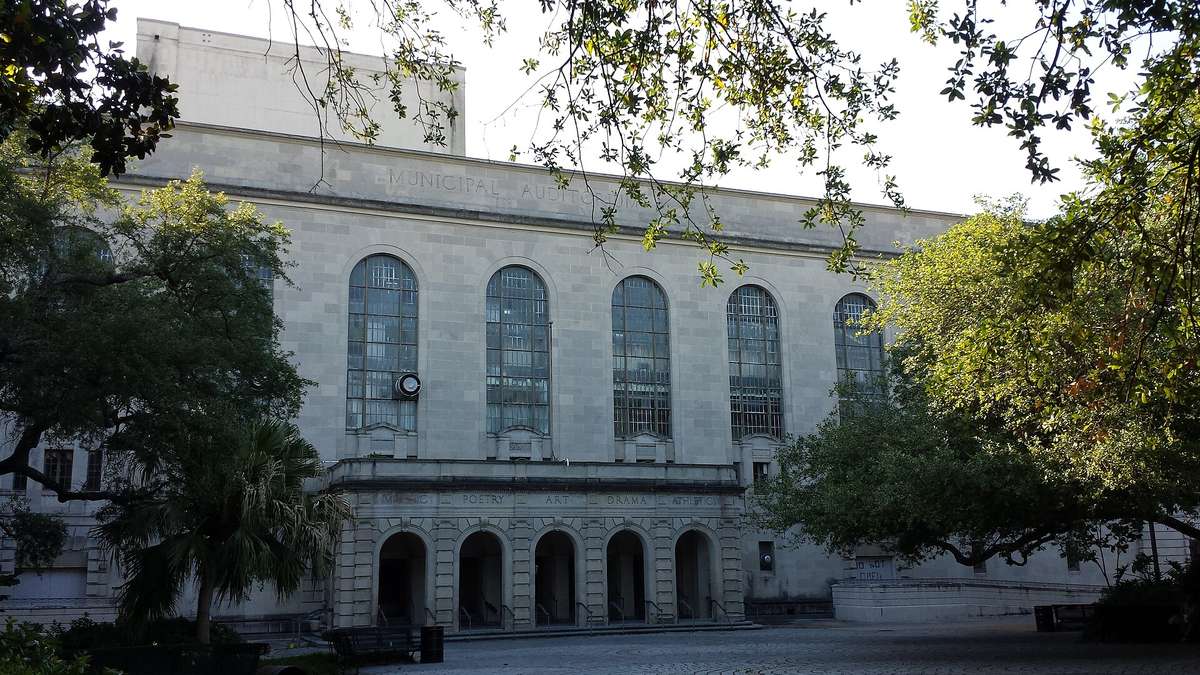
Stats at a Glance
- Team(s): New Orleans Jazz (NBA, 1974-75), New Orleans Buccaneers (ABA), New Orleans Brass (ECHL)
- Location: Tremé, New Orleans, Louisiana
- Opened: May 30, 1930
- Closed: 2005 (Hurricane Katrina damage, still shuttered)
- Capacity: About 7,853 (up to roughly 10,600 across full configuration)
- Architect: Favrot and Livaudais
- Notable fact: Birthplace of the first New Orleans Jazz & Heritage Festival in 1970
A Carnival Ball Showpiece
Though dedicated as a World War I memorial, the Municipal Auditorium’s real design brief was Mardi Gras. Its arena could be split into two ballrooms so separate krewes could hold balls simultaneously, and for much of the 20th century it was the social center of Carnival season in New Orleans.
The building also drew boxing and wrestling crowds, including a 1956 lightweight title fight and a 1988 NWA World Tag Team Championship match won by the Road Warriors.
Pro Hoops and the First Jazz Fest
The auditorium briefly served as a major-league arena, hosting the ABA’s New Orleans Buccaneers and the NBA’s New Orleans Jazz during their 1974-75 debut season before the team moved into the Louisiana Superdome. The ECHL’s New Orleans Brass also played there in the late 1990s.
Its deepest cultural legacy may be musical: the venue hosted the first New Orleans Jazz & Heritage Festival in 1970, the event that grew into the city’s signature annual festival. Flooded by Hurricane Katrina in 2005, the auditorium has sat closed ever since, with the city weighing a reported $38 million restoration.
Explore more: Explore more historic stadiums and arenas.
A see-through purse that looks like a purse. Works for most stadium, arena and concert bag policies.
Bleachers for three hours, but with back support. Folds flat and clips to the bench.
For upper-deck seats. Watch line play at the stadium, or the far side of the park from the top of a lift hill.
New Orleans Municipal Auditorium FAQs
Is the New Orleans Municipal Auditorium still open?
No. It has been closed since flooding from Hurricane Katrina in 2005 damaged the building, and as of recent years it remains unrestored.
What sports teams played at the Municipal Auditorium?
It hosted the ABA’s New Orleans Buccaneers, the NBA’s New Orleans Jazz during their 1974-75 inaugural season, and the ECHL’s New Orleans Brass.
What is the Municipal Auditorium best known for?
It’s best known as a longtime home of Mardi Gras krewe balls and as the site of the first New Orleans Jazz & Heritage Festival in 1970.
Get More from New Orleans Municipal Auditorium
Log the coasters, stadiums, and venues you’ve experienced, rate New Orleans Municipal Auditorium, and see what your friends thought. Get the ThrillZing app.
Photo: Spatms / CC BY-SA 3.0, via Wikimedia Commons.