
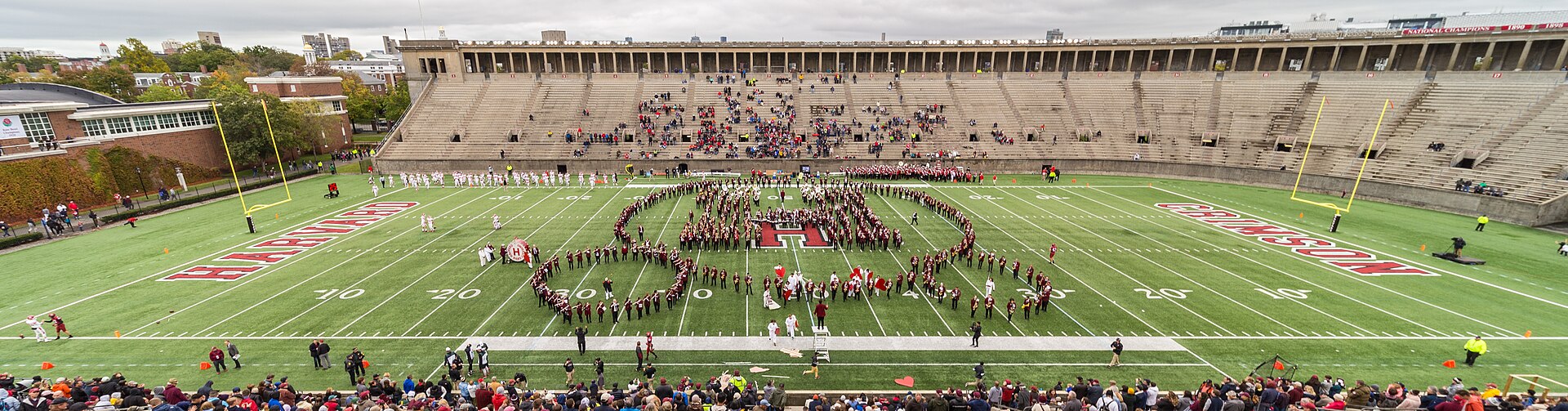
Harvard Stadium has stood along the Charles River in Boston’s Allston neighborhood since 1903, making it the oldest stadium structure still in use for college football in the United States. Built for the Harvard Crimson, the horseshoe-shaped venue was also the nation’s first large permanent structure built of reinforced concrete, a construction method that was still experimental when Harvard’s Class of 1879 funded the project.
The stadium’s fixed, unmovable dimensions had an outsized influence on the sport itself: when rules-makers debated widening the football field in 1906 to open up play, Harvard Stadium’s concrete walls made that impossible, and the forward pass was legalized instead. In 1987, the National Park Service designated Harvard Stadium a National Historic Landmark, one of only a handful of athletic facilities in the country to hold that distinction.
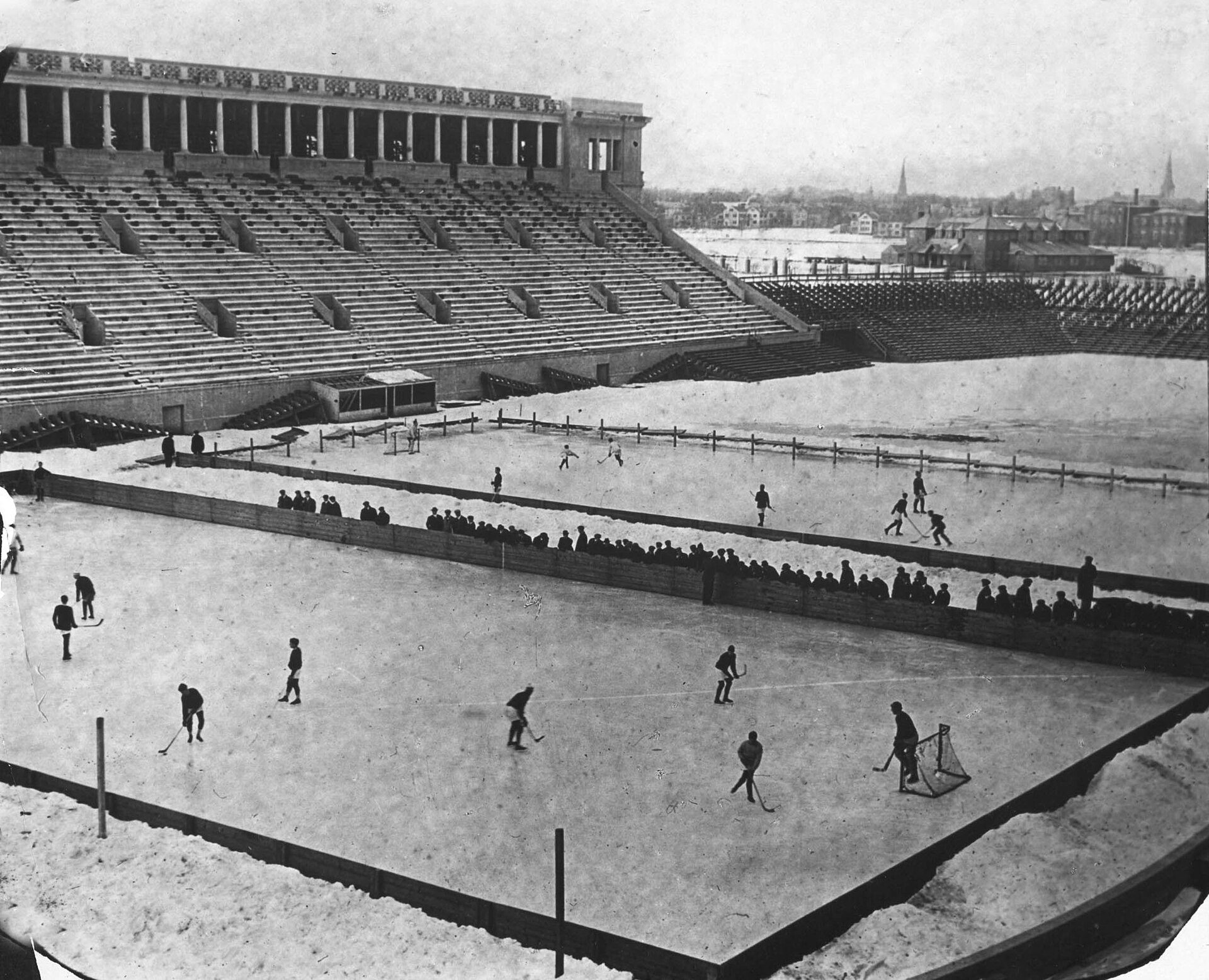
Stats at a Glance
- Team(s): Harvard Crimson football
- Location: Allston, Boston, Massachusetts
- Opened: November 14, 1903
- Capacity: About 25,000 (originally about 20,000)
- Architects: Charles F. McKim, George de Gersdorff, Lewis Johnson
- Notable fact: Oldest permanent concrete stadium in the U.S.; National Historic Landmark since 1987
A Landmark in Concrete
When Harvard Stadium opened, its horseshoe of reinforced concrete was unlike anything built for American sport before it. The design drew comparisons to ancient Greek stadiums, and the structure was completed in roughly four and a half months at a cost of about $310,000. Early seating was a mix of stone, concrete, and temporary wood stands on the open end of the horseshoe, with capacity growing and shrinking over the decades as sections were added and later removed for safety reasons.
The stadium has hosted more than just Harvard football over the years, including the NFL’s Boston Patriots for their entire 1970 season while their new Foxborough stadium was under construction, plus stints for Boston’s professional lacrosse and women’s soccer clubs, and Harvard’s men’s soccer program through the early 1980s.
Still in Use, Still Historic
Unlike most stadiums of its era, Harvard Stadium was never torn down and rebuilt. FieldTurf and permanent lighting were added in 2006, letting Harvard host its first night game there in September 2007, but the surrounding concrete bowl remains largely the original 1903 structure. That continuity is central to why the National Park Service named it a National Historic Landmark in 1987, recognizing both its engineering significance and its role in shaping the modern rules of American football.
Explore more: Explore more historic and modern stadiums.
Sherpa-lined and windproof, with a waterproof back for wet bleachers. Folds into its own pouch.
For late-season football, outdoor hockey and October park nights. Shake, pocket, and stay warm for hours.
12 x 10.5 x 6 in. — built to the common stadium clear-bag size. Check your venue's rules.


Harvard Stadium FAQs
Why is Harvard Stadium historically significant?
It is the oldest original stadium structure still used for college football and the first large permanent reinforced-concrete stadium built in the United States, opening in 1903.
How did Harvard Stadium influence football rules?
Because its concrete walls couldn’t be moved to widen the playing field, officials legalized the forward pass in 1906 instead, changing the sport’s strategy going forward.
What is Harvard Stadium’s seating capacity today?
The stadium seats about 25,000 today, down from a peak of tens of thousands when temporary stands were added in the early 20th century.
Get More from Harvard Stadium
Log the coasters, stadiums, and venues you’ve experienced, rate Harvard Stadium, and see what your friends thought. Get the ThrillZing app.
Photo: Quintinsoloviev / CC BY-SA 4.0, via Wikimedia Commons.