
At the edge of Italy’s largest theme park, a train of 18 riders is held nose-down over a near-vertical abyss. For a few agonizing seconds, nothing happens. Then the brakes release. Oblivion: The Black Hole at Gardaland is Italy’s first vertical-drop coaster — a Bolliger & Mabillard Dive Coaster that opened on March 28, 2015 near Lake Garda.
Borrowing its name from the genre-defining Oblivion at Alton Towers, Gardaland’s version adds what the original never had: a full layout after the plunge, including two inversions at over 100 km/h.
Key Stats
| Height | 42.5 m (139.4 ft) |
| Drop angle | 87° |
| Speed | 100.1 km/h (62.2 mph) |
| Length | 566 m (1,857 ft) |
| Inversions | 2 |
| Duration | 1 minute, 40 seconds |
| Trains | 4 trains, 18 riders each |
| Riders per hour | 1,890 |
| Manufacturer | Bolliger & Mabillard |
| Model | Dive Coaster |
| Opened | March 28, 2015 |
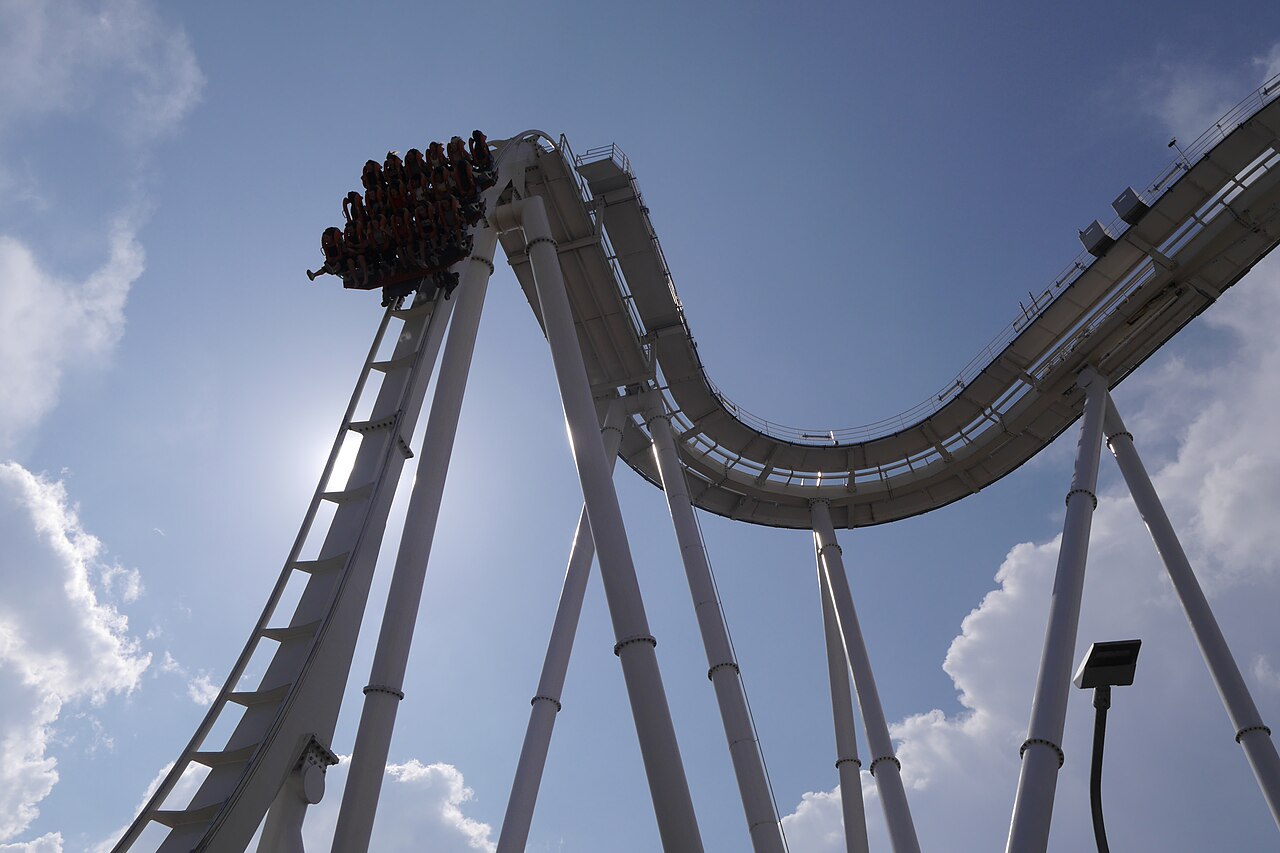
The Hold, Then the Drop
Everything about a Dive Coaster is engineered around one moment. Oblivion’s trains seat 18 riders across three rows of six, so nearly everyone gets an unobstructed view as the train crests the 42.5-meter (139-foot) top and is held hanging over the edge. The 87-degree first drop that follows is about as close to vertical as it gets — steep enough to sit near the territory covered in our roundup of the steepest roller coaster drops in the world.
The plunge accelerates the train to 100.1 km/h (62.2 mph), Oblivion’s top speed and one of the fastest in Italy. For context on how the world’s biggest plunges compare, see our list of the biggest roller coaster drops in the world.
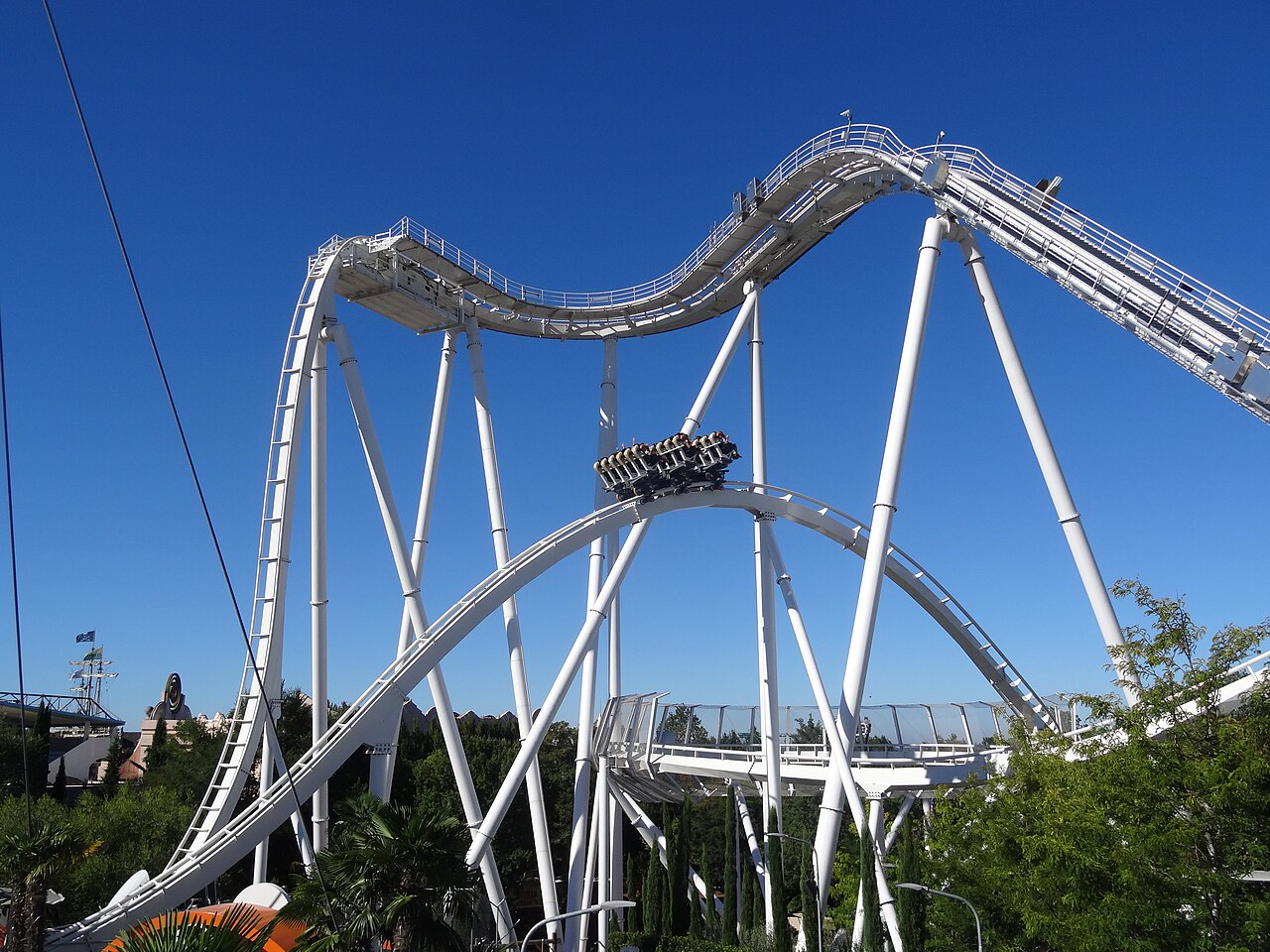
More Than One Trick
Where the original Alton Towers Oblivion ends almost immediately after its drop, Gardaland’s ride keeps going. The 566-meter layout throws riders through an Immelmann loop and a second inversion, trading the one-hit-wonder formula for a compact, forceful B&M circuit that lasts a minute and 40 seconds.
Throughput is classic B&M, too: four short trains keep the line moving at up to 1,890 riders per hour, with riders between 140 and 195 cm tall welcome aboard.
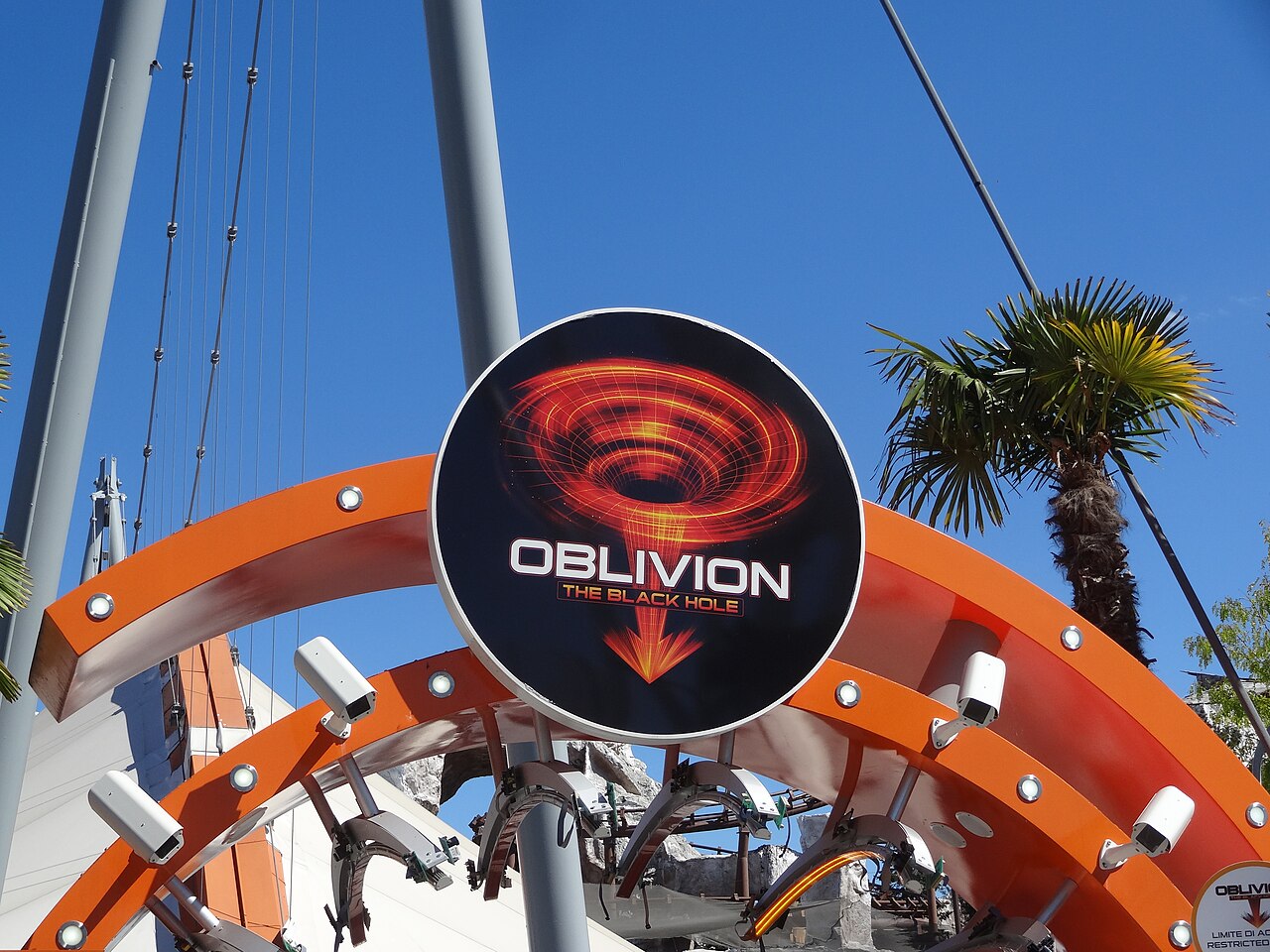
Italy’s First Vertical-Drop Coaster
When Oblivion: The Black Hole opened in 2015, it became the first vertical-drop roller coaster in Italy — a headline addition for Gardaland, the resort on the shores of Lake Garda that draws millions of visitors a year. A decade later it remains the park’s purest adrenaline machine and a bucket-list drop for European coaster fans.
Operations are a show of their own. Oblivion runs up to four trains at once — unusually many for a coaster of this length — which is how it sustains nearly 1,900 riders per hour despite each train carrying just 18 guests. Note the strict rider window: guests must be between 140 and 195 cm tall (about 4 ft 7 in to 6 ft 5 in) to board.
Folds into its own pocket. Pop it on when the storm rolls in and the rides reopen to short lines.
Keeps your phone strapped to you, not in a loose-article bin. Zip it before the lift hill and walk straight off the exit ramp.
Rapids, log flumes and splash zones without the rice-bag aftermath. The touchscreen still works through the window, so you can still take photos.
FAQ
How tall is Oblivion: The Black Hole?
Oblivion: The Black Hole stands 42.5 meters (139.4 feet) tall, with an 87-degree first drop that accelerates the train to 100.1 km/h (62.2 mph).
Does Oblivion at Gardaland go upside down?
Yes — unlike its Alton Towers namesake, Gardaland’s Oblivion features two inversions after the vertical drop, packed into 566 meters (1,857 feet) of track.
Was Oblivion the first coaster of its kind in Italy?
Yes. When it opened on March 28, 2015, Oblivion: The Black Hole became Italy’s first vertical-drop roller coaster. It was built by Bolliger & Mabillard as a Dive Coaster model.
Photo: Smatteo499 via Wikimedia Commons (CC BY 4.0)