
Corkscrew opened at Cedar Point in Sandusky, Ohio, on May 15, 1976, and made history as the first roller coaster in the world to feature three inversions. Built by Arrow Development and designed by legendary engineer Ron Toomer, the steel coaster arrived during the U.S. Bicentennial year, and its original trains were even painted red, white, and blue to match the occasion.
Beyond its inversion record, Corkscrew holds another notable distinction: it was the first coaster to send riders looping directly over a park midway, letting guests below watch trains fly overhead. Nearly five decades later, the ride is still running at Cedar Point, having carried more than 30 million riders through its loop and double corkscrew since opening day.
Stats at a Glance
- Park: Cedar Point, Sandusky, Ohio
- Manufacturer: Arrow Development
- Opened: May 15, 1976
- Height: 85 feet
- Top speed: 48 mph
- Length: 2,050 feet
- Inversions: 3
The Ride Experience
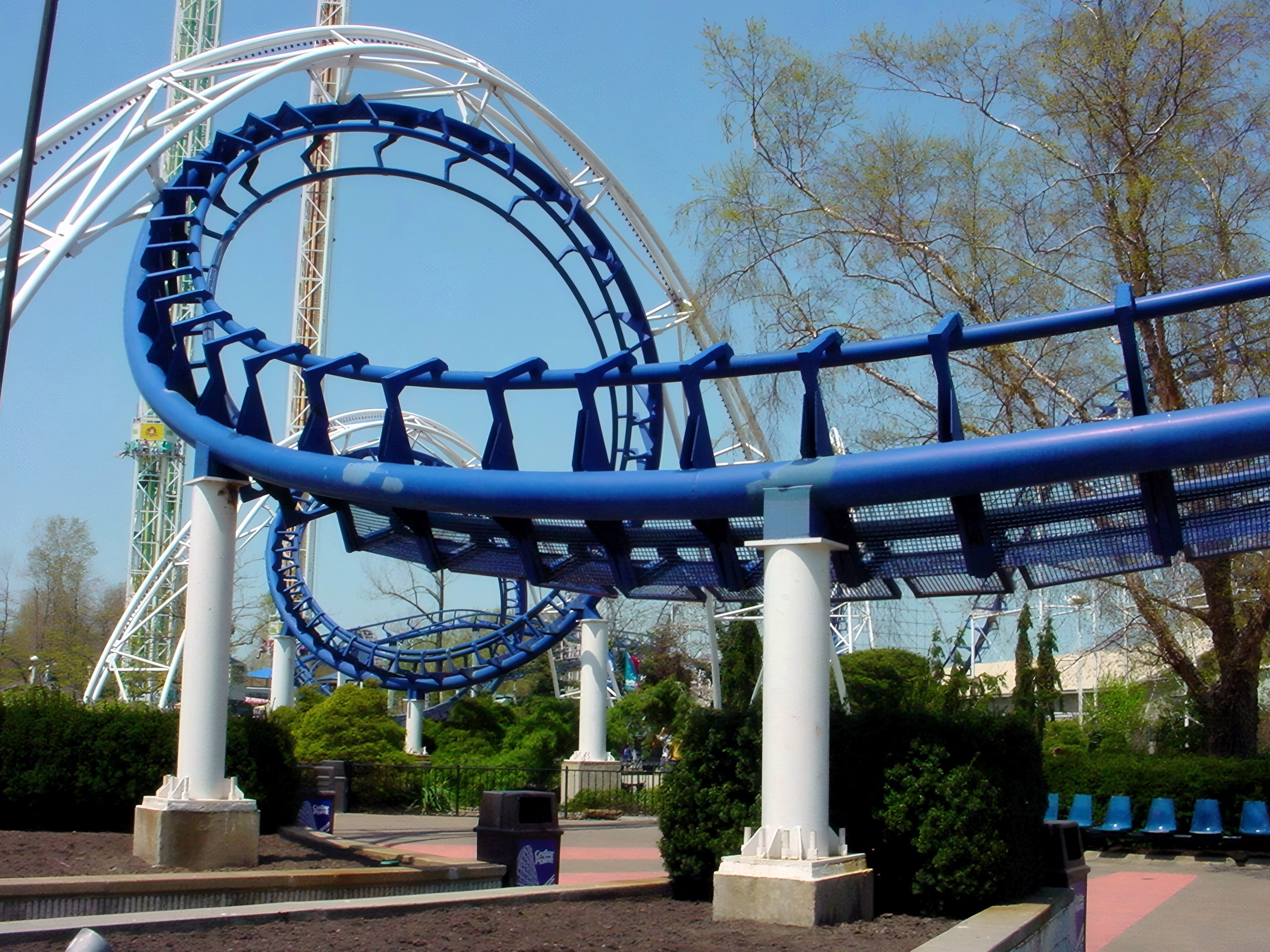
Corkscrew’s layout is short but eventful, lasting about two minutes from lift hill to brake run. After a chain-lift climb to 85 feet, trains plunge into a vertical loop followed by the ride’s signature double corkscrew, threading riders through a pair of inversions in quick succession before crossing back over the midway.
The ride runs two six-car trains, seating riders two across for a total of 24 per train, with a throughput of about 1,800 riders per hour. Its compact, high-energy layout has made it a family-friendly introduction to inverting coasters for generations of Cedar Point visitors.
A Trailblazing Legacy
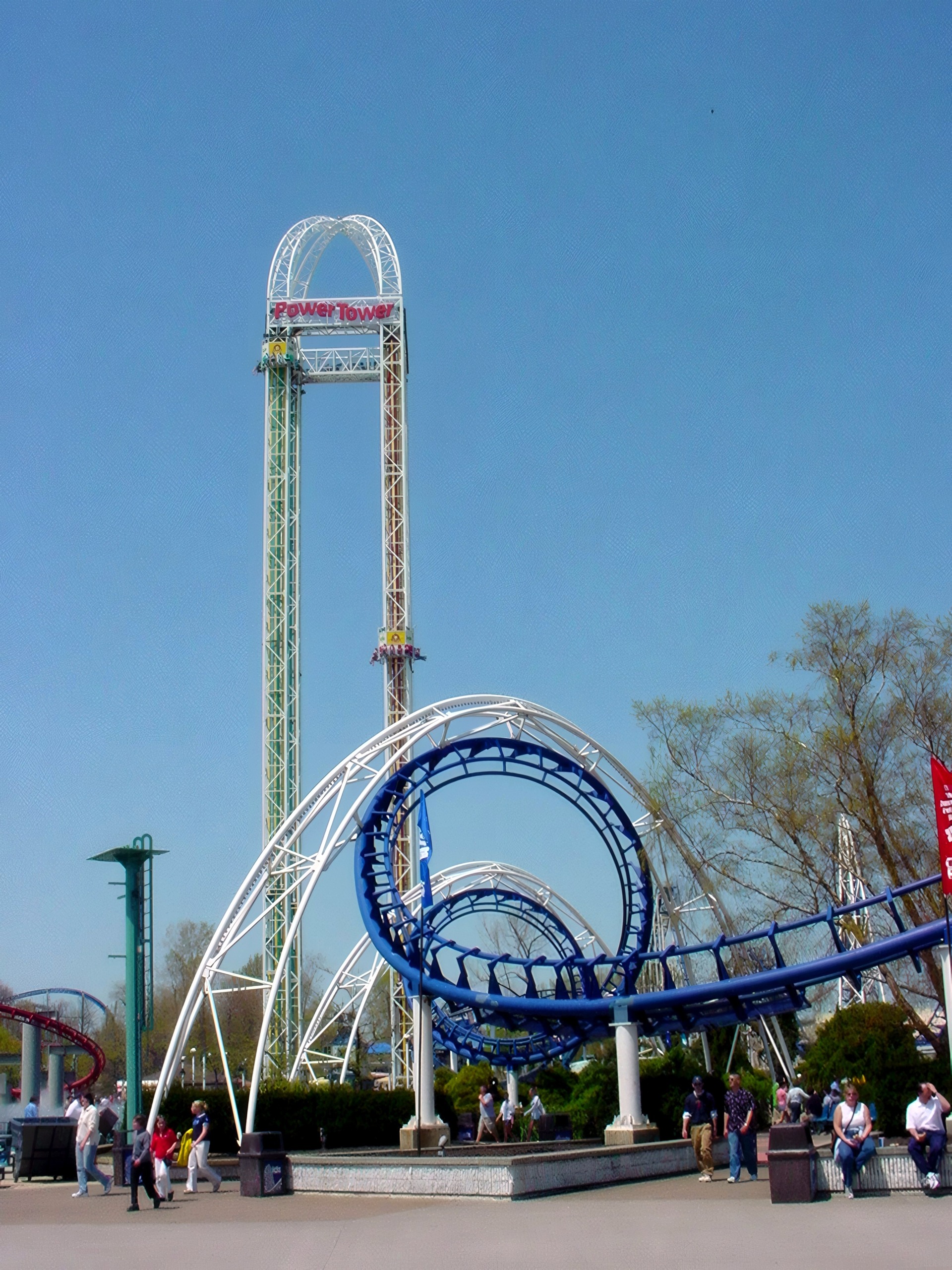
When Corkscrew debuted, it broke new ground by giving riders three inversions in a single ride, a record it held from 1976 until 1980. It was also the first coaster to route track directly over a park walkway, letting spectators watch trains loop overhead as they strolled the midway below, a design touch that helped popularize the corkscrew element across the industry in the years that followed.
Originally floated as ‘The Great Lake Erie Roller’ before its 1976 debut, the ride was renamed Corkscrew ahead of opening. Nearly 50 years later, it remains part of Cedar Point’s lineup, now sharing the skyline with the park’s much larger modern hypercoasters and giga coasters.
Explore more: Explore more roller coasters.
Corkscrew Photo Archive: 2002–2026
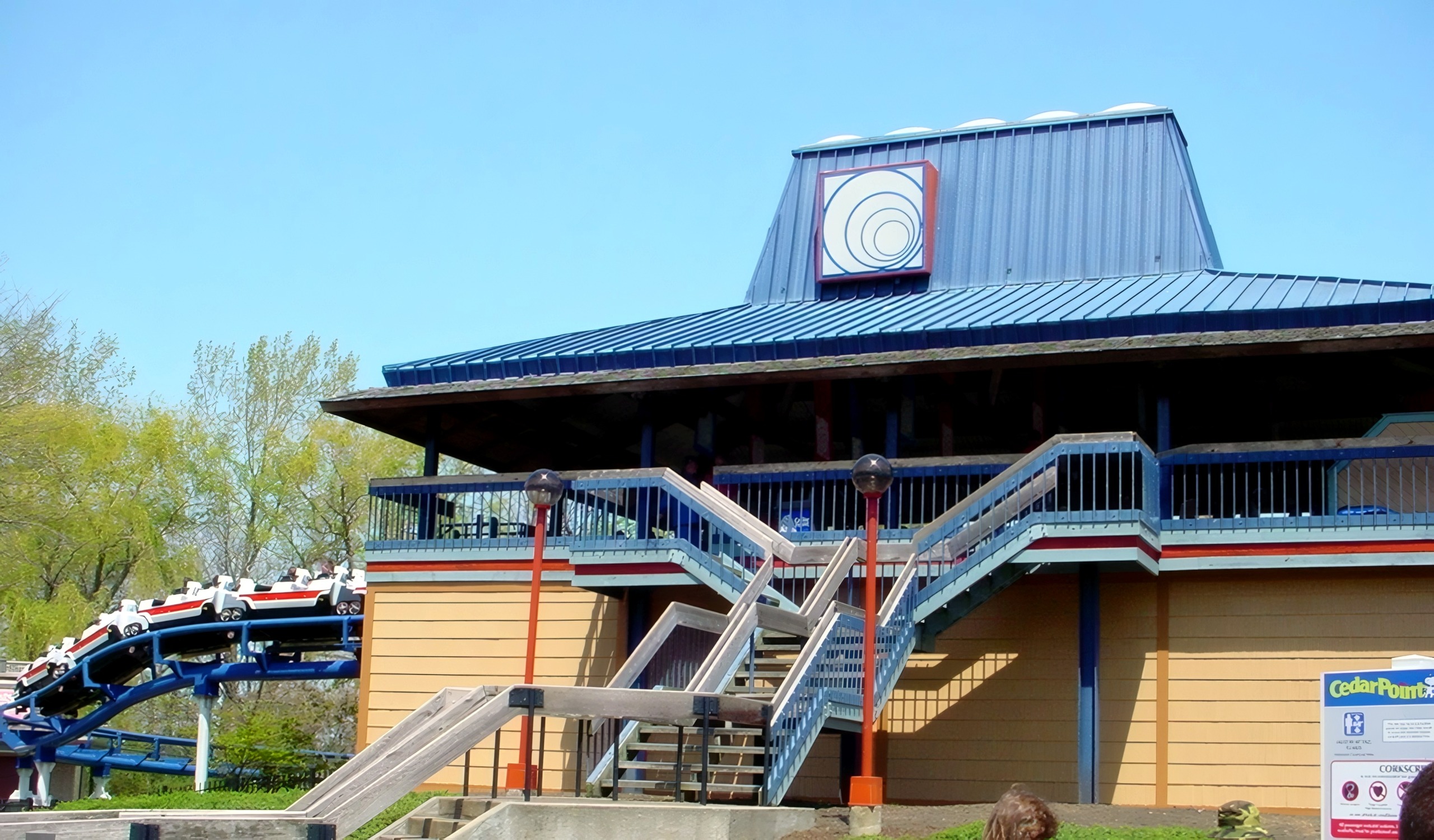
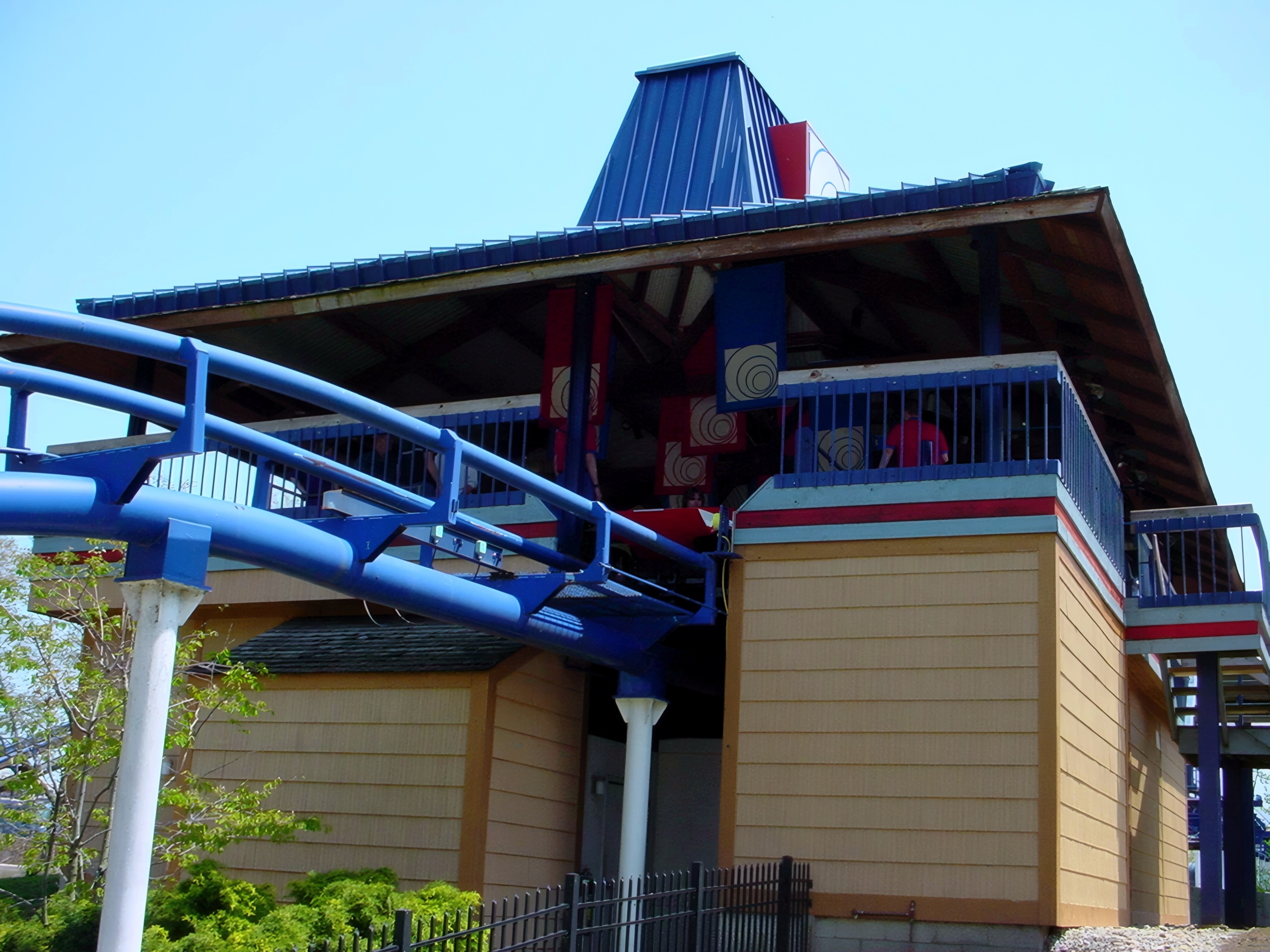
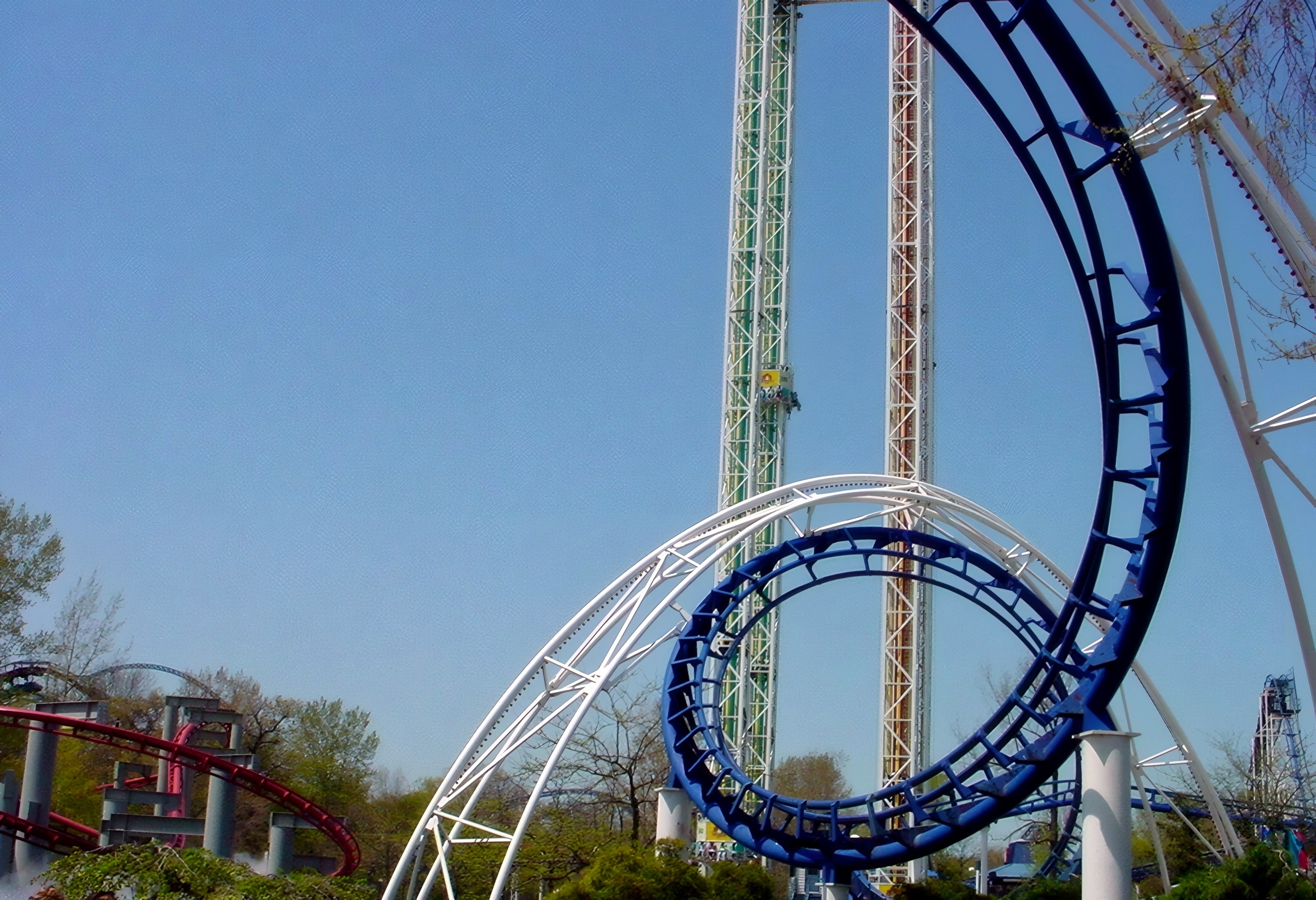
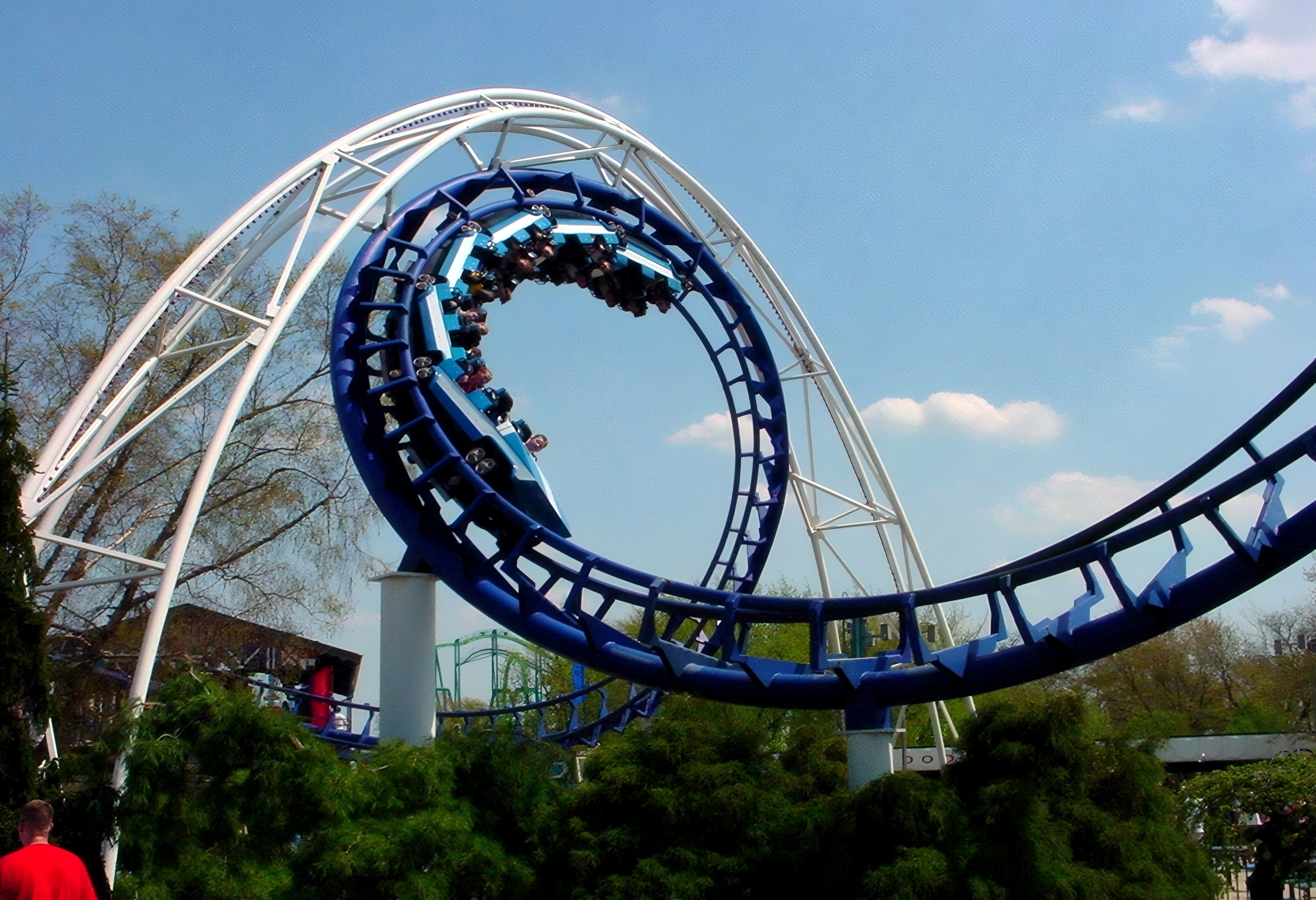
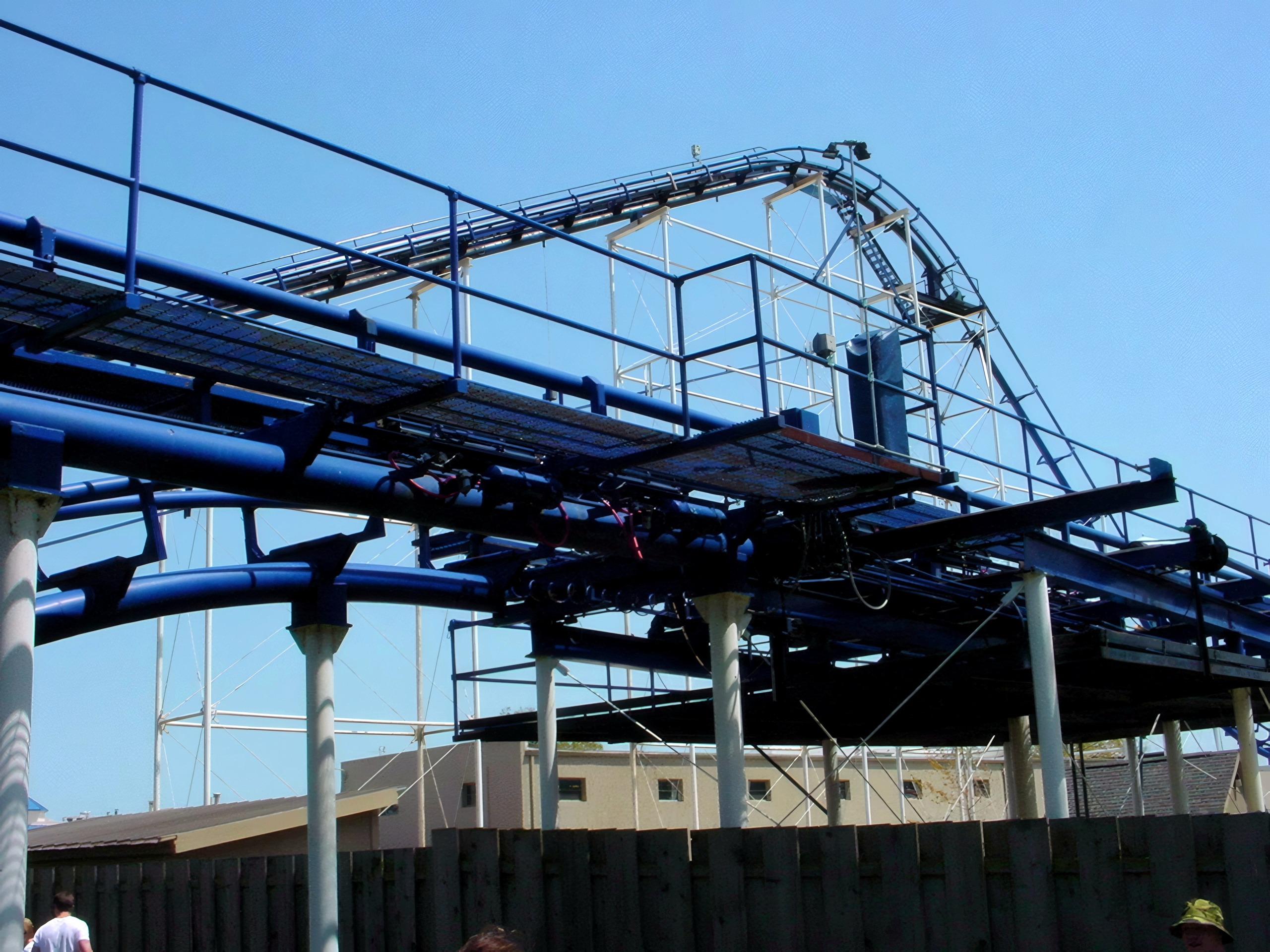
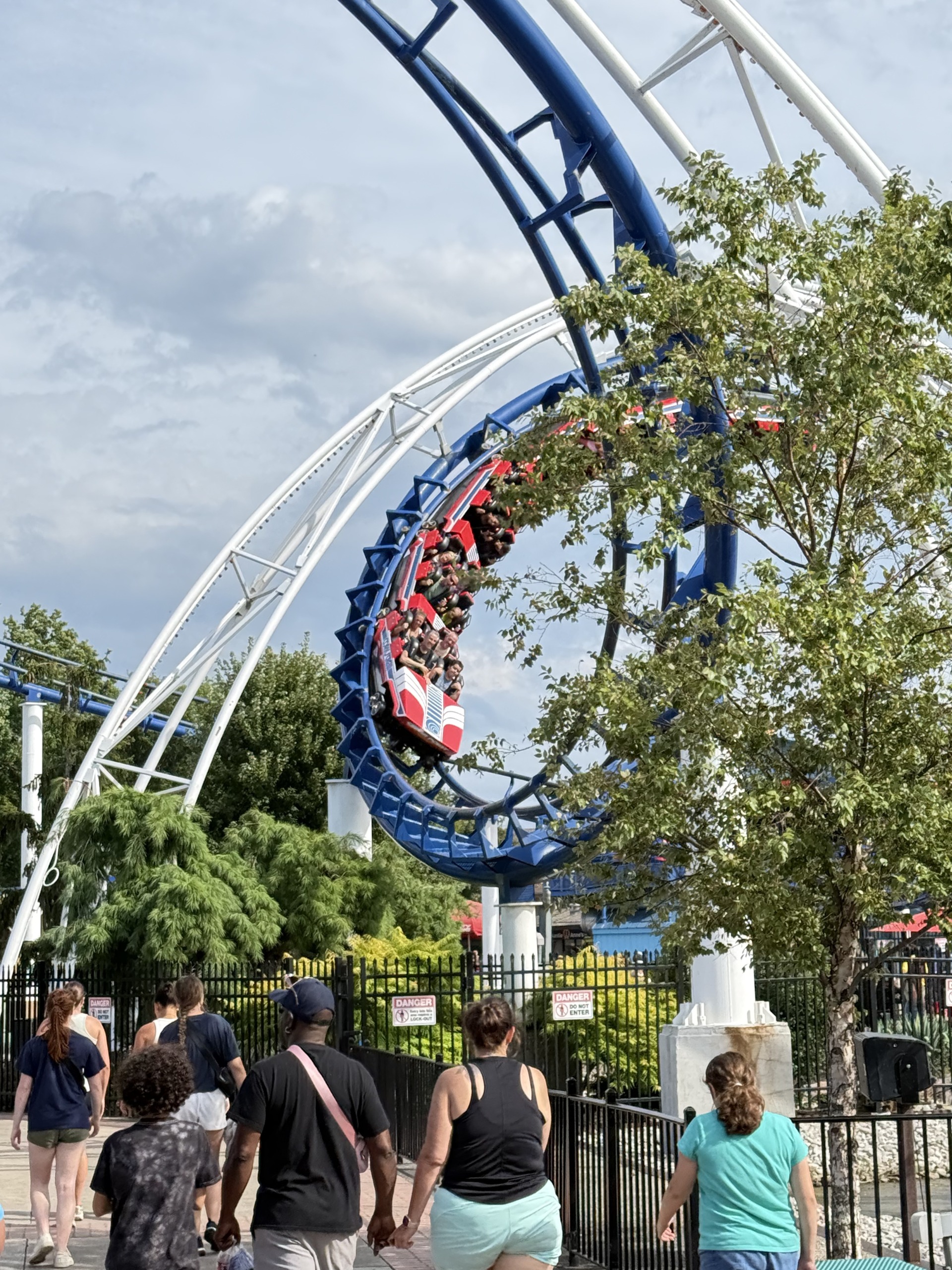
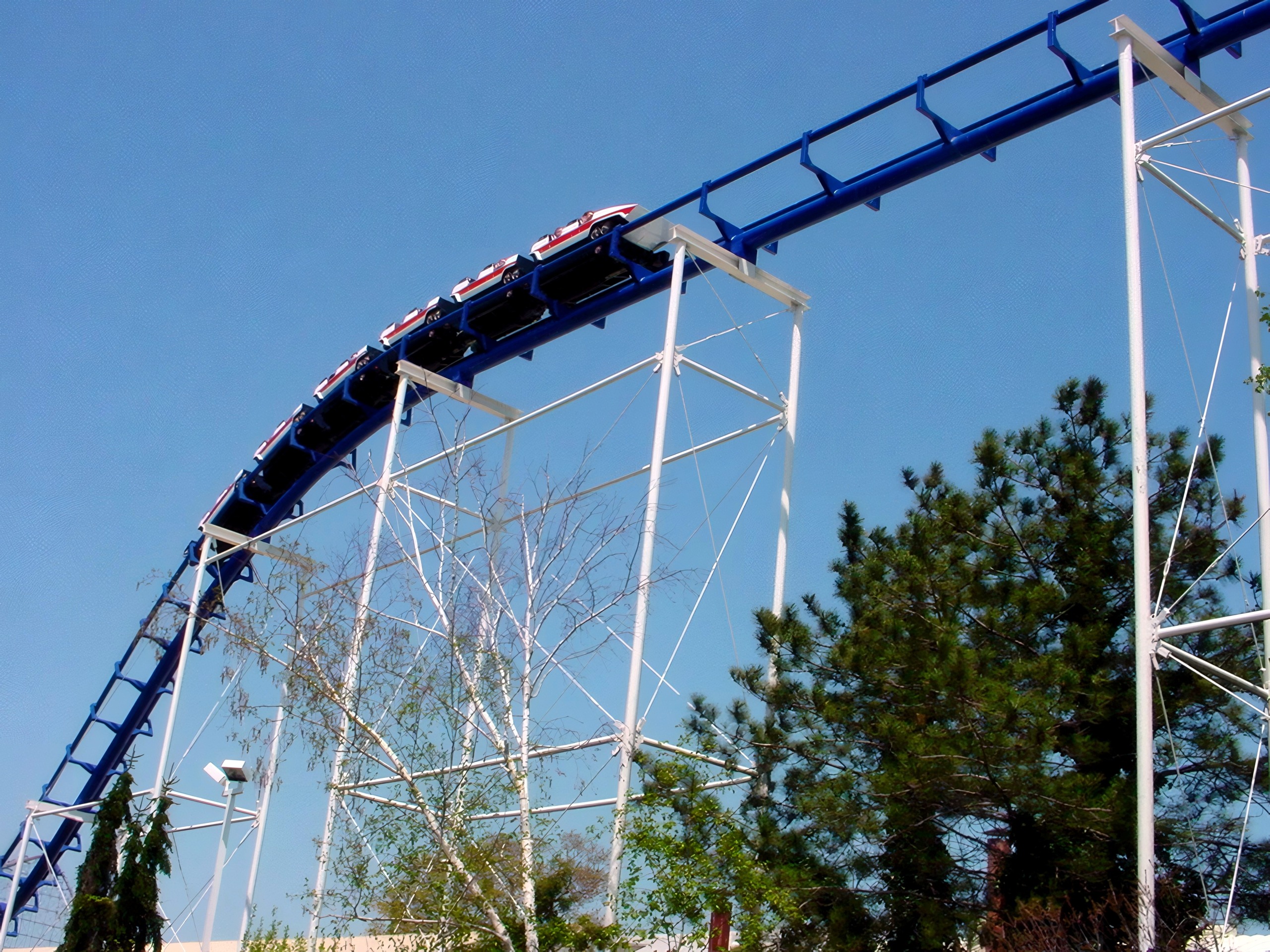
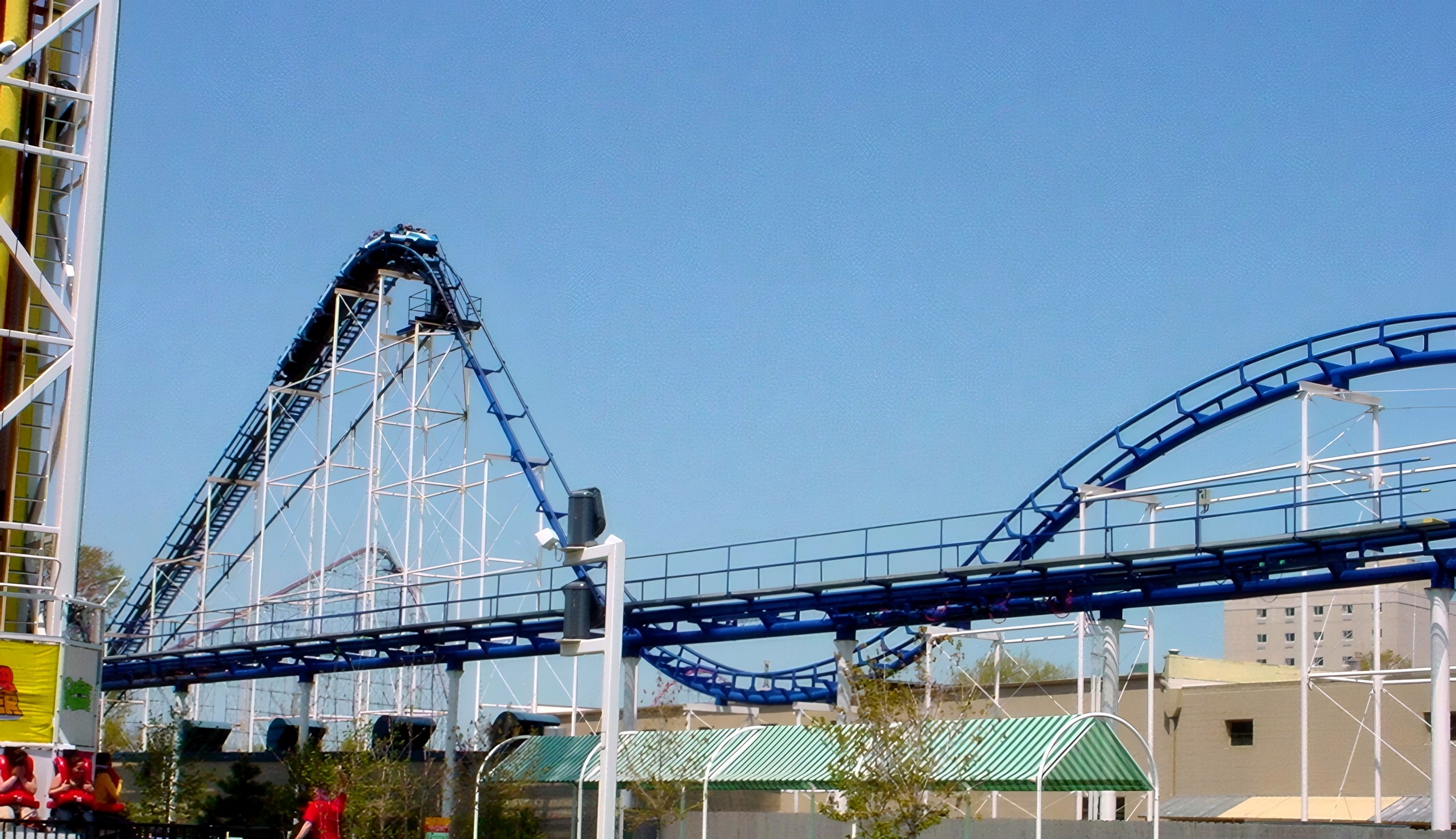
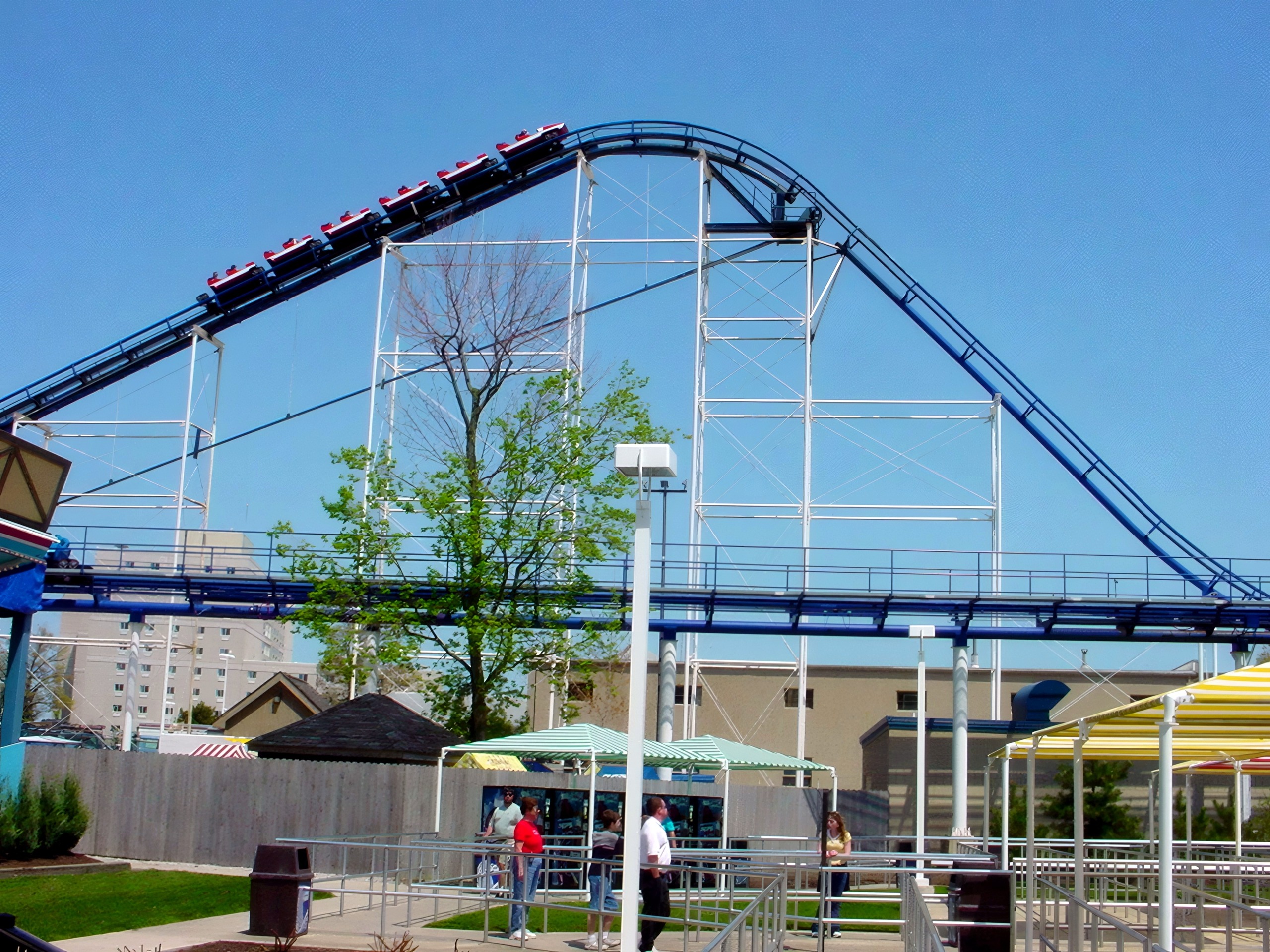
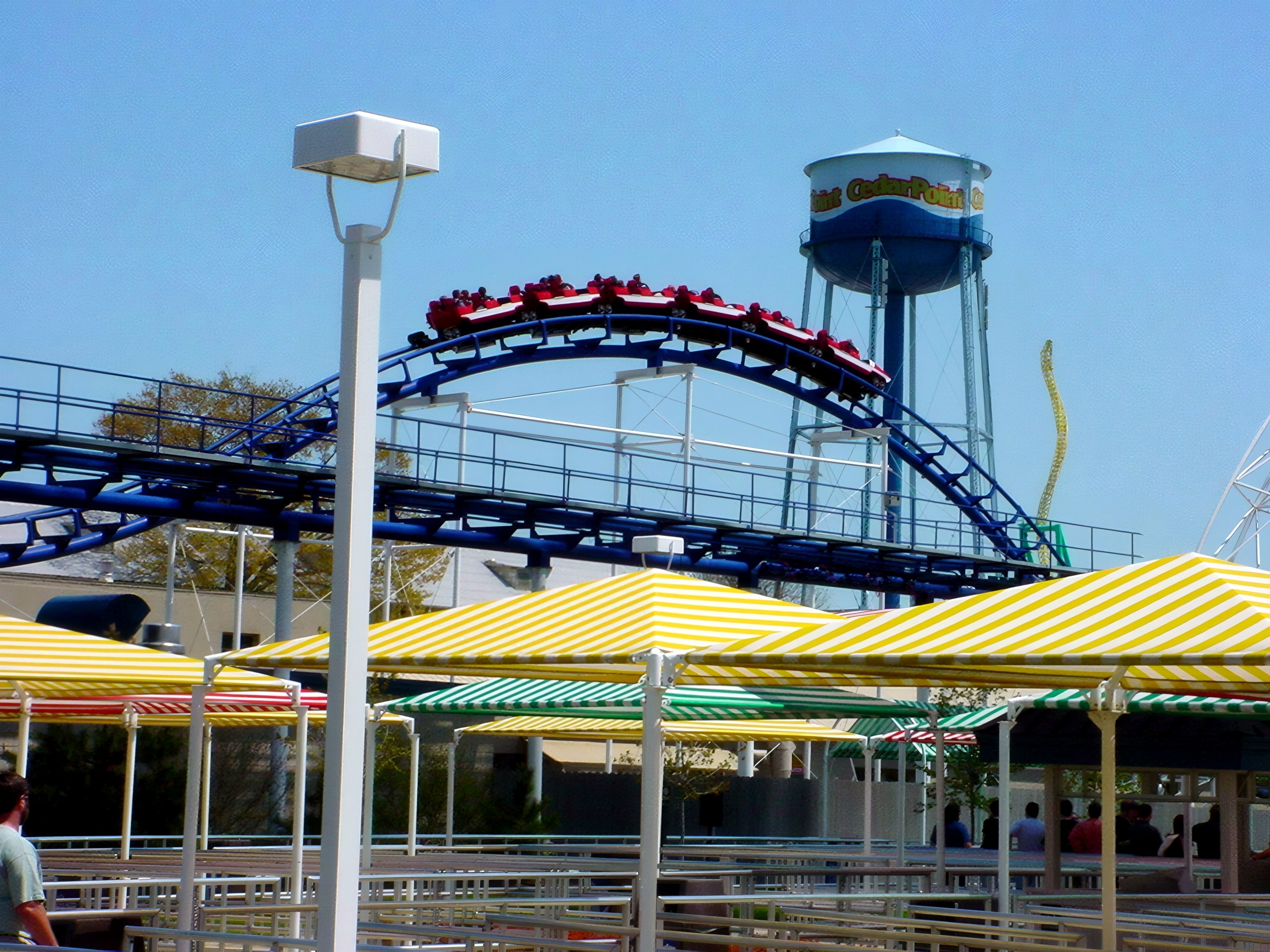
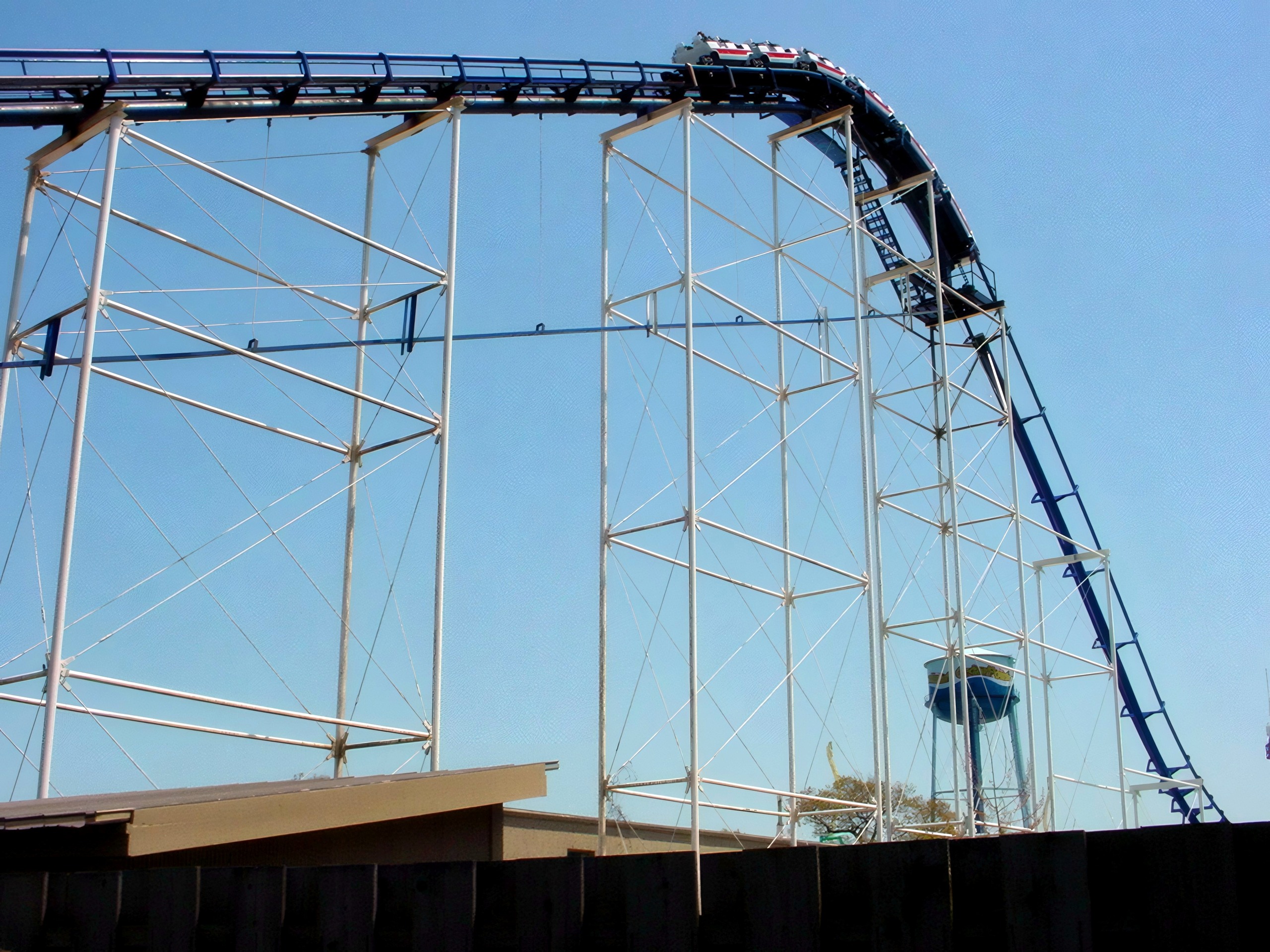
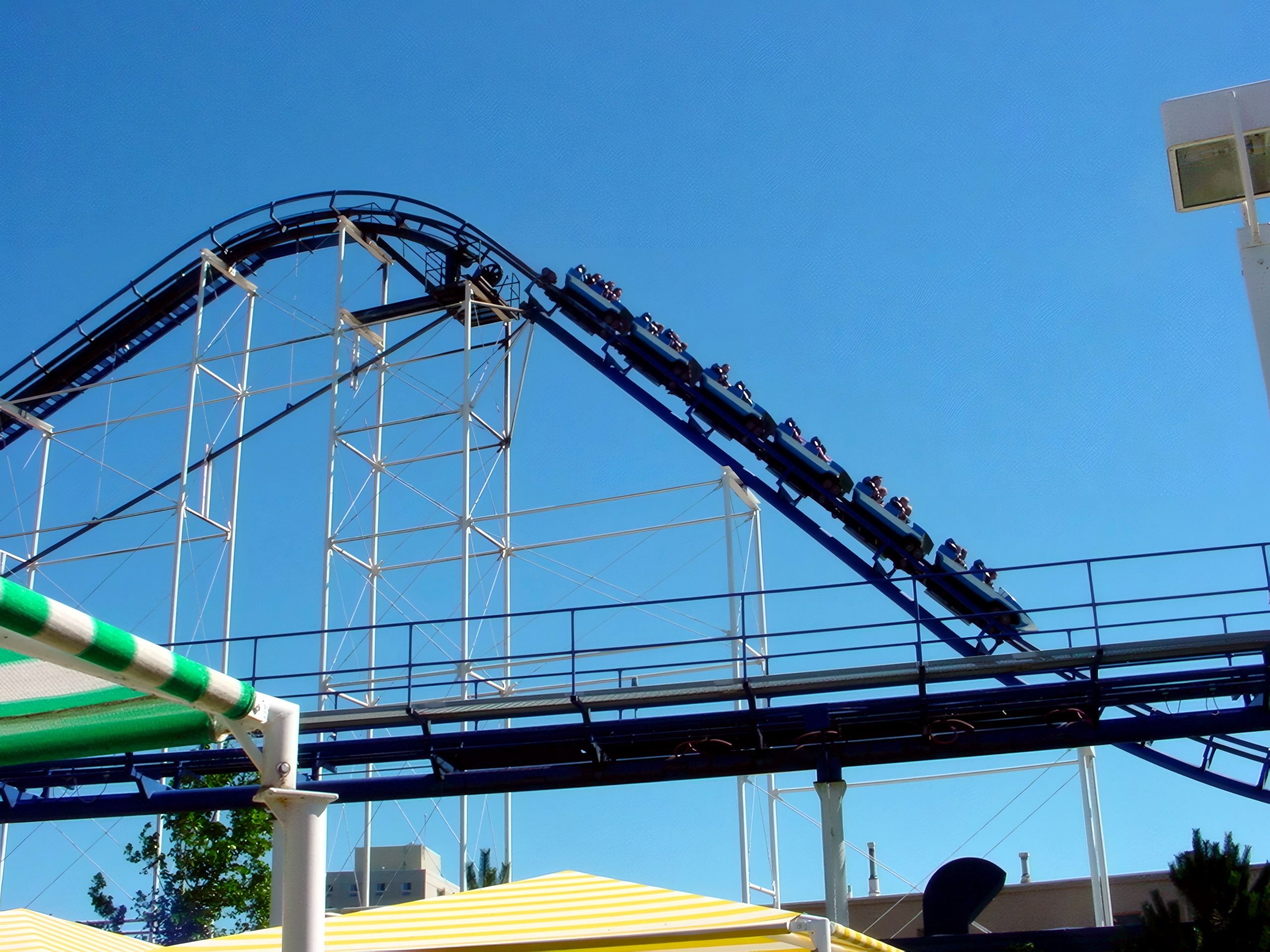
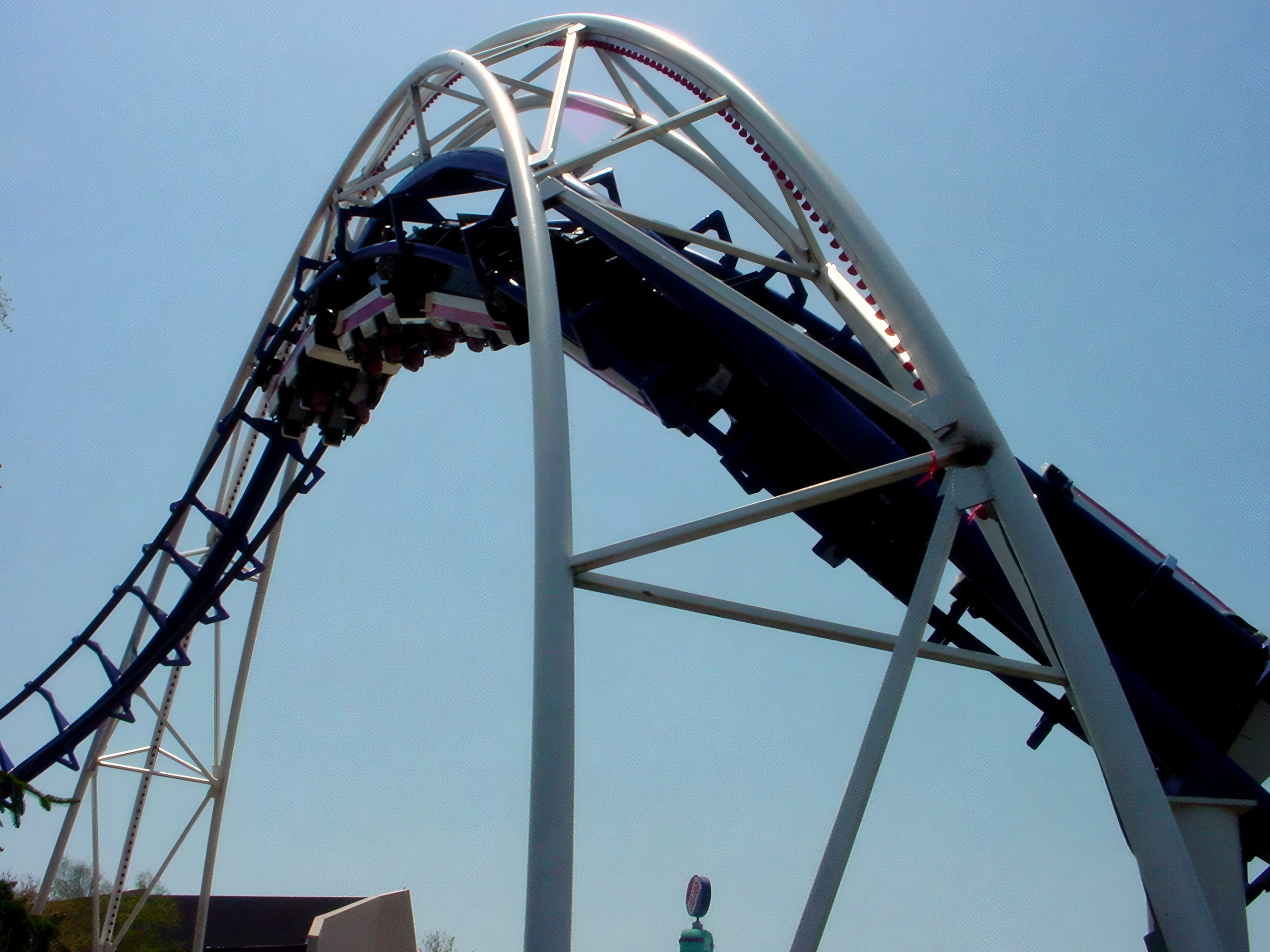
These are original ThrillZing photos of Corkscrew taken at Cedar Point on May 5, 2002, restored and upscaled from the original camera files. They show the 1976 Arrow coaster in its blue paint: a train pulling into the blue-roofed station, the track curving past the station, the double corkscrew with Power Tower behind it, the vertical loop, and a train through the corkscrews above the midway. The September 2026 group below was shot on a phone on September 13, 2026, the first HalloWeekends weekend, and is published as taken. All photos are free to reuse under a CC BY 4.0 license with credit to ThrillZing and a link to this page.
September 2026
Park apps, mobile ordering and photos kill a battery by 3 p.m. This one snaps on magnetically, so there's no cable to snag on a restraint.
Ride with your glasses on and keep them. Many parks allow glasses on rides if they're strapped, so check the ride rules first.
Small enough to ride with on most coasters, big enough for a phone, card and keys. Two zippers mean nothing falls out upside down.


Corkscrew FAQs
When did Corkscrew at Cedar Point open?
Corkscrew opened on May 15, 1976, as part of a larger park expansion that year.
Who built Corkscrew?
It was built by Arrow Development (later Arrow Dynamics) and designed by engineer Ron Toomer.
What makes Corkscrew historically significant?
It was the first roller coaster in the world to feature three inversions and the first to send track directly over a park midway.
Get More from Corkscrew
Log the coasters, stadiums, and venues you’ve experienced, rate Corkscrew, and see what your friends thought. Get the ThrillZing app.