
The Berliner Philharmonie is the home concert hall of the Berlin Philharmonic Orchestra, standing in the Tiergarten district near Potsdamer Platz. Designed by architect Hans Scharoun and opened on October 15, 1963, the building replaced the orchestra’s original Philharmonie hall, which was destroyed by Allied bombing in January 1944. Its inaugural concert was led by conductor Herbert von Karajan, performing Beethoven’s Ninth Symphony.
Scharoun’s design broke sharply from the traditional shoebox-shaped concert hall by placing the orchestra platform at the center of the room, with terraced seating blocks rising irregularly around it in what became known as “vineyard-style” seating. The tent-like structure, wrapped in shimmering gold anodized aluminum panels added in 1979-1981, has influenced concert hall architecture worldwide, from Tokyo’s Suntory Hall to the Elbphilharmonie in Hamburg.
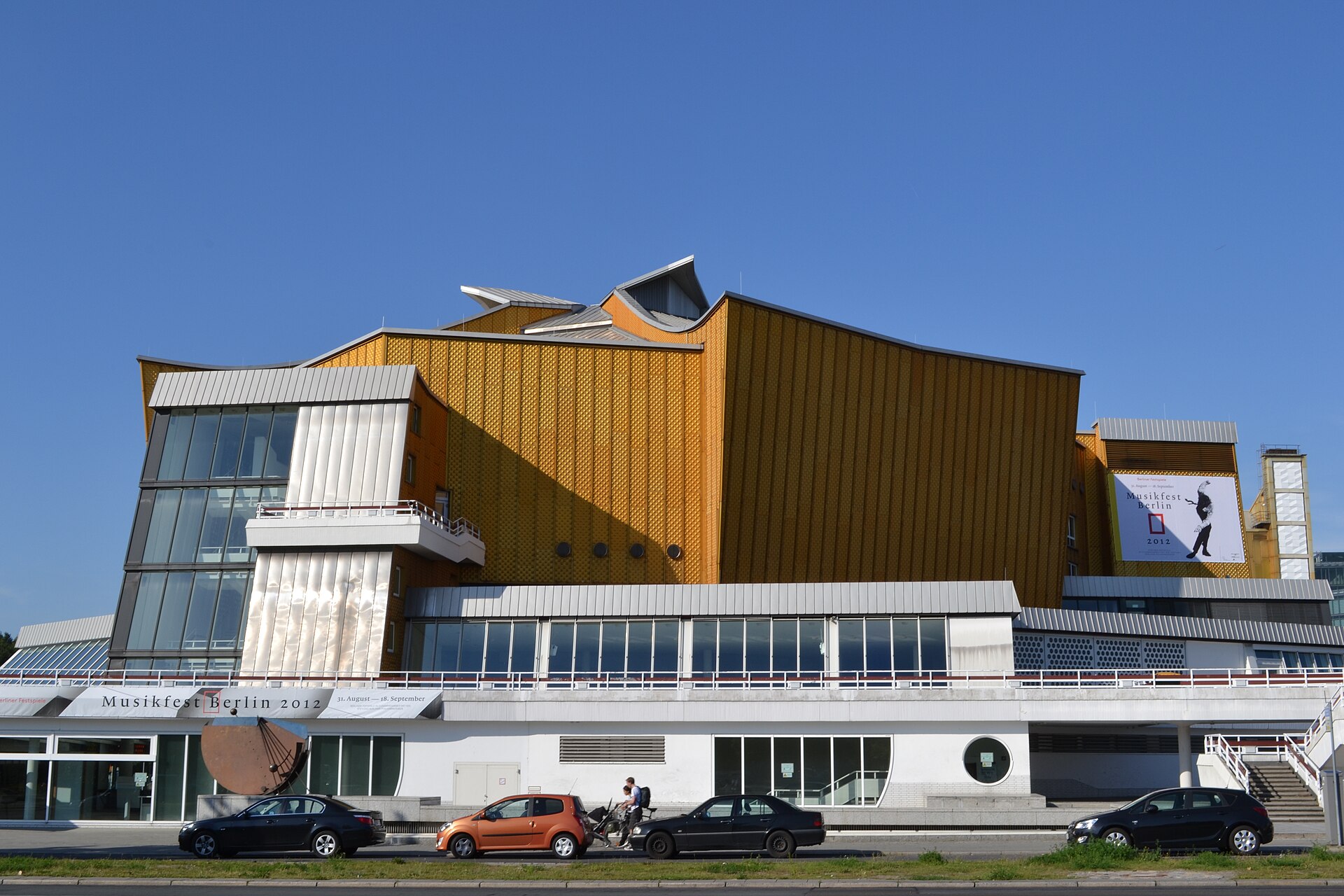
Stats at a Glance
- Location: Tiergarten, Berlin, Germany
- Type: Concert hall
- Architect: Hans Scharoun
- Opened: October 15, 1963
- Capacity: 2,440 (Grand Hall) / 1,180 (Kammermusiksaal)
- Resident orchestra: Berlin Philharmonic Orchestra
- Famous for: Pioneering vineyard-style seating around a central stage
Vineyard-Style Seating
Instead of facing rows of seats toward a raised stage, Scharoun placed the orchestra at the heart of the room and wrapped the audience around it in terraced, vineyard-like sections. No seat sits more than about 30 meters from the conductor, and the irregular pentagon-shaped roof was engineered to reflect sound evenly across the asymmetrical layout. The design was considered radical in the early 1960s but has since become one of the most imitated concert hall formats in the world.
A companion building, the Kammermusiksaal (Chamber Music Hall), was completed nearby in 1987 by architect Edgar Wisniewski, a former student and partner of Scharoun, following the original architect’s sketches. It seats 1,180 and shares the same golden-toned exterior and inside-out vineyard seating concept.
Rebuilding After War
The Berlin Philharmonic’s original home, built in 1882 in a converted skating rink, was destroyed in a 1944 air raid during World War II. The orchestra performed in temporary venues for nearly two decades before Scharoun’s new hall opened in West Berlin’s Tiergarten in 1963, becoming a symbol of postwar cultural renewal. A fire caused by welding work damaged the roof structure in May 2008, but the hall was repaired and reopened to the public that June.
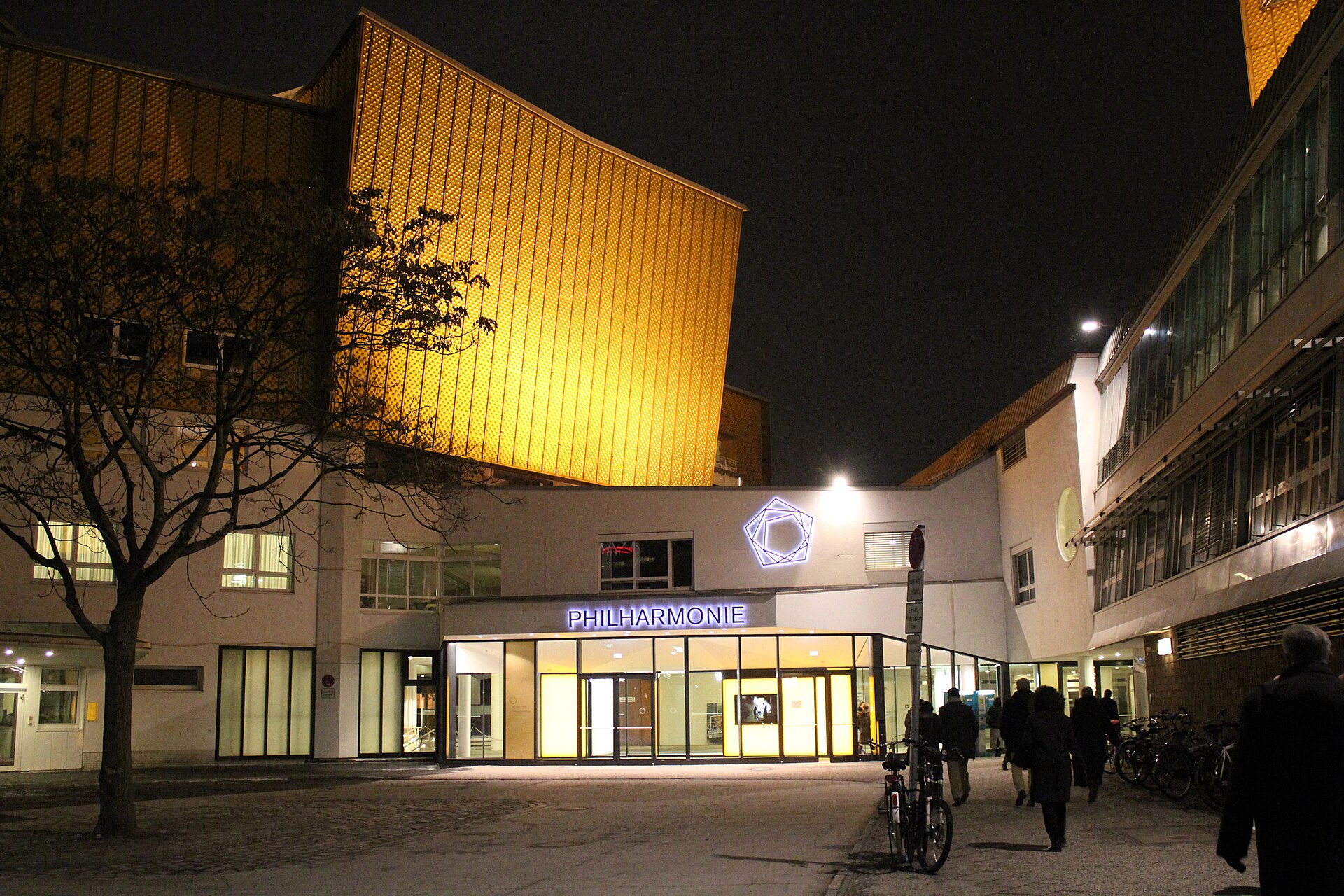
Explore more: more iconic music venues.
Berliner Philharmonie FAQs
Who designed the Berliner Philharmonie?
German architect Hans Scharoun designed the building, which opened in 1963. The adjoining Kammermusiksaal was completed in 1987 by Edgar Wisniewski, based on Scharoun’s sketches.
How many people can the Berliner Philharmonie hold?
The Grand Hall seats about 2,440 people, while the smaller Kammermusiksaal chamber music hall seats around 1,180.
What orchestra performs at the Berliner Philharmonie?
The hall is the home venue of the Berlin Philharmonic Orchestra, one of the world’s leading orchestras.
Get More from Berliner Philharmonie
Log the coasters, stadiums, and venues you’ve experienced, rate Berliner Philharmonie, and see what your friends thought. Get the ThrillZing app.
Photo: Unknown German photographer / Public domain, via Wikimedia Commons.