
The Virginia Living Museum in Newport News is a rare hybrid attraction, blending a zoo, aquarium, science center, and planetarium into a single campus dedicated to the plants and animals native to Virginia. It traces its roots to 1966, when it opened as the Junior Nature Museum and Planetarium, before expanding and reopening under its current name in 1987.
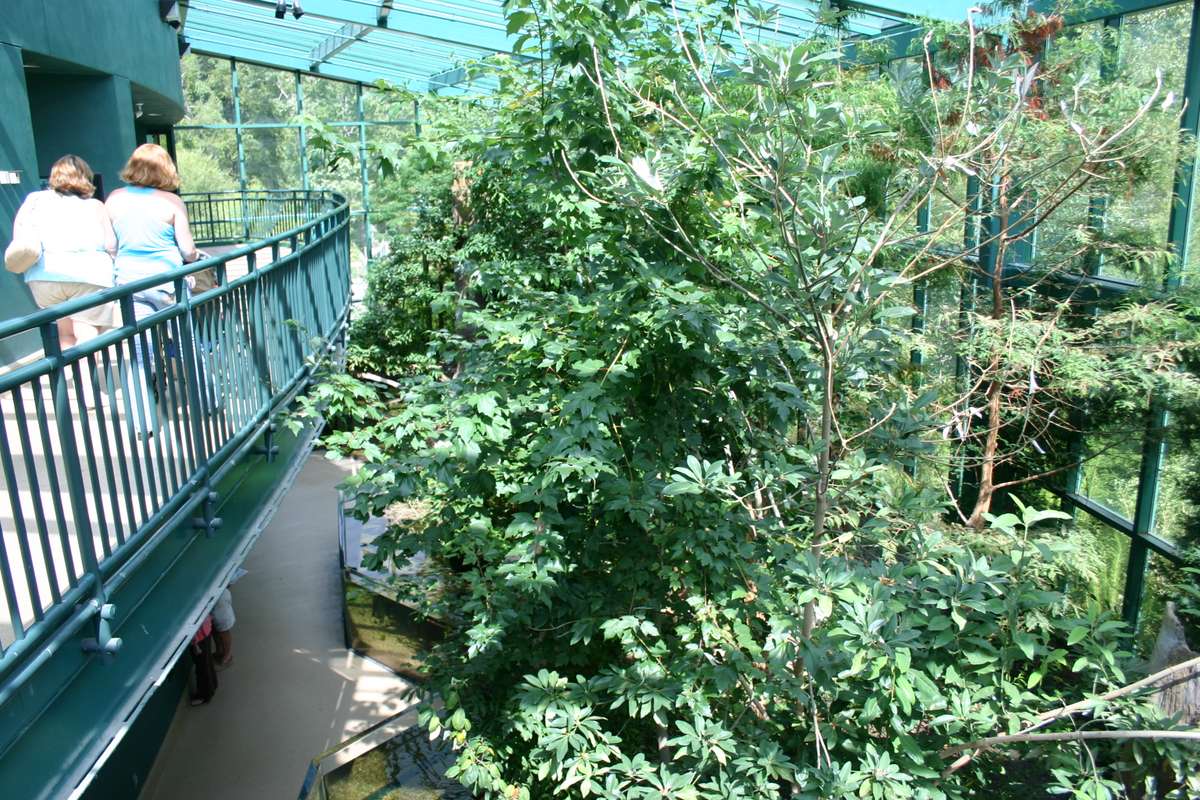
Rather than showcasing exotic animals from around the world, the museum focuses entirely on species found within Virginia’s own borders, from Chesapeake Bay fish to Appalachian mammals. Indoor galleries recreate the state’s distinct ecosystems, while an outdoor boardwalk trail lets visitors walk among bobcats, otters, and endangered red wolves in naturalistic habitats.
Stats at a Glance
- Location: Newport News, Virginia
- Opened: 1966 (as Junior Nature Museum and Planetarium); renamed Virginia Living Museum in 1987
- Size: 62,000-square-foot museum building (added 2004) on a roughly 23-acre campus
- Species count: 250+ native Virginia species
- Annual visitors: more than 270,000
- Famous for: 30,000-gallon Chesapeake Bay exhibit and endangered red wolves
Native Habitats, Indoors and Out
Inside, the museum recreates Virginia’s major ecosystems one gallery at a time: a coastal plain, the Piedmont, an Appalachian mountain cove, a cypress swamp, an underground cave exhibit, and a gallery devoted to nocturnal animals. The centerpiece Chesapeake Bay exhibit holds roughly 30,000 gallons of water and showcases fish native to the bay.
Outdoors, a three-quarter-mile boardwalk trail winds past natural-habitat enclosures for bobcats, river otters, beavers, raccoons, foxes, coyotes, deer, and red wolves, whose exhibit opened in 2003 as the first permanent public red wolf display in Virginia. A 5,500-square-foot aviary, waterfall trail, and butterfly garden round out the grounds.
Science, Conservation, and the Night Sky
Beyond its animal collection, the museum operates the Abbitt Planetarium, offering full-dome shows about astronomy and ecology, and in November 2024 opened a new Wild Care Center along the boardwalk trail with a veterinary suite and habitats for animal ambassadors used in wildlife rehabilitation and education.
The Virginia Living Museum is accredited by both the Association of Zoos and Aquariums and the American Alliance of Museums, a dual distinction held by relatively few institutions, reflecting its dual role as both a living museum and a conservation-focused science center.
Explore more: more Zoos & Aquariums to explore.
Zoo days are long and the shade isn't always where the animals are.
Clips to a stroller, wagon or backpack strap. Quiet enough that it won't wake a napping toddler.
Cold water for the whole loop around the zoo, with a straw lid that doesn't leak in the bag.
Virginia Living Museum FAQs
Where is the Virginia Living Museum located?
It’s located in Newport News, Virginia, on the Virginia Peninsula.
What kind of animals can you see at the Virginia Living Museum?
The museum focuses exclusively on species native to Virginia, including red wolves, bobcats, river otters, beavers, foxes, coyotes, deer, and native fish species in its Chesapeake Bay exhibit.
Does the Virginia Living Museum have a planetarium?
Yes, the Abbitt Planetarium offers full-dome shows covering astronomy and ecology as part of the museum’s combined science center experience.
Get More from Virginia Living Museum
Log the coasters, stadiums, and venues you’ve experienced, rate Virginia Living Museum, and see what your friends thought. Get the ThrillZing app.
Photo: Ryan Somma from Occoquan, USA / CC BY-SA 2.0, via Wikimedia Commons.