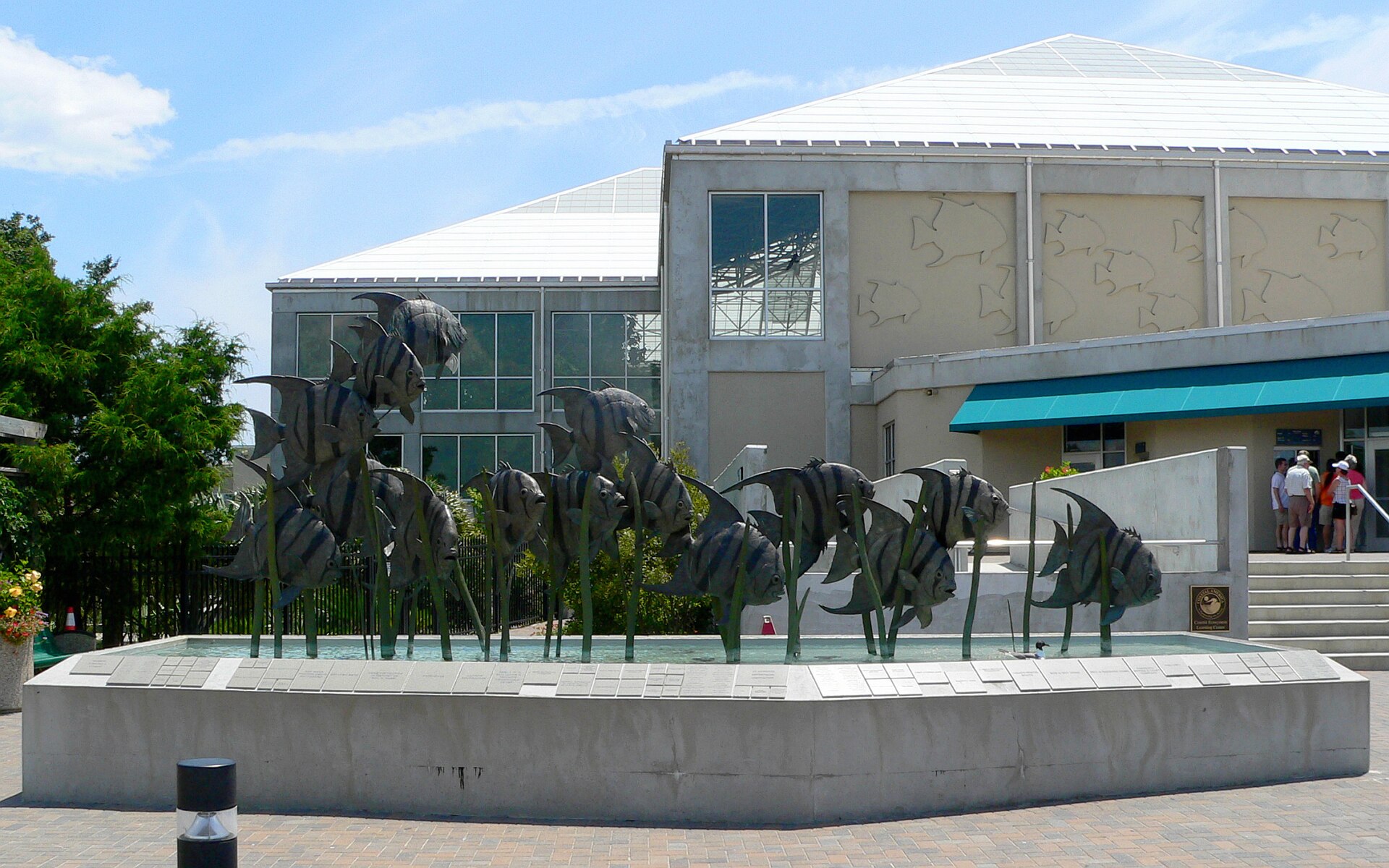
North Carolina Aquariums is a state-run system of three public aquariums strung along the coast at Fort Fisher (Kure Beach), Pine Knoll Shores, and Roanoke Island. The system traces back to September 10, 1976, when the state opened three Marine Resources Centers built primarily for research and education, each with modest public exhibit space. In 1986 they were rebranded as full aquariums, and a wave of expansions between 2000 and 2006 tripled the size of all three facilities.
Today each site is accredited by the Association of Zoos and Aquariums and run by the Aquariums Division of the North Carolina Department of Natural and Cultural Resources. Roanoke Island centers its exhibits on a USS Monitor replica, Pine Knoll Shores around a German U-352 submarine replica, and Fort Fisher around a large shark habitat, together drawing coastal visitors year-round to see North Carolina’s native marine life up close.
Stats at a Glance
- Location: Kure Beach, Pine Knoll Shores & Roanoke Island, NC
- Opened: September 10, 1976 (as Marine Resources Centers)
- Renamed Aquariums: 1986
- Largest habitat: 306,000 gallons (Pine Knoll Shores’ Living Shipwreck)
- Combined water volume: about 1.3 million gallons across all three sites
- Annual visitors: over 1 million systemwide
- Famous for: Fort Fisher’s Cape Fear Shoals shark tank and albino alligator
Three Sites, One System
Each aquarium has its own personality built around a shipwreck theme. Fort Fisher’s 235,000-gallon Cape Fear Shoals tank anchors its shark exhibits, Pine Knoll Shores built its centerpiece habitat around a sunken-ship set, and Roanoke Island’s 285,000-gallon shark habitat pairs with a full-scale USS Monitor replica honoring the Civil War ironclad that sank nearby.
The state closed Fort Fisher in November 1999 for a major rebuild, reopening in March 2002 with total capacity jumping from 77,000 to 455,000 gallons. Roanoke Island’s renovation debuted in 2000 and Pine Knoll Shores followed in 2006, giving all three sites their current modern footprints.
Conservation and Milestones
Beyond exhibits, the system runs hands-on conservation work, including the Sea Turtle Assistance and Rehabilitation (STAR) Center at Roanoke Island, which opened to the public in June 2014 to treat and release injured sea turtles. Fort Fisher reported a record-breaking 2023, logging over 502,000 visitors and housing roughly 239 species. In 2026 the system marked its 50th anniversary with events coordinated through its nonprofit partner, the North Carolina Aquarium Society.
Explore more: Explore more Zoos & Aquariums.
Little hands reach in, snacks stay in — a lifesaver on long zoo days.
Easier on your back than carrying in arms all day at the zoo.
Cheap insurance for splash zones, water rides and surprise showers.
North Carolina Aquariums FAQs
How many North Carolina Aquariums are there?
Three: the aquariums at Fort Fisher (Kure Beach), Pine Knoll Shores, and Roanoke Island, all operated by the state’s Department of Natural and Cultural Resources.
When did the North Carolina Aquariums open?
The original sites opened September 10, 1976, as Marine Resources Centers and were renamed North Carolina Aquariums in 1986.
Which North Carolina Aquarium is the biggest?
Fort Fisher holds the most total water volume at about 455,000 gallons, though Pine Knoll Shores’ single largest tank, at 306,000 gallons, is the biggest individual habitat in the system.
Get More from North Carolina Aquariums
Log the coasters, stadiums, and venues you’ve experienced, rate North Carolina Aquariums, and see what your friends thought. Get the ThrillZing app.
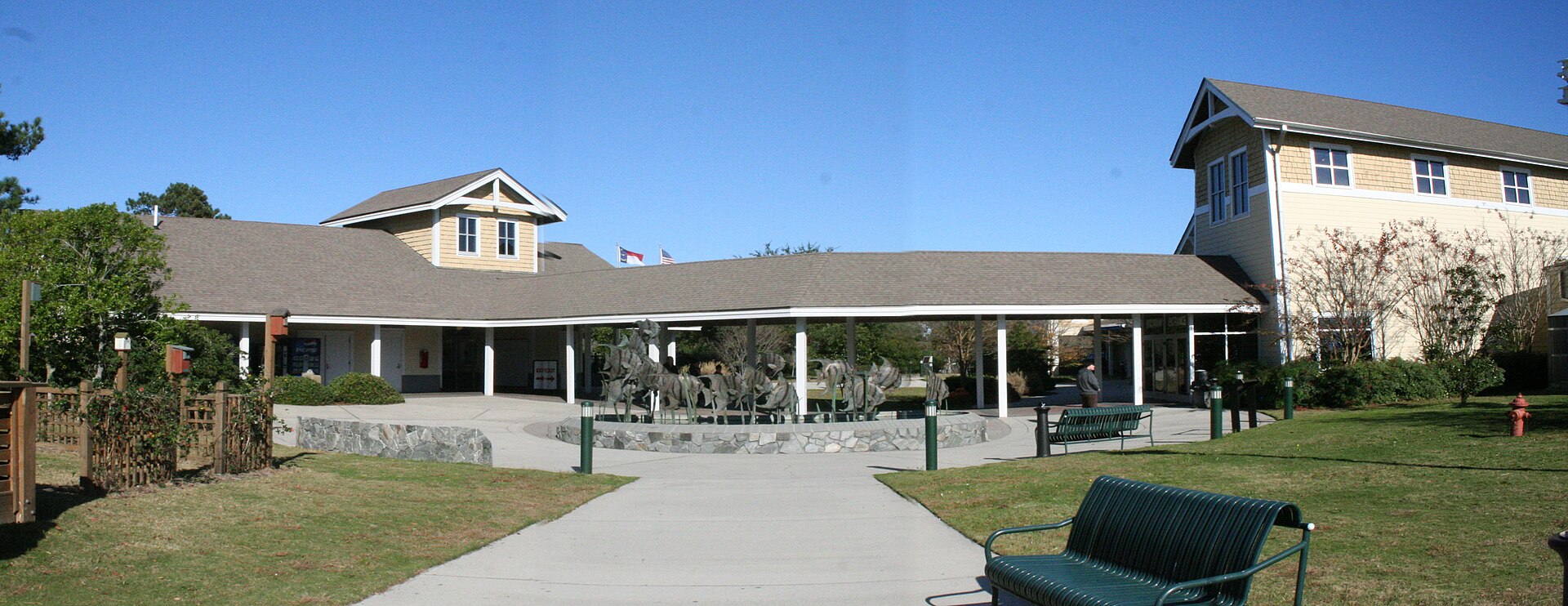
Photo: Ken Thomas / Public domain, via Wikimedia Commons.