
The Key West Aquarium has anchored the island’s waterfront near Mallory Square since the Great Depression, when construction began in 1932 at the urging of Dr. Robert O. Van Deusen, a former superintendent of Philadelphia’s Fairmount Park Aquarium. The project was funded by the federal Civil Works Administration and later the Florida Emergency Relief Administration, directed by Julius Stone, with crews of unemployed veterans mixing the structure’s concrete with seawater since fresh water was scarce on the island. It opened to the public on February 17, 1935, billed as the first open-air aquarium in the United States, with admission set at 15 cents for adults and 5 cents for children.
Nearly a century later, the aquarium is still a fixture of Old Town Key West, now operated by Historic Tours of America. Visitors walk among sharks, sea turtles, moray eels, and tropical reef fish while staff lead hands-on touch-tank encounters and shark feedings, continuing the open-air format that made the attraction unusual when it first opened.
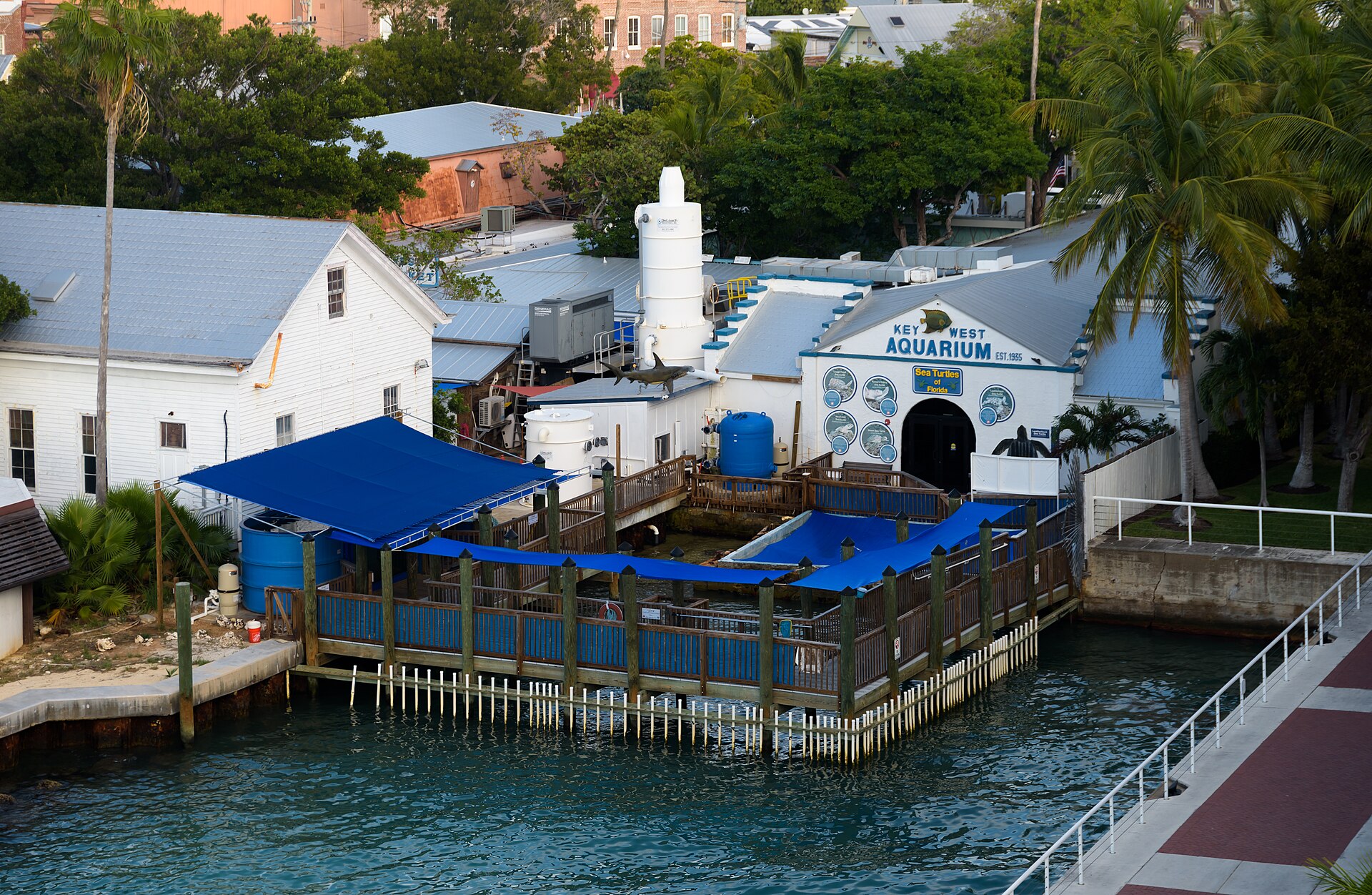
Stats at a Glance
- Location: Key West, Florida
- Opened: February 17, 1935
- Operator: Historic Tours of America
- Size: 50,000-gallon Atlantic Shores exhibit tank
- Species: About 100 marine species
- Famous For: First open-air aquarium in the United States
A Depression-Era Landmark
The aquarium’s origins trace to the depths of the Great Depression, when Key West’s city government was effectively insolvent and the federal government stepped in to develop tourism as an economic lifeline. Built with Civil Works Administration and Florida Emergency Relief Administration funding, the aquarium survived a major hurricane that struck just seven months after its 1935 opening, and later served as a U.S. military firing range during World War II before reopening to the public. A roof was added in the 1960s to control algae growth, and the facility underwent a major renovation and expansion in the late 1970s and early 1980s under Historic Tours of America founders Chris Belland and Ed Swift III.
A 2023 restoration modernized the site further, re-theming exhibits around the Keys’ marine ecosystems and adding a glass entryway featuring a 1937 photograph of guests entering the open-air aquarium, along with a new touch tank and an audiovisual show. The rehabilitation earned the Historic Florida Keys Foundation’s Award of Excellence.
Touch Tanks and Shark Feedings
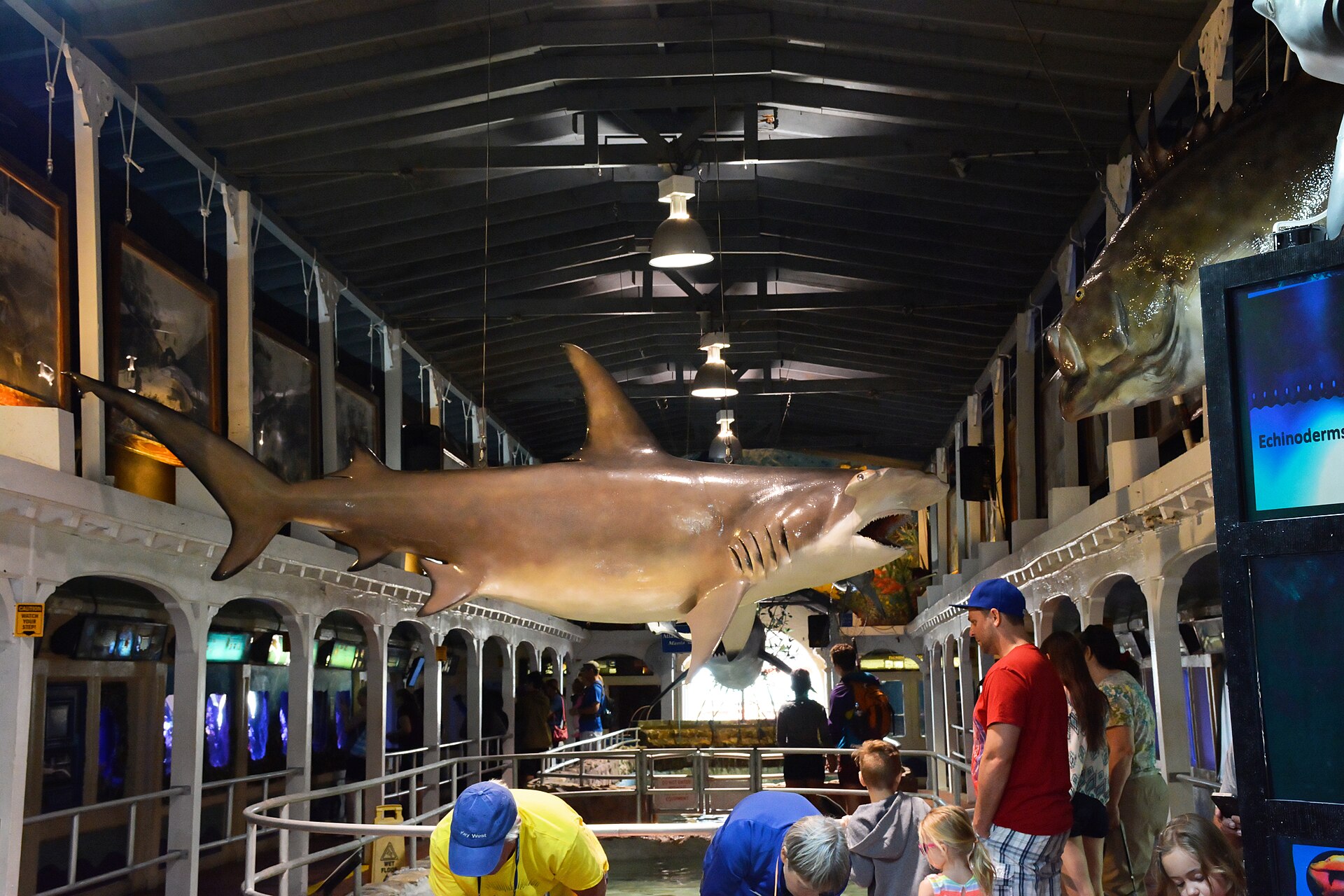
The centerpiece Atlantic Shores exhibit recreates a mangrove shoreline in a 50,000-gallon tank stocked with tarpon, barracuda, sharks, and sea turtles. A touch tank lets guests handle conchs, sea stars, sea urchins, sea cucumbers, hermit crabs, and horseshoe crabs native to the Florida Keys.
Staff-led shark feedings and sea turtle feeding demonstrations run several times daily, part of the conservation-focused talks that have become a staple of the self-guided tour. As the only public aquarium in Key West, it remains a short walk from the cruise docks and Mallory Square’s sunset celebration.
Explore more: more zoos and aquariums worth visiting.
Let them photograph their own favorite animals — and keep your phone in your pocket.
Hauls kids, coolers and souvenirs across a big zoo or park, folds flat for the trunk.
Little hands reach in, snacks stay in — a lifesaver on long zoo days.
Key West Aquarium FAQs
When did the Key West Aquarium open?
Construction began in 1932 with Civil Works Administration and Florida Emergency Relief Administration funding, and the aquarium opened to the public on February 17, 1935.
Who owns the Key West Aquarium?
It is owned and operated by Historic Tours of America, which also renovated and expanded the facility starting in the late 1970s.
Can visitors touch the animals at the Key West Aquarium?
Yes. The touch tank allows guests to handle conchs, sea stars, sea urchins, sea cucumbers, and hermit crabs, and staff also host shark feeding encounters.
Get More from Key West Aquarium
Log the coasters, stadiums, and venues you’ve experienced, rate Key West Aquarium, and see what your friends thought. Get the ThrillZing app.
Photo: Marc Averette / CC BY-SA 3.0, via Wikimedia Commons.