
Dresden Zoo (Zoo Dresden) opened its gates on May 9, 1861, on the southern edge of the Großer Garten, the vast park at the heart of the Saxon capital. That makes it the fourth-oldest zoo in Germany and one of the oldest zoos in the world still operating. Today it houses about 3,000 animals of almost 400 species on 13 hectares, with a particular emphasis on Asian wildlife.
The zoo began, improbably, with poultry: in 1859 the Dresden ‘Association for Chicken Breeding’ proposed a zoological garden, and a committee working with the city took up the plan. King Johann of Saxony made part of the royal Great Garden available, the celebrated Prussian landscape architect Peter Joseph Lenné laid out the grounds, and architect Carl Adolph Canzler designed the buildings. After two years of construction the zoo opened under its first director, Albin Schoepf.
Key Stats
| Opened | May 9, 1861 |
| Location | Dresden, Saxony, Germany (Großer Garten) |
| Animals / species | About 3,000 animals of almost 400 species |
| Area | 13 hectares (about 32 acres) |
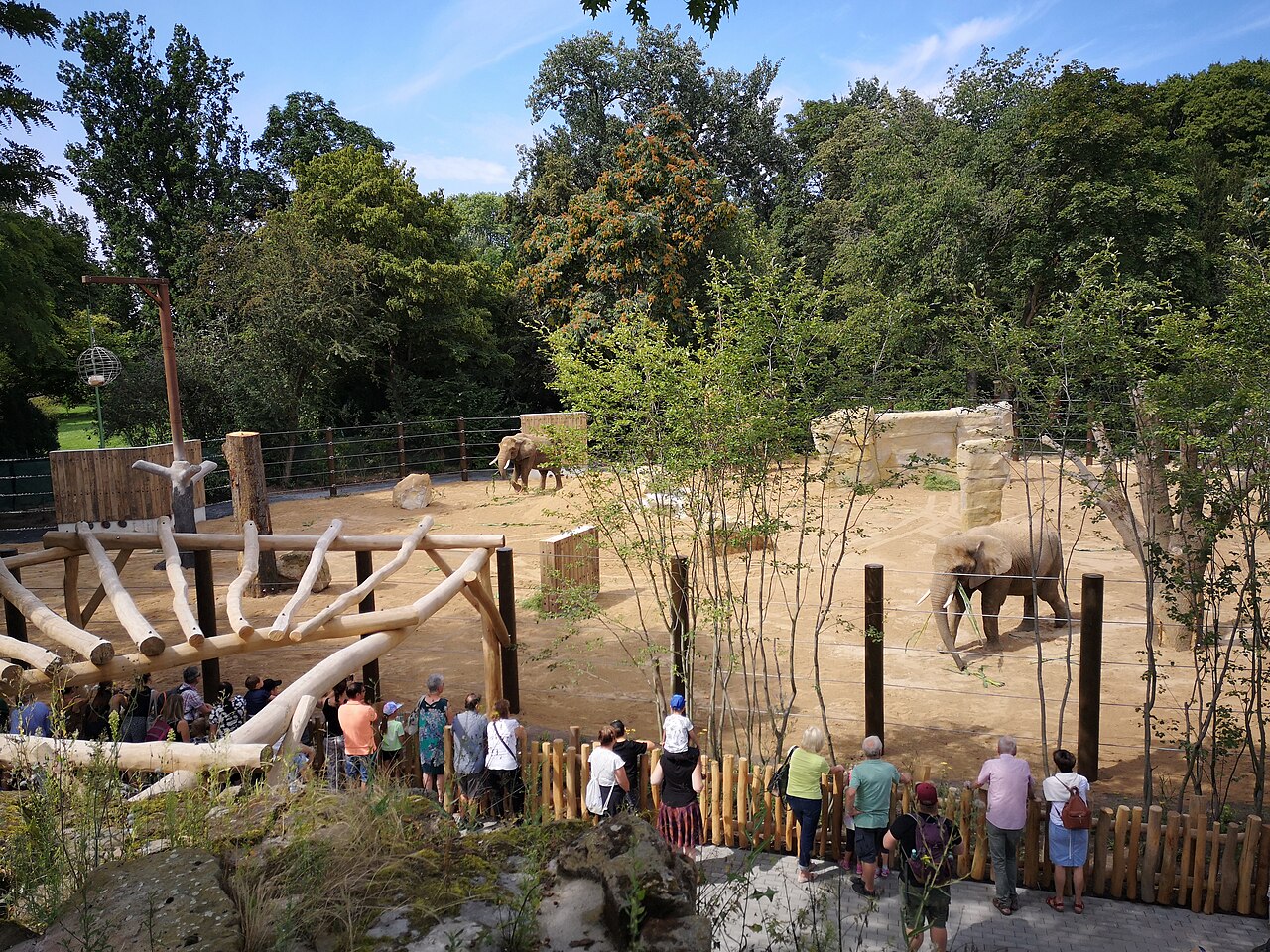
The Orangutan Zoo
Dresden has cared for great apes, especially orangutans, since 1873 — one of the longest such traditions anywhere. In 1927 the zoo drew worldwide attention when, for the first time, the growth of an orangutan raised naturally by its own mother was observed and scientifically documented. The foundations of the modern zoo were laid between 1910 and 1934 under director Gustav Brandes, who restructured Dresden from a pure animal show into an early example of species-appropriate keeping, with animals displayed in more natural surroundings.
War, Fiction and Recovery
The zoo’s location in the city centre put it in the path of the devastating February 1945 bombing of Dresden, an episode dark enough to have entered literature: in Jonathan Safran Foer’s novel Extremely Loud & Incredibly Close, a character recalls being ordered to shoot the animals that escaped their cages during the raid. The rebuilt zoo grew into one of Saxony’s best-loved attractions, and it remains a member of both the World Association of Zoos and Aquariums (WAZA) and the European Association of Zoos and Aquaria (EAZA).
Getting There: Trams and a Children’s Railway
Few zoos have a stranger transit connection. Besides tram lines 9 and 13 on its southern side, Dresden Zoo has its own station on the Dresdner Parkeisenbahn — a miniature railway running through the Großer Garten that is largely operated by children.
Little hands reach in, snacks stay in — a lifesaver on long zoo days.
Easier on your back than carrying in arms all day at the zoo.
Cheap insurance for splash zones, water rides and surprise showers.
FAQ
When did Dresden Zoo open?
On May 9, 1861. It is Germany’s fourth-oldest zoo and ranks 13th among the world’s oldest zoos still operating.
How many animals live at Dresden Zoo?
About 3,000 animals of almost 400 species, with a notable focus on Asian species and a great-ape tradition dating back to 1873.
Where is the zoo located?
On the southern edge of the Großer Garten, Dresden’s central park, reachable by tram lines 9 and 13 or by the park’s famous children-operated miniature railway.
Photo: Jörg Blobelt via Wikimedia Commons (CC BY-SA 4.0)