
The Budapest Zoo & Botanical Garden (Fővárosi Állat- és Növénykert) opened on 9 August 1866, making it the oldest zoo in Hungary and one of the oldest in the world. Uniquely for a major zoo, it sits inside the City Park in the very center of Budapest, reachable by the historic Line 1 metro, and its grounds double as a nature reserve dotted with prized Art Nouveau buildings.
Today the zoo keeps 1,072 animal species — more than 10,000 individual animals — on just 18.4 hectares, and welcomes around 1 to 1.1 million visitors a year. Its combination of age, architecture, and a collection that includes Komodo dragons and wombats makes it a standout among the oldest zoos in the world still operating.
Stats at a Glance
- Location: City Park (Városliget), Budapest, Hungary
- Opened: 9 August 1866
- Area: 18.4 hectares (about 45 acres)
- Animals: 1,072 species; more than 10,000 individual animals
- Annual visitors: 1–1.1 million
- Famous for: Its Art Nouveau Elephant House and city-center setting inside a nature reserve
Founded by Patriots, Saved by Showmen
The zoo was the initiative of a circle of Hungarian patriots and scientists — among them geologist József Szabó and zoologist János Xántus, who became its first director. Emperor Franz Joseph and Queen Elizabeth donated a giraffe and other animals, and the first lion house opened in 1876. But exotic animals were expensive: to stay afloat, management famously hired fire eaters, sword swallowers, and tightrope dancers to draw crowds. Even that wasn’t enough — the operating company went bankrupt after Hungary’s Millennium celebrations in 1896.
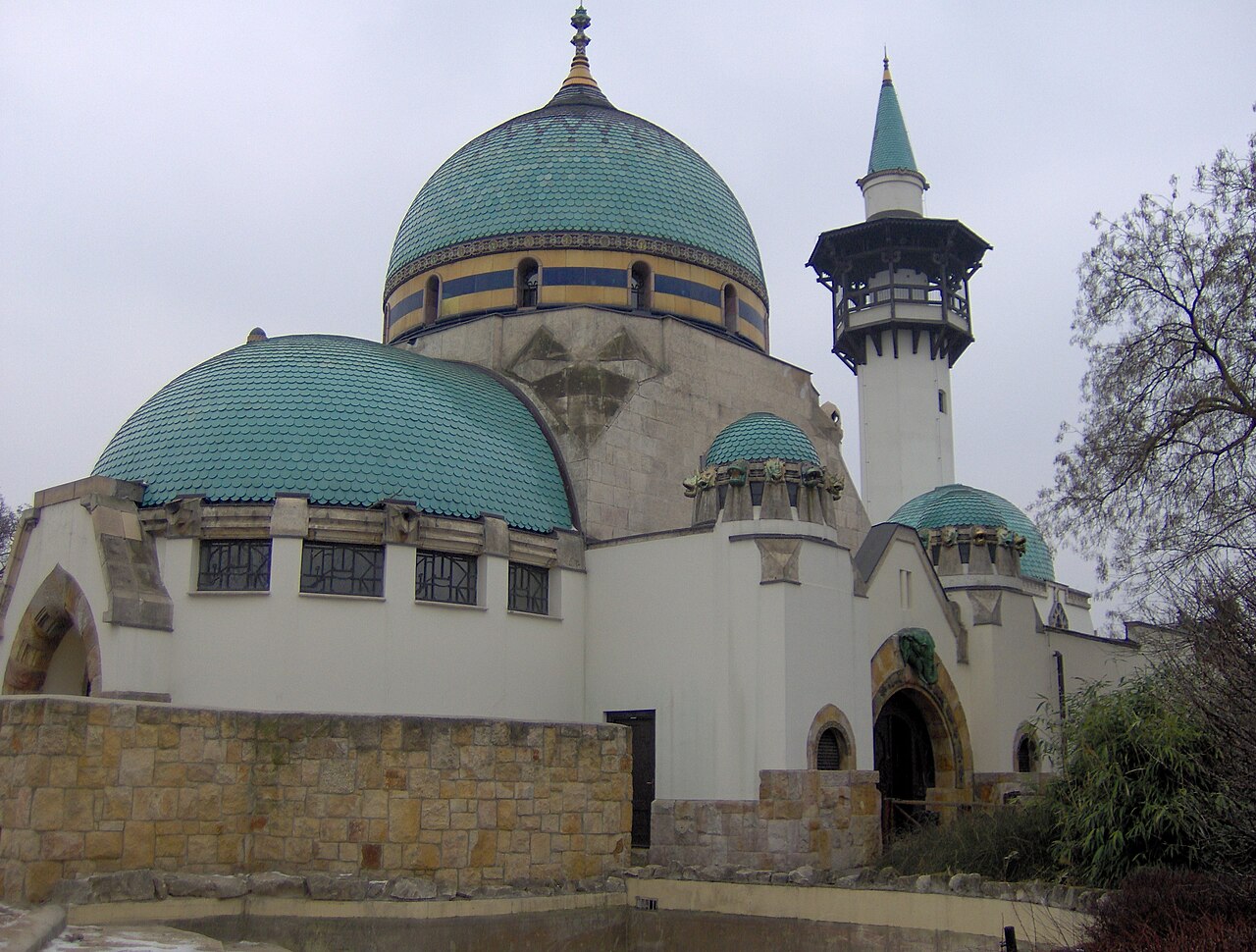
The city of Budapest took the zoo over in 1907 and rebuilt it almost completely between 1909 and 1912. That reconstruction gave the zoo its architectural identity: the fairy-tale main gate and the domed, minaret-topped Elephant House by architect Kornél Neuschloss, alongside buildings by Károly Kós, made it one of the most modern zoos in Europe when it reopened on 20 May 1912.
Destruction and Rebirth
The Second World War nearly erased the zoo. During the Siege of Budapest the grounds were bombed, most buildings were destroyed, and of roughly 2,000 animals only 15 survived. The zoo reopened in 1945 with a few dozen animals and was rebuilt over the following decades, with major modernizations in the 1950s and 1960s and a painstaking restoration of the historic buildings from the 1990s onward. In 2007 the zoo made headlines when the first rhinoceros ever conceived by artificial insemination was born here.
What You’ll See Today
The collection spans themed zones: the Savannah Zone with giraffes and white rhinos, the India House with Asiatic lions and striped hyenas, an Australia Zone with cassowaries and wombats, and America Tropicana in the old palm house. The Magical Hill inside the Great Rock explores evolution and biodiversity with more than 100 species and interactive exhibits. Primate fans are especially well served, with western lowland gorillas, Sumatran orangutans, and one of Europe’s oldest siamangs.
Explore more: Explore more Zoos & Aquariums.
Hauls kids, coolers and souvenirs across a big zoo or park, folds flat for the trunk.
Little hands reach in, snacks stay in — a lifesaver on long zoo days.
Easier on your back than carrying in arms all day at the zoo.
Budapest Zoo FAQs
How old is Budapest Zoo?
It opened on 9 August 1866, making it the oldest zoo in Hungary and one of the oldest anywhere in the world.
Why is the Elephant House famous?
Built during the 1909–1912 reconstruction to designs by Kornél Neuschloss, the Art Nouveau Elephant House with its ceramic-clad dome and minaret-like tower is a protected architectural landmark.
How many animals does the zoo have?
The zoo houses 1,072 species and more than 10,000 individual animals on 18.4 hectares in central Budapest.
Get More from Budapest Zoo & Botanical Garden
Log the coasters, stadiums, and venues you’ve experienced, rate Budapest Zoo & Botanical Garden, and see what your friends thought. Get the ThrillZing app.
Photo: Martin Belam (currybet) from Niederalm, Austria / CC BY-SA 2.0, via Wikimedia Commons.