
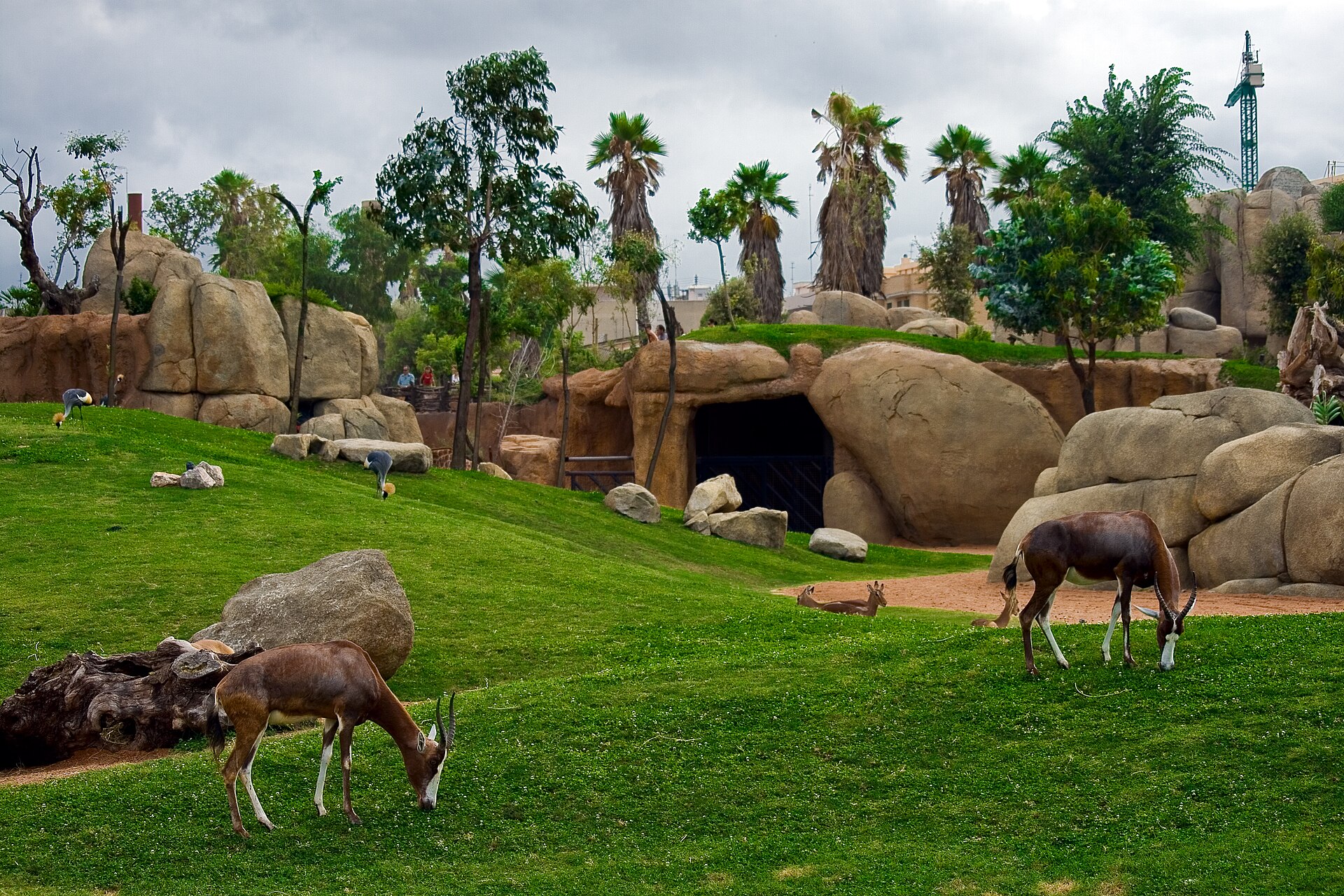
Bioparc Valencia opened in 2008 as a new-generation zoo built around a concept called “Zooimersion,” where visitors step into recreated African ecosystems rather than viewing animals from behind bars or fences. Owned by the City Council of Valencia and designed and managed by the Spanish zoo specialist Rainforc, the park replaced traditional cages with rivers, ponds, streams, and rock formations that separate people from wildlife while keeping the illusion of a shared landscape intact.
Spread across 10 hectares (about 25 acres) in the Cabecera Park area of the city, Bioparc Valencia is home to roughly 4,000 animals representing about 200 species, drawing around 650,000 visitors a year. The park is organized into three main recreated habitats — the Savannah, Madagascar, and Equatorial Africa — and it made local history as the birthplace of Makena, the first elephant born in the Valencian Community.

Stats at a Glance
- Location: Valencia, Spain
- Opened: 2008
- Size: 10 hectares (about 25 acres)
- Species: About 200 species, ~4,000 animals
- Annual visitors: About 650,000
- Famous for: Barrier-free “Zooimersion” African habitats
The Zooimersion Experience
Instead of cages and railings, Bioparc Valencia uses moats, dense vegetation, glass, and elevation changes to create the sense that visitors are walking through open habitat rather than past enclosures. The park’s three zones recreate distinct African ecosystems: the open grasslands of the Savannah, home to lions and giraffes; the island habitats of Madagascar, featuring several species of lemur including the endangered grey bamboo lemur; and the dense jungle of Equatorial Africa, where gorilla troops share space with other primates, buffaloes, and bush pigs.
A Local Milestone
Bioparc Valencia has become one of the city’s most visited attractions since opening, credited with helping popularize the immersive zoo design approach in Spain. The park gained particular local attention as the birthplace of Makena, the first elephant born in the Valencian Community, cementing its role in regional conservation and breeding efforts alongside its focus on habitat-based animal welfare.
Explore more: Explore more top zoos and aquariums.
Bioparc Valencia FAQs
What does “Zooimersion” mean at Bioparc Valencia?
Zooimersion is the park’s design philosophy of removing visible cages and railings, using natural barriers like water, rocks, and plants instead so visitors feel immersed in the same landscape as the animals.
When did Bioparc Valencia open?
Bioparc Valencia opened in 2008 and is owned by the City Council of Valencia, with design and management by the Spanish zoo company Rainforc.
How many animals live at Bioparc Valencia?
The zoo is home to roughly 4,000 animals across about 200 species, spread across recreated Savannah, Madagascar, and Equatorial Africa habitats within its 10-hectare grounds.
Get More from Bioparc Valencia
Log the coasters, stadiums, and venues you’ve experienced, rate Bioparc Valencia, and see what your friends thought. Get the ThrillZing app.
Photo: Googledance / CC BY-SA 1.0, via Wikimedia Commons.