
Yale Bowl is the 61,446-seat stadium in New Haven, Connecticut, where Yale has played every home football game since it opened on November 21, 1914 — the answer to “where does Yale play football” for well over a century now, and one of the oldest stadiums still hosting a major college program.
Knowing the capacity is just the start, though. This guide covers how big Yale Bowl is today, how its seating has shrunk over the decades, why its circular design became the blueprint for the Rose Bowl and nearly every ‘bowl’ game since, and the practical details — parking, bag rules, tailgating, and best seats — you need to actually go see a game there.
Quick Answer
Yale football plays at Yale Bowl, an on-campus stadium at 81 Central Avenue in New Haven, Connecticut. It currently seats 61,446, down from an original capacity of about 70,869 before renovations in 1994 and 2006 reduced it. Opened in 1914, it was the first bowl-shaped stadium built in the U.S. and has been a National Historic Landmark since 1987.
Where Does Yale Play Football?
Every Yale Bulldogs home game is played at Yale Bowl, located at 81 Central Avenue in New Haven, about two miles from Yale’s central campus. The team has played there continuously since 1914 — no other venue has hosted Yale football since. Yale Bowl is also where Yale hosts its biggest rivalry matchup, The Game against Harvard, in years when it falls on Yale’s home schedule.
Yale Bowl Capacity, Then and Now
Yale Bowl’s capacity today is 61,446, according to Yale Athletics’ official facility page. That number has shrunk twice from the original design: the Bowl opened in 1914 with roughly 70,869 seats (some references list it as 70,896), briefly making it the largest football-specific stadium ever built. Renovations in 1994 trimmed capacity to about 64,246, and a further round of upgrades in 2006 brought it down to today’s 61,446 — still large enough to rank among the biggest stadiums in NCAA Division I FCS football.
Those numbers make Yale Bowl far bigger than most Ivy League venues and larger than many FBS stadiums, even though actual attendance at a typical regular-season game is usually a fraction of capacity, often in the 7,000–10,000 range. Most of the bowl sits empty except for marquee games like The Game against Harvard, which can still draw 50,000 or more.
A Design That Changed Football Forever
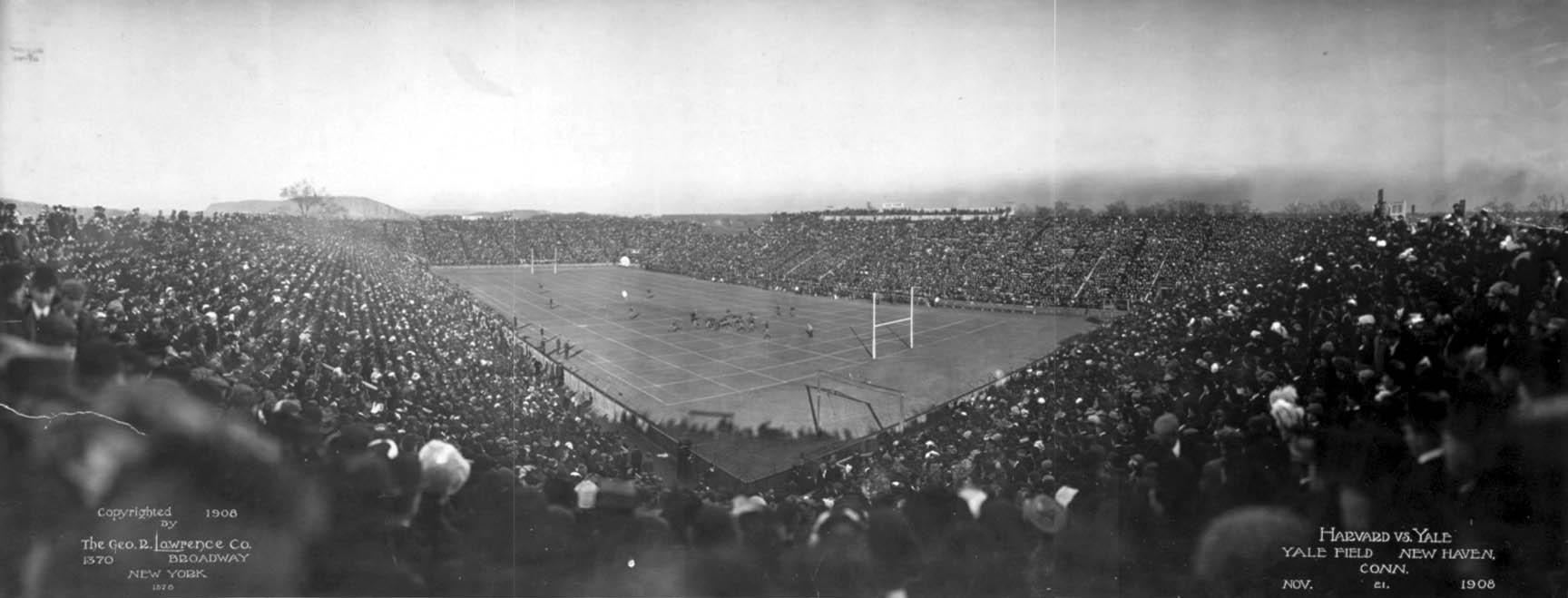
Before Yale Bowl, American stadiums typically used open horseshoe or grandstand seating. Yale Bowl’s continuous elliptical bowl let every seat wrap around the action, a layout that quickly became the template for major college and professional venues, including the Rose Bowl in Pasadena. The stadium originally cost about $750,000, roughly $24 million in today’s dollars, and its opening game on November 21, 1914, against Harvard drew more than 68,000 spectators.
The largest crowd in the Bowl’s history was an estimated 80,000 fans who packed in to watch Yale face Army on November 3, 1923, filling standing room well beyond the seated capacity. Crowds above 70,000 turned out on about twenty occasions over the stadium’s history, most recently in 1983 for the 100th playing of The Game against Harvard.
Game-Day Traditions
Yale Bowl’s original design famously omitted locker rooms, requiring players to dress at a separate facility and walk to the field — a quirk visiting NFL teams disliked during the New York Giants’ tenancy there in 1973 and 1974. Yale turned that walk into tradition: the ‘Bulldog Walk,’ where the team proceeds roughly 200 yards from the Class of 1954 Field House to the stadium before kickoff.
The playing surface was natural grass for over a century before Yale switched to FieldTurf in 2019. More than a hundred years after it opened, Yale Bowl still hosts Yale football each fall, making it one of the oldest stadiums in continuous use in the United States.
Getting There and Parking
Yale Bowl sits just off I-95 and Route 34, with highway access via Exit 44, a few minutes’ drive from downtown New Haven. On game days, the main general-parking lots — Lot A (visiting fans) and Lot D — open several hours before kickoff, while premium lots F, F-Special, H, and YUAD are reserved for Yale Football Association members and season-lot holders. ADA parking is available in Lot YUAD.
Fans without a car can use Yale’s free campus shuttle, which runs from Payne Whitney Gym to Yale Bowl Gate B on game days, or the designated rideshare drop-off point on Derby Avenue. Gates to the stadium itself typically open about 90 minutes before kickoff. For exact lot assignments, current parking rates, and shuttle times on a specific game day, check Yale Athletics’ official Game Day Central page.
Bag Policy and Tailgating Rules
Yale enforces a clear-bag policy at Yale Bowl: bags must be clear plastic, vinyl, or PVC and no larger than 12″ x 12″ x 6″, or a small clutch-style bag no bigger than about 6.5″ x 4.5″ with no strap; one-gallon clear resealable bags are also allowed. Fans who arrive with a non-compliant bag are asked to return it to their car, though clear bags are typically sold at the Bowl on game days for a small fee.
Tailgating is part of the culture here. Yale permits it in the designated lots (A, D, F, F-Special, H, and YUAD) starting when the lots open and running up to kickoff. Gas grills with propane cylinders up to 20 lbs, tables, canopy tents, and chairs are allowed; kegs, glass containers, open fires, generators, and amplified music are not. Anyone 21 or older can have alcohol in the tailgate lots, but it’s a different story once you’re through the gates — alcohol inside the stadium bowl is limited to what’s sold at concessions.
Best Seats, Accessibility, and Concessions
Tickets are typically sold only in the sections between the 20-yard lines, which gives nearly every seat in Yale Bowl a solid angle on the field even though the stadium’s sunken bowl design means there’s no second deck. Seating is wooden bleachers with backs — comfortable enough, but not padded stadium seats — and because Yale Bowl rarely sells out outside of The Game, fans can often move to an open bench for a better view mid-game. The bowl’s roughly 30 field-level portals keep most sections a similar walk from the concourse, and the open elliptical shape exposes nearly the entire seating area to the sky, so there’s no dramatically better side for sun or shade.
Concession stands are spread around the main concourse at several portals, selling typical stadium fare. Accessible seating and parking are available, with ADA parking in Lot YUAD and accessible entry points at the gates, and a medical tent and guest-services station are staffed on the concourse during games.
Planning Your Visit
Tickets go on sale through Yale Athletics’ ticket office, with single-game and season options; Yale students get in free with a valid ID, and faculty and staff receive discounted rates. Because Yale Bowl doesn’t run a year-round box office like a pro stadium, the most reliable way to confirm a specific game’s kickoff time, gate times, and parking details is Yale’s own athletics site. Visit Yale Athletics’ Game Day Central page for current parking, bag-policy, and gate-time details, or the official Yale Bowl facility page for stadium facts and history.
Photos
12 x 10.5 x 6 in. — built to the common stadium clear-bag size. Check your venue's rules.
USB-charged warmers for cold night games — no disposable packets.
Keeps chili hot from the tailgate to the fourth quarter.
Yale Bowl FAQs
How many people does Yale Bowl hold?
Yale Bowl’s current capacity is 61,446. It originally held about 70,869 seats when it opened in 1914, with renovations in 1994 reducing it to roughly 64,246 and a 2006 renovation bringing it down to today’s 61,446.
Where does Yale play football?
Yale plays all of its home football games at Yale Bowl, located at 81 Central Avenue in New Haven, Connecticut, about two miles from Yale’s main campus. It’s been Yale’s only home field since 1914.
When did Yale Bowl open?
Yale Bowl opened on November 21, 1914, with a game against Harvard that drew more than 68,000 spectators.
Why is Yale Bowl historically significant?
It was the first bowl-shaped stadium built in the United States, a design that influenced later venues like the Rose Bowl and helped popularize the term ‘bowl’ for college football games. It was named a National Historic Landmark in 1987.
Can you bring a bag into Yale Bowl?
Only clear bags are allowed: clear plastic, vinyl, or PVC bags up to 12″ x 12″ x 6″, small clutch bags up to about 6.5″ x 4.5″ with no strap, or one-gallon clear resealable bags. Non-compliant bags must be returned to your car, and clear bags are usually sold on-site for a small fee.
Where do you park for a game at Yale Bowl?
General parking is in Lot A (visiting fans) and Lot D, with premium lots F, F-Special, H, and YUAD reserved for Yale Football Association members. ADA parking is in Lot YUAD. Check Yale Athletics’ Game Day Central page for exact rates and lot assignments for a given game.
Is there tailgating at Yale Bowl?
Yes. Tailgating is permitted in the designated parking lots starting when the lots open and running until kickoff, with gas grills, tables, and tents allowed; kegs, glass containers, open fires, and generators are not.
Get More from Yale Bowl
Log the coasters, stadiums, and venues you’ve experienced, rate Yale Bowl, and see what your friends thought. Get the ThrillZing app.