
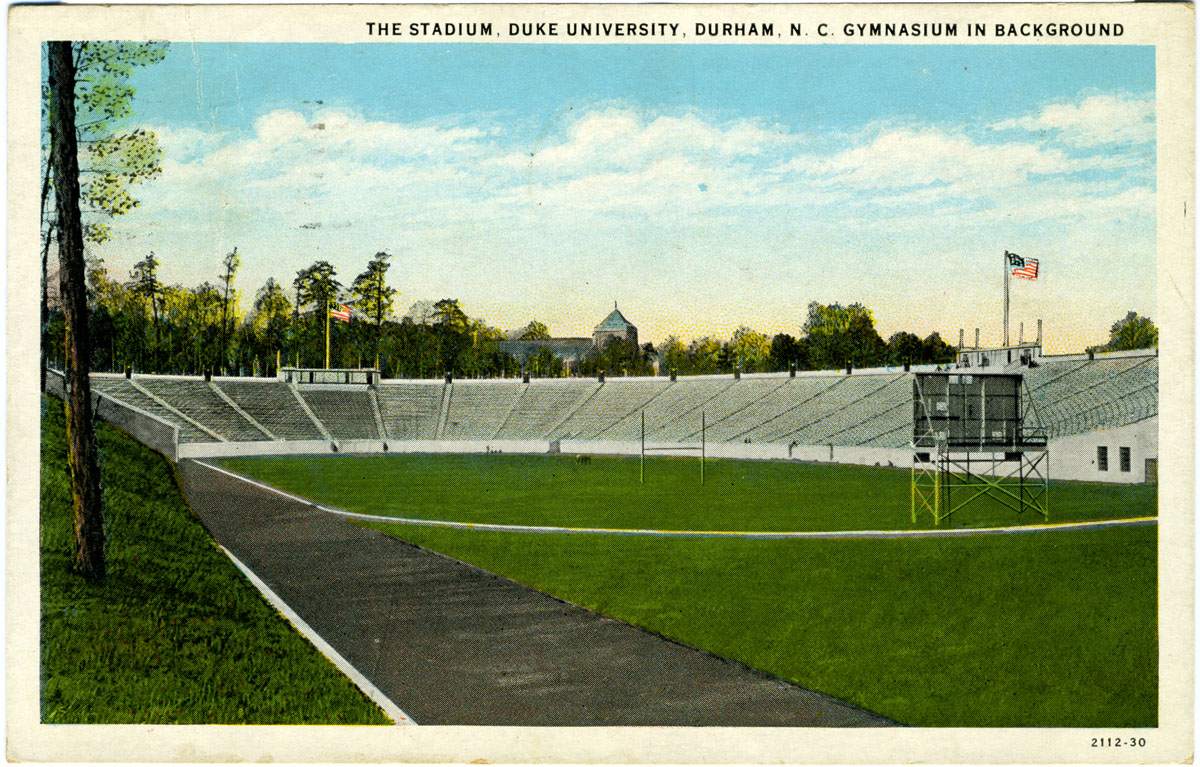
Wallace Wade Stadium opened on October 5, 1929, on Duke University’s campus in Durham, North Carolina, and has served as the home of Duke Blue Devils football for nearly a century. Originally known simply as Duke Stadium, it was renamed in 1967 to honor Wallace Wade, the coach who led the Blue Devils to national prominence in the 1930s.
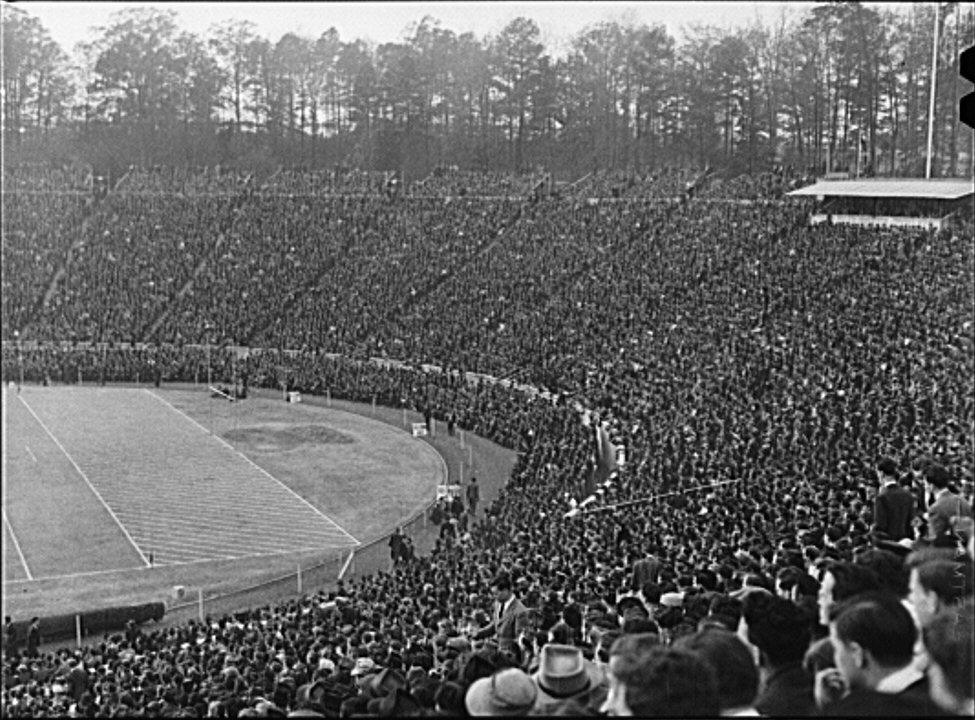
The stadium’s most famous moment came on January 1, 1942, when it hosted the Rose Bowl after wartime fears following the attack on Pearl Harbor forced officials to move the game away from Pasadena, California. It was the first Rose Bowl ever played outside Pasadena, with Oregon State beating Duke 20-16 in front of roughly 56,000 fans.
Stats at a Glance
- Team: Duke Blue Devils (NCAA, ACC)
- Location: Durham, North Carolina
- Opened: October 5, 1929
- Capacity: About 35,018 (as of 2024)
- Playing Surface: Brooks Field (named 2015)
- Notable Event: Hosted the 1942 Rose Bowl, relocated from Pasadena
A Rose Bowl Far From Home
No game defines Wallace Wade Stadium’s legacy more than the 1942 Rose Bowl. With West Coast stadiums deemed vulnerable after Pearl Harbor, officials shifted the matchup between Oregon State and Duke to Durham on short notice. Oregon State pulled off a 20-16 upset in front of a packed crowd, marking the first time in the game’s history that the Rose Bowl was played outside Pasadena. It remains the only time the Rose Bowl has been hosted on a college campus rather than in a dedicated bowl stadium. The game has since left Pasadena only one other time: the 2021 edition moved to AT&T Stadium in Arlington, Texas, after California’s COVID-19 restrictions barred fans from the Rose Bowl stadium, making Wallace Wade and AT&T Stadium the only two venues to have ever hosted the Rose Bowl outside its traditional Pasadena home.
Nearly a Century of Renovation
The stadium has evolved considerably since 1929, including a 2014-2017 renovation that removed its old track, added the Blue Devil Tower with club seating and suites in 2016, and introduced a new video board. In 2024, the north end zone was reshaped into the “Devils Deck,” a standing-room social space that trimmed official capacity to about 35,018 while refreshing the gameday atmosphere for a new generation of fans.
Explore more: Explore more legendary stadiums.
For upper-deck seats. Watch line play at the stadium, or the far side of the park from the top of a lift hill.
Sherpa-lined and windproof, with a waterproof back for wet bleachers. Folds into its own pouch.
For late-season football, outdoor hockey and October park nights. Shake, pocket, and stay warm for hours.
Wallace Wade Stadium FAQs
Why is it called Wallace Wade Stadium?
It was renamed in 1967 to honor Wallace Wade, the Duke head coach who built the program into a national power in the 1930s. It was originally known as Duke Stadium.
Did Wallace Wade Stadium really host a Rose Bowl?
Yes. On January 1, 1942, it hosted the Rose Bowl after the game was relocated from Pasadena over fears of a West Coast attack following Pearl Harbor. Oregon State defeated Duke 20-16, and it was the first Rose Bowl ever played outside Pasadena. The only other time the game left Pasadena was in 2021, when it was held at AT&T Stadium in Arlington, Texas, because of COVID-19 restrictions in California.
What is the current capacity of Wallace Wade Stadium?
As of the 2024 season, capacity is about 35,018 following the addition of the Devils Deck standing-room area at the north end.
Get More from Wallace Wade Stadium
Log the coasters, stadiums, and venues you’ve experienced, rate Wallace Wade Stadium, and see what your friends thought. Get the ThrillZing app.
Photo: User:B / CC BY-SA 4.0, via Wikimedia Commons.