
Before it was a cricket ground, the site in Kennington was a market garden growing cabbages on land leased from the Duchy of Cornwall. Surrey County Cricket Club took the lease in 1845, laid roughly 10,000 turves shipped in from Tooting Common, and created a ground that would go on to host more sporting firsts than almost anywhere else on earth. The Oval — known commercially as the Kia Oval — is still Surrey’s home more than 180 years later, and it still sits in the shadow of the gasholders that make it the most instantly recognisable skyline in cricket.
It ranks fifth on our list of the oldest stadiums in the world still in use, and unlike most venues of that vintage it has never stopped growing.
Key Stats
| Opened | 1845 |
| Location | Kennington, London, England |
| Capacity | 27,500 |
| Tenants | Surrey County Cricket Club (1845–present); England cricket team (Tests since 1880) |
| Sport | Cricket (historically also football and rugby union) |
| Owner | Duchy of Cornwall (leased to Surrey CCC) |
A ground of firsts
The Oval’s claim to fame is not simply age — it is the sheer density of things that happened here before they happened anywhere else. In 1870 it staged the first of the unofficial England v Scotland representative football matches, the series that preceded the first officially recognised international at Hamilton Crescent in Glasgow in 1872. That same year the ground hosted the very first FA Cup final, Wanderers beating Royal Engineers 1–0 in front of a crowd of around 2,000. The Oval went on to host almost every FA Cup final until 1892, when the growing crowds forced the fixture north to Fallowfield and eventually to Crystal Palace.
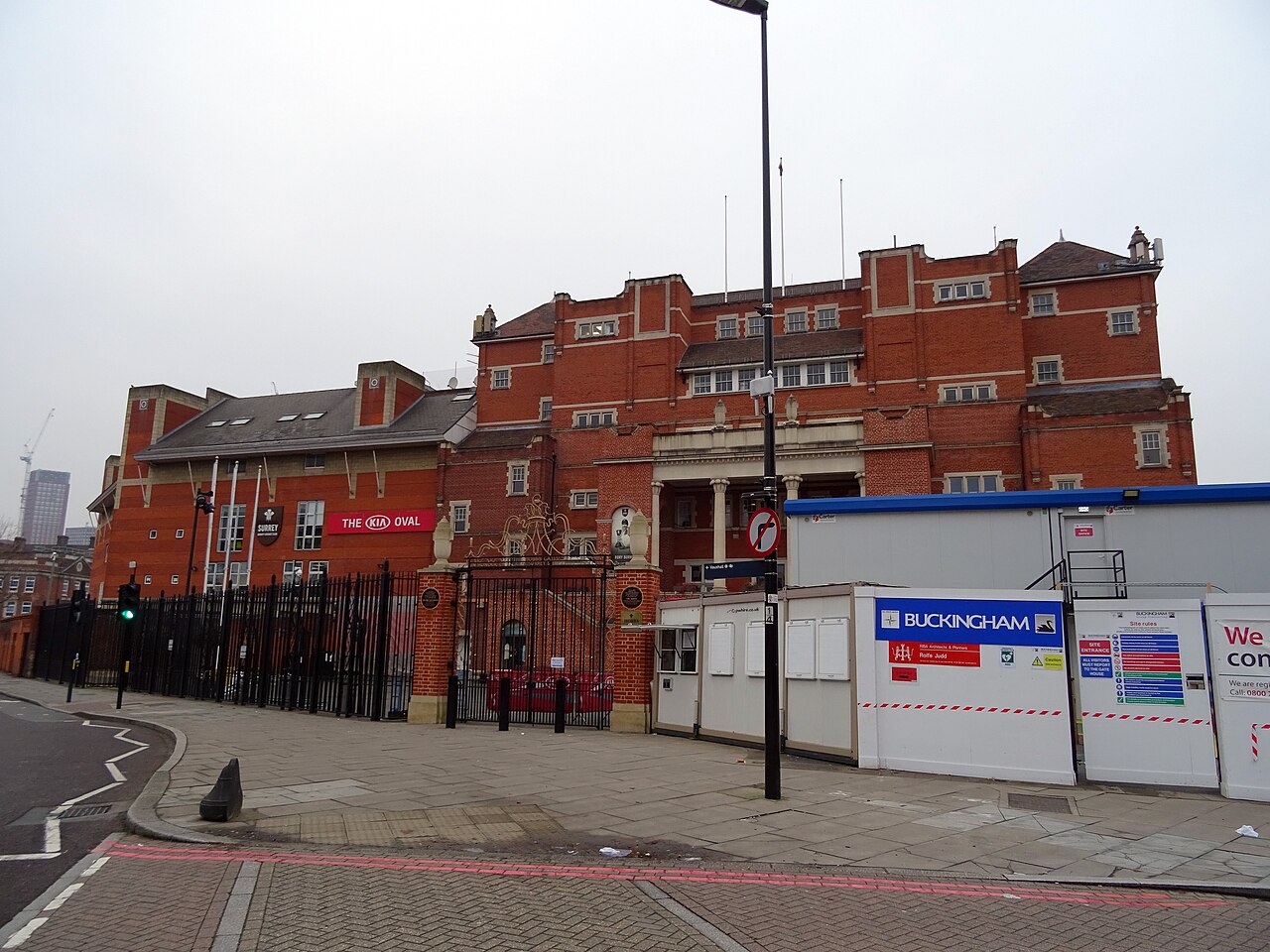
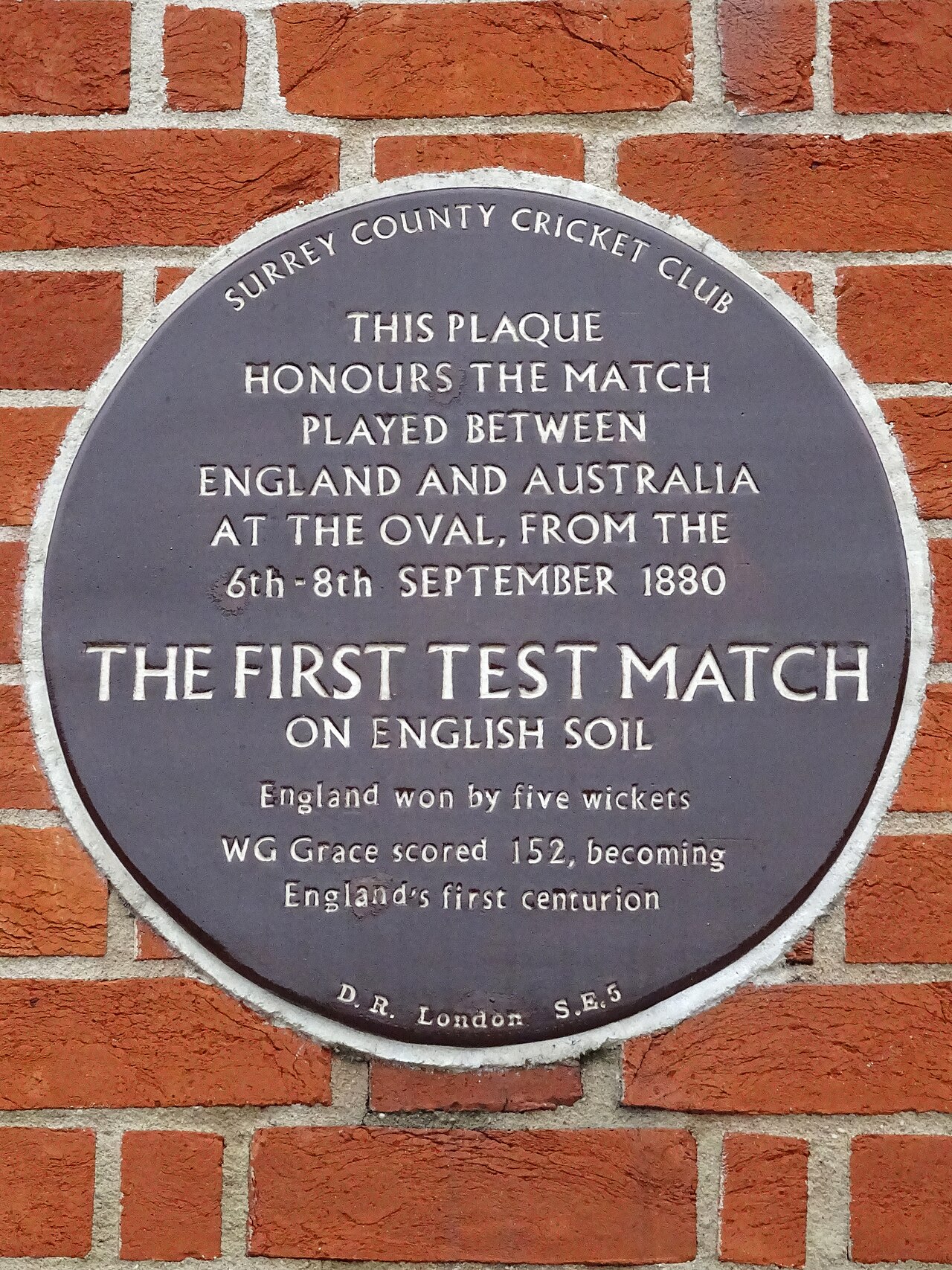
Rugby got in on the act too: England played home internationals at The Oval through the 1870s. And in September 1880 the ground staged the first Test match ever played on English soil, England beating Australia by five wickets, with W. G. Grace scoring 152 to become England’s first Test centurion. A Surrey CCC plaque on the pavilion wall still records the details.
The birth of the Ashes
Two years after that first Test, The Oval produced the most consequential result in cricket history. In August 1882 Australia won by seven runs on a rain-affected pitch, prompting a mock obituary in The Sporting Times declaring that English cricket had died and “the body will be cremated and the ashes taken to Australia.” The Ashes urn, and the rivalry that has defined both nations’ summers ever since, traces directly back to a single afternoon on this ground.
The Oval has retained a special place in the English cricket calendar as the traditional venue for the final Test of the home summer — the ground where series are settled. It hosted its 100th Test match in 2017, and it staged the first men’s Test in England to be played under lights.
The gasholders and the modern ground
No cricket ground has a more famous piece of industrial furniture. The gasholders beyond the Vauxhall End date from the Victorian gasworks next door and have loomed over play for well over a century; the surviving frame was given Grade II listed status in 2016, protecting it during the redevelopment of the surrounding site. Television directors have been cutting to it for decades — it is to The Oval what the Hill is to the SCG.
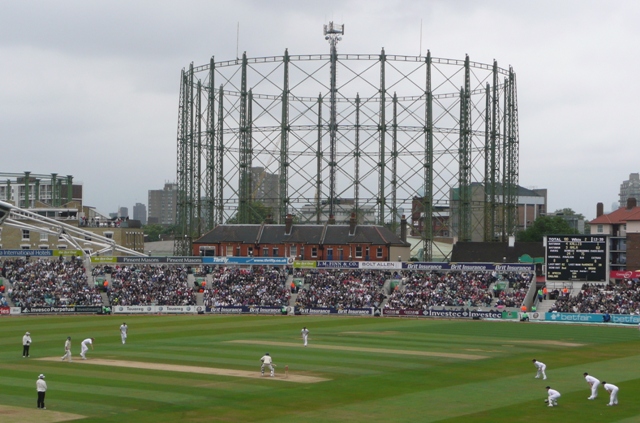
Inside, the ground bears almost no resemblance to the Victorian original. A rolling programme of rebuilds since 2002 — the OCS Stand, the Peter May Stand redevelopment and most recently a new Lock and Laker Stand — has taken capacity from roughly 18,000 to 27,500, making The Oval one of the largest cricket grounds in the country. LED floodlights were installed ahead of the 2025 season. The two ends are the Pavilion End, in front of the surviving red-brick Victorian pavilion, and the Vauxhall End under the gasholder.
Team-color face paint in a twist-up stick — no brushes, no mess in the car.
Sized to the NFL's 12x6x12 clear-bag rule. Fits snacks, a jacket and a rally towel.
A see-through purse that looks like a purse. Works for most stadium, arena and concert bag policies.
FAQ
How old is The Oval?
The Oval opened as a cricket ground in 1845, when Surrey County Cricket Club leased the former market garden from the Duchy of Cornwall and had it turfed. That makes it one of the five oldest continuously used major sports venues anywhere in the world.
What is The Oval’s capacity?
Around 27,500, following successive stand rebuilds since 2002 that raised it from roughly 18,000. It is the second-largest cricket ground in England after Lord’s by seated capacity in some configurations, and among the largest in Europe.
Why is it called the Kia Oval?
Kia is the ground’s title sponsor, so the official commercial name is the Kia Oval. Almost everyone still calls it The Oval, and international broadcasters and the ICC generally use that name.
Did football really get played at The Oval?
Yes — extensively. The first FA Cup final was played here in 1872, and the ground hosted most finals until 1892, alongside England home internationals and early rugby union fixtures. It is one of very few venues that can claim to be foundational to three separate sports.
Photo: Spike ’em via Wikimedia Commons (CC BY 4.0)