
Every sport has its quirks, but only one first-class cricket ground ever asked fielders to work around a full-grown tree. For more than 150 years a lime stood inside the boundary at the St Lawrence Ground in Canterbury, and Kent County Cricket Club wrote a local rule to deal with it. The tree is gone now, blown down in a January gale in 2005, but the ground it made famous is still here — opened in 1847 and still Kent’s headquarters.
It sits sixth on our ranking of the oldest stadiums in the world still in use, and it is arguably the most characterful venue on that entire list.
Key Stats
| Opened | 1847 |
| Location | Old Dover Road, Canterbury, Kent, England |
| Capacity | 6,000 (raised to around 15,000 in 2000 for international fixtures) |
| Tenant | Kent County Cricket Club (1847–present; club-owned since 1896) |
| Sport | Cricket |
| Current name | The Spitfire Ground, St Lawrence (sponsored since 2013) |
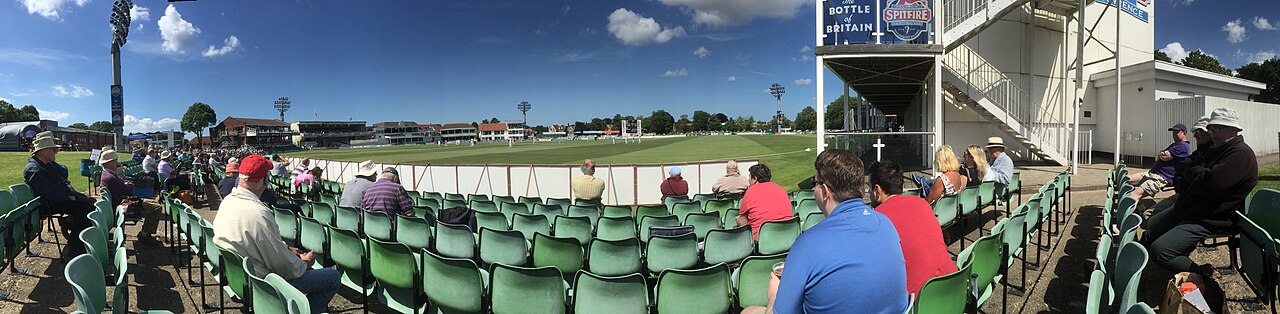
The tree inside the boundary
When the ground was laid out in 1847, an existing lime tree was simply left where it stood — inside the playing area, roughly 30 yards in from the boundary rope on the Nackington Road side. Rather than fell it, Kent legislated around it. A ball that struck the tree was scored as four runs whether or not it would have reached the rope, and a batsman could not be caught out off a rebound from its branches. Generations of fielders learned to sprint at it and pull up short.
Clearing the lime on the full became one of cricket’s odder honours. Only four men are recorded as having hit a six over it: Arthur Watson in 1925, the great West Indian all-rounder Learie Constantine in 1928, Jim Smith in 1939, and Carl Hooper in 1992 — roughly one every generation.

By the late 1990s the tree was clearly ailing, and a replacement lime was planted just outside the ground in 1999 in anticipation. On 7 January 2005 high winds finally brought the old tree down. The sapling was transplanted into the playing area later that year, restoring the ground’s signature — but boundary changes in 2017 moved the rope inside it, so the current lime no longer sits in play. The unique local rule is, for now, dormant.
Canterbury Cricket Week
The ground was built for a festival, and the festival still runs. Canterbury Cricket Week was established in 1847, the same year the ground opened, and it is regarded as the oldest cricket festival anywhere in the world. In its Victorian and Edwardian pomp it was as much a society event as a sporting one, with marquees, theatricals and the Old Stagers amateur dramatic company performing in the evenings — a tradition that itself dates back to the 1840s.
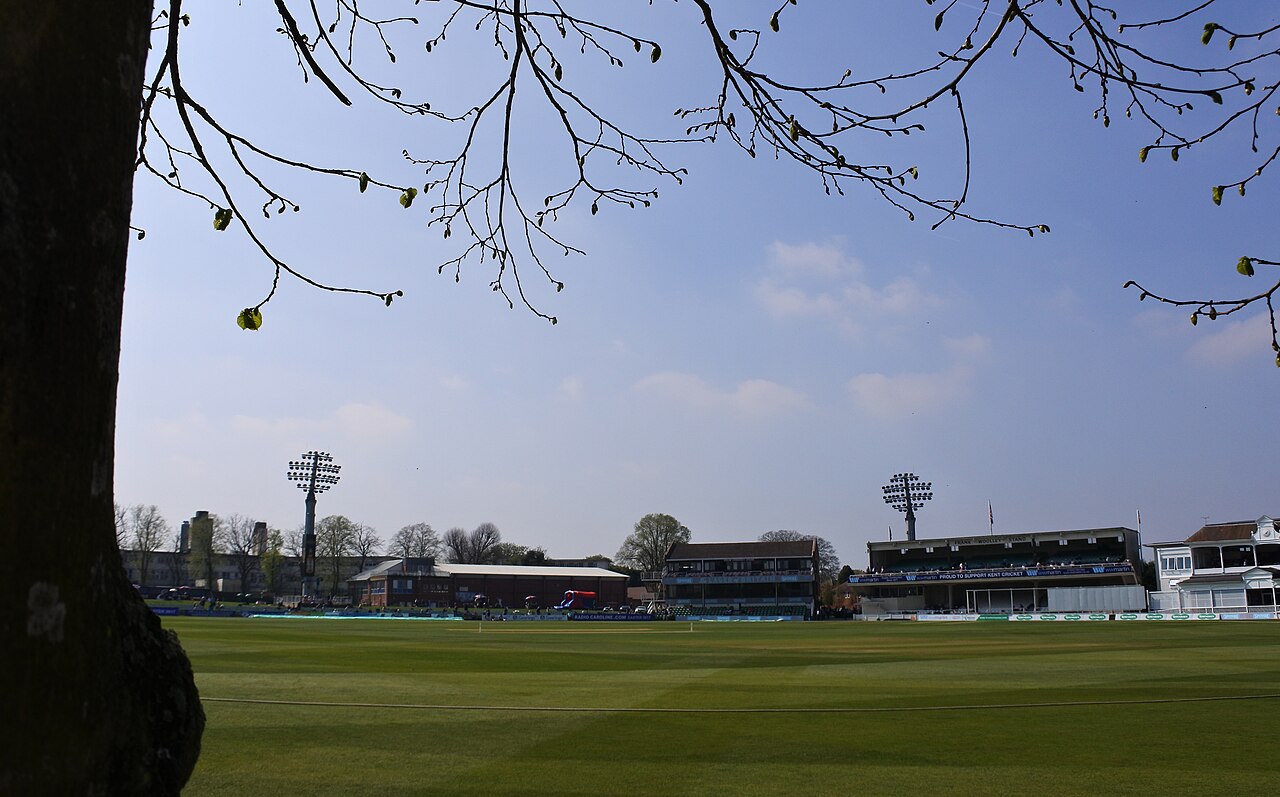
Stands, scoreboard and memorials
Kent bought the freehold in 1896 and built the pavilion in 1900. The stands read like a roll call of the county’s greatest players: the Frank Woolley Stand dates from 1927, with the Les Ames Stand and the Colin Cowdrey Stand added later. The manual scoreboard, installed in the 1930s, is one of only two still operating at a major English county ground — numbers still hung by hand while the rest of the sport moved to LED.
Near the entrance stands the memorial to Colin Blythe, the Kent and England left-arm spinner killed at Passchendaele in 1917, one of the most affecting war memorials at any sports ground in Britain. The venue has also hosted four One-Day Internationals, and it appears in one of cricket’s most famous paintings — Albert Chevallier Tayler’s 1906 canvas of Kent against Lancashire at Canterbury.
For late-season football, outdoor hockey and October park nights. Shake, pocket, and stay warm for hours.
12 x 10.5 x 6 in. — built to the common stadium clear-bag size. Check your venue's rules.
USB-charged warmers for cold night games — no disposable packets.
FAQ
Is there still a tree inside the boundary at Canterbury?
No. The original lime fell in a storm on 7 January 2005 and its replacement, planted in 1999 and moved into the playing area in 2005, was left outside the rope by boundary changes in 2017. For roughly 158 years, though, the St Lawrence Ground was the only first-class venue in the world with a tree in play.
How old is the St Lawrence Ground?
It opened in 1847, making it one of the half-dozen oldest continuously used major sports grounds anywhere. Kent County Cricket Club has played there since day one and has owned the site outright since 1896.
Why is it called the Spitfire Ground?
Shepherd Neame, the Kent brewery behind Spitfire ale, took naming rights in 2013, so the official title is The Spitfire Ground, St Lawrence. Most supporters and commentators still say St Lawrence or simply Canterbury.
Photo: AMBerry via Wikimedia Commons (CC BY-SA 3.0)