
On 31 August 1968, Garry Sobers walked out at St Helen’s as captain of Nottinghamshire, faced an over from Glamorgan’s Malcolm Nash, and hit every ball for six. It was the first time anyone had scored the maximum 36 runs from a single over in first-class cricket, breaking a 57-year-old record of 34 held by Ted Alletson. No ground in world sport has a better single-over story, and St Helen’s has been telling it ever since.
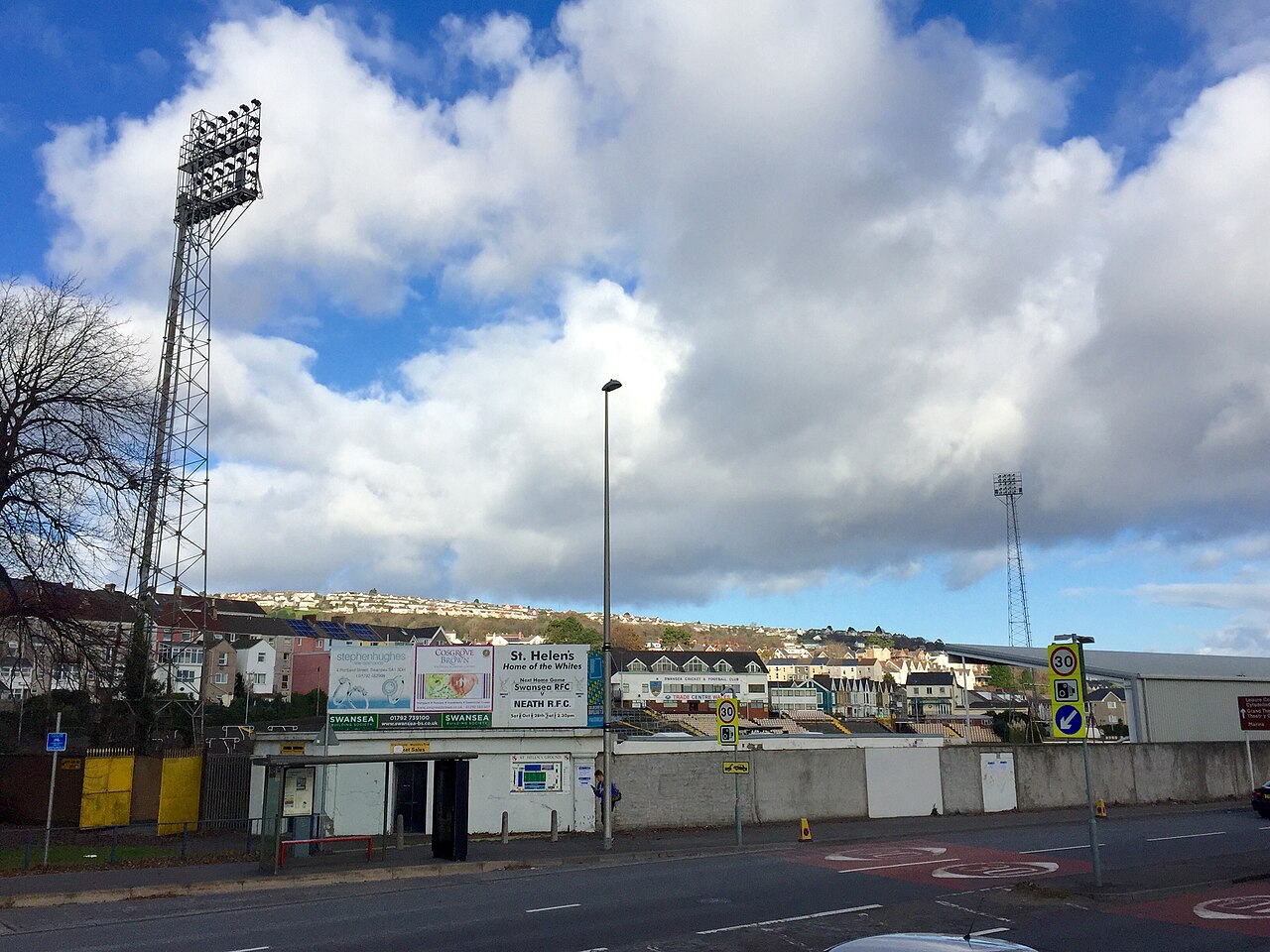
The ground opened in 1873 on the Swansea seafront at Brynmill and has spent its whole life shared between two codes: Swansea RFC on one hand, Swansea Cricket Club on the other. That makes it one of the oldest stadiums in the world still in use — and after a 2024–25 rebuild it entered a new chapter as a rugby-only venue, with the Ospreys moving in for the 2025/26 season.
Key Stats
| Opened | 1873 (renovated 2024–25) |
| Location | Brynmill, Swansea, Wales (SA2 0AR) |
| Capacity | 8,396 |
| Tenants | Swansea RFC, Swansea University RFC, Ospreys (from 2025/26); Swansea Cricket Club 1875–2025 |
| Sport | Rugby union (and cricket until 2025) |
| Owner | City and County of Swansea Council |
| Record attendance | 50,000 — Wales v Ireland, Five Nations, 8 March 1930 |
| ODIs hosted | 2 — England v New Zealand (1973) and Pakistan v Sri Lanka (1983 World Cup) |
36 Runs in an Over: Sobers, 31 August 1968
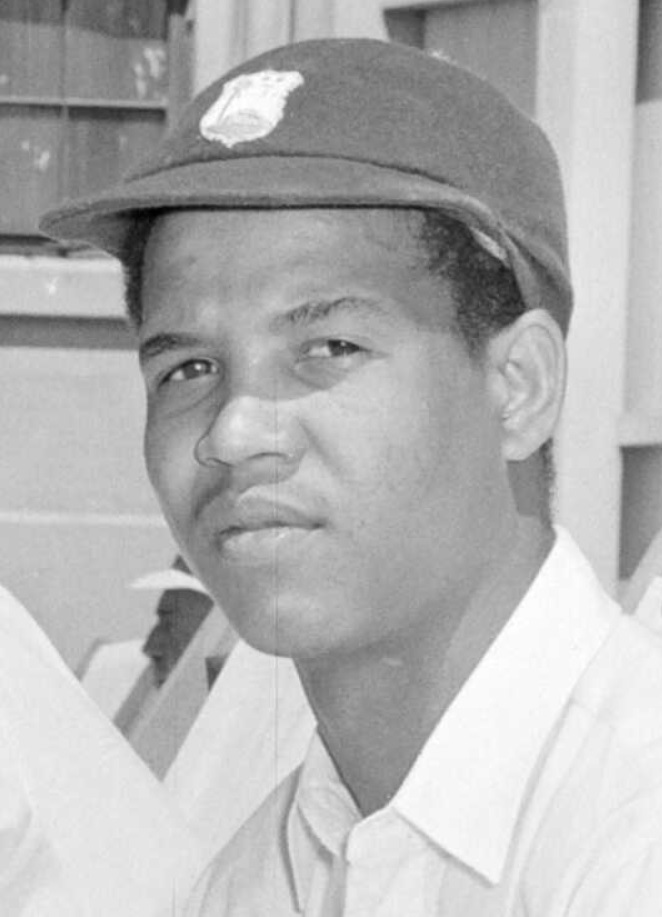
Sobers hit the first four deliveries cleanly out of the ground. On the fifth, Roger Davis caught him at long-off on the boundary — then fell backwards and landed on the line. Umpire Eddie Phillipson ruled that Davis had carried the ball over the rope and signalled six. The sixth ball went clean over the East Terrace and out of the ground entirely, prompting commentator Wilf Wooller’s line: “And he’s done it! He’s done it! And my goodness, it’s gone … way down to Swansea!” An 11-year-old, Richard Lewis, retrieved the ball from a garden and later gave it to Sobers.
Nash, unfairly remembered for that over, was a fine bowler: 993 first-class wickets in 17 seasons at an average just over 25, with a best of 9 for 56 against Hampshire in 1975. Glamorgan captain Tony Lewis described the assault as “not sheer slogging through strength, but scientific hitting with every movement working in harmony.” The feat was not matched in first-class cricket until Ravi Shastri repeated it for Bombay against Baroda in 1984–85.
Wales’ First Home Ground
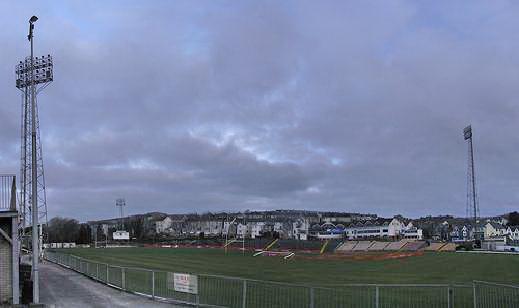
St Helen’s staged the first home international in the history of Welsh rugby, against England on 16 December 1882. It remained a regular Wales venue — often for the Five Nations — until 1954, and was the scene of New Zealand’s first victory over Wales in 1924. Only one full international has been played there since: Wales against Tonga in 1997.
The move away from Swansea in the 1950s was practical rather than sentimental. The 50,000-capacity ground was overstretched, the A48 west through Port Talbot clogged on matchdays, and Cardiff Arms Park generated more revenue. Swansea Corporation debated raising capacity to 70,000 or even 82,000, but wartime bomb damage to the city forced other building priorities to the front of the queue. The ground has since hosted three Wales women’s internationals, the first against England in April 1999 and the most recent a 56–7 win over Sweden in November 2009.
Club rugby has produced its own landmarks here. On 28 September 1935 Swansea RFC beat New Zealand 11–3, becoming the first club side ever to defeat the All Blacks, and in November 1992 they beat world champions Australia 21–6 in the opening match of the Wallabies’ Welsh tour. Wales’ rugby league team played thirteen matches at the ground between 1945 and 1978, including two in the 1975 World Cup, and a Wales v Ireland football international was staged here in 1894.
Cricket’s Long Goodbye
Glamorgan used St Helen’s as an outground from 1921 to 2019, part of the county’s commitment to playing across the whole of Wales. Two One Day Internationals were staged here: England against New Zealand on 18 July 1973 and a 1983 World Cup group game between Pakistan and Sri Lanka. Wales Minor Counties, the only non-English side in the Minor Counties Championship, also used the ground as a base.
In July 2024 Glamorgan confirmed it would not return, having last played there in 2019, and the council’s deal to bring the Ospreys back from the Swansea.com Stadium meant replacing the cricket infrastructure with new stands and a purpose-built 4G rugby surface. Swansea Cricket Club, in residence since 1875, left after roughly 150 years. One other curiosity survives the rebuild: the floodlight in the north-eastern corner, at 150 ft (45 m), is claimed to be the tallest freestanding floodlight in Europe. And on 19 June 1928 the ground hosted a schools mile race won by a teenage Dylan Thomas, who carried the newspaper photograph of his victory for the rest of his life.
Team-color face paint in a twist-up stick — no brushes, no mess in the car.
Sized to the NFL's 12x6x12 clear-bag rule. Fits snacks, a jacket and a rally towel.
A see-through purse that looks like a purse. Works for most stadium, arena and concert bag policies.
FAQ
Where did Garry Sobers hit six sixes in an over?
At St Helen’s, Swansea, on 31 August 1968, playing for Nottinghamshire against Glamorgan. The bowler was Malcolm Nash, and it was the first instance of six sixes in an over in first-class cricket.
Who plays at St Helen’s now?
Swansea RFC and Swansea University RFC, joined by the Ospreys from the 2025/26 season after their move from the Swansea.com Stadium. Swansea Cricket Club left in 2025 when the ground was converted for rugby.
How old is St Helen’s ground?
It opened in 1873, making it one of the oldest sports grounds still in regular use anywhere. Its record crowd of 50,000 came for Wales against Ireland in the Five Nations on 8 March 1930.
Photo: Mike Faherty via Wikimedia Commons (CC BY-SA 2.0)