
This ranks the NFL’s 32 current stadiums by the seating capacity each team or the league publishes for the 2026 season, smallest to largest. Capacity here means the fixed, listed seat count for a standard regular-season game, not the higher temporary or standing-room totals some venues advertise for concerts or special events. Stadiums are included only if they are open and hosting games in 2026, whatever their current configuration.
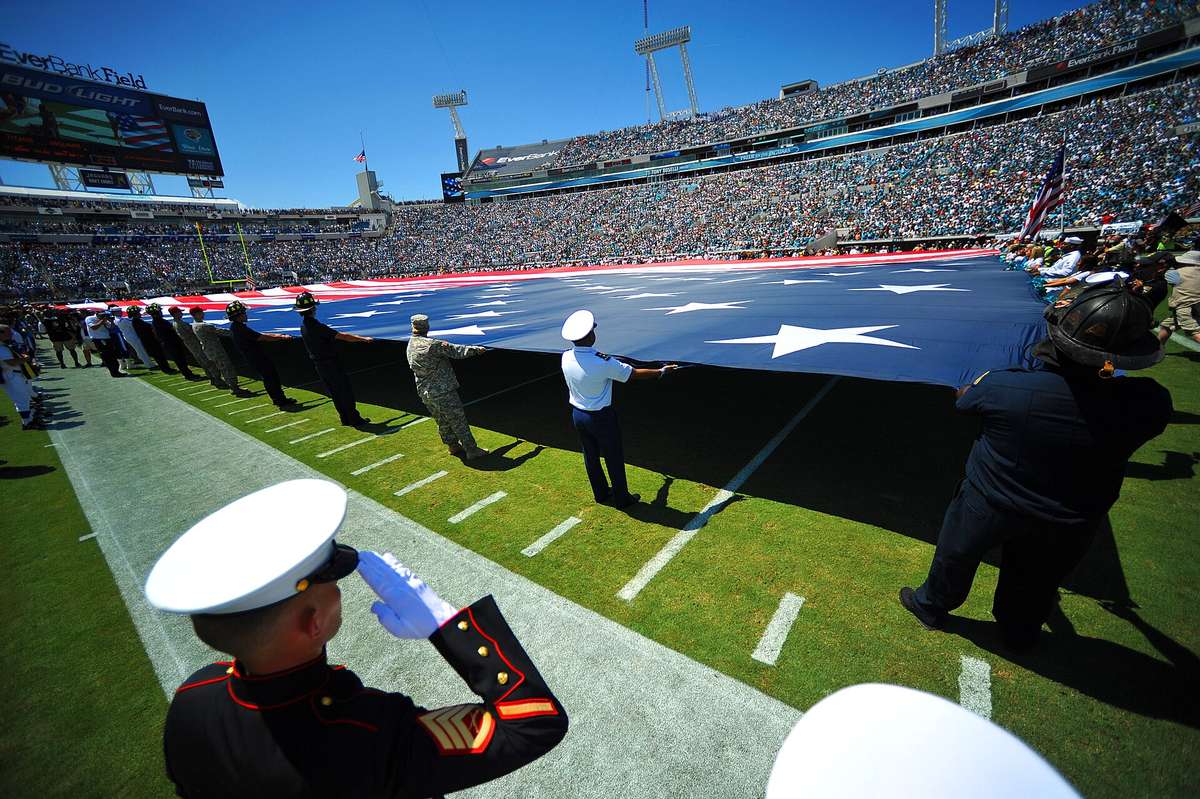
EverBank Stadium, home of the Jacksonville Jaguars, is the smallest NFL stadium of the 2026 season at 42,507, a figure cut nearly in half by the ongoing ‘Stadium of the Future’ renovation that has taken roughly 27,600 seats offline for construction. That is a temporary, season-specific number rather than the stadium’s normal size; among stadiums not reduced by construction, Highmark Stadium, the Buffalo Bills’ new home, is smallest at 60,108, about 17,600 seats above EverBank’s current figure and roughly 1,400 below third-place Soldier Field.
The Full Ranking
Figures are the seating capacities each team or the league has published for the 2026 NFL season; all stadiums listed are open and hosting games this season, including EverBank Stadium at its temporarily reduced capacity.
| # | Stadium | Location | Capacity (2026 season) |
|---|---|---|---|
| 1 | EverBank Stadium (Jacksonville Jaguars) | Jacksonville, Florida | 42,507 |
| 2 | Highmark Stadium (Buffalo Bills) | Orchard Park, New York | 60,108 |
| 3 | Soldier Field (Chicago Bears) | Chicago, Illinois | 61,500 |
| 4 | State Farm Stadium (Arizona Cardinals) | Glendale, Arizona | 63,400 |
| 5 | Northwest Stadium (Washington Commanders) | Landover, Maryland | 64,000 |
| 6 | Gillette Stadium (New England Patriots) | Foxborough, Massachusetts | 64,628 |
| 7 | Allegiant Stadium (Las Vegas Raiders) | Paradise, Nevada | 65,000 |
| 8 | Ford Field (Detroit Lions) | Detroit, Michigan | 65,000 |
| 9 | Hard Rock Stadium (Miami Dolphins) | Miami Gardens, Florida | 65,326 |
| 10 | Paycor Stadium (Cincinnati Bengals) | Cincinnati, Ohio | 65,515 |
| 11 | Raymond James Stadium (Tampa Bay Buccaneers) | Tampa, Florida | 65,890 |
| 12 | U.S. Bank Stadium (Minnesota Vikings) | Minneapolis, Minnesota | 66,655 |
| 13 | Lucas Oil Stadium (Indianapolis Colts) | Indianapolis, Indiana | 67,000 |
| 14 | Huntington Bank Field (Cleveland Browns) | Cleveland, Ohio | 67,895 |
| 15 | Levi’s Stadium (San Francisco 49ers) | Santa Clara, California | 68,500 |
| 16 | Acrisure Stadium (Pittsburgh Steelers) | Pittsburgh, Pennsylvania | 68,984 |
Why EverBank Stadium and Highmark Stadium Sit at the Bottom
EverBank Stadium’s low 2026 number is a construction side effect, not a design choice. The Jaguars and the city are partway through a roughly $1.4 billion ‘Stadium of the Future’ rebuild, and about 27,600 seats, most of them in the upper 400 Level, are offline for the 2026 season while that work continues. The published capacity for 2026 is 42,507, including 1,260 standing-room tickets; once the project finishes for the 2028 season, the stadium is planned to return to a base capacity of around 62,000, expandable to 71,500 for events like college football.
Highmark Stadium is the smallest NFL stadium not affected by active construction. The Bills’ previous stadium seated roughly 71,000 at its largest, so the new building, which opened in June 2026, actually has fewer seats than the one it replaced. The team built it around steep, closely stacked seating bowls meant to put fans near the field rather than to maximize total seat count. Soldier Field, third-smallest at 61,500, is limited by a 2003 renovation that rebuilt the seating bowl inside the stadium’s 1924 colonnade, a constraint the Chicago Bears have cited while pursuing a new stadium site elsewhere.
How This Measure Works, and Where the Numbers Get Fuzzy
This list uses each stadium’s listed capacity for a standard 2026 regular-season game, not peak or event capacity: AT&T Stadium, for example, lists 80,000 seats but is commonly cited as able to hold over 100,000 people when standing-room and temporary floor seating are added for concerts. EverBank Stadium’s figure is a different kind of exception, a season-specific, construction-reduced number rather than a permanent architectural total, so it will not stay at 42,507 once renovation finishes. Allegiant Stadium and Ford Field both list 65,000, a tie that lands them next to each other in the middle of this ranking.
Gillette Stadium shows how quickly these published numbers can get stale. General NFL stadium roundups, including some aggregated Wikipedia tables, still circulate Gillette’s original 2002 opening capacity of roughly 66,800. But the Patriots’ own figures and Wikipedia’s dedicated Gillette Stadium article put the current number at 64,628, including 5,876 club seats, reflecting seats removed during a 2023 renovation that added lounge space behind the north end zone. That lower, current figure is what this list uses, which places Gillette sixth rather than near the middle of the pack.
Because premium seating, suites, and configurations get adjusted from year to year, listed capacities can shift by a few hundred to a couple thousand seats between seasons even without construction, and some older roundups still circulate out-of-date totals; Soldier Field, for instance, is sometimes listed at 62,500 in older stadium roundups, but Wikipedia and the Bears’ own current figures put it at 61,500, reflecting the seating bowl built during the 2003 renovation. Treat the figures here as the current published numbers for the 2026 season rather than fixed, unchanging totals, and expect EverBank Stadium’s ranking to move once its renovation is complete.
What This Means If You’re Planning a Visit
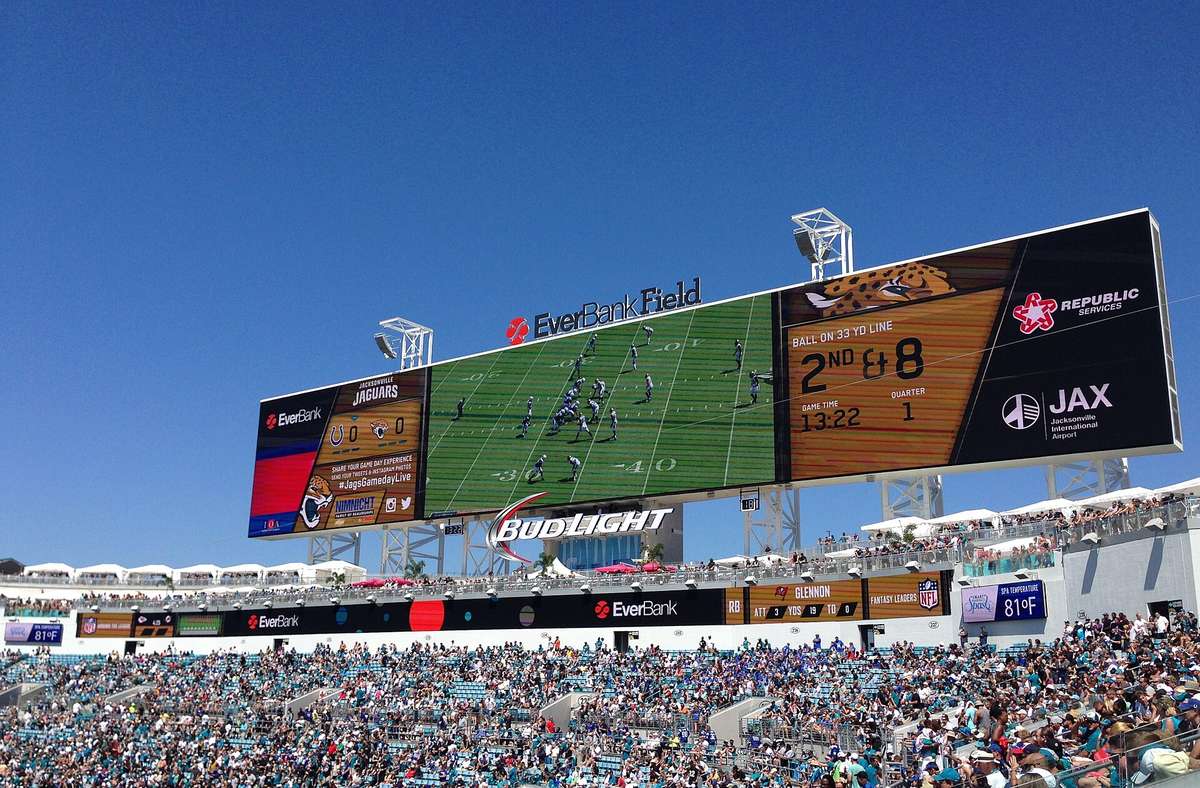
A smaller capacity does not necessarily mean a worse seat, but it usually means scarcer, pricier tickets. EverBank Stadium’s reduced 2026 capacity, combined with the Jaguars playing some games in London as part of the construction-era schedule, has made home tickets unusually hard to get this season; fans planning a visit should expect higher prices and should check current construction and access notes on the Jaguars’ site before buying. Highmark Stadium’s steep upper deck, by contrast, was built to keep the farthest fans close to the field under normal operation, a different kind of trade-off than EverBank’s temporary squeeze.
This list covers only current, operating stadiums in 2026. It leaves out venues still under construction or planned, such as the new Nissan Stadium in Nashville (targeted for 2027) and a new enclosed Huntington Bank Field in Brook Park, Ohio (targeted for 2029), since neither is open yet.
Explore more: See more NFL stadium guides.
For upper-deck seats. Watch line play at the stadium, or the far side of the park from the top of a lift hill.
Sherpa-lined and windproof, with a waterproof back for wet bleachers. Folds into its own pouch.
For late-season football, outdoor hockey and October park nights. Shake, pocket, and stay warm for hours.
Smallest NFL Stadiums FAQs
What is the smallest stadium in the NFL in 2026?
EverBank Stadium, home of the Jacksonville Jaguars, is the smallest NFL stadium for the 2026 season with a published capacity of 42,507, reduced from its normal size because of an ongoing renovation.
Why is EverBank Stadium’s capacity so low this season?
The Jaguars’ ‘Stadium of the Future’ renovation has taken roughly 27,600 seats offline during the 2026 season, most of them in the upper 400 Level. The reduction is temporary; the stadium is planned to return to a base capacity of about 62,000 once the project finishes for the 2028 season.
What is the smallest NFL stadium not affected by construction?
Highmark Stadium, home of the Buffalo Bills in Orchard Park, New York, is the smallest NFL stadium operating at its normal, non-construction capacity, with 60,108 seats for the 2026 season.
Get More from Smallest NFL Stadiums
Log the coasters, stadiums, and venues you’ve experienced, rate Smallest NFL Stadiums, and see what your friends thought. Get the ThrillZing app.
Photo: Quintin Soloviev / CC BY 4.0, via Wikimedia Commons.