
Salt Lake Stadium, formally known as Vivekananda Yuba Bharati Krirangan (VYBK), opened in January 1984 in the Bidhannagar area of Salt Lake City, part of Greater Kolkata, India. Built as a multi-purpose venue, it quickly became the spiritual home of Indian football, hosting the country’s biggest clubs and the national team on a scale few stadiums in the world could match.
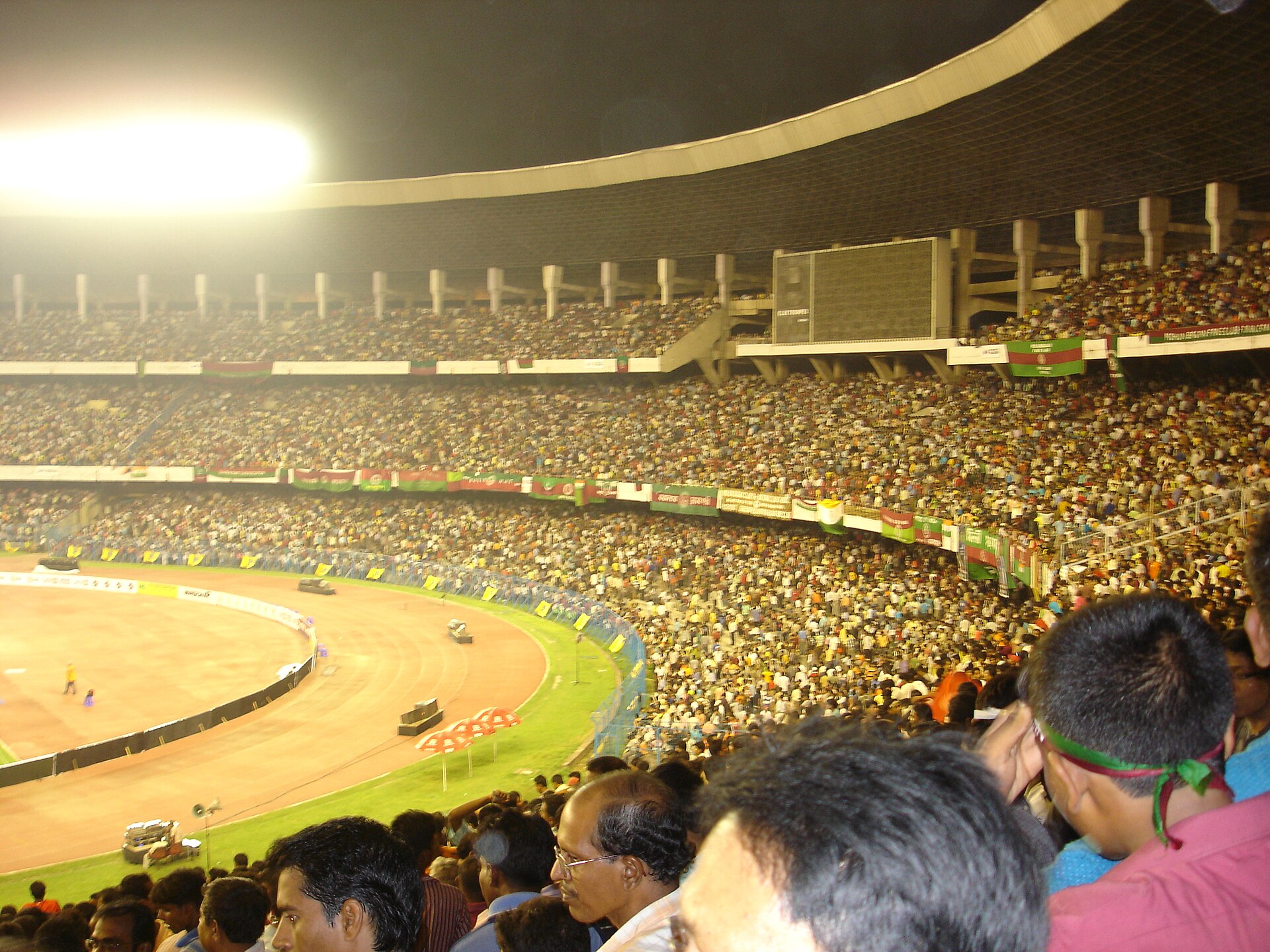
At its original capacity of 120,000, Salt Lake Stadium ranked among the largest football stadiums anywhere, drawing record crowds for fierce local derbies between Mohun Bagan and East Bengal. Renovations over the following decades replaced concrete terraces with individual seats and trimmed the capacity considerably. Depending on the source and the date, its current capacity is quoted anywhere from roughly 68,000 to 85,000, and it remains one of India’s largest and most historic football grounds.
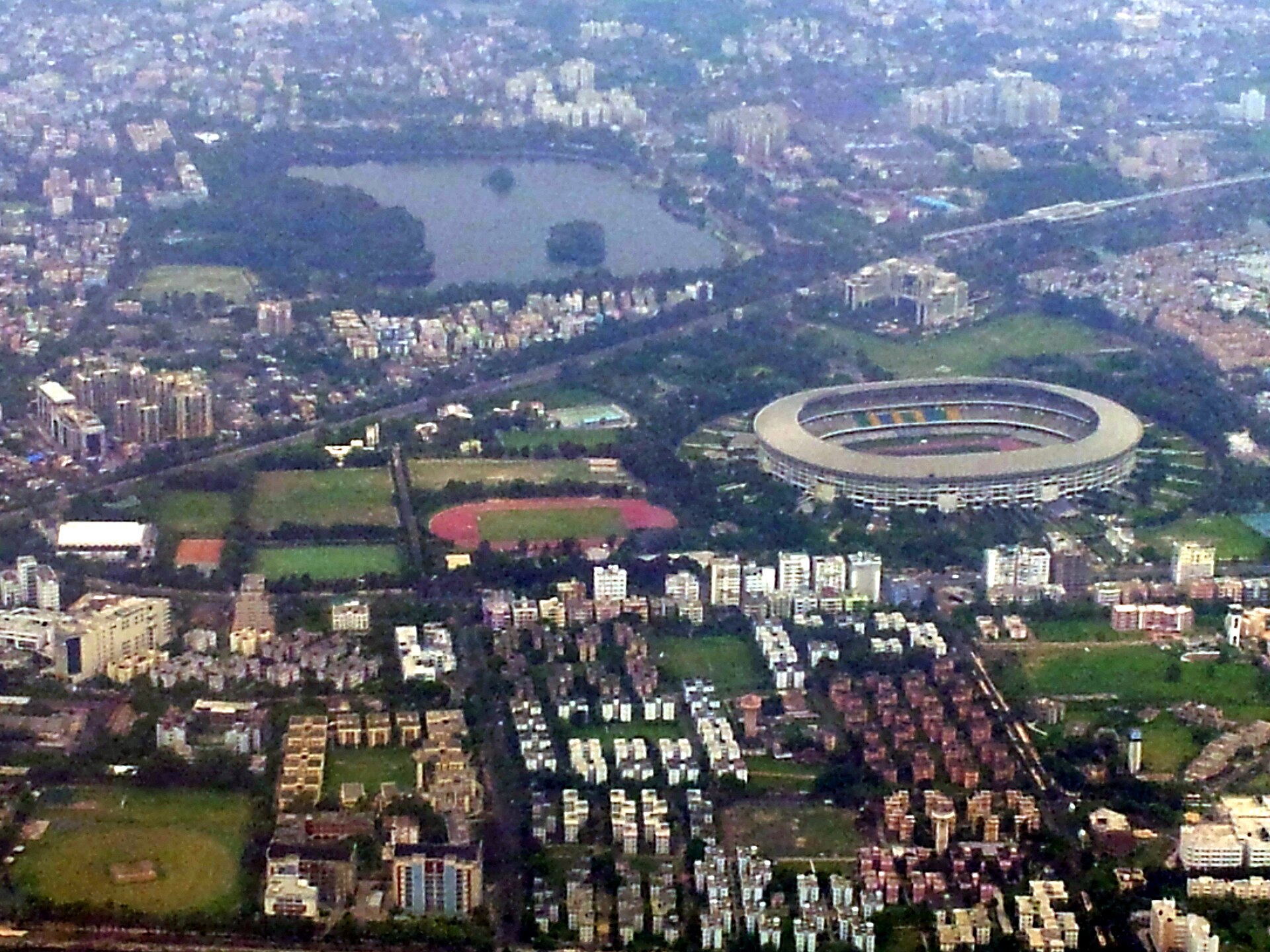
Stats at a Glance
- Team(s): India national football team, Mohun Bagan, East Bengal, Mohammedan
- Location: Bidhannagar (Salt Lake City), Kolkata, West Bengal, India
- Opened: January 1984
- Capacity: Originally 120,000; reduced to about 85,000 after the 2011 renovation and quoted lower in some recent listings
- Record attendance: about 131,000 (1997 Kolkata derby, Federation Cup semi-final)
- Notable fact: Hosted the final of the 2017 FIFA U-17 World Cup
From Mega-Capacity to Modern Arena
When it opened in 1984, Salt Lake Stadium could pack in roughly 120,000 spectators, making it briefly the largest football stadium on the planet. That scale was put to the test in 1997, when a crowd of roughly 131,000 filled the ground for a Federation Cup semi-final between East Bengal and Mohun Bagan, a figure still cited as one of the largest football attendances ever recorded.
Renovation work around 2011 replaced the concrete gallery benches with bucket seats, which brought the capacity down to about 85,000 and improved comfort and sightlines. Further work in the years since has trimmed the figure again, so recent reference listings put the current capacity lower than the 85,000 quoted by FIFA. For the 2017 FIFA U-17 World Cup, about 66,600 seats were made available to spectators to meet tournament requirements.
A Stage for Global Football
Beyond domestic derbies, Salt Lake Stadium has hosted marquee international moments, including a September 2011 friendly in which Lionel Messi led Argentina against Venezuela. Its biggest showcase came in 2017, when it staged 11 matches of the FIFA U-17 World Cup, including the final, putting Kolkata’s football culture on a global stage.
The venue also holds a place in Indian cricket history, having hosted the opening ceremony of the 2013 Indian Premier League, underscoring its role as one of the country’s most versatile large-scale sporting venues.
Explore more: Explore more legendary stadiums.
Salt Lake Stadium FAQs
What is Salt Lake Stadium’s official name?
Its official name is Vivekananda Yuba Bharati Krirangan (VYBK), though it is widely known as Salt Lake Stadium after the Kolkata neighborhood where it stands.
How big was Salt Lake Stadium originally?
When it opened in 1984, the stadium had a capacity of about 120,000, making it the largest football stadium in the world at the time.
What is Salt Lake Stadium’s capacity today?
FIFA lists the capacity at about 85,000, the figure that resulted from the 2011 renovation. Some recent reference listings give a lower figure of around 68,000 after later work, so check the latest match-day information. For the 2017 FIFA U-17 World Cup, about 66,600 seats were made available to spectators.
Get More from Salt Lake Stadium
Log the coasters, stadiums, and venues you’ve experienced, rate Salt Lake Stadium, and see what your friends thought. Get the ThrillZing app.
Photo: Soumyadityac / CC BY-SA 4.0, via Wikimedia Commons.