
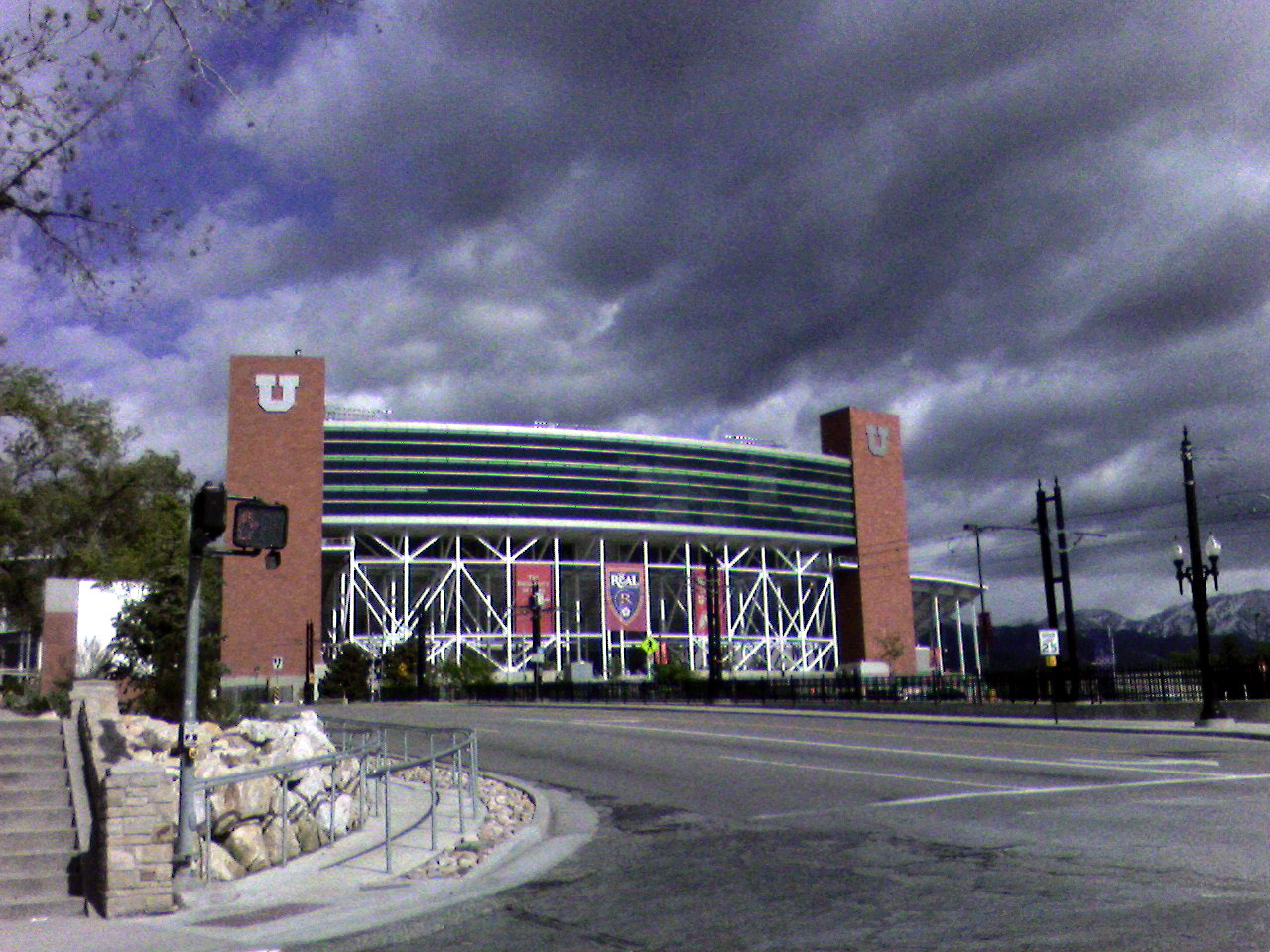
Rice-Eccles Stadium sits on the University of Utah campus in Salt Lake City, serving as the home field for Utah Utes football since it reopened on September 12, 1998, following a near-total rebuild of the site. Beyond college football, it earned a permanent place in Olympic history as the venue for the opening and closing ceremonies of the 2002 Winter Olympics and Paralympics.
This guide covers the numbers fans search for most — capacity, elevation, and address — along with the stadium’s two-name history and a practical visitor guide covering bag policy, parking, and the best seats in the house.
Quick Answer
Rice-Eccles Stadium has an official seated capacity of 51,444 and sits at an elevation of about 4,637 feet (1,413 m) above sea level. Its address is 451 South 1400 East, Salt Lake City, Utah. For concerts and other general-admission configurations that add field-level seating, attendance can run higher — the stadium’s all-time record crowd of 54,383 was set during the Utah-BYU football game on November 9, 2024.
From Ute Stadium to Rice-Eccles
The stadium’s history stretches back to 1927, when Ute Stadium first opened on this site with a capacity of about 20,000. A 1972 expansion enlarged it to roughly 32,500 seats and brought a new name: Robert Rice Stadium, honoring a $1 million gift from businessman and University of Utah alumnus Robert L. Rice. That version of the stadium — sometimes searched simply as “Robert Rice Stadium” — stood from 1972 until after the 1997 season, when it was almost entirely demolished to make way for a modern facility built on the same footprint, in time for the 2002 Winter Olympics.
The rebuild was funded in part by a $10 million donation from George S. and Dolores Dore Eccles, and the University of Utah received permission from both donor families to carry Robert L. Rice’s name forward alongside the Eccles name — giving the rebuilt venue its current Rice-Eccles Stadium title when it opened on September 12, 1998.
An Olympic and College Football Landmark
Rice-Eccles Stadium’s biggest moment on the world stage came on February 8, 2002, when it hosted the opening ceremony of the Winter Olympics, followed by the closing ceremony on February 24; it also hosted the opening and closing ceremonies of the 2002 Winter Paralympics. The stadium is expected to host Olympic ceremonies again when the Winter Games return to Utah in 2034.
On the football side, the stadium has grown steadily, most recently through the 2019-2021 Ken Garff Red Zone project, a south end zone renovation that added premium seating, suites, and club space and pushed the official capacity to 51,444.
Rice-Eccles Stadium Capacity, Elevation & Address
Capacity: The current, official seated capacity is 51,444, reached after the 2021 south end zone expansion added more than 1,000 seats on top of the 45,807-seat figure that preceded it. Capacity has grown in stages from the original 1927 bowl (about 20,000) through the 1972 expansion (about 32,500) to today’s figure. The 54,383 mark some sources list is the record single-game attendance (set at the November 9, 2024 Utah-BYU game), not the fixed seating capacity — it reflects standing-room and temporary additions on a sellout night.
Concert capacity: Rice-Eccles also hosts major concerts and events, including U2’s 360° Tour in 2011 and a Garth Brooks stadium show, by opening the field as general-admission space in addition to the seating bowl. Concert capacity varies by show configuration (how much of the field and which upper sections are used), so it can land anywhere from roughly 45,000 to the low 50,000s rather than one fixed figure — promoters and the university set the exact number per event.
Elevation: Rice-Eccles Stadium sits at approximately 4,637 feet (1,413 meters) above sea level, reflecting Salt Lake City’s high-desert setting at the base of the Wasatch Range. That altitude is occasionally cited by visiting teams and broadcasters as a minor conditioning factor for football games.
Address: The stadium’s street address is 451 South 1400 East, Salt Lake City, Utah 84112, on the east side of the University of Utah campus.
Bag Policy
Rice-Eccles Stadium uses a clear-bag policy for football games and most ticketed events. Each guest may carry one clear plastic, vinyl, or PVC bag no larger than 12″ x 12″ x 6″ (or a one-gallon clear plastic storage bag), plus a small clutch purse or wallet-style bag no larger than 4.5″ x 6.5″ that does not need to be clear. Backpacks, drawstring bags, large purses, camera bags, computer bags, and duffel bags are not permitted inside the stadium, and large seat cushions with pockets or zippered compartments are also restricted. Gates offer dedicated no-bag lanes for fans who skip bringing a bag altogether, which typically move faster.
Parking & Getting There
Most event-day parking lots open about five hours before kickoff, while the Signature and tailgate lots open earlier, around 6 a.m. on game days. Several lots require a prepaid game-day parking pass, and tickets and parking passes are scanned digitally at lots and gates, so fans should download both to their phone wallet before arriving. Stadium gates themselves open two hours before kickoff for football games.
For fans skipping the parking lot, the Stadium TRAX light-rail stop sits directly west of the stadium and the South Campus stop is just southwest, and a valid event ticket doubles as a transit pass on game day. Rideshare pickup for services like Lyft is typically staged on 500 South, southwest of the stadium, with other rideshare pickup points along 1300 East near the law school.
Best Seats, Sun & Shade
Sideline Lower Level sections near midfield offer the cleanest sightlines for both football and concerts, and the Mighty Utah Student Section (MUSS) anchors the east sideline lower bowl as the loudest part of the stadium. Because the field runs roughly north-south, shade shifts across the bowl as an afternoon game goes on rather than staying fixed on one side — the west sideline generally picks up more shade during typical afternoon kickoffs, while the east sideline (where the student section sits) tends to stay sunnier longer. Fans sensitive to sun exposure for an afternoon game may want to look at west-side chairback sections when picking seats.
Concessions, Alcohol & Accessibility
Concessions include traditional stadium stands, portable carts, and an East Eats food truck alley; payment is cashless, with only cards and phone-based payment apps accepted. Alcohol is not sold or permitted in general seating areas of Rice-Eccles Stadium — it’s limited to private reception rooms served through the venue’s exclusive caterer. Accessible parking, seating, and other ADA accommodations are detailed on the venue’s accessibility page, and guests with specific accessibility or medical-equipment needs can contact Guest Services at 801-587-9047.
Planning Your Visit
Ticket prices, exact gate times for non-football events, and seasonal schedule details change year to year, so for current game times, ticket pricing tiers, and the latest policy updates, check the official Rice-Eccles Stadium site or the University of Utah Athletics site before you go.
Photos
Rice-Eccles Stadium FAQs
What is the elevation of Rice-Eccles Stadium?
Rice-Eccles Stadium sits at approximately 4,637 feet (1,413 meters) above sea level, in keeping with Salt Lake City’s high-desert elevation at the foot of the Wasatch Range.
What is the capacity of Rice-Eccles Stadium?
The official seated capacity is 51,444, following the 2019-2021 south end zone expansion. The stadium’s record attendance of 54,383, set at the 2024 Utah-BYU game, reflects standing-room and temporary additions beyond the fixed seat count.
What is Rice-Eccles Stadium’s concert capacity?
Concert capacity varies by show, since promoters configure how much of the field floor and how many upper sections are used; it generally runs from roughly 45,000 up to the low 50,000s, similar to the football seating capacity.
Is Robert Rice Stadium the same as Rice-Eccles Stadium?
They occupy the same site but are technically different structures. Robert Rice Stadium was the 1972-1997 version of the venue, named for donor Robert L. Rice. It was largely demolished after the 1997 season and rebuilt as Rice-Eccles Stadium, which kept Rice’s name alongside new donors George S. and Dolores Dore Eccles.
What is the address of Rice-Eccles Stadium?
451 South 1400 East, Salt Lake City, Utah 84112, on the east side of the University of Utah campus.
Does Rice-Eccles Stadium have a clear-bag policy?
Yes. Guests may bring one clear bag no larger than 12″ x 12″ x 6″ (or a one-gallon clear plastic bag) plus a small clutch purse. Backpacks, large purses, and camera or computer bags are not allowed inside.
Who plays at Rice-Eccles Stadium?
The Utah Utes college football team has called Rice-Eccles Stadium home since it reopened in 1998. The MLS club Real Salt Lake also played there from 2005 to 2008, and the AAF’s Salt Lake Stallions used it in 2019.
Did Rice-Eccles Stadium host the Olympics?
Yes. It hosted the opening and closing ceremonies of the 2002 Winter Olympics and the 2002 Winter Paralympics, and it’s expected to host Olympic ceremonies again when the Winter Games return to Utah in 2034.
Get More from Rice-Eccles Stadium
Log the coasters, stadiums, and venues you’ve experienced, rate Rice-Eccles Stadium, and see what your friends thought. Get the ThrillZing app.