
Most stadiums claim to be historic. The Racecourse Ground in Wrexham holds a record no other venue can take: it is the oldest international football stadium in the world that still hosts internationals. Wales played their first home international here in 1877 and are still playing here in 2026, which is a 149-year run no other ground on Earth can match.
The site itself dates to 1807, when it was a cricket ground that occasionally hosted horse racing — hence the name. Football arrived in 1864, and the ground has been the home of Wrexham A.F.C. ever since, which places it second only to Sandygate Road on any ranking of the oldest stadiums in the world still in use.
Key Stats
| Opened | 1807 (football from 1864) |
| Location | Mold Road, Wrexham, Wales |
| Capacity | 10,771 (football), with a new Kop Stand under construction |
| Tenants | Wrexham A.F.C. (1864–present); Wales national football team (1877–present, selected matches) |
| Sport | Football (also rugby league and rugby union; cricket and horse racing in its early years) |
| Record attendance | 34,445 v Manchester United, FA Cup fourth round, 1957 |
| Record | Guinness-recognised oldest international football stadium still hosting internationals |
Formed in a Pub, Housed on a Racecourse
Wrexham Football Club was founded in October 1864 in the Turf Hotel, the public house that still sits in the corner of the ground on Mold Road. The players walked out of the pub and onto the land next door, which the Wrexham Cricket Club then controlled. That arrangement produced the ground’s only real interruption: a rent rise pushed Wrexham to the Recreation Ground in Rhosddu for the 1881–82 and 1882–83 seasons, before the club returned for good.
Between the cricket and the football, the Racecourse also did duty as an aerodrome. Gustav Hamel flew public aviation displays here in August 1912 and June 1913, and Wrexham Borough Council briefly considered turning the site into the town’s municipal airport before settling on Borras instead.
The Stands
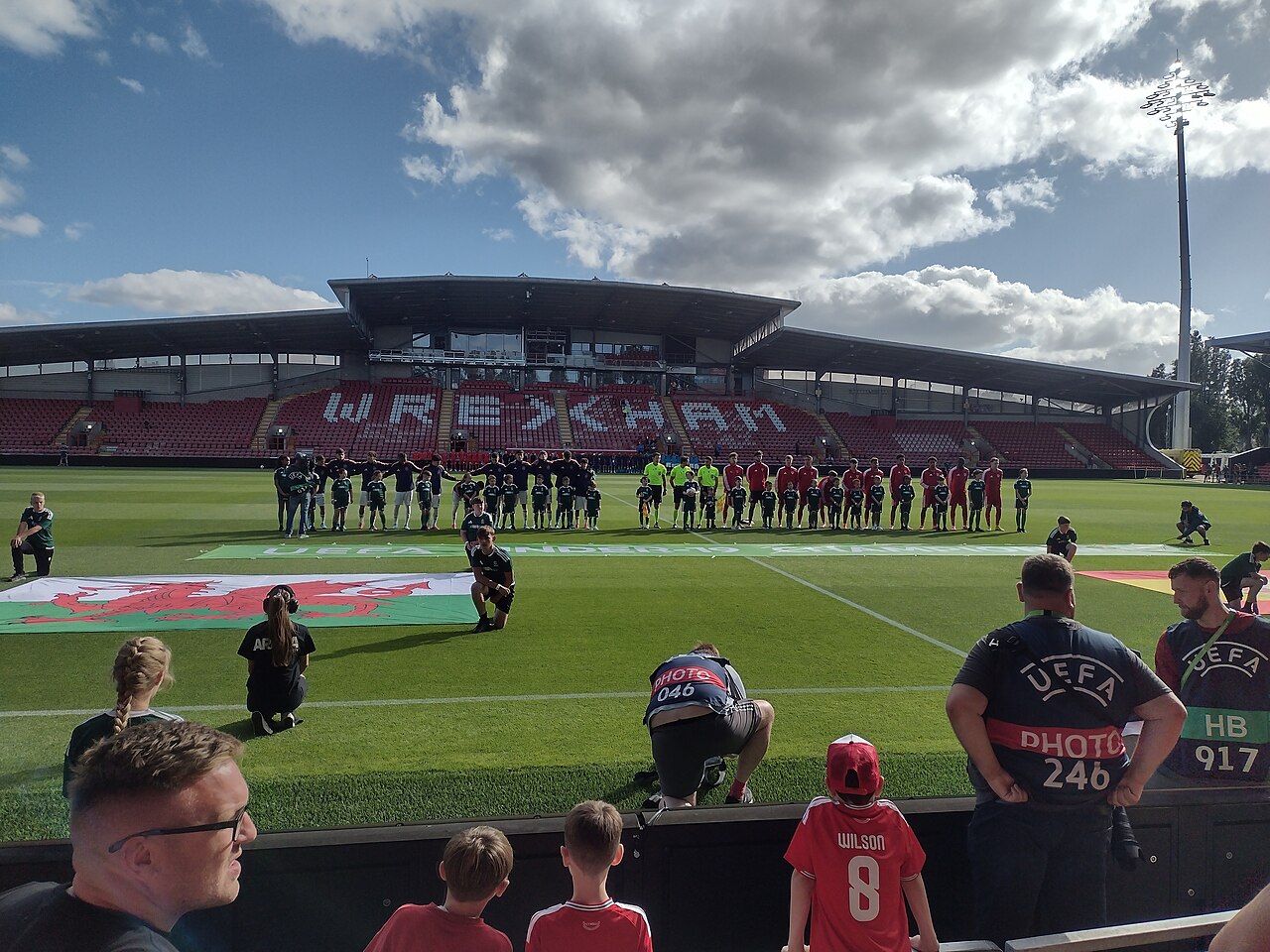
The current ground is a four-sided mix of eras. The Macron Stand, built over the old Mold Road stand in 1999 with lottery funding, holds 3,500 and carries the TV studio and executive boxes. The Wrexham Lager Stand (4,200) went up in 1972 ahead of the club’s first European campaign. The STōK Cold Brew Coffee Stand behind the far goal holds 2,800.
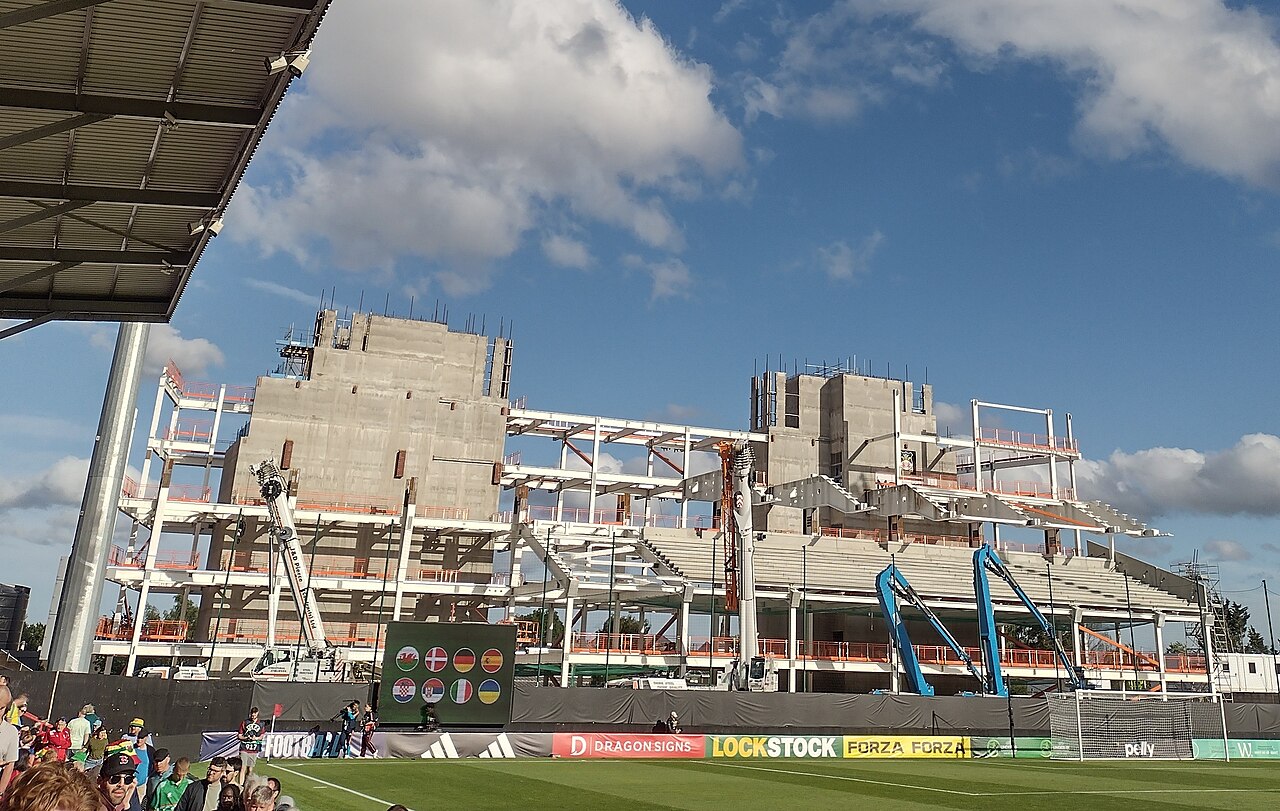
The Kop is the story of the moment. The old terrace — at 5,000 capacity, the largest all-standing terrace in the English Football League — was closed on safety grounds in 2008 and finally demolished in January 2023. A temporary stand covered the gap from December 2023. Construction of a permanent replacement began in December 2025, with revised plans approved for 7,750 seats and a target of the 2026–27 season, partly driven by the ground’s role in hosting UEFA European Under-19 Championship matches.
Nearly Lost, Then Saved
The Racecourse came closer to disappearing than most heritage venues. In 2002 the freehold was bought by Wrexham A.F.C. for £300,000 and transferred the same day to a company controlled by chairman Alex Hamilton, under a lease that let the new owner evict the club on 12 months’ notice. Notice was duly served in 2004. A High Court case running to March 2006 ruled the transfer improper and returned the ground to the club’s administrators.
Wrexham University (then Glyndŵr) bought the stadium in 2011 and handed operational control back to the club on a 99-year lease in 2016; Wrexham A.F.C. took ownership outright on 29 June 2022. In August 2025 the club completed a £1.7 million pitch overhaul with undersoil heating, improved drainage and goal-line technology to meet UEFA standards — and moved the playing surface two metres towards the Kop.
12 x 10.5 x 6 in. — built to the common stadium clear-bag size. Check your venue's rules.
USB-charged warmers for cold night games — no disposable packets.
Keeps chili hot from the tailgate to the fourth quarter.
FAQ
Why is it called the Racecourse Ground?
Because it was one. The site opened in 1807 as a cricket ground that also staged horse racing; the name survived long after the horses stopped. The Welsh name, Y Cae Ras, means the same thing.
Is the Racecourse the oldest international stadium in the world?
It is the oldest still hosting international football. Wales played their first home international there in 1877, the ground has staged more Wales internationals than any other venue, and the Football Association of Wales still uses it — a continuity Guinness World Records formally recognised in 2008.
What is the ground called now?
Officially the STōK Cae Ras, under a sponsorship deal with STōK Cold Brew Coffee that took effect on 1 July 2023. Most supporters still call it the Racecourse.
Photo: John Lord via Wikimedia Commons (CC BY 2.0)