
Philadelphia Municipal Stadium opened on April 15, 1926, as Sesquicentennial Stadium, built in South Philadelphia for that year’s Sesquicentennial Exposition. Designed by the architecture firm Simon & Simon in a classic 1920s horseshoe shape reminiscent of Harvard Stadium, the massive open-air bowl could hold more than 100,000 spectators, making it one of the largest stadiums in the country at the time of its opening.
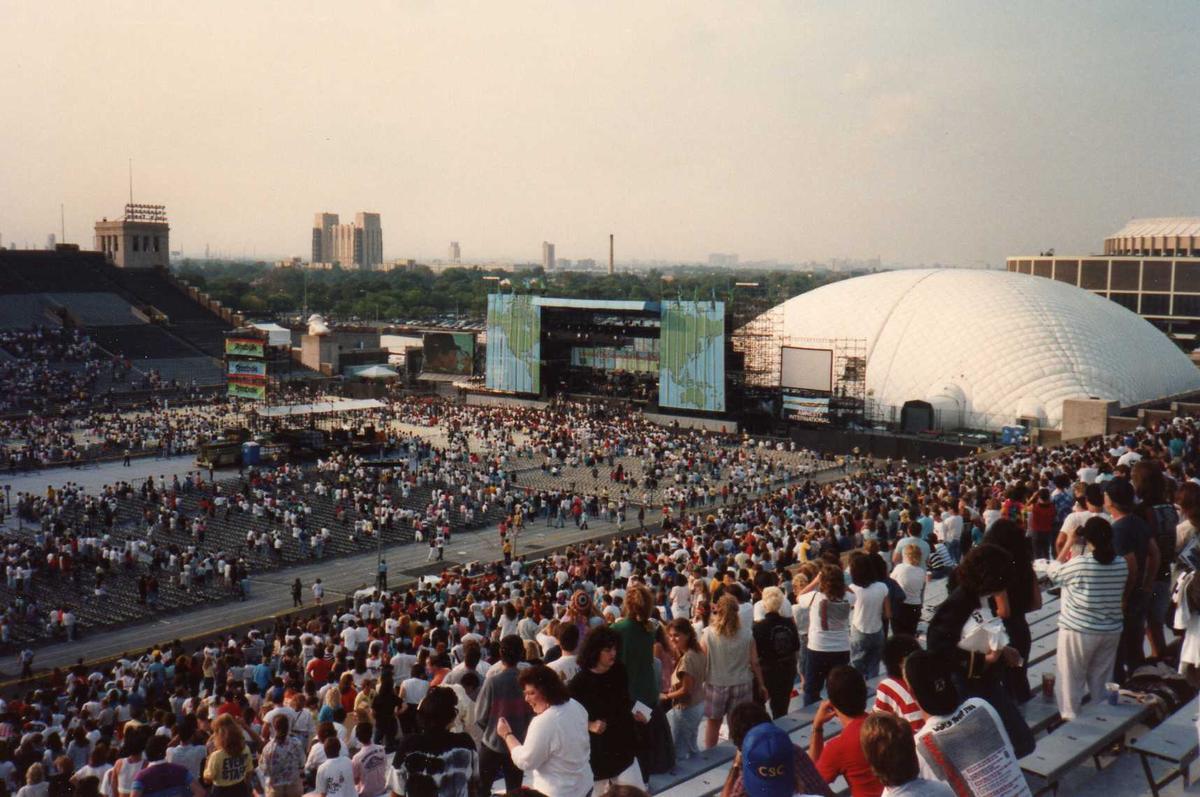
Renamed John F. Kennedy Stadium in 1964 in honor of the assassinated president, the venue became best known as the longtime neutral-site home of the Army-Navy football game, hosted there 41 times between 1936 and 1979. It also staged the Philadelphia leg of Live Aid in 1985 and decades of concerts and boxing matches before deteriorating infrastructure forced its closure in 1989 and demolition in 1992.
- Philadelphia Eagles played here 1936–1939. See every Eagles stadium →
Stats at a Glance
- Original Name: Sesquicentennial Stadium
- Later Name: John F. Kennedy (JFK) Stadium
- Location: South Philadelphia, Pennsylvania
- Opened: April 15, 1926
- Closed: July 13, 1989 (demolished September 1992)
- Capacity: About 102,000 (football)
- Notable Event: Live Aid concert, July 13, 1985 (about 89,484 attendees)
A Stage for Army-Navy and Rock History
For over four decades, the stadium’s horseshoe bowl was synonymous with the Army-Navy Game, hosted there 41 times between 1936 and 1979 as a neutral battleground between the service academies. The venue also drew enormous concert crowds, with acts including the Beatles, the Rolling Stones, Led Zeppelin, and Pink Floyd performing there, and it earned a permanent place in music history as the Philadelphia venue for Live Aid on July 13, 1985.
Boxing history was made there too: Gene Tunney defeated Jack Dempsey in the stadium’s debut year of 1926, and Rocky Marciano beat Jersey Joe Walcott there in 1952. The Philadelphia Eagles also called the stadium home for several seasons between 1936 and 1941.
Closure and Demolition
By the late 1980s, decades of exposure and deferred maintenance had taken a visible toll. Just six days after the Grateful Dead’s final concert there, inspectors found crumbling concrete, electrical hazards, and combustible debris throughout the structure, prompting Mayor Wilson Goode to condemn the stadium on July 13, 1989. After standing empty for several years, the stadium was demolished in September 1992, clearing the site for what eventually became part of the South Philadelphia Sports Complex.
Explore more: Explore more historic and iconic stadiums.
For upper-deck seats. Watch line play at the stadium, or the far side of the park from the top of a lift hill.
Sherpa-lined and windproof, with a waterproof back for wet bleachers. Folds into its own pouch.
For late-season football, outdoor hockey and October park nights. Shake, pocket, and stay warm for hours.


Philadelphia Municipal Stadium FAQs
What was Philadelphia Municipal Stadium originally called?
It opened in 1926 as Sesquicentennial Stadium, built for Philadelphia’s Sesquicentennial Exposition, before becoming known as Philadelphia Municipal Stadium and later John F. Kennedy (JFK) Stadium in 1964.
How many people could the stadium hold?
The stadium’s capacity exceeded 102,000 for football, making it one of the largest stadiums in the United States during its decades of use.
Why was the stadium demolished?
Inspectors found severe structural decay, electrical hazards, and combustible debris in 1989, leading the city to condemn the building. It was demolished in September 1992.
Get More from Philadelphia Municipal Stadium
Log the coasters, stadiums, and venues you’ve experienced, rate Philadelphia Municipal Stadium, and see what your friends thought. Get the ThrillZing app.
Photo: Dallin Aerial Survey Collection / Public domain, via Wikimedia Commons.