
Junction Oval sits at the corner of Fitzroy Street and Lakeside Drive in St Kilda, a few minutes from Melbourne’s bayside beaches, and it has been in use as a sports ground since 1856. For most of the 20th century it was better known for football than cricket, but a A$40 million redevelopment finished in 2018 turned it back into what it was originally built to be: Victoria’s dedicated first-class cricket home. It ranks tenth on our list of the oldest stadiums in the world still in use.
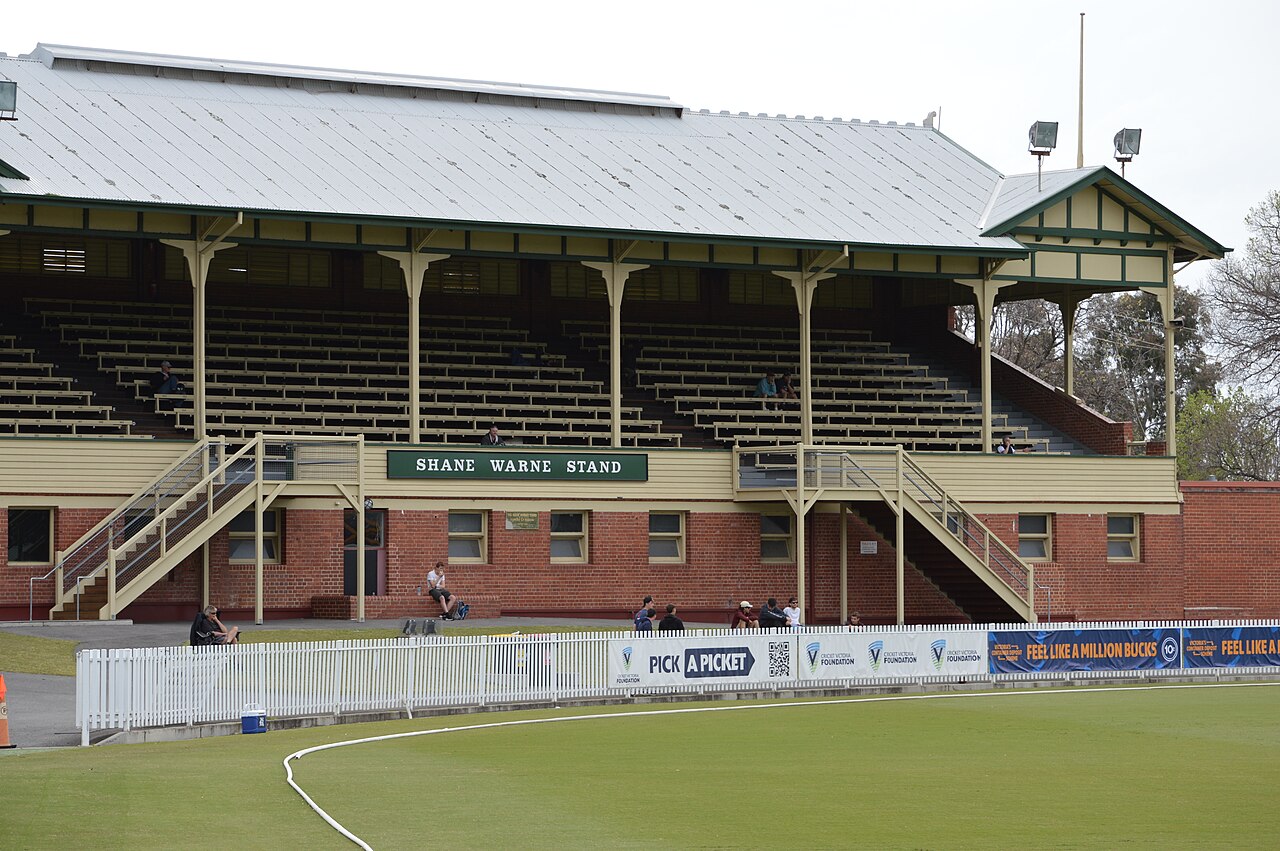
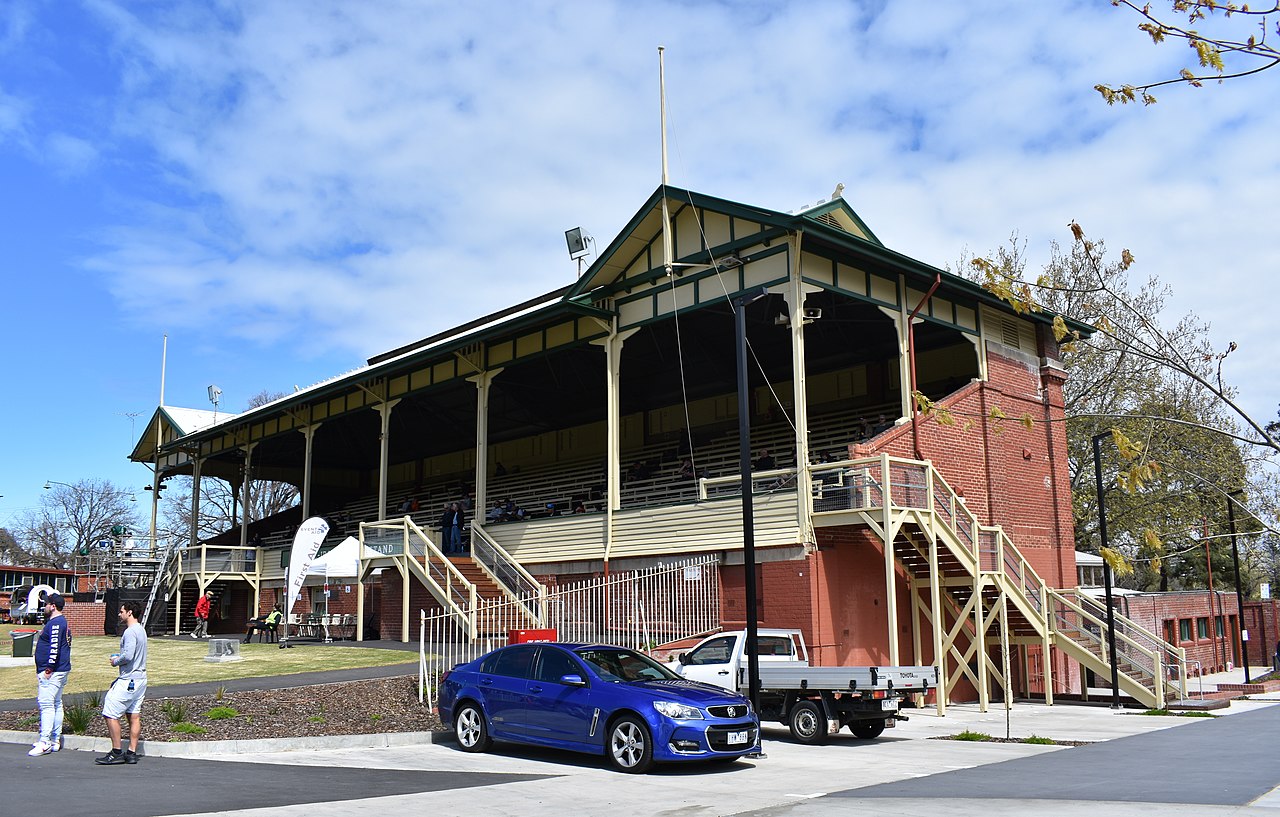
The ground holds only about 7,000 people, which makes it one of the smallest venues on that list, but the two grandstands that give it its character are among the oldest surviving pieces of sporting architecture in Melbourne. Both went up between the world wars and both are still the seats you sit in to watch a Sheffield Shield match.
Key Stats
| Opened | 1856 |
| Location | St Kilda, Melbourne, Victoria, Australia |
| Capacity | 7,000 |
| Tenants | Victoria men’s and women’s cricket teams, Melbourne Stars and Melbourne Renegades (WBBL), St Kilda Cricket Club |
| Sport | Cricket (formerly Australian rules football) |
| Record attendance | 46,973 (20 May 1950, St Kilda v Carlton, VFL) |
| Redevelopment | A$40 million, completed March 2018 |
A Football Ground for a Century
Junction Oval’s longest continuous relationship was with the St Kilda Football Club, which played 564 home matches here between 1897 and 1964 before moving to Moorabbin. South Melbourne used the ground during the war years, playing 29 home games from 1944 to 1946, and Fitzroy took it over from 1970 to 1984 for another 135 matches. That football era produced the ground’s attendance record: 46,973 people crammed in on 20 May 1950 to watch St Kilda play Carlton, a figure more than six times the modern capacity.
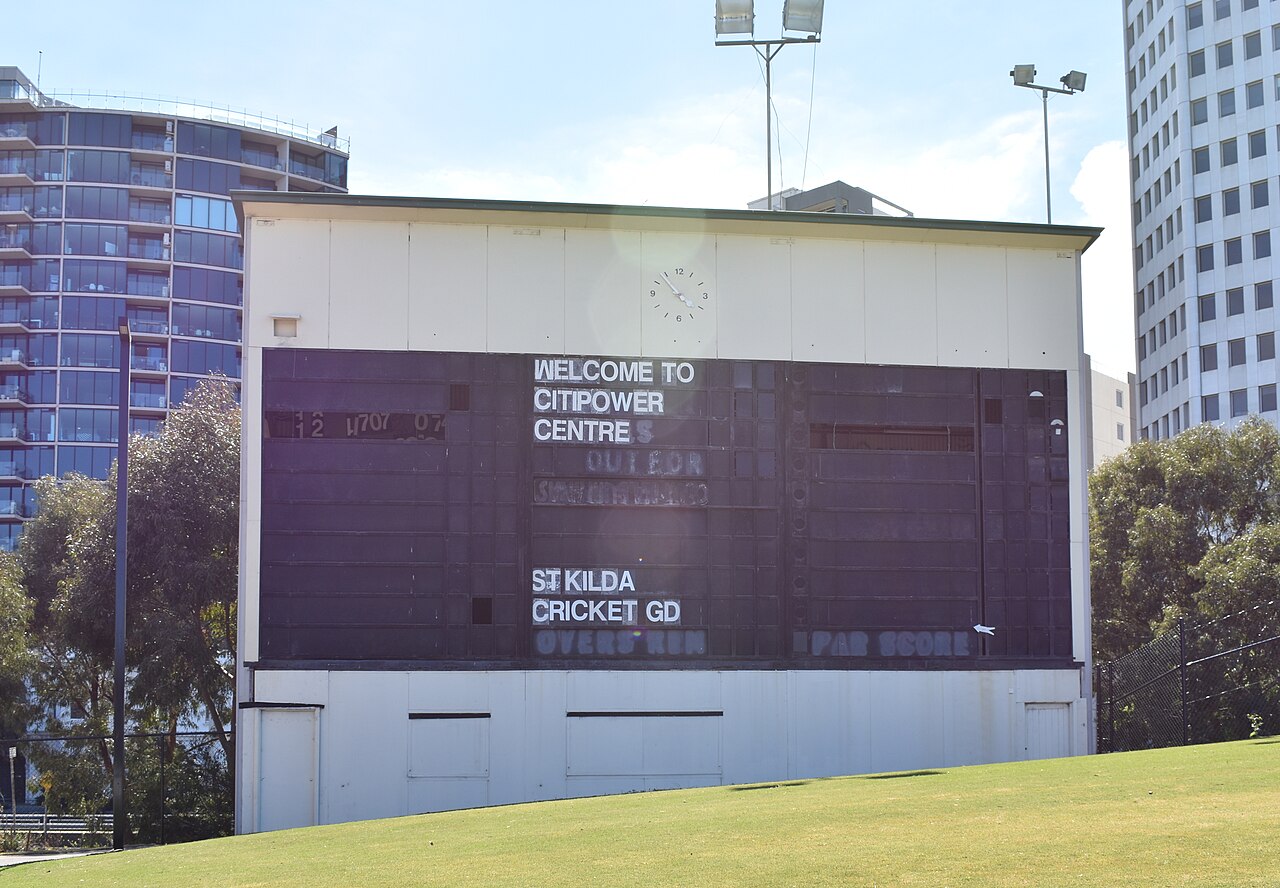
The stands that survive date from that period. The 1925-26 grandstand, built for about A£7,000, was known for years as the Kevin Murray Stand and has since been renamed the Shane Warne Stand. The Don Blackie-Bert Ironmonger Stand followed in 1933-34 at a cost of around A£7,500, named for two Victorian bowlers. The manual scoreboard went up in 1956-57 and is still in place.
The 2018 Return to First-Class Cricket
After Fitzroy left, the ground drifted for three decades, used mostly by district cricket and local football. The turnaround came from a A$40 million redevelopment run between 2015 and 2018, funded with A$25 million from the Victorian government and A$15 million from Cricket Victoria, Cricket Australia and the Melbourne Cricket Club. It added the CitiPower Centre — training facilities, indoor nets and Cricket Victoria’s headquarters — alongside upgraded playing surfaces and multiple turf wickets.
The redeveloped ground was unveiled on 3 March 2018 ahead of a Sheffield Shield match, and Victoria’s first-class fixtures have been based there ever since rather than at the MCG. It also hosts Women’s Big Bash League games for both Melbourne clubs and remains the home of the St Kilda Cricket Club.
Junction Oval also has a place in women’s cricket history: it staged a women’s Test between Australia and England beginning on 21 February 1958. Nearly seventy years on, the ground’s main tenants once again include two women’s professional sides.
12 x 10.5 x 6 in. — built to the common stadium clear-bag size. Check your venue's rules.
USB-charged warmers for cold night games — no disposable packets.
Keeps chili hot from the tailgate to the fourth quarter.
FAQ
How old is Junction Oval?
The ground dates from 1856, making it one of the oldest sports venues in Australia and one of only a handful worldwide still in regular professional use after more than 165 years.
Who plays at Junction Oval now?
Victoria’s men’s and women’s state teams play their first-class and one-day cricket here, the Melbourne Stars and Melbourne Renegades use it for WBBL fixtures, and the St Kilda Cricket Club is the resident club side.
Is Junction Oval still an AFL ground?
No. St Kilda left in 1964 and Fitzroy played their last home game here in 1984. The ground is now a cricket venue, though it kept the oval shape and grandstands from its football years.
Photo: DustyNail via Wikimedia Commons (CC BY-SA 4.0)