
International Stadium Yokohama, known commercially as Nissan Stadium, opened on March 1, 1998, in Yokohama’s Shin-Yokohama Park. With 72,327 seats, it holds the title of Japan’s largest stadium, a distinction that made it the natural choice to host the country’s biggest sporting moments.
The stadium reached global prominence on June 30, 2002, when it hosted the FIFA World Cup final between Brazil and Germany, a match Brazil won 2-0 to claim its fifth title. Since then, the venue has remained a centerpiece of Japanese sport, serving as the home ground for J1 League club Yokohama F. Marinos and hosting the 2019 Rugby World Cup final after the original host venue fell behind schedule.
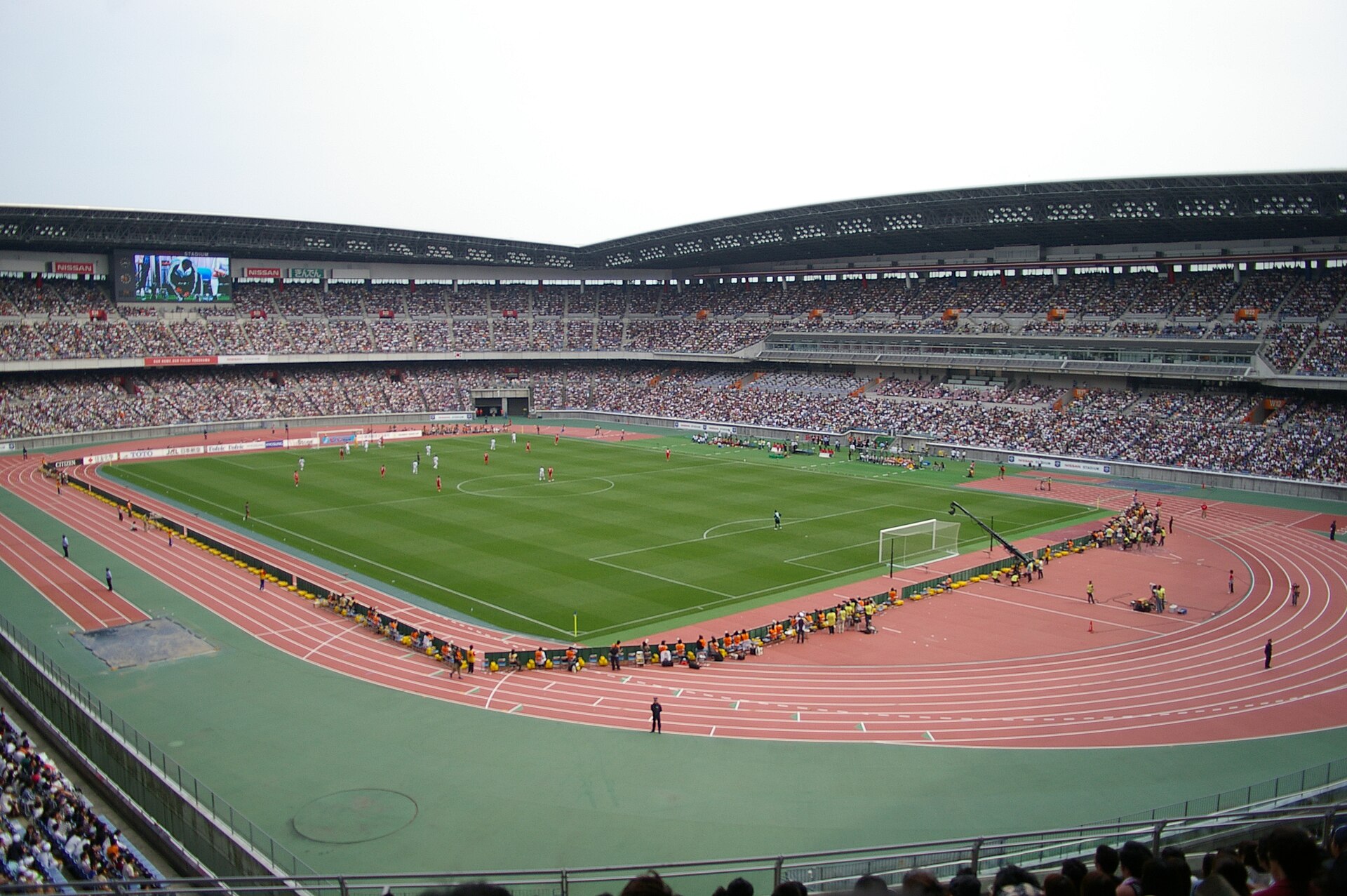
Stats at a Glance
- Team(s): Yokohama F. Marinos, Japan national football team
- Location: Kozukue-cho, Yokohama, Kanagawa Prefecture, Japan
- Opened: March 1, 1998
- Capacity: 72,327
- Field Surface: Natural grass, 107m x 72m
- Notable Event: Hosted the 2002 FIFA World Cup final (Brazil 2-0 Germany)
A Stage for World Football
Beyond the 2002 World Cup final, International Stadium Yokohama has built a resume few stadiums can match. It hosted matches during the 2001 FIFA Confederations Cup, including the semifinal and final, and later welcomed football back to the Olympic stage as a venue for the 2020 Summer Olympics football tournament. The stadium has also regularly hosted FIFA Club World Cup matches since 2002, reinforcing its status as one of Asia’s premier football venues.
In 2019, the stadium stepped outside its usual sport when it hosted the Rugby World Cup final between South Africa and England, stepping in after Tokyo’s new National Stadium could not be completed in time for the tournament. That match, drawing a capacity crowd, further cemented the venue’s reputation as Japan’s go-to site for events on the world’s biggest stage.
Home of Yokohama F. Marinos
Since 1999, International Stadium Yokohama has served as the home ground of Yokohama F. Marinos, one of the J1 League’s most successful clubs. On matchdays, the vast bowl-shaped stadium gives the club one of the largest home-field advantages in Japanese football, and the venue frequently doubles as the stage for Japan national team matches and major domestic cup finals.
Explore more: Explore more legendary stadiums.
International Stadium Yokohama FAQs
Why is International Stadium Yokohama also called Nissan Stadium?
Nissan Stadium is the venue’s corporate naming-rights title, while International Stadium Yokohama remains its official and most widely recognized name, especially for international events like the World Cup.
What is the seating capacity of International Stadium Yokohama?
The stadium seats 72,327 people, making it the largest stadium in Japan.
What major finals has the stadium hosted?
It hosted the 2002 FIFA World Cup final between Brazil and Germany and the 2019 Rugby World Cup final between South Africa and England.
Get More from International Stadium Yokohama
Log the coasters, stadiums, and venues you’ve experienced, rate International Stadium Yokohama, and see what your friends thought. Get the ThrillZing app.
Photo: Arne Müseler / CC BY-SA 3.0 de, via Wikimedia Commons.