
Grace Road is not named after W. G. Grace. The road took its name from Grace Margaret Yearby, daughter of a local property owner, Edward John Yearby — a coincidence so neat that the cricketing explanation has stuck for well over a century. What is true is that Leicestershire County Cricket Club bought the land from the Duke of Rutland in 1877 and spent the enormous sum of £40,000 building a cricket club, athletics track and hotel on it. The first match followed three months later, against a touring Australian side.
Known today for sponsorship reasons as the Uptonsteel County Ground, Grace Road is Leicestershire’s home and administrative base, and one of the oldest stadiums in the world still in use. It is also the county ground that got away and came back: the club abandoned it in 1901 and did not return until 1946.
Key Stats
| Opened | 1878 (land bought 1877) |
| Location | Grace Road, Aylestone, Leicester, England |
| Capacity | 6,000 for cricket (up to 19,999 for concerts) |
| Tenant | Leicestershire County Cricket Club (1878–1901; 1946–present) |
| Sport | Cricket |
| Ends | Pavilion End and Bennett End |
| Record attendance | 16,000 — Leicestershire v the touring Australians, 1948 |
| Only Women’s Test | 8–12 August 2006, England v India |
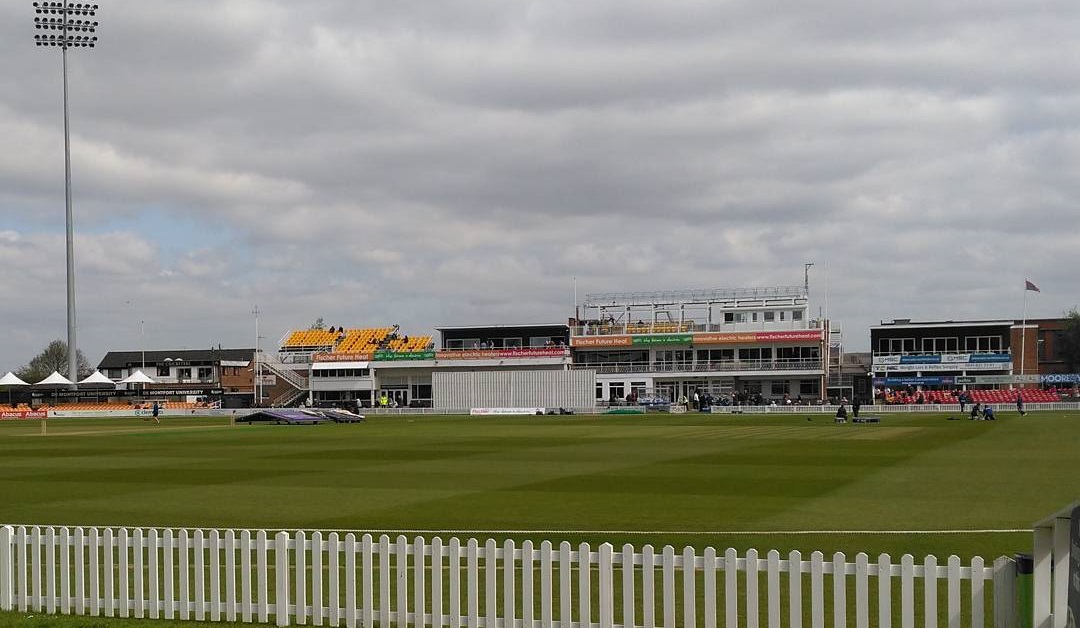
The 45-Year Exile
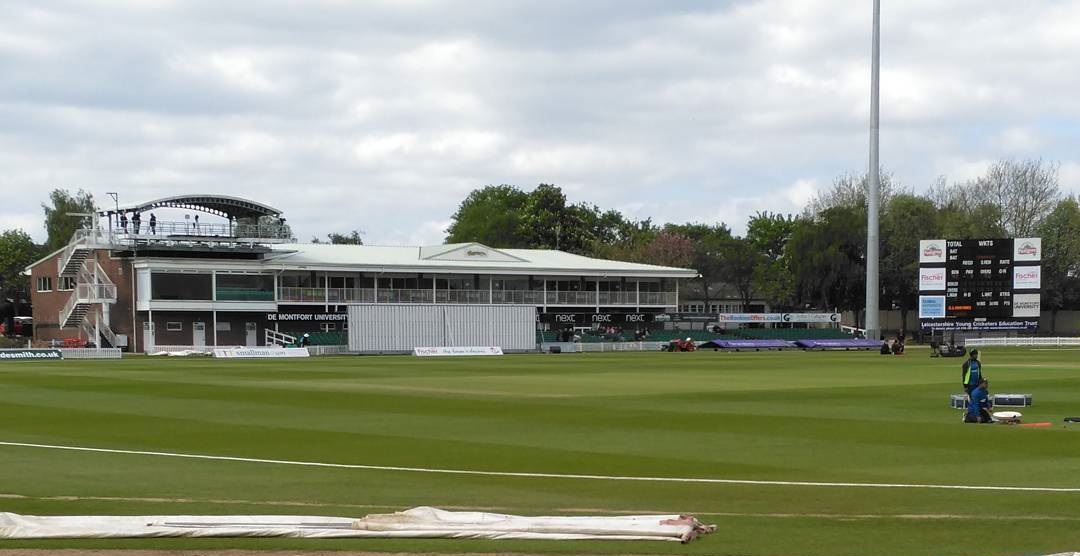
Leicestershire walked away from Grace Road in 1901. The problem was not the ground but getting to it: attendances were poor, and the club blamed a lack of public transport to a site out at Aylestone, well south of the city centre. It moved to a ground near Aylestone Road, closer in and easier to reach.
The return came after the Second World War. Leicestershire moved back to Grace Road in 1946 and has been based there ever since, finally re-purchasing the land in 1966 — 65 years after leaving and 89 years after first buying it. The record attendance dates from just after the return: 16,000 packed in to watch Leicestershire face Don Bradman’s touring 1948 Australians.
The Biggest Playing Area in County Cricket
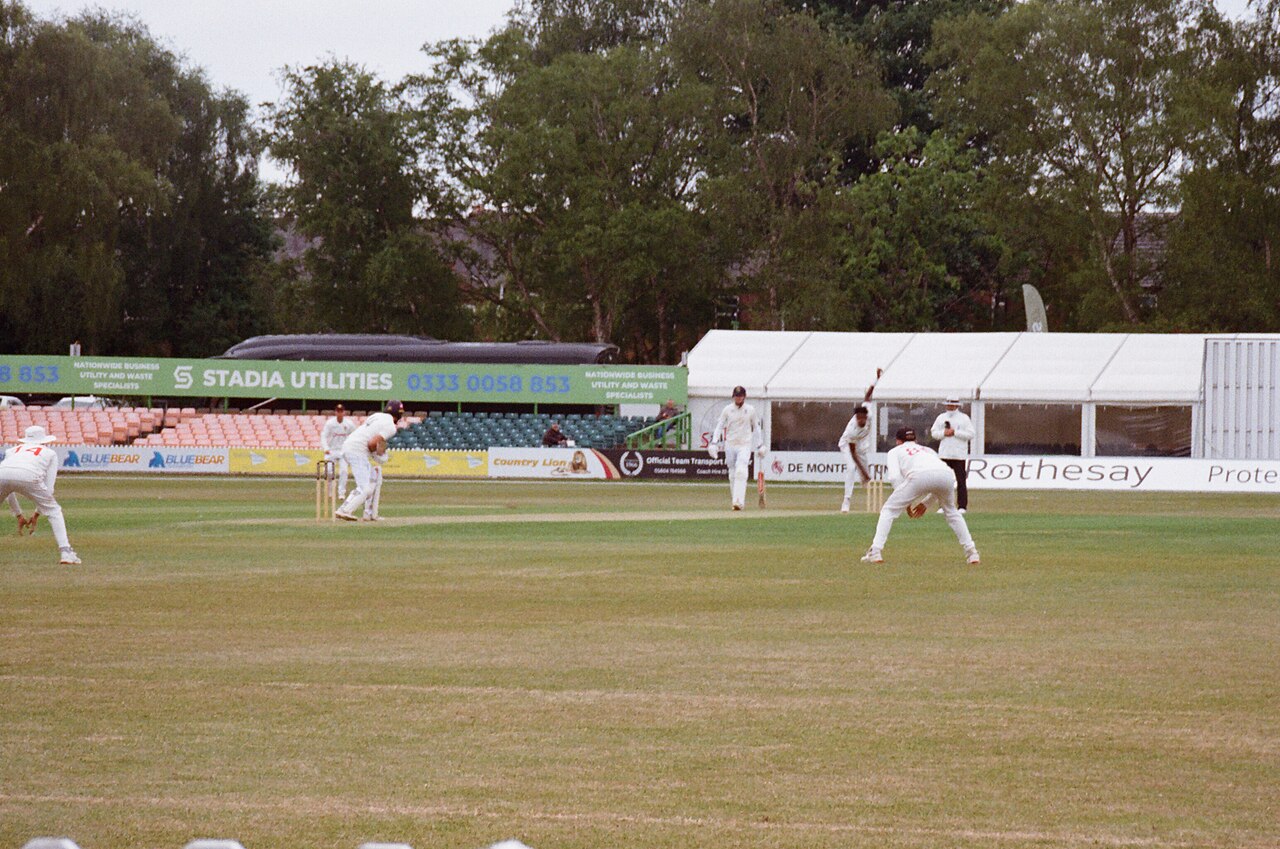
Grace Road has the largest playing area of any county ground in England, bigger even than the major international venues such as the Oval. The boundary is 63 metres straight in front of the wicket at both ends, and 76 metres square of the wicket on either side. For batters used to shorter grounds it is a genuine adjustment: shots that clear the rope elsewhere are caught in the deep here, and the extra square footage rewards running between the wickets.
The two ends are the Pavilion End and the Bennett End. Outside the cricket season the ground doubles as a concert venue, where the licensed capacity rises to 19,999 — more than three times the cricket figure.
International Cricket at Grace Road
Three men’s One Day Internationals have been played here, and remarkably none has involved England. The first came in the 1983 World Cup, when eventual champions India chased down 156 to beat Zimbabwe by five wickets. The other two were both 1999 World Cup fixtures: Zimbabwe beat India by three runs, and the West Indies beat Scotland by eight wickets.
Women’s international cricket has a longer association with the ground. Grace Road staged a Women’s Test between England and India from 8 to 12 August 2006, hosted its first Women’s ODI in June 1984 (England against New Zealand) and was still on the international calendar in 2025 for England against the West Indies. Seven centuries have been scored in Women’s ODIs at the ground.
A see-through purse that looks like a purse. Works for most stadium, arena and concert bag policies.
Bleachers for three hours, but with back support. Folds flat and clips to the bench.
For upper-deck seats. Watch line play at the stadium, or the far side of the park from the top of a lift hill.
FAQ
Is Grace Road named after W. G. Grace?
No. Despite the obvious cricketing association, the road was named after Grace Margaret Yearby, the daughter of local property owner Edward John Yearby.
Why did Leicestershire leave Grace Road?
The club left in 1901 because attendances were low, which it put down to poor public transport links to the ground. It relocated nearer the city centre by Aylestone Road, returned to Grace Road in 1946 and bought the land back in 1966.
How big is the Grace Road outfield?
63 metres straight at both ends and 76 metres square of the wicket, giving it the largest playing area of any county ground in England, including the Test venues.
Photo: Mat Fascione via Wikimedia Commons (CC BY-SA 2.0)