
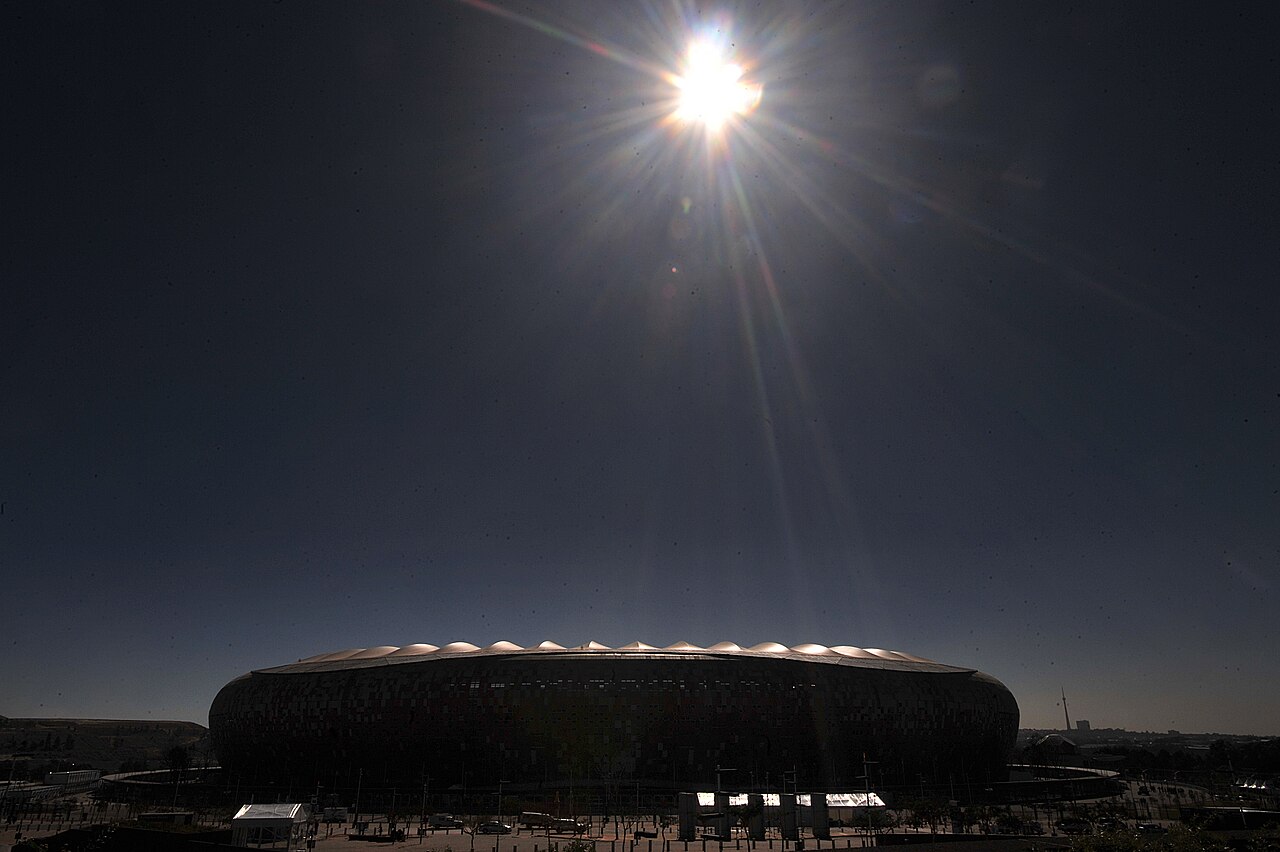
On the edge of Soweto in Johannesburg stands Africa’s largest stadium — a giant vessel of fire-colored mosaic panels known officially as FNB Stadium, and affectionately as Soccer City or “The Calabash.” Rebuilt for the 2010 FIFA World Cup with a design inspired by the traditional African cooking pot, the 94,736-seat bowl hosted the tournament’s final and has been the stage for some of South Africa’s most defining moments, from Nelson Mandela’s 1990 homecoming speech to his 2013 memorial. It ranks among the largest stadiums in the world and is the biggest on the African continent.
Key Stats
| Capacity | 94,736 |
| Opened | October 7, 1989 (rebuilt 2009) |
| Primary use | Football (Kaizer Chiefs, South Africa national team); also rugby union |
| Location | Nasrec, Johannesburg, South Africa |
| Record attendance | 94,807 — Kaizer Chiefs vs Orlando Pirates, August 1, 2015 |
From 1989 Original to 2010 Calabash
The original FNB Stadium — named through a naming-rights deal with First National Bank — opened on October 7, 1989, and quickly became the spiritual home of South African football. For the 2010 World Cup it was radically transformed: architects Populous and Boogertman + Partners wrapped the bowl in a mosaic of earthen and fire tones, with a ring of lights running around the base to simulate flames beneath a pot. An extended upper tier, an encircling roof, 195 executive suites and new floodlights brought the rebuilt stadium to a capacity of 94,736 when construction finished in October 2009, at a cost of roughly R1.5 billion.
The design carries a subtle tribute: the stands are articulated by ten black vertical lines, nine of them aligned geographically with the other nine 2010 World Cup stadiums — the tenth added because nine is considered unlucky in South African tradition. No spectator sits more than 100 meters from the pitch, and there is not a single restricted-view seat in the house.
The 2010 World Cup Final and Other Landmark Moments
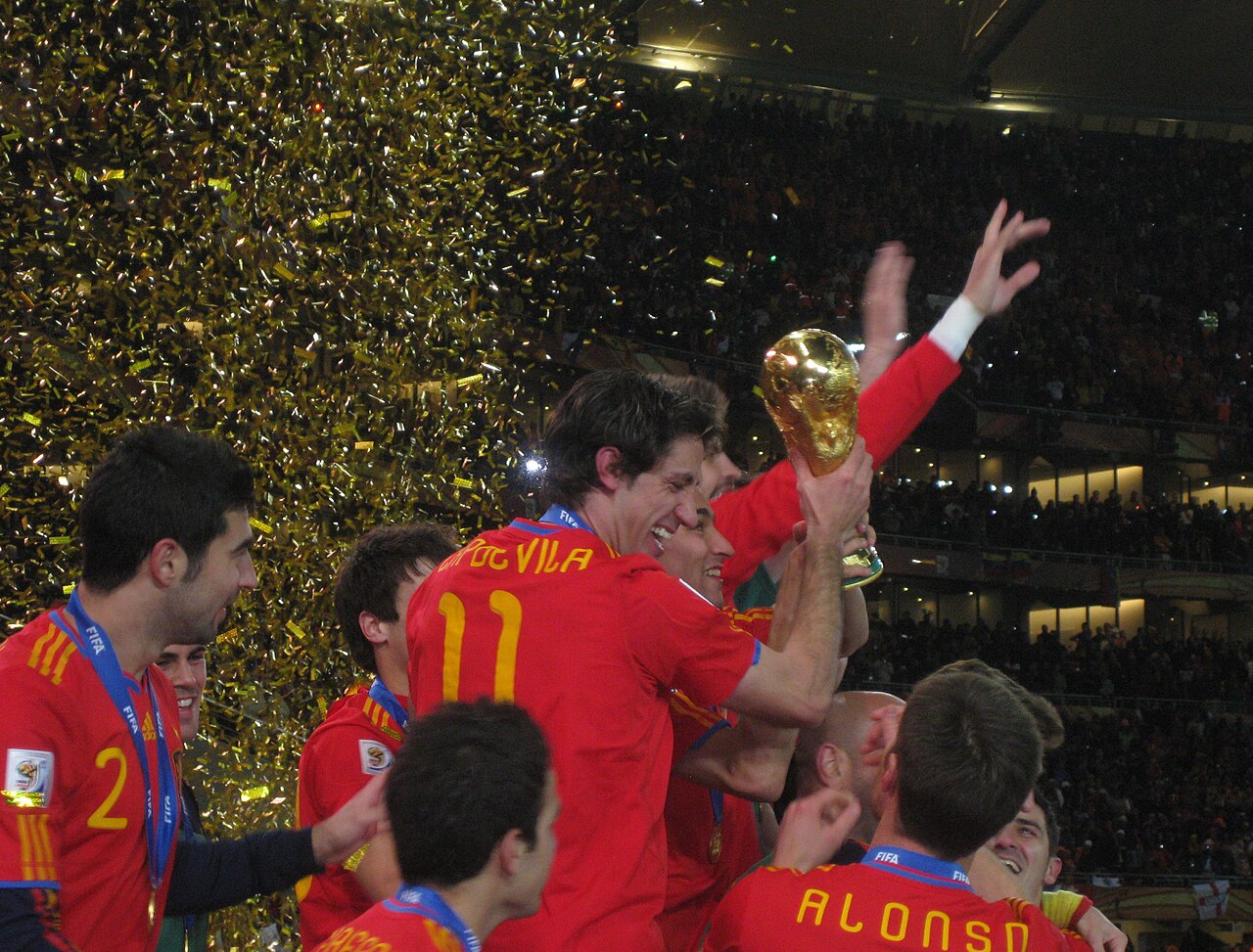
During the 2010 FIFA World Cup the venue was branded Soccer City, since FIFA does not permit sponsored stadium names at its tournaments. It hosted the opening match and, on July 11, 2010, the final, where Andrés Iniesta’s extra-time goal gave Spain a 1–0 win over the Netherlands in front of 84,490 fans — the capacity reduced from its maximum by press and VIP seating. The closing ceremony that day also marked Nelson Mandela’s final major public appearance.
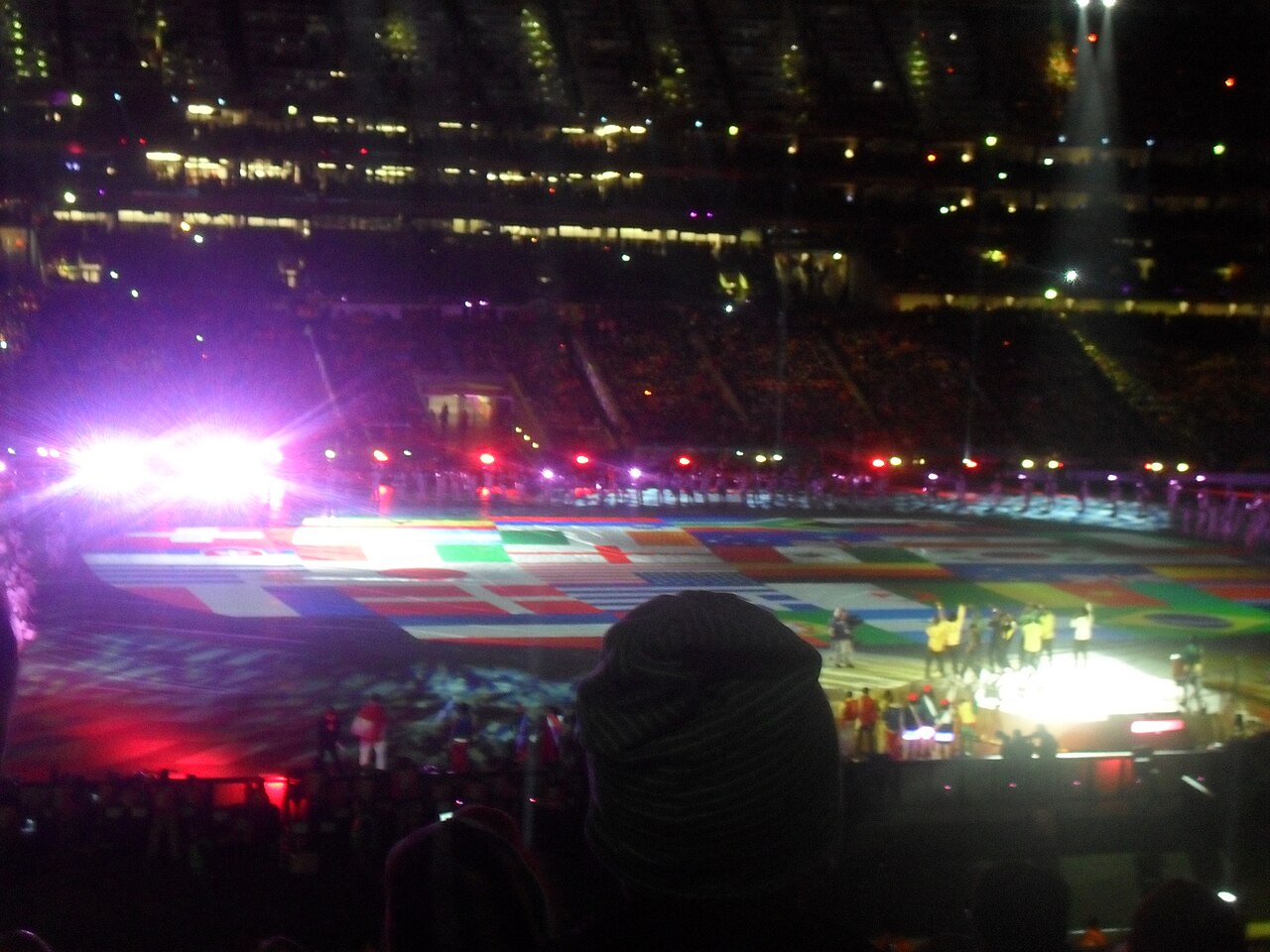
The stadium’s history is inseparable from Mandela’s. He delivered his first speech in Johannesburg here after his release from prison in 1990, and on December 10, 2013, world leaders gathered in the same bowl for his national memorial service. The venue also hosted the funerals of anti-apartheid leaders Oliver Tambo and Chris Hani in 1993, and the final of the 2013 Africa Cup of Nations.
Matchdays at the Calabash Today
FNB Stadium is home to Kaizer Chiefs of the South African Premiership and stages key fixtures for Bafana Bafana, the national team. Its biggest regular occasion is the Soweto Derby between Kaizer Chiefs and Orlando Pirates — one of world football’s fiercest rivalries — which set the stadium’s attendance record of 94,807 on August 1, 2015. The venue also moonlights as South Africa’s premier concert stage and has hosted major rugby fixtures, making it a genuine multi-purpose flagship for Johannesburg.
For upper-deck seats. Watch line play at the stadium, or the far side of the park from the top of a lift hill.
Sherpa-lined and windproof, with a waterproof back for wet bleachers. Folds into its own pouch.
For late-season football, outdoor hockey and October park nights. Shake, pocket, and stay warm for hours.
FAQ
Is FNB Stadium the biggest stadium in Africa?
Yes. At 94,736 seats it is the largest stadium on the African continent, ahead of Egypt’s new Misr Stadium (93,940) and Borg El Arab Stadium (86,000). See where it sits among the world’s largest stadiums.
Why is FNB Stadium called Soccer City and The Calabash?
“Soccer City” was the FIFA-mandated, sponsor-free name used during the 2010 World Cup. “The Calabash” comes from the 2010 redesign, whose mosaic cladding and rounded silhouette resemble the traditional African calabash pot set over fire.
Who plays their home games at FNB Stadium?
Kaizer Chiefs F.C. of the South African Premiership call it home, and the South Africa national football team plays its key fixtures here. The stadium also hosts rugby union matches and major concerts.
Photo: lumoplank via Wikimedia Commons (CC0)