
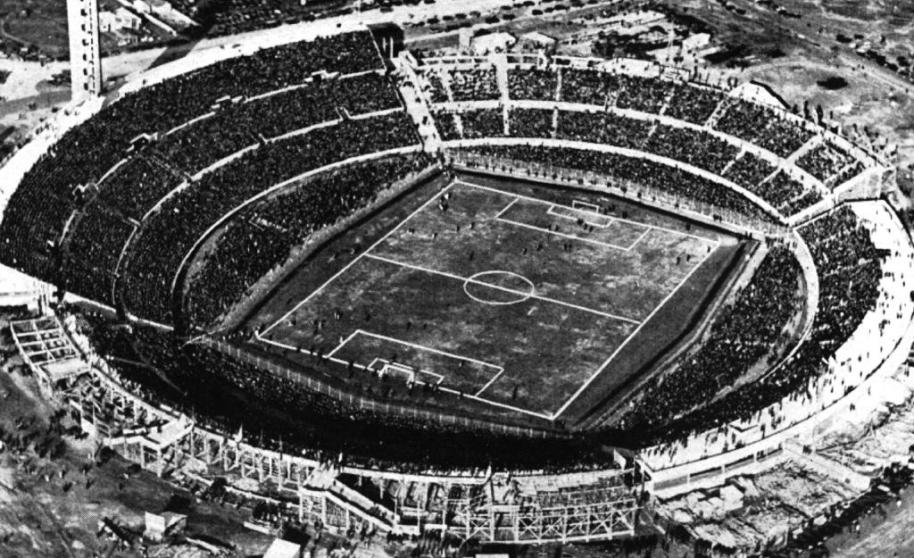
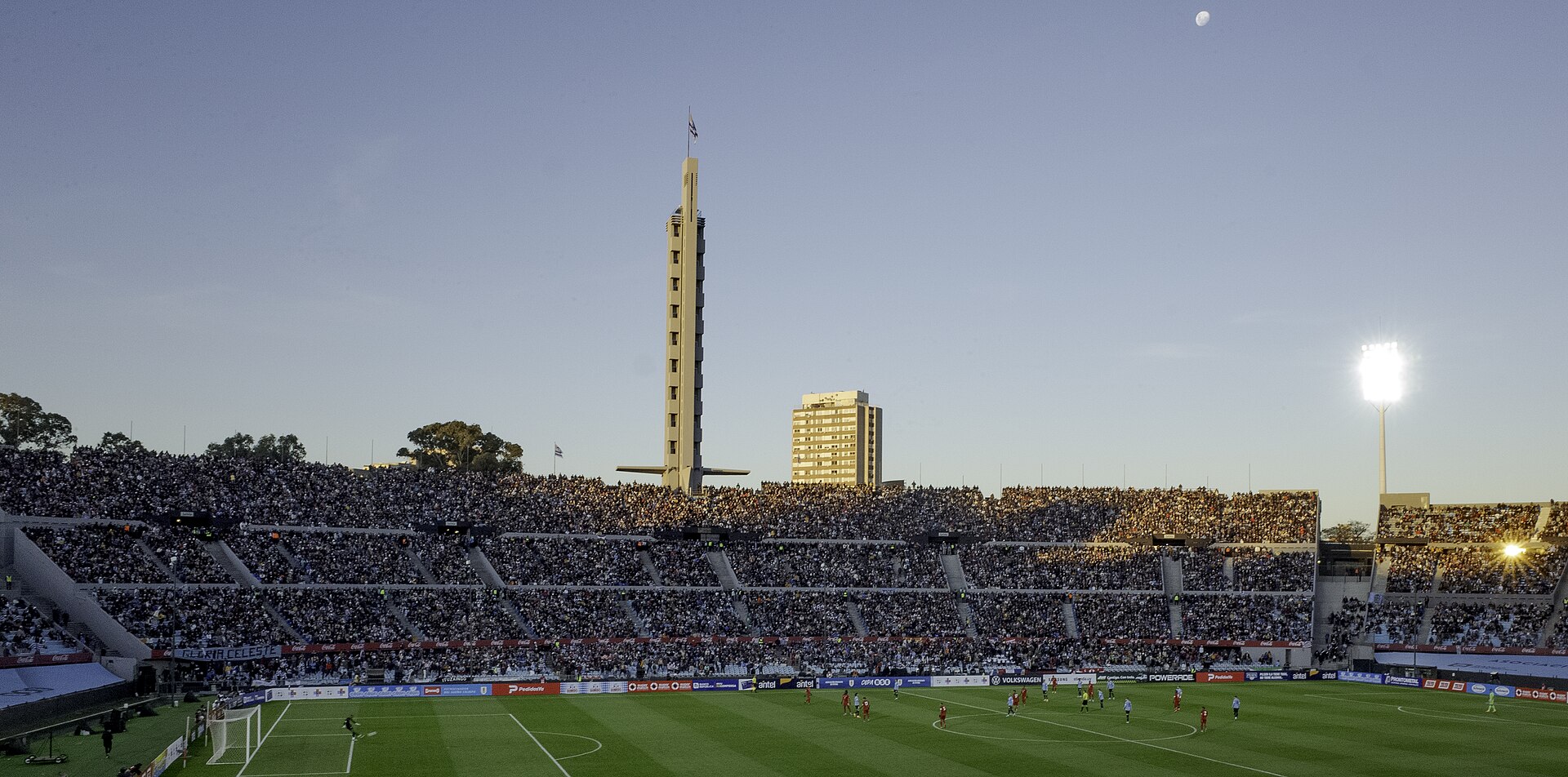
Estadio Centenario rises in Montevideo’s Parque Batlle neighborhood as the sport’s most historically significant ground. Built in just eight months during 1929 and 1930, it was rushed to completion so Uruguay could host the very first FIFA World Cup, opening its gates on July 18, 1930. Architect Juan Antonio Scasso designed the stadium, whose towering Torre de los Homenajes still dominates the skyline above the eastern stand.
The stadium hosted ten matches of that inaugural tournament, including both semifinals and the final, where the host nation beat Argentina 4-2 in front of a packed crowd. In 1983, FIFA named it the first Historical Monument of World Football, a title no other stadium on Earth holds. Nearly a century later, Estadio Centenario remains the home of the Uruguay national team and is set to host the opening match of the 2030 World Cup, marking the tournament’s centennial return to where it all began.
Stats at a Glance
- Team(s): Uruguay national football team
- Location: Montevideo, Uruguay
- Opened: July 18, 1930
- Capacity: about 60,235
- Architect: Juan Antonio Scasso
- Notable fact: First FIFA World Cup final host (1930); only stadium designated a FIFA Historical Monument of World Football
A Stadium Built for History
Estadio Centenario was constructed at breakneck speed to be ready for the 1930 World Cup, and that urgency shaped its identity from day one. Its centerpiece, the Torre de los Homenajes, features nine tiers of balconies said to echo the nine stripes of the Uruguayan flag, with sculptural details evoking the ships and aircraft that carried European immigrants to Uruguay’s shores.
The stadium’s Tribuna Olímpica houses the Football Museum, which opened in 1975 and was remodeled in 2004. Spread across roughly 3,000 square meters, it traces the stadium’s role in the sport’s early global history, including memorabilia from that first World Cup tournament.
Still a Working Stadium
Unlike many century-old grounds, Estadio Centenario remains an active venue rather than a relic. A roughly $6 million modernization in 2021 upgraded grandstands, lighting, and the pitch ahead of hosting Copa Libertadores and Copa Sudamericana finals. The Uruguay national team continues to play its home matches there, and the stadium is slated for further expansion as it prepares to host a 2030 World Cup opening match, exactly a century after its own debut tournament.
Explore more: Explore more legendary stadiums.
Estadio Centenario FAQs
Why is Estadio Centenario historically important?
It hosted the first-ever FIFA World Cup final in 1930, when Uruguay beat Argentina 4-2, and in 1983 FIFA designated it the first Historical Monument of World Football, a distinction still unique to this stadium.
What is the capacity of Estadio Centenario?
The stadium currently holds about 60,235 spectators, though plans exist to expand capacity ahead of future international matches.
Is Estadio Centenario still in use today?
Yes. It remains the home stadium of the Uruguay national football team and underwent a renovation in 2021; it is scheduled to host an opening match of the 2030 FIFA World Cup.
Get More from Estadio Centenario
Log the coasters, stadiums, and venues you’ve experienced, rate Estadio Centenario, and see what your friends thought. Get the ThrillZing app.
Photo: Marcelo Campi / CC BY-SA 2.0, via Wikimedia Commons.