
David Booth Kansas Memorial Stadium has been the home of Kansas Jayhawks football in Lawrence, Kansas, since it opened on October 29, 1921. Built as a memorial to University of Kansas students who died in World War I, it’s recognized as one of the oldest college football stadiums in the country and the oldest one west of the Mississippi River, giving it a century-plus of Jayhawk gameday history on Mississippi Street.
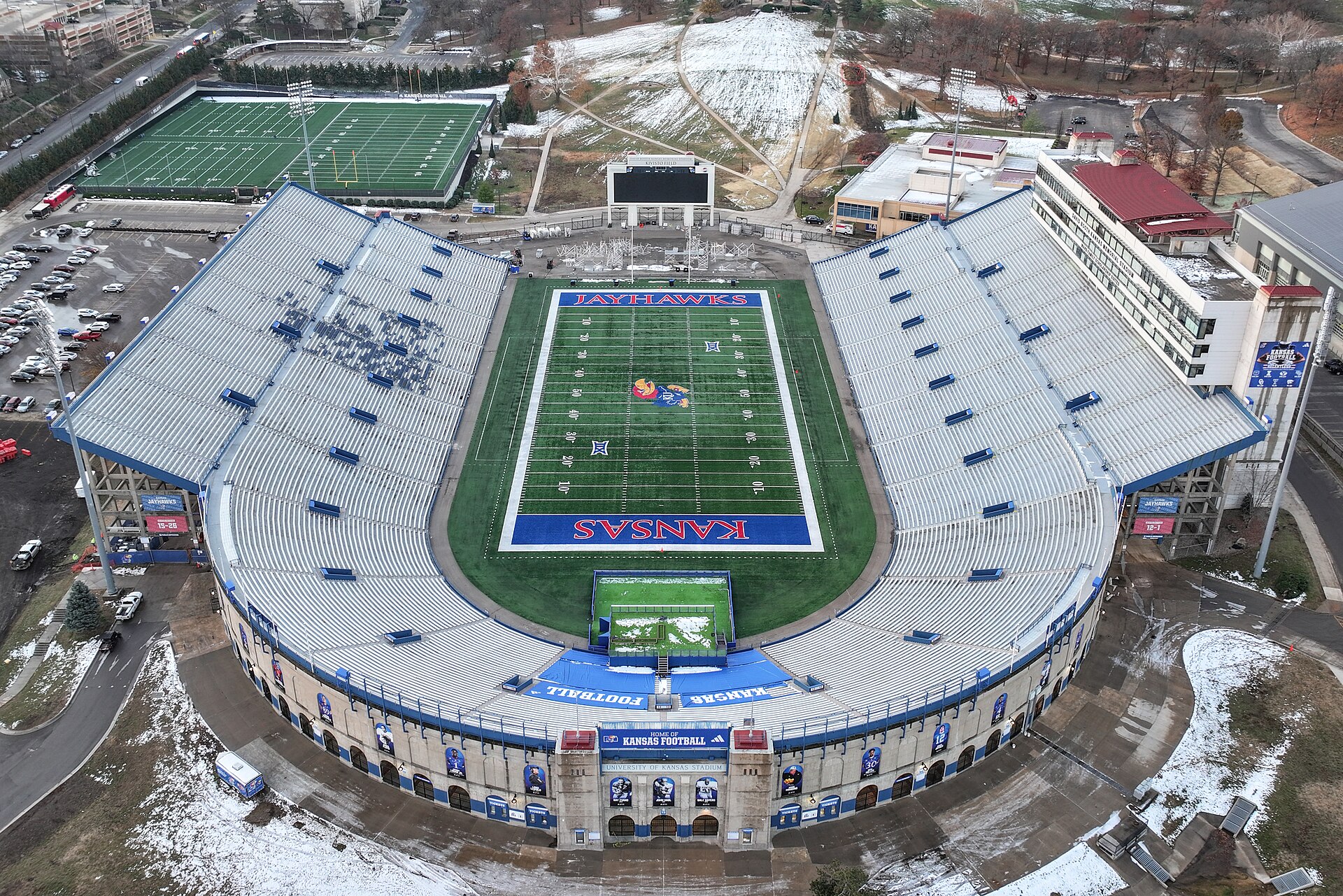
The stadium took on its current name in December 2017 after longtime donor David Booth pledged $50 million toward a facility overhaul, and that transformation accelerated dramatically in the 2020s. A near-total rebuild pushed the Jayhawks to play their 2024 home slate at Arrowhead Stadium and Children’s Mercy Park while crews reworked the west and north stands, which reopened for the 2025 season at a capacity of about 41,525. Demolition then began on the east side for Phase II, dropping capacity to roughly 32,000 for the 2026 season while crews rebuild the remaining stands.
Stats at a Glance
- Team: Kansas Jayhawks (NCAA football)
- Location: Lawrence, Kansas
- Opened: October 29, 1921
- Capacity: about 32,000 (2026, Phase II construction); was about 41,525 in 2025; projected 43,000 after completion
- Surface: Shaw Sports Turf
- Record Attendance: about 52,530 (set September 5, 2009)
- Notable Fact: Oldest college football stadium west of the Mississippi River
A Century of Jayhawk Football
When Memorial Stadium opened in 1921, it was dedicated to the University of Kansas students who gave their lives in World War I, and that tribute still anchors the stadium’s identity today. For more than a hundred years it has anchored the Kansas Jayhawks’ home schedule, surviving decades of expansions and modernizations while retaining its place as one of the sport’s oldest active venues.
The stadium’s name changed in December 2017 when donor David Booth committed $50 million toward overhauling the aging facility, kicking off a renaming and a long-term redevelopment plan that would reshape the venue inside and out.
A Rebuild in Two Phases
Kansas launched a near-total rebuild of the stadium after the 2023 season, demolishing and reconstructing the west and north stands first. The scale of the work forced the Jayhawks to relocate their entire 2024 home schedule to Arrowhead Stadium and Children’s Mercy Park in the Kansas City area, and Phase I reopened for the 2025 season at a capacity of about 41,525, complete with new seating and a custom wheatfield-design turf.
Demolition on the east side began in December 2025 to start Phase II, trimming the stadium to roughly 32,000 seats with temporary concessions and restrooms for the 2026 season. Kansas expects the rebuilt upper bowl and concourses to be finished before the 2027 season, bringing capacity up to around 43,000.
Explore more: Explore more legendary stadiums.
David Booth Kansas Memorial Stadium FAQs
Who is David Booth, the stadium’s namesake?
David Booth is a University of Kansas alumnus and longtime athletics donor who pledged $50 million toward renovating the stadium, leading to its renaming from Memorial Stadium in December 2017.
Why is the stadium’s capacity so much lower in 2026?
Crews began demolishing the east side of the stadium in December 2025 to start Phase II of the rebuild, temporarily cutting capacity to about 32,000 for the 2026 season until the upper bowl and concourses are completed for 2027.
What makes the stadium historically significant?
Opened in 1921, it’s considered one of the oldest college football stadiums in the country and the oldest one located west of the Mississippi River.
Get More from David Booth Kansas Memorial Stadium
Log the coasters, stadiums, and venues you’ve experienced, rate David Booth Kansas Memorial Stadium, and see what your friends thought. Get the ThrillZing app.
Photo: Kuwxman / CC BY-SA 4.0, via Wikimedia Commons.