
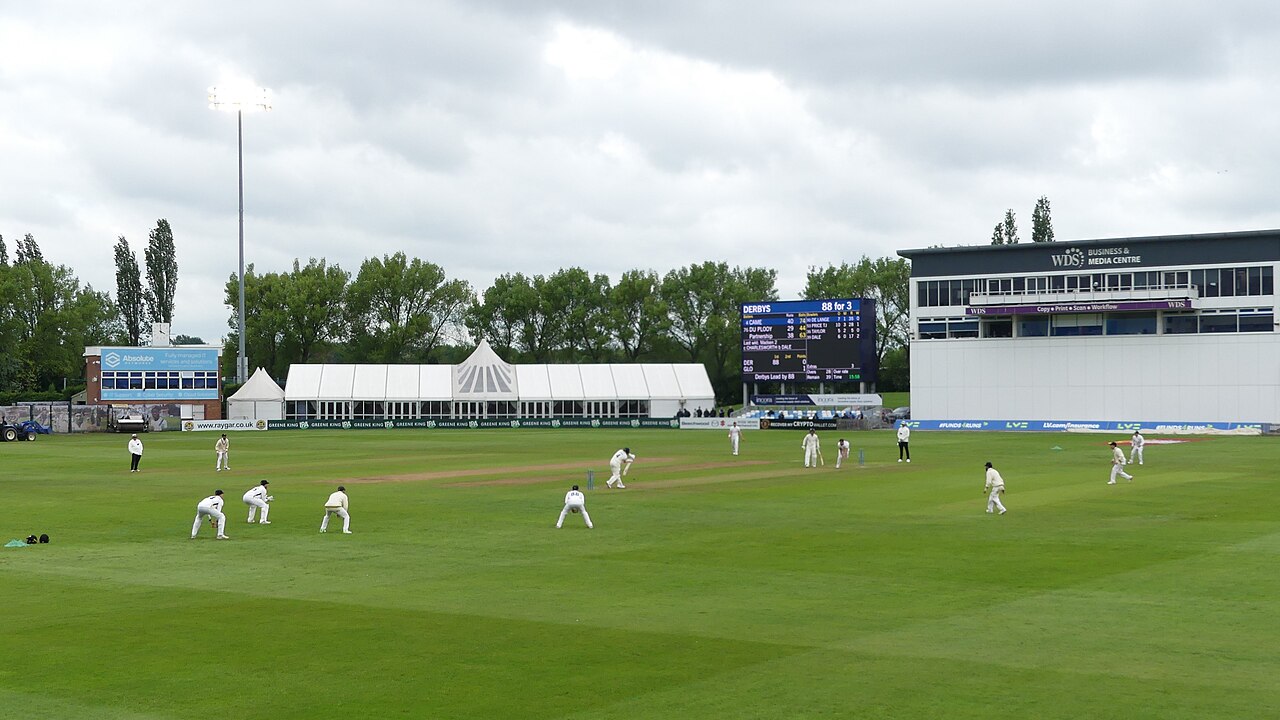
The County Ground in Derby was not built as a standalone cricket venue. It was laid out inside the loop of Derby Racecourse in 1863, and for the next 76 years horses ran around a cricket ground that sat in the middle of the track. Racing finally stopped after the 1939 season, leaving the cricket behind. The ground ranks fourteenth on our list of the oldest stadiums in the world still in use.
The layout is still visible: one end of the ground is known as the Racecourse End, and the open, exposed feel of the outfield is a direct legacy of a site designed for a very different sport. Derbyshire County Cricket Club has been the resident tenant since 1871.
Key Stats
| Opened | 1863 (South Derbyshire Cricket Club) |
| Location | Derby, Derbyshire, England |
| Capacity | 9,500 |
| Tenants | Derbyshire County Cricket Club (since 1871) |
| Sport | Cricket (formerly horse racing and football) |
| Racing on site | Until 1939 |
| Men’s ODIs | 18 June 1983 to 28 May 1999 |
Racing, Football and Cricket on One Site
For most of the Victorian era the ground was a genuinely multi-purpose site. Derby County F.C. — a founder member of the Football League — played here between 1884 and 1895 before moving to the Baseball Ground. That decade produced two national fixtures that had nothing to do with cricket. The 1886 FA Cup Final replay was staged here, the first FA Cup Final held outside London, with Blackburn Rovers beating West Bromwich Albion 2-0. Nine years later, on 9 March 1895, England beat Ireland 9-0 in a British Home Championship international on the same turf.
Horse racing outlasted the football by more than 40 years but ended with the outbreak of the Second World War, and the meetings never resumed. Since then the site has been cricket’s alone.
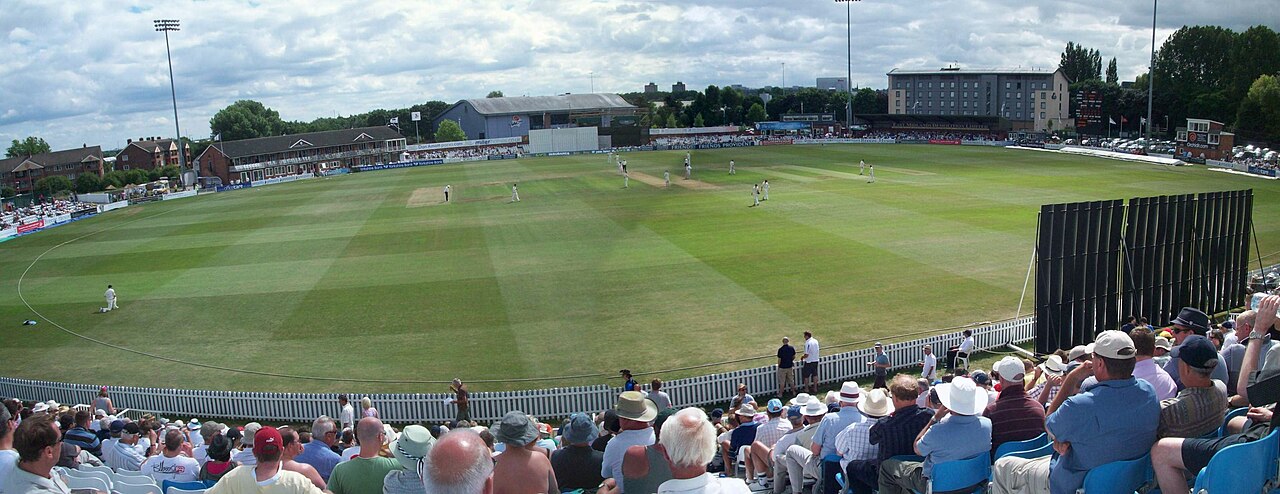
Turning the Square
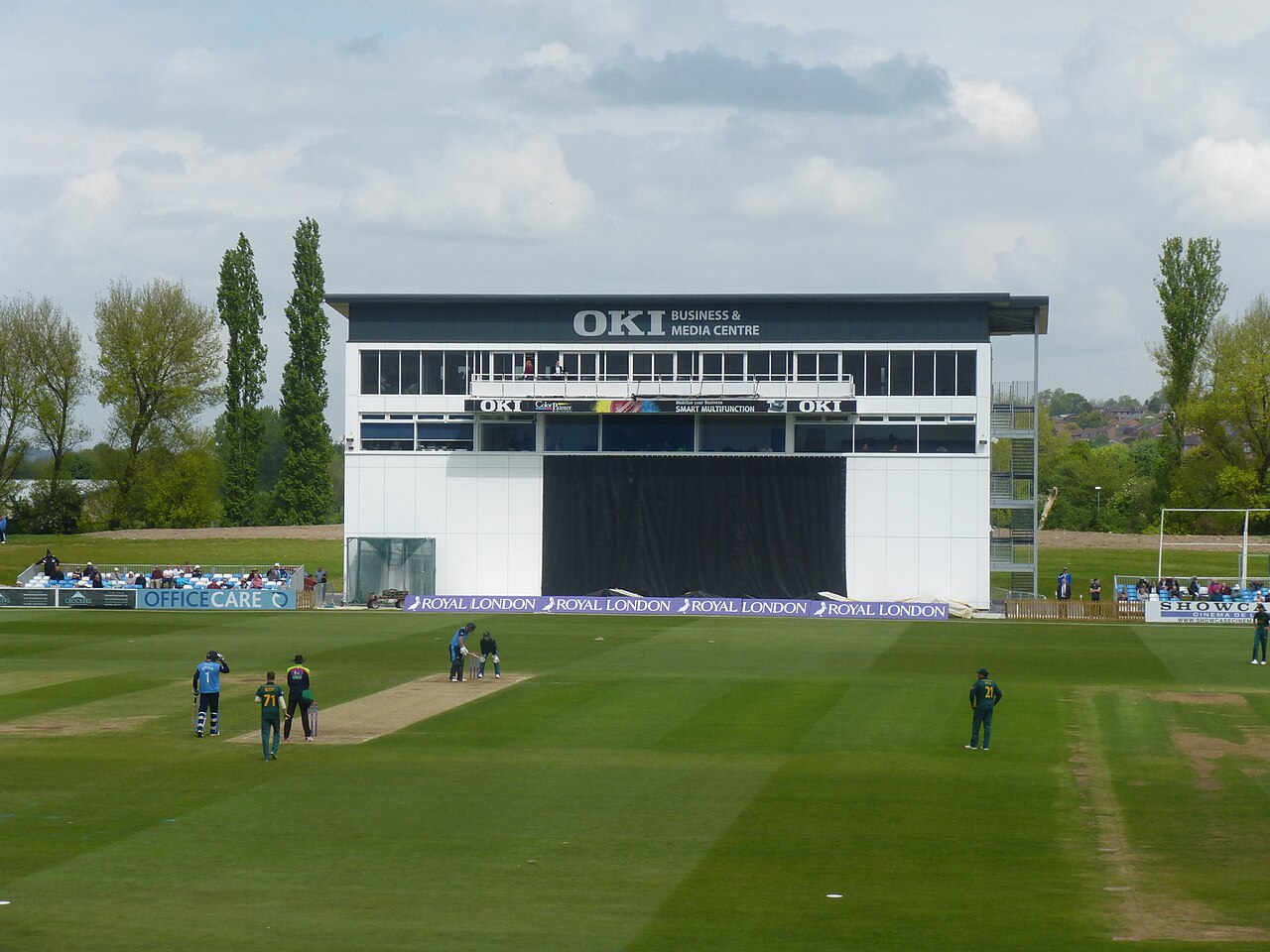
Like Old Trafford, Derby eventually decided its playing area was pointing the wrong way. Over the winter of 2009-10 the pitches were relaid from an east-west axis onto a north-south one at a cost of £100,000, improving sightlines and light conditions. An 1,800-seat stand went up in early 2010, and a four-storey media centre costing £2.2 million was completed in September 2016.
These are modest figures next to the tens of millions spent at Test grounds, but they are the reason a ground of this age is still hosting professional cricket rather than being redeveloped into housing.
International Cricket at Derby
Derby has never staged a men’s Test but it has had its share of international days. Its first men’s One Day International was played on 18 June 1983, New Zealand against Sri Lanka during that year’s World Cup, and its last on 28 May 1999, New Zealand against Pakistan. More recently it hosted a semi-final of the 2017 Women’s Cricket World Cup, the tournament that did more than any other to change the profile of the women’s game in England.
For upper-deck seats. Watch line play at the stadium, or the far side of the park from the top of a lift hill.
Sherpa-lined and windproof, with a waterproof back for wet bleachers. Folds into its own pouch.
For late-season football, outdoor hockey and October park nights. Shake, pocket, and stay warm for hours.
FAQ
Was the County Ground really inside a racecourse?
Yes. The cricket ground was laid out within Derby Racecourse in 1863 and racing continued around it until 1939. One end of the ground is still called the Racecourse End.
Did Derby County play at the cricket ground?
They did, from 1884 to 1895, before moving to the Baseball Ground. The site staged the 1886 FA Cup Final replay — the first held outside London — and an England international in 1895.
What is the capacity of the County Ground, Derby?
Around 9,500, including the 1,800-seat stand added in 2010.
Photo: John Sutton via Wikimedia Commons (CC BY-SA 2.0)