
Sussex County Cricket Club did not so much build a new ground in 1872 as move the old one. The club had played at the Royal Brunswick Ground, on the seafront, and when a barley field off Eaton Road was bought in 1871 the turf from Brunswick was dug up and carted across to it. The playing surface at the County Ground, Hove — known for sponsorship reasons as the 1st Central County Ground — therefore has a claim to being older than the ground itself.
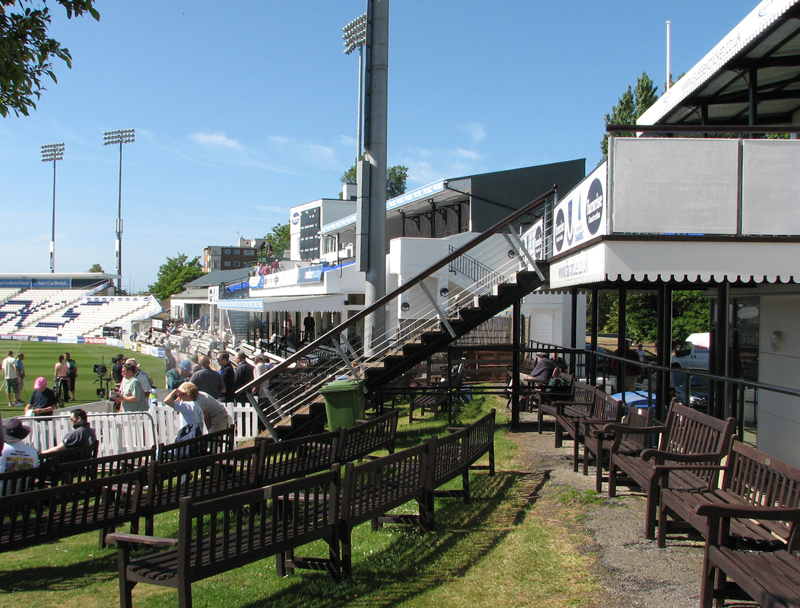
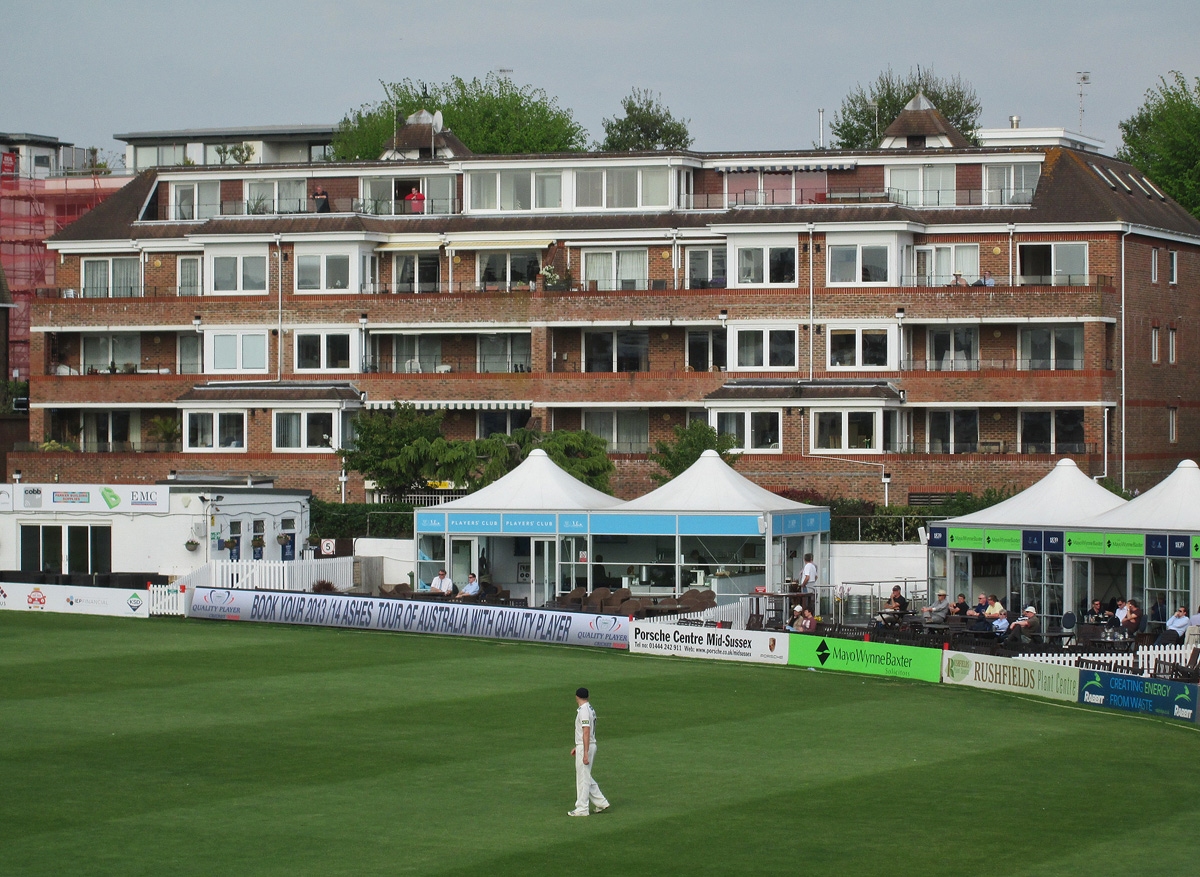
Sussex have played most of their home matches there ever since, which makes Hove one of the oldest stadiums in the world still in use. It remains one of the few county grounds where spectators sit in deckchairs, striped in the Sussex colours of blue and white, with the Sea End at one side and blocks of Hove flats looming over the boundary at the other.
Key Stats
| Opened | 1872 |
| Location | Eaton Road, Hove, Brighton and Hove, East Sussex, England |
| Capacity | 6,000 |
| Tenant | Sussex County Cricket Club (1872–present) |
| Sport | Cricket |
| Ends | Cromwell Road End and Sea End |
| Only men’s ODI | 15 May 1999, South Africa v India (1999 Cricket World Cup) |
| Women’s Tests | 1987 and 2005, England v Australia (Women’s Ashes) |
A Barley Field and a Borrowed Pitch
Before 1872 Sussex played at the Royal Brunswick Ground. The land that became the County Ground was a barley field until it was bought in 1871, and the Brunswick turf was transplanted onto it — a practical bit of Victorian recycling that gave the new ground a mature playing surface from its first season. Sussex moved in for 1872 and have been there ever since, though the club has always taken matches on the road to Eastbourne, Hastings, Arundel Castle and Horsham.
Ownership was settled by public subscription. In 1884–85 the people of Sussex raised £4,400 towards buying the ground outright, with the Earl of Sheffield — the same patron who funded early England tours to Australia — adding a further £600.
The First Ground With Permanent Floodlights
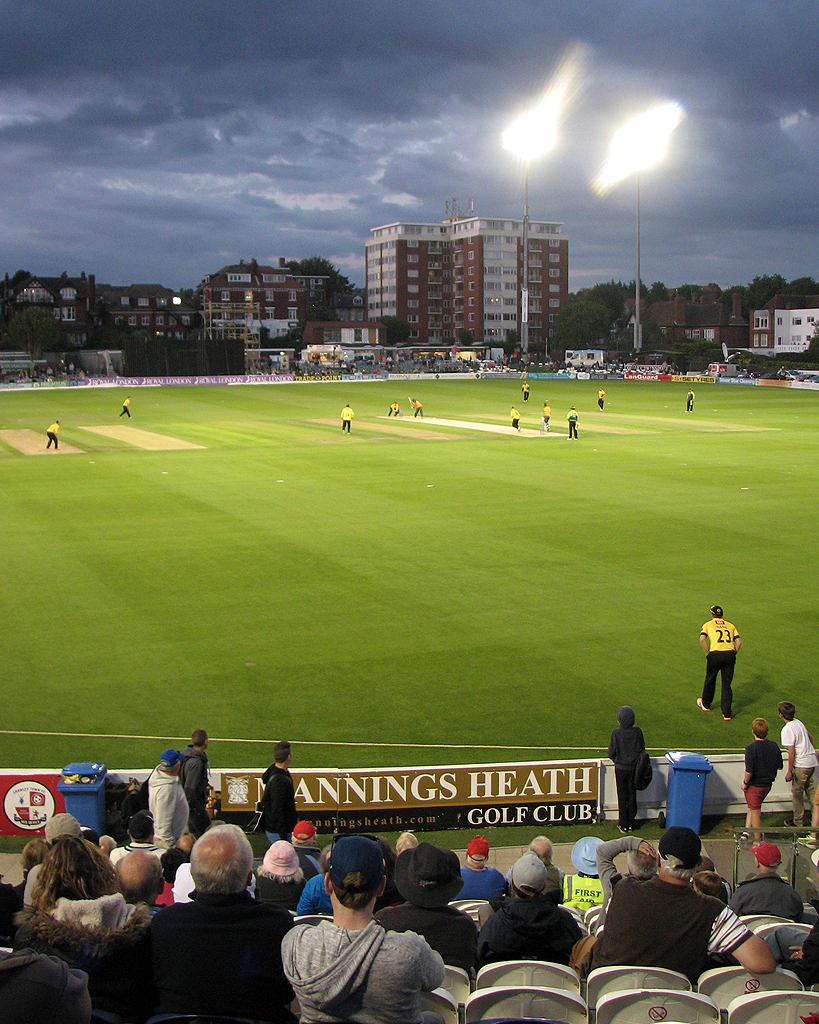
Hove was the first cricket ground anywhere to install permanent floodlights, built for day/night matches, and in 1997 it became the second ground in England after Edgbaston to stage a day/night fixture. The tall pylons are now part of the skyline in photographs of the ground, standing over a bowl that otherwise looks much as it did a century ago: low stands, benches, deckchairs and a line of red-brick apartment blocks behind the sightscreen.
Great Days at Hove
The ground was quick to produce oddities. In 1872, in a match between Kent and Sussex at Hove, George “Farmer” Bennett became the first batsman in first-class cricket to be given out handled the ball. The following season Sussex bowled Worcestershire out for 19.
Its most celebrated day came in 2003, when Sussex clinched the County Championship at Hove for the first time in the club’s history. In that match Murray Goodwin made 335 not out, then the highest first-class score by a Sussex player. The ground also saw Sussex take a third Championship in 2007. Internationally its haul is modest but distinctive: one men’s ODI, a 1999 World Cup group game in which South Africa beat India by four wickets, plus two Women’s Ashes Tests in 1987 and 2005 and a run of women’s ODIs and T20 internationals.
Beyond Cricket
In the 1890s the County Ground doubled as a football venue for Brighton-area clubs, including Brighton United of the Southern League, who folded in 1900, and Brighton Athletic of the East Sussex League. It hosted the Sussex lawn tennis championships in 1893 and 1899 and a rugby union match in 1948. In modern times it has become a concert venue — Elton John has played there three times, in 2006, 2011 and 2019, alongside Madness, Lionel Richie, Little Mix, Olly Murs, Cliff Richard and Rod Stewart — and it staged an official torch event during the 2012 Olympic relay. Its annual Guy Fawkes Night fireworks display is among the biggest in the South East; the 2019 edition sold out with more than 7,500 attending.
Sherpa-lined and windproof, with a waterproof back for wet bleachers. Folds into its own pouch.
For late-season football, outdoor hockey and October park nights. Shake, pocket, and stay warm for hours.
12 x 10.5 x 6 in. — built to the common stadium clear-bag size. Check your venue's rules.
FAQ
How old is the County Cricket Ground at Hove?
It was established in 1872, when Sussex moved from the Royal Brunswick Ground onto a former barley field bought the previous year. The turf itself was carted over from Brunswick, so the playing surface predates the ground.
Was Hove really the first ground with floodlights?
It was the first cricket ground to install permanent floodlights, and in 1997 became the second venue in England, after Edgbaston, to host a day/night match.
What is the capacity at Hove?
Around 6,000. Much of that is bench and deckchair seating rather than fixed stands, which is part of why Hove keeps its festival-cricket feel even on Championship days.
Photo: John Sutton via Wikimedia Commons (CC BY-SA 2.0)