
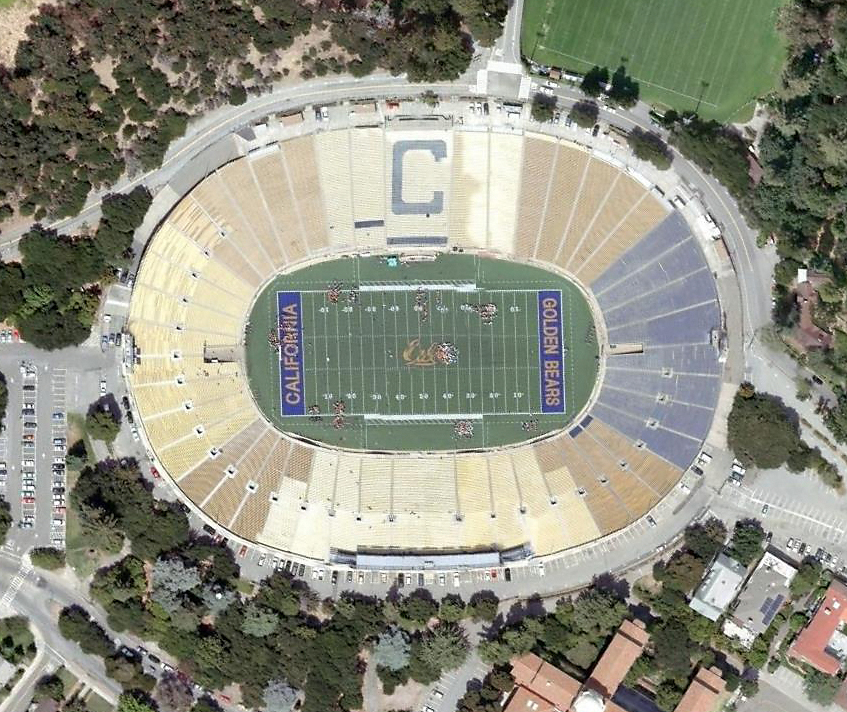
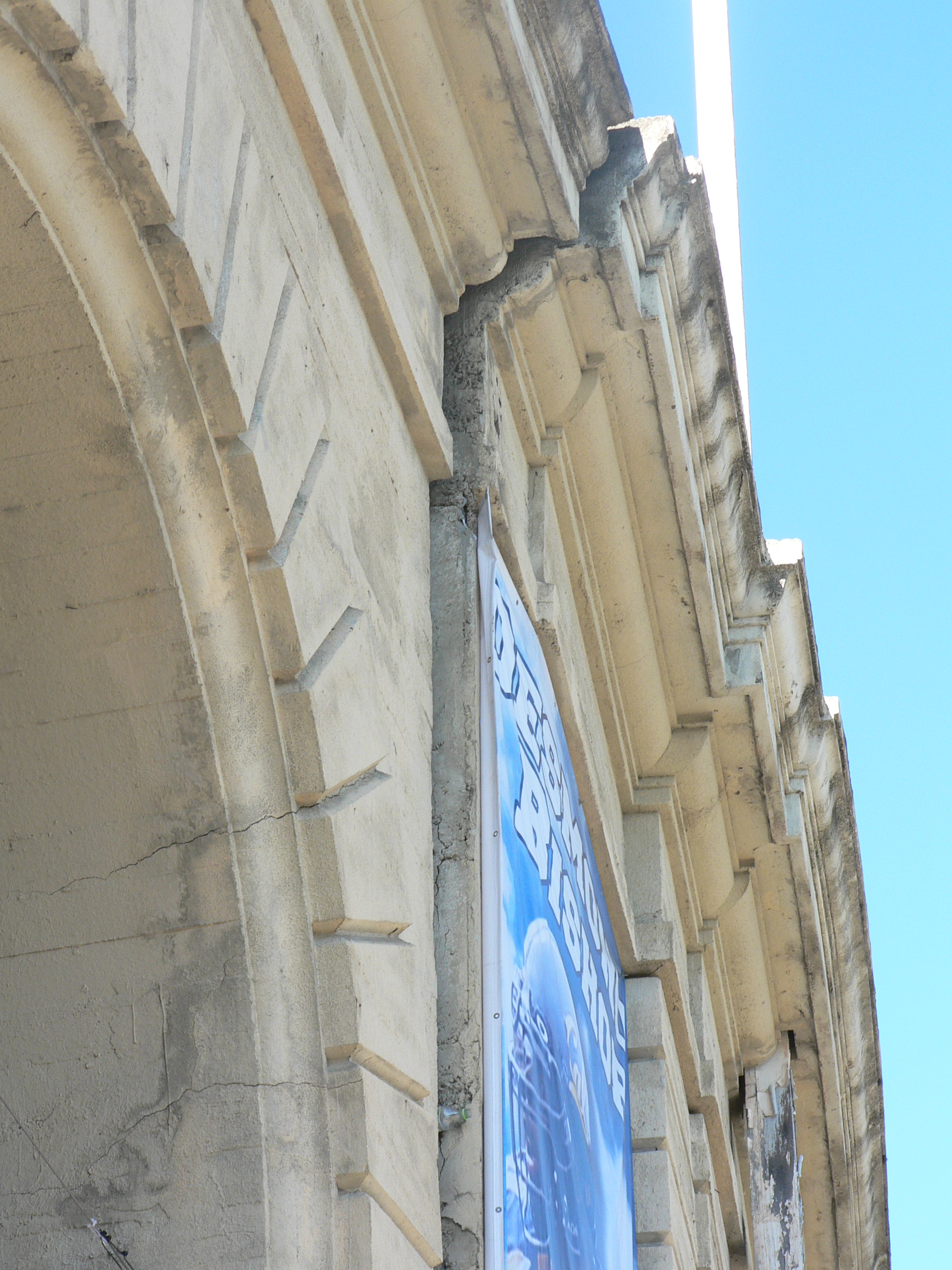
California Memorial Stadium has been the home of the California Golden Bears football team since it opened on November 24, 1923, on the UC Berkeley campus. Built as a memorial to Californians who died in World War I, the neoclassical bowl was designed by a committee chaired by architect John Galen Howard and was modeled loosely on the Roman Colosseum, tucked into the mouth of Strawberry Canyon with sweeping views over San Francisco Bay.
The stadium’s most unusual claim to fame is geological rather than architectural: the active Hayward Fault runs directly beneath the playing field, nearly goal line to goal line. That fault line was a central concern of a $321 million seismic retrofit completed in 2012, which rebuilt the west side of the stadium, preserved its historic facade, and lowered the playing surface to improve sightlines while giving the two halves of the structure room to move independently in an earthquake.
Stats at a Glance
- Team(s): California Golden Bears (NCAA football)
- Location: Berkeley, California
- Opened: November 24, 1923 (reopened after retrofit September 1, 2012)
- Capacity: About 52,428, expandable to roughly 62,467
- Architect: John Galen Howard (committee), with Baker & Carpenter and George E. Cunningham
- Notable fact: Sits directly atop the active Hayward Fault
A Stadium Built Across a Fault Line
Engineers have known for decades that the Hayward Fault crosses the stadium’s footprint, and a 1998 seismic study rated the original structure as poor for earthquake safety. Rather than relocate the venue, UC Berkeley’s 2010-2012 retrofit added surface rupture blocks and expansion joints so the east and west halves of the bowl can shift independently during a quake, a solution that let the historic 1923 shell remain in use.
The result is one of college football’s more dramatic settings: a neoclassical bowl framed by eucalyptus-covered hills, with the free-viewing spot known as Tightwad Hill still drawing fans who watch games from just outside the stadium walls.
Big Games and Historic Moments
The stadium has hosted decades of Cal football, including the Big Game rivalry against Stanford. Its most famous moment came on November 20, 1982, when Cal’s kickoff return featuring five laterals and a collision with the Stanford band, remembered as ‘The Play,’ capped a 25-20 win in front of 75,662 fans. The venue has also hosted non-football events, including President John F. Kennedy’s 1962 Charter Day address to roughly 88,000 people.
Explore more: Explore more legendary stadiums.
California Memorial Stadium FAQs
Why is California Memorial Stadium built over a fault line?
The stadium was constructed in 1923 before the risk posed by the Hayward Fault, which runs beneath the field, was fully understood. Rather than move the historic venue, a 2010-2012 seismic retrofit added expansion joints and rupture blocks so the structure can better withstand fault movement.
What is the capacity of California Memorial Stadium?
The stadium currently seats about 52,428 fans, with capacity expandable to roughly 62,467 for larger games.
What team plays at California Memorial Stadium?
It is the home stadium of the California Golden Bears football team at UC Berkeley.
Get More from California Memorial Stadium
Log the coasters, stadiums, and venues you’ve experienced, rate California Memorial Stadium, and see what your friends thought. Get the ThrillZing app.
Photo: Quintin Soloviev / CC BY 4.0, via Wikimedia Commons.