
When Malaysia wants to make noise, it comes to Bukit Jalil. The Bukit Jalil National Stadium in Kuala Lumpur is the largest stadium in Southeast Asia, a bowl of roughly 87,411 seats beneath a sweeping white membrane roof that has hosted Commonwealth Games ceremonies, SEA Games, cup finals soundtracked by tens of thousands of Harimau Malaya fans, and some of the biggest concerts ever staged in Asia. It sits comfortably among the largest stadiums in the world.
Key Stats
| Capacity | 87,411 (commonly listed as 87,500) |
| Opened | July 11, 1998 |
| Primary use | Football (Malaysia national team, Malaysia Cup and FA Cup finals) and athletics |
| Location | Bukit Jalil, Kuala Lumpur, Malaysia |
| Record attendance | 100,000 — Jana Nayagan audio launch, December 27, 2025 |
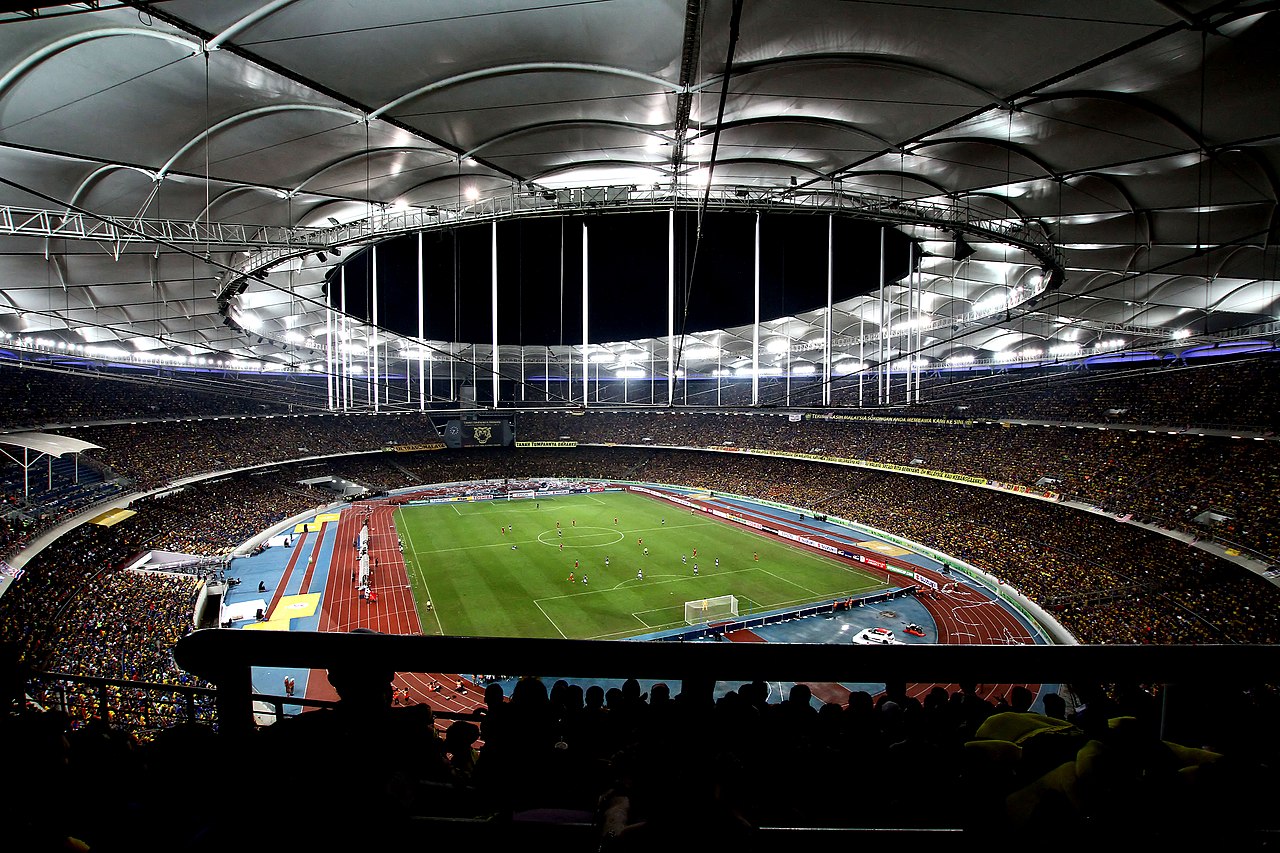
Built for the 1998 Commonwealth Games
Construction began on January 1, 1995 and wrapped exactly three years later — three months ahead of schedule — in time for Prime Minister Mahathir Mohamad to officially inaugurate the stadium on July 11, 1998. That September it staged the opening ceremony of the 1998 Commonwealth Games, the first ever held in Asia. Built by United Engineers Malaysia and designed by Arkitek FAA with Weidleplan Consulting and the roof specialists Schlaich Bergermann Partner, the stadium anchors the 1.2-square-kilometer National Sports Complex and took over national-stadium duties from the historic Stadium Merdeka.
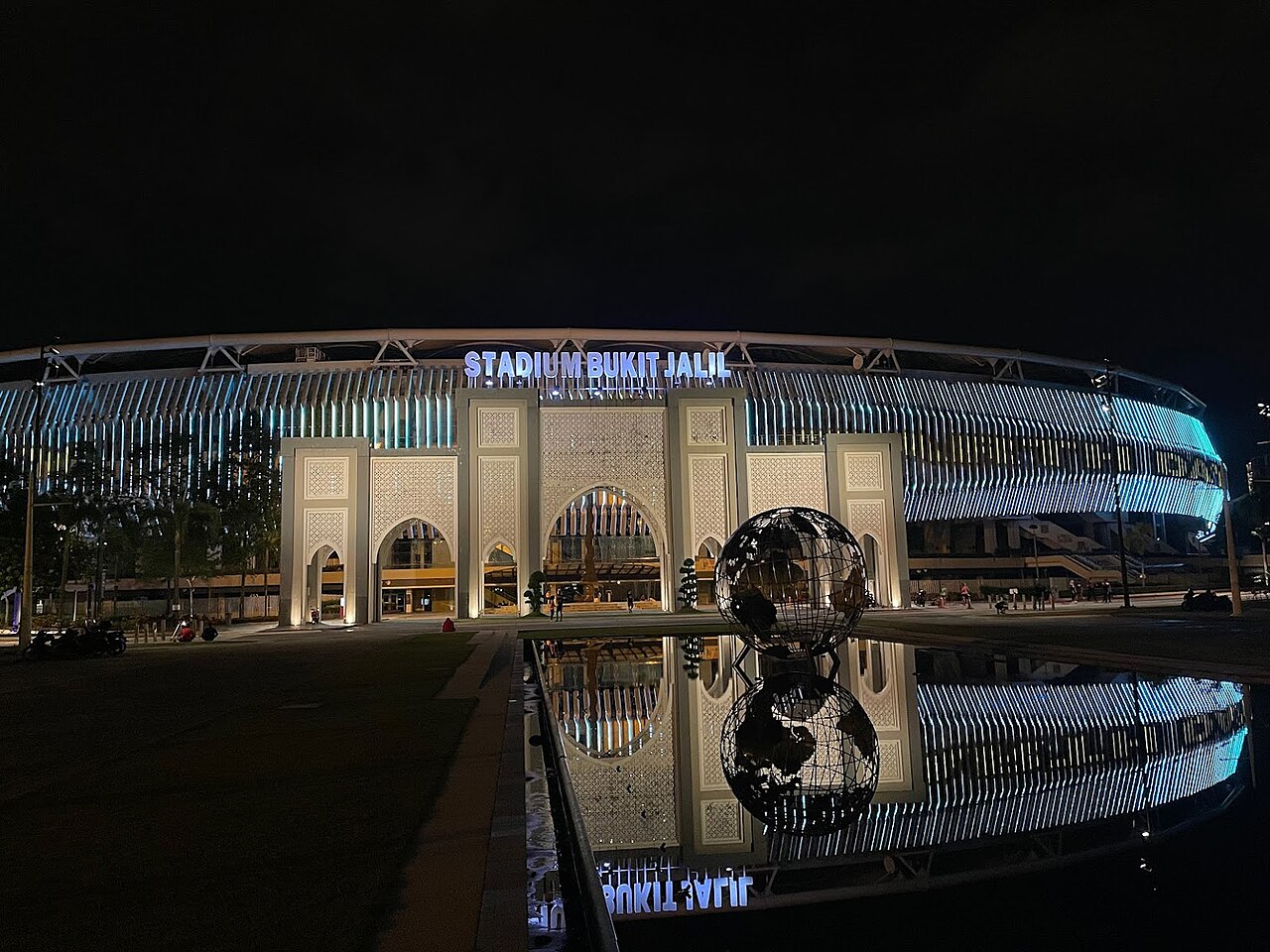
For the 2017 SEA Games, the venue was transformed as part of the RM1.34 billion KL Sports City project: a Populous-designed facade of twisted, LED-lit vertical louvres now wraps the exterior, turning the stadium into a glowing landmark on Kuala Lumpur’s southern skyline at night.
The Cauldron of Malaysian Football
Since 1998 Bukit Jalil has been the home of the Malaysia national football team and the stage for the country’s showpiece finals — the Malaysia Cup and the Malaysia FA Cup — along with major athletics events. It was the main venue for the 2001 and 2017 Southeast Asian Games, and on big football nights it becomes one of the most intimidating grounds in Asia, a wall of yellow and black scarves and synchronized chants. Memorable nights include the second leg of the 2014 AFF Suzuki Cup final and a 2011 friendly against Chelsea that packed the bowl.
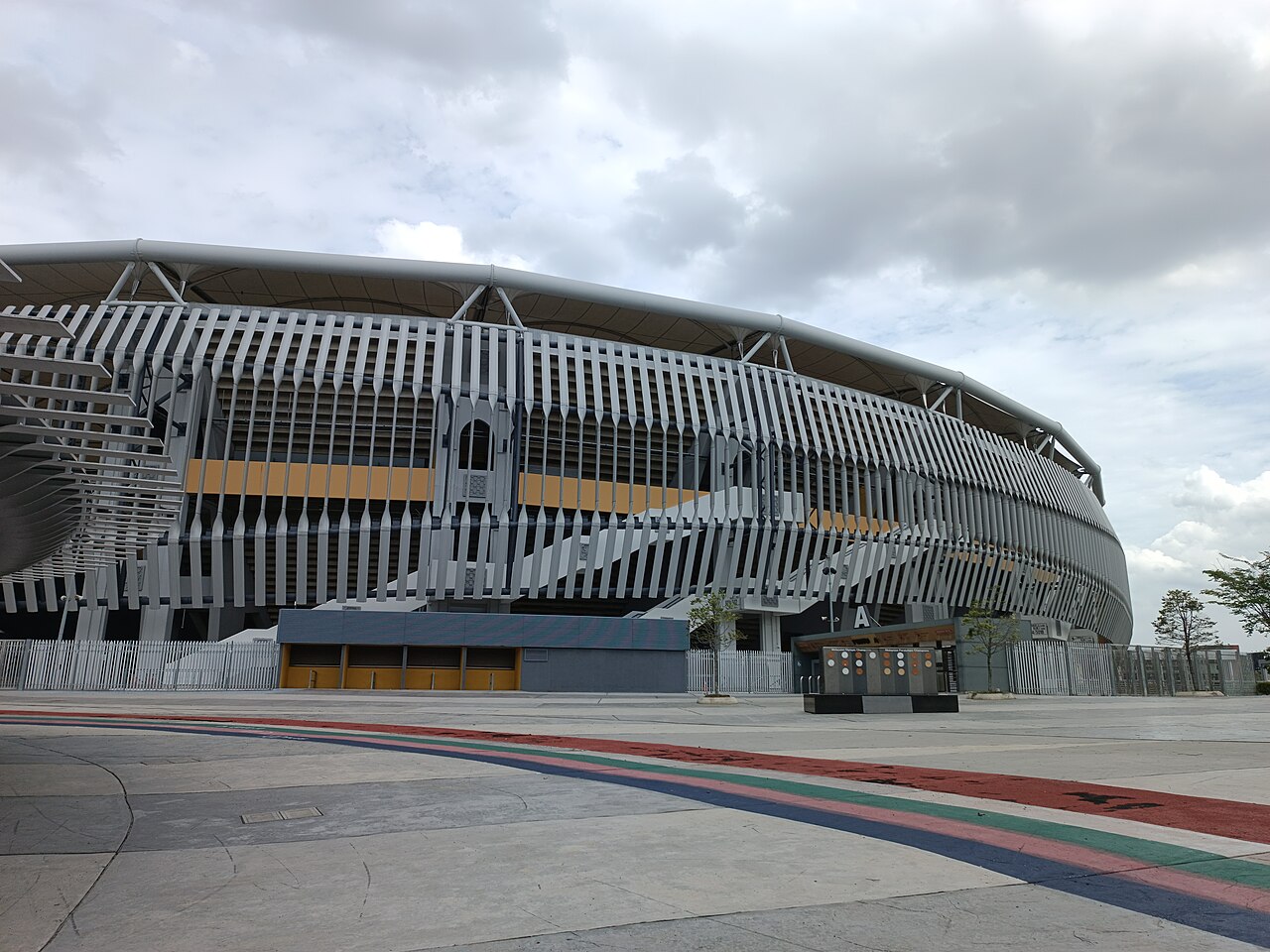
Concerts, Spectacles and a 100,000 Record
The stadium moonlights as Malaysia’s biggest concert venue, and its attendance record was actually set by entertainment, not sport: the audio launch of the Vijay film Jana Nayagan drew a reported 100,000 people on December 27, 2025. During the pandemic the venue even served as a mega vaccination center — a reminder that national stadiums are civic infrastructure as much as sporting cathedrals. Fans arriving today reach the stadium directly via the Bukit Jalil LRT station, with the National Aquatic Centre and Axiata Arena as neighbors in the sports complex.
Sherpa-lined and windproof, with a waterproof back for wet bleachers. Folds into its own pouch.
For late-season football, outdoor hockey and October park nights. Shake, pocket, and stay warm for hours.
12 x 10.5 x 6 in. — built to the common stadium clear-bag size. Check your venue's rules.
FAQ
Is Bukit Jalil National Stadium the biggest stadium in Southeast Asia?
Yes. At roughly 87,411 seats it is the largest stadium in Southeast Asia and the fourth largest in Asia, ranking among the world’s largest stadiums.
Who plays at Bukit Jalil National Stadium?
The Malaysia national football team plays most home internationals here, and the stadium hosts the finals of the Malaysia Cup and Malaysia FA Cup, plus major athletics meets and concerts.
What is the stadium’s attendance record?
A reported 100,000 people attended the Jana Nayagan movie audio launch on December 27, 2025 — the largest crowd in the venue’s history, exceeding its seated capacity thanks to pitch-level standing room.
Photo: Bartosz Sakwerda via Wikimedia Commons (CC BY-SA 4.0)