
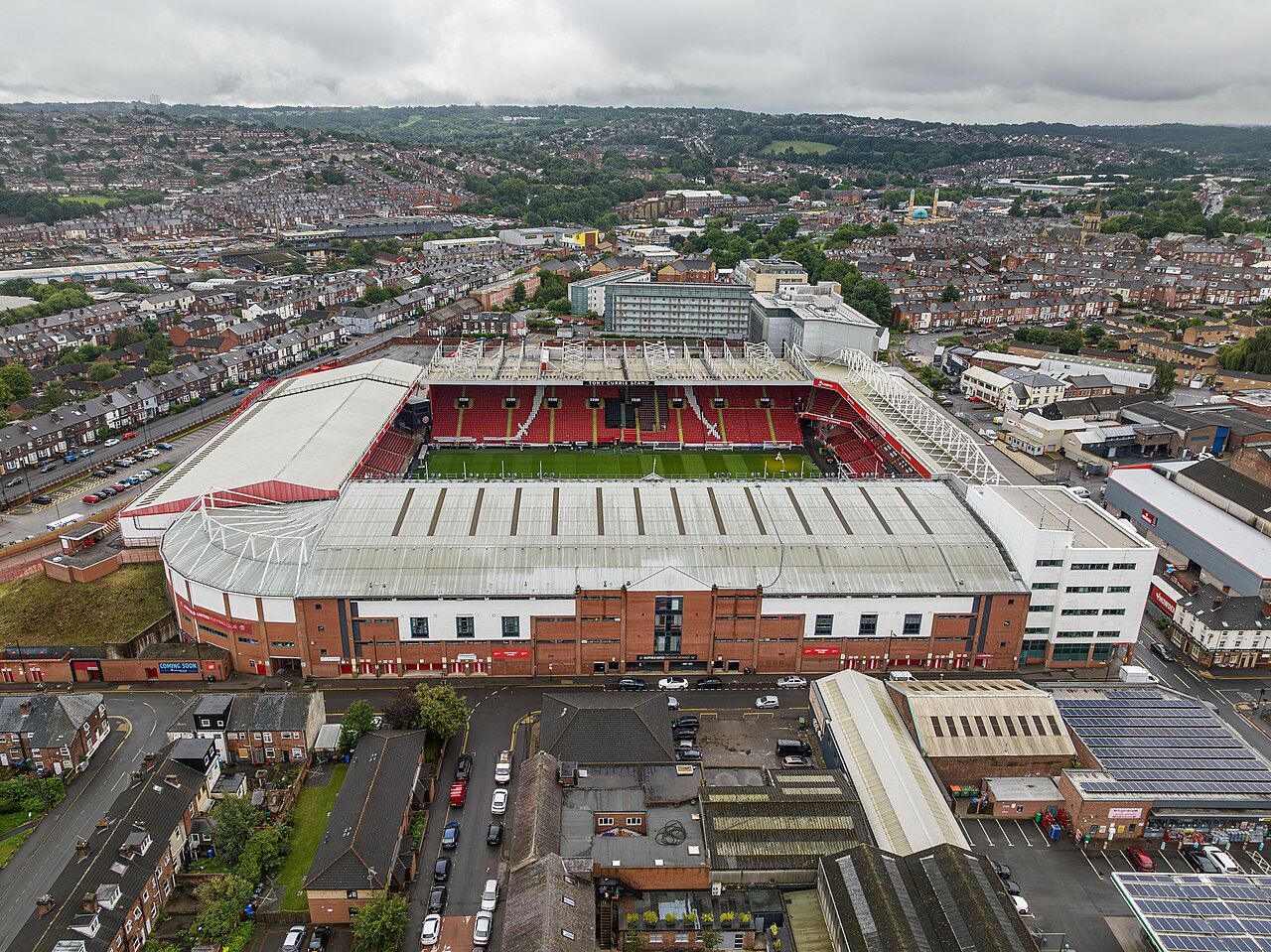
Sheffield United fans will tell you, at length and with justification, that their ground is the oldest in world football. They are right. Bramall Lane opened on 30 April 1855 as a cricket ground, started hosting football in the 1860s, and has never stopped — making it the oldest major stadium anywhere that still stages professional association football. Nearly everything about the modern game, from floodlights to the FA Cup, has passed through this patch of Sheffield at some point.
It ranks ninth on our list of the oldest stadiums in the world still in use, and it is the highest-placed venue on that list whose main tenant is a top-flight football club.
Key Stats
| Opened | 30 April 1855 |
| Location | Highfield, Sheffield, South Yorkshire, England |
| Capacity | 32,050 |
| Tenants | Sheffield United (1889–present); previously Yorkshire CCC (1855–1973), Sheffield FC (1873–1884), The Wednesday (1880–1887) |
| Sport | Association football (formerly first-class cricket) |
| Record attendance | 68,287 v Leeds United, FA Cup fifth round, 1936 |
| Pitch | 101 x 68 m |
Cricket first, football second
Bramall Lane was laid out in 1855 by a consortium of local cricket clubs on land leased from the Duke of Norfolk, and it took its name from the Bramall family of file manufacturers whose home stood nearby. Yorkshire County Cricket Club made it a regular home for well over a century, playing there from 1855 until August 1973. In 1902 the ground hosted a Test match — England against Australia — the only Test ever played in Sheffield.
Football arrived early and never left. Sheffield FC, the oldest football club in the world, used the ground from 1873 to 1884; The Wednesday played there from 1880 to 1887. Sheffield United did not yet exist — the club was founded in 1889, six days after an FA Cup semi-final at Bramall Lane drew 22,688 paying spectators and convinced the ground’s committee that the city needed its own football team.
The first floodlit match in history
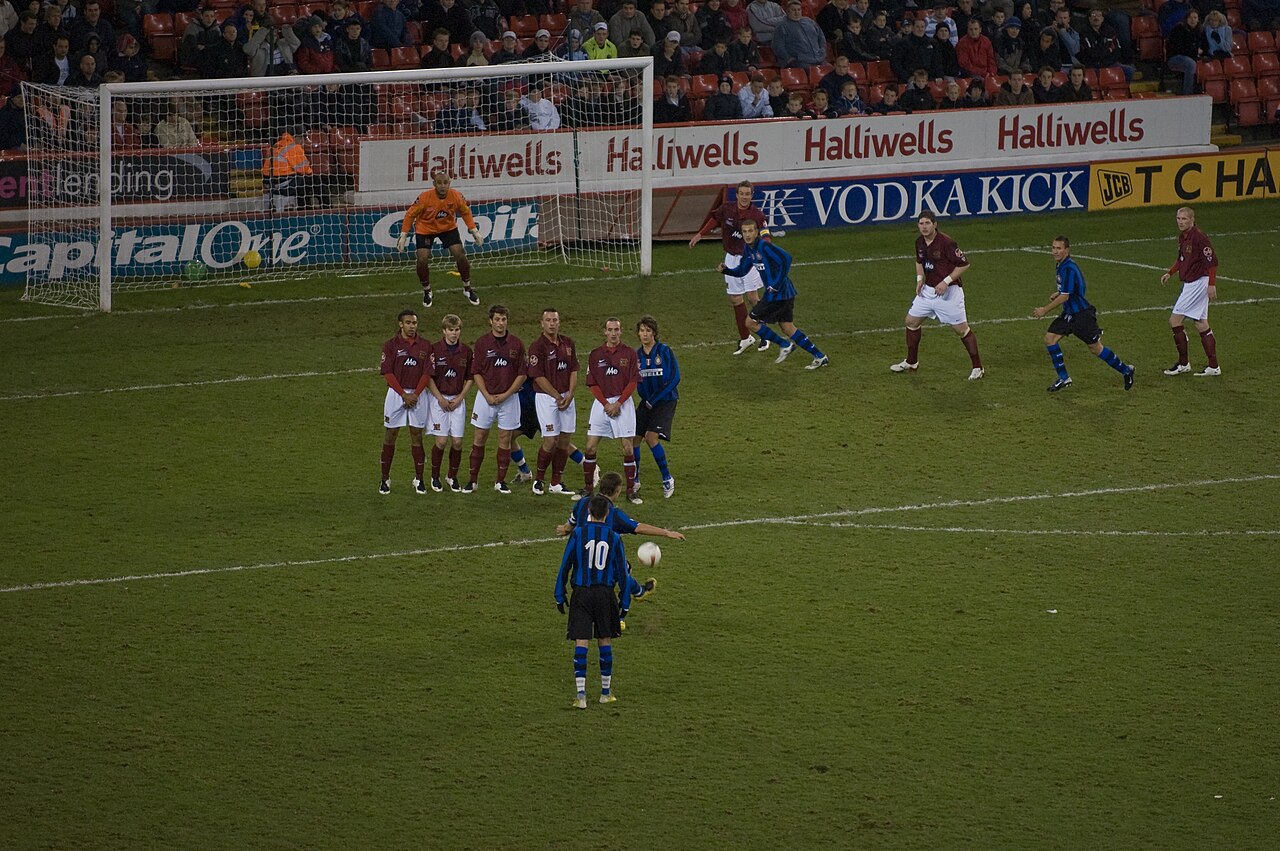
On the evening of 14 October 1878, Bramall Lane staged the first floodlit football match ever played. Two scratch sides, billed simply as the Reds and the Blues, played under electric lamps powered by portable generators in front of a crowd reported at more than 20,000 — a staggering figure for an exhibition game, and a measure of how novel artificial light still was in 1878. The lamps were unreliable and the experiment was decades ahead of the technology, but the principle that football could be played after dark was established here, on this pitch.
The ground has hosted five England men’s internationals — against Scotland in 1883 and 1903, Ireland in 1887 and 1930, and Wales in 1889 — plus the 1912 FA Cup final replay, in which Barnsley beat West Bromwich Albion. More recently it staged matches at UEFA Women’s Euro 2022, including the England v Sweden semi-final.
From three sides to four
For most of its life Bramall Lane was a strange shape. Because the south end doubled as the cricket outfield, there was no stand there at all — the ground was effectively three-sided, with football spectators looking out across an open expanse of grass. That only changed after Yorkshire’s departure: the South Stand, now named for the great Sheffield United midfielder Tony Currie, opened in August 1975 and enclosed the pitch for the first time in 120 years.
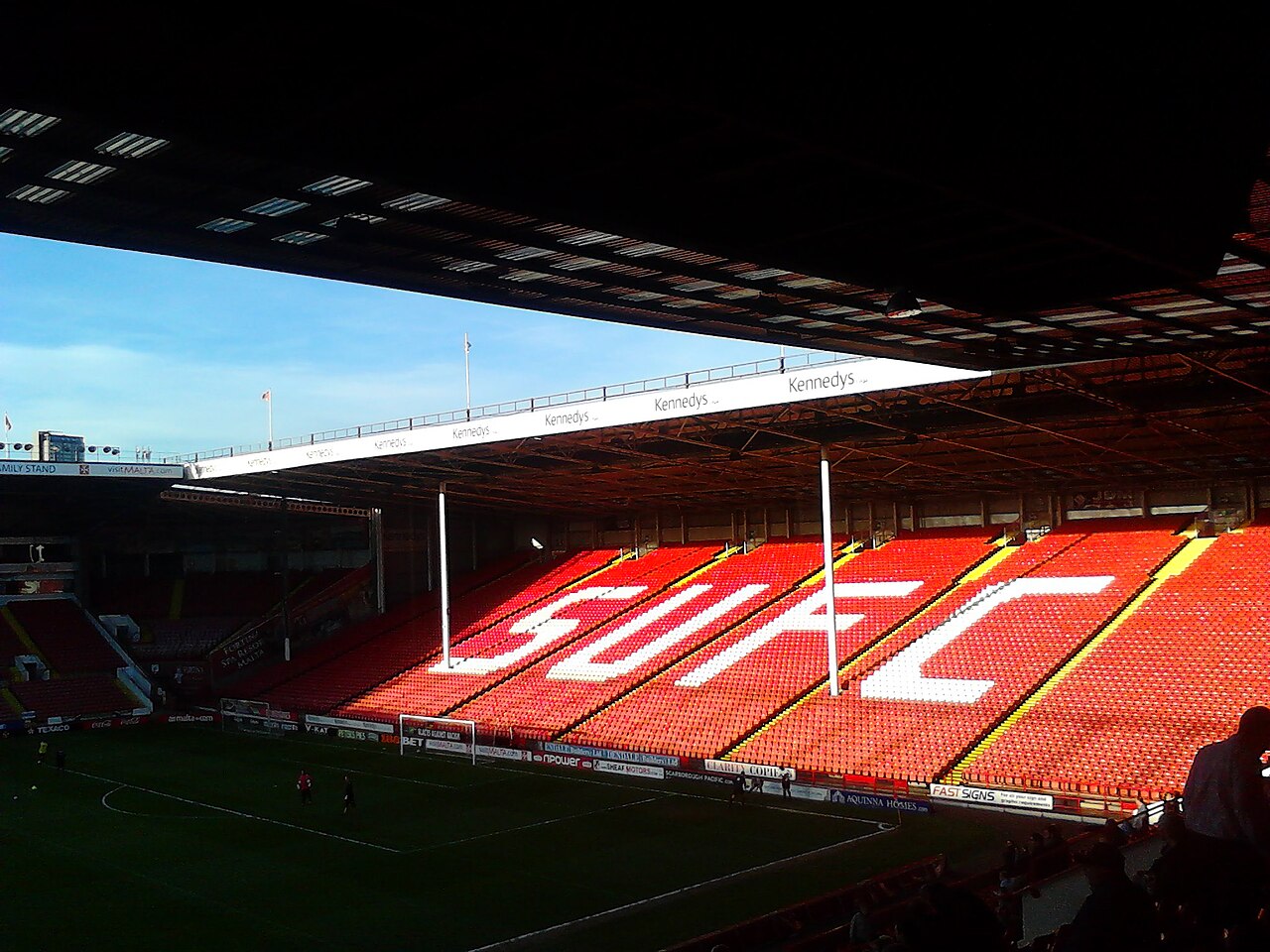
The rest of the ground came together piece by piece: the Bramall Lane Stand in 1966, the Kop roofed in 1935 and seated in 1991, and the John Street Stand rebuilt in 1996 after the old terrace was demolished in 1994. The record crowd of 68,287, set against Leeds United in a 1936 FA Cup tie, belongs to an era of vast standing terraces that no safety certificate would permit today; the all-seated record is 32,604, set against Wigan Athletic in 2007.
For upper-deck seats. Watch line play at the stadium, or the far side of the park from the top of a lift hill.
Sherpa-lined and windproof, with a waterproof back for wet bleachers. Folds into its own pouch.
For late-season football, outdoor hockey and October park nights. Shake, pocket, and stay warm for hours.
FAQ
Is Bramall Lane really the oldest football stadium in the world?
It is the oldest major stadium still hosting professional association football. It opened in 1855 and has staged football continuously since the 1860s. Some smaller and older grounds exist — Sandygate Road in Sheffield, home of Hallam FC, dates from 1804 — but none operates at professional level.
When was the first floodlit football match at Bramall Lane?
14 October 1878, between two scratch teams called the Reds and the Blues, watched by a reported 20,000-plus crowd. It was the first floodlit football match anywhere in the world.
Was cricket really played at Bramall Lane?
Yes — it was a cricket ground first. Yorkshire County Cricket Club played there from 1855 to their final match in August 1973, and England hosted Australia in a Test match at Bramall Lane in 1902.
What is Bramall Lane’s capacity?
32,050 across four all-seated stands: the Bramall Lane Stand, the Tony Currie Stand, the Kop and the John Street Stand.
Photo: Arne Müseler via Wikimedia Commons (CC BY-SA 3.0 DE)