
In the desert 25 kilometers west of Alexandria stands the stage for one of African football’s most emotional nights. Borg El Arab Stadium — an 86,000-seat colossus beside the Cairo–Alexandria desert highway — is Egypt’s second largest stadium and the third largest in Africa, and it was here, on October 8, 2017, that Mohamed Salah’s stoppage-time penalty against Congo sent Egypt to its first World Cup in 28 years in front of a full house. The venue sits high on the list of the largest stadiums in the world.
Key Stats
| Capacity | 86,000 (all-seater) |
| Opened | 2009 (commissioned 2005) |
| Primary use | Football (Egypt national team, Smouha SC) and athletics |
| Location | Amreya, near Borg El Arab, west of Alexandria, Egypt |
| Record attendance | 86,000 — Egypt 2–1 Congo, October 8, 2017 |
Born From a World Cup Bid
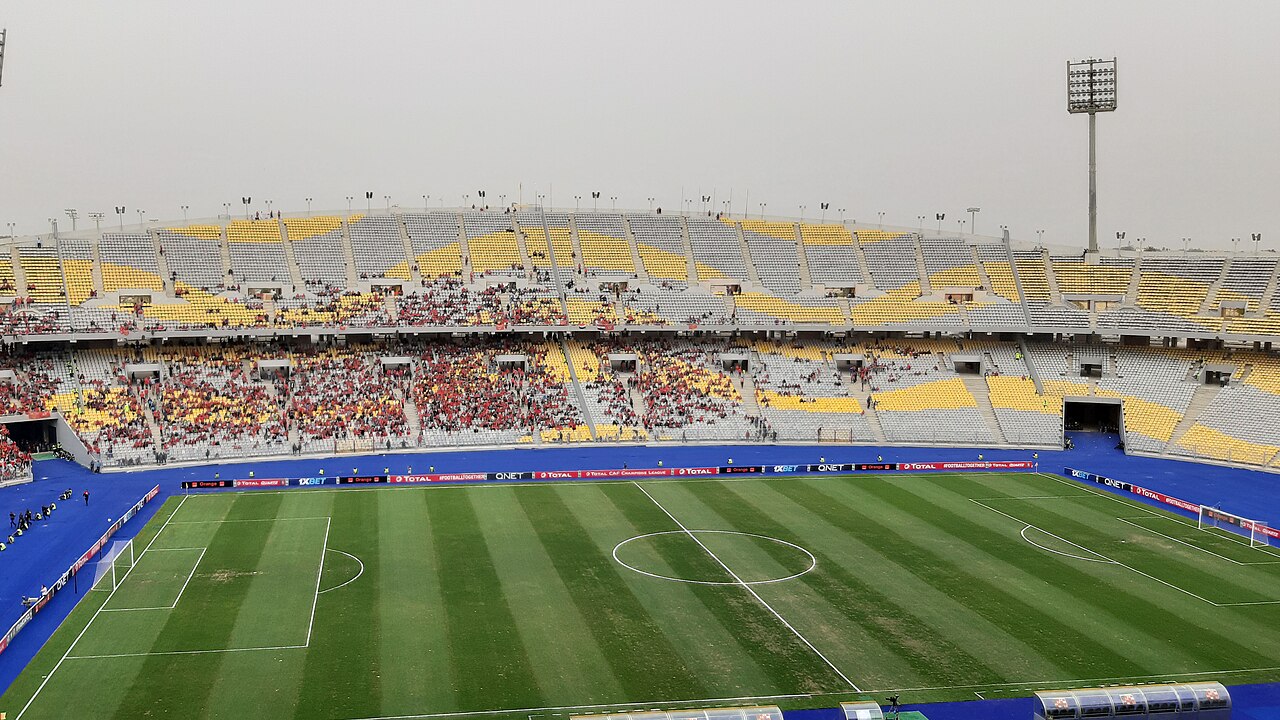
Borg El Arab was commissioned in 2005 as the flagship of a five-stadium program supporting Egypt’s bid to host the 2010 FIFA World Cup. The bid went to South Africa, but the stadium was completed anyway and made its debut at the 2009 FIFA U-20 World Cup, hosting the opening ceremony and the opening match between Egypt and Trinidad and Tobago. FIFA vice-president Jack Warner called it “one of the best in the world” during his inspection tour, and president Sepp Blatter praised the “fantastic” venue at the opening ceremony’s light show.
The scale of the complex is remarkable: the grounds cover roughly 609,000 square meters ringed by a three-kilometer fence, with a six-kilometer internal road network, parking for 5,000 cars and 200 buses, 136 electronic entrances, two 2,000-seat training grounds, a 200-guest hotel, a 300-seat press building — and even its own airstrip. A running track circles the pitch, one main stand is covered by a sweeping roof canopy, and the seating bowl is fully air-conditioned.
Salah’s Night and the Pharaohs’ Fortress
After Egypt’s 2010 bid failed, Borg El Arab settled into its role as a second home for the national team alongside Cairo International Stadium — and then became a fortress. Its defining moment came in World Cup qualifying on October 8, 2017: with the score level against Congo deep in stoppage time, Salah converted a 94th-minute penalty to win the match 2–1 and clinch Egypt’s first World Cup appearance since 1990. The official crowd of 86,000 remains the stadium’s record attendance, and the eruption that followed the final whistle is part of Egyptian football folklore.
Who Plays Here Today
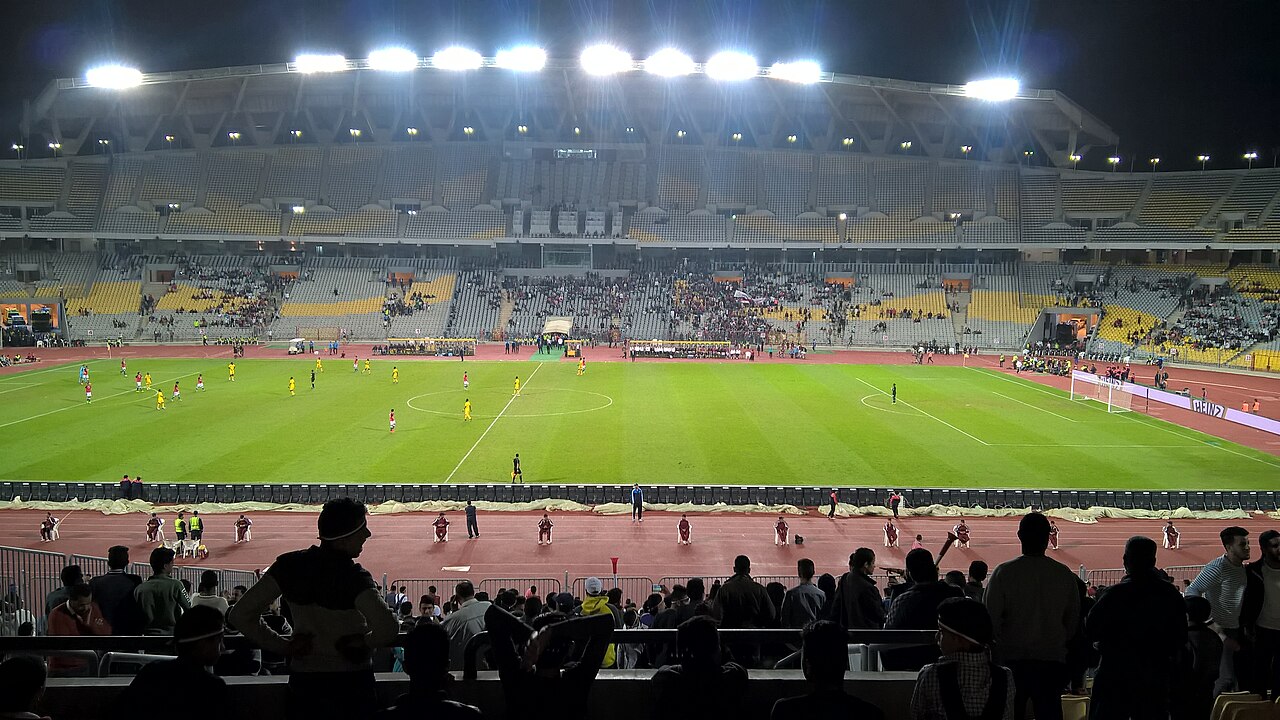
Alexandria-based Smouha SC has used Borg El Arab as its regular home since 2016, while Cairo giants Al Ahly and Zamalek, along with Al Ittihad and Al Masry, have staged league, cup and continental fixtures here when circumstances demanded a bigger or neutral venue — including Egypt Cup finals and Super Cup matches. With the 93,940-seat Misr Stadium opening in the New Administrative Capital in 2024, Borg El Arab now shares flagship duties, but it remains the biggest stadium in the Alexandria region and one of the largest football grounds on Earth.
For late-season football, outdoor hockey and October park nights. Shake, pocket, and stay warm for hours.
12 x 10.5 x 6 in. — built to the common stadium clear-bag size. Check your venue's rules.
USB-charged warmers for cold night games — no disposable packets.
FAQ
How big is Borg El Arab Stadium?
It holds 86,000 spectators, all seated — the second largest stadium in Egypt after Misr Stadium and the third largest in Africa. See where it ranks among the world’s largest stadiums.
Why was Borg El Arab Stadium built?
It was commissioned in 2005 for Egypt’s unsuccessful bid to host the 2010 FIFA World Cup, then completed and opened for the 2009 FIFA U-20 World Cup, where it hosted the opening ceremony and opening match.
What was the most famous match at Borg El Arab?
Egypt 2–1 Congo on October 8, 2017, when Mohamed Salah’s 94th-minute penalty qualified Egypt for the 2018 World Cup — the country’s first appearance since 1990 — before a record 86,000 crowd.
Photo: Abdelrhman 1990 via Wikimedia Commons (CC BY 3.0)