
This list ranks every stadium used by a 2026-27 Premier League club by official seating capacity, as published in the Premier League Handbook for that season and cross-checked against Wikipedia’s stadium articles. Capacity is a fixed, published number rather than an estimate, so the ranking is a straightforward count of seats rather than a matter of attendance or turnout.
Manchester United’s Old Trafford tops the list at 74,158, more than 11,000 seats clear of second-placed Tottenham Hotspur Stadium (62,850). Behind that, a tight cluster of three more grounds, Anfield, Etihad Stadium and Emirates Stadium, all sit above 60,000. After those five, capacity drops off quickly: the gap between 5th-placed Emirates Stadium (60,704) and 6th-placed Hill Dickinson Stadium (52,769) is nearly 8,000 seats.
The Full Ranking
Figures are official seating capacities for the 2026-27 Premier League season, as listed in the Premier League Handbook and the Wikipedia stadium entries that cite it.
| # | Stadium | Club / Location | Capacity |
|---|---|---|---|
| 1 | Old Trafford | Manchester United, Manchester | 74,158 |
| 2 | Tottenham Hotspur Stadium | Tottenham Hotspur, London | 62,850 |
| 3 | Anfield | Liverpool, Liverpool | 61,276 |
| 4 | Etihad Stadium | Manchester City, Manchester | 61,038 |
| 5 | Emirates Stadium | Arsenal, London | 60,704 |
| 6 | Hill Dickinson Stadium | Everton, Liverpool | 52,769 |
| 7 | St James’ Park | Newcastle United, Newcastle upon Tyne | 52,729 |
| 8 | Stadium of Light | Sunderland, Sunderland | 48,095 |
| 9 | Stamford Bridge | Chelsea, London | 40,044 |
| 10 | Elland Road | Leeds United, Leeds | 37,633 |
| 11 | Villa Park | Aston Villa, Birmingham | 36,887 |
| 12 | Coventry Building Society Arena | Coventry City, Coventry | 32,609 |
| 13 | Falmer Stadium (Amex) | Brighton & Hove Albion, Falmer | 32,176 |
| 14 | City Ground | Nottingham Forest, Nottingham | 31,212 |
| 15 | Portman Road | Ipswich Town, Ipswich | 30,294 |
| 16 | Craven Cottage | Fulham, London | 28,107 |
| 17 | Selhurst Park | Crystal Palace, London | 25,194 |
| 18 | MKM Stadium | Hull City, Kingston upon Hull | 24,983 |
| 19 | Gtech Community Stadium | Brentford, London | 17,250 |
| 20 | Dean Court (Vitality Stadium) | AFC Bournemouth, Bournemouth | 12,357 |
Why Old Trafford Still Leads
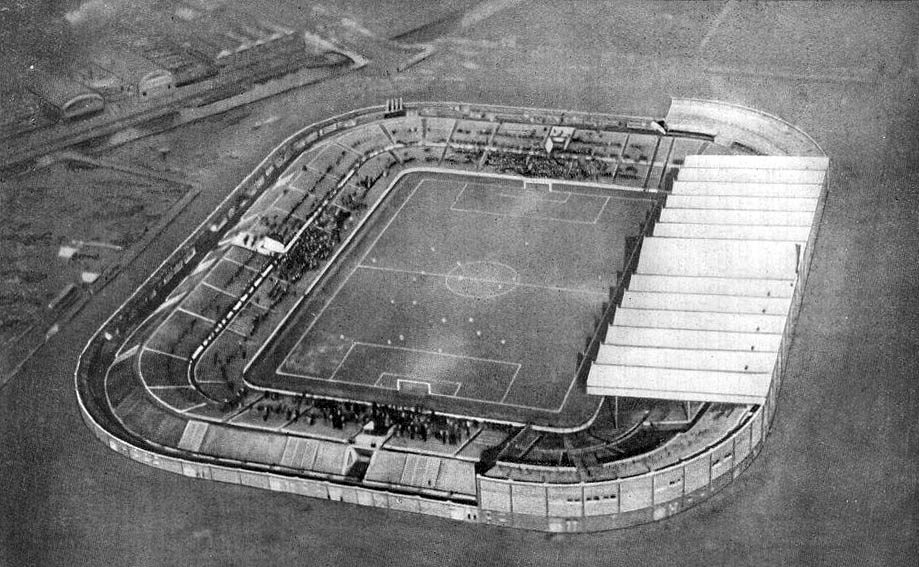
Old Trafford has been Manchester United’s home since 1910 and has been expanded in stages, most significantly in the 1990s and early 2000s, to reach its current 74,158 capacity, well above any other English club ground. It has not needed a new build to stay on top; incremental tiering of its existing stands got it there.
That lead has an expiration date. United secured a 25-acre site adjacent to Old Trafford in June 2026, clearing the way for a planned 100,000-seat replacement stadium as the centrepiece of a wider regeneration project backed by co-owner Sir Jim Ratcliffe’s group, with construction expected to take around five years once it starts. Until that ground opens, Old Trafford’s capacity is unlikely to grow further, since United’s plans describe a new build rather than another expansion of the existing stadium.
How Capacity Is Measured, and Why It Moves
Capacity here means total seats as licensed for Premier League matches, the figure clubs report to the league and that appears in the Premier League Handbook each season. It is distinct from attendance, which varies match to match and is almost always below capacity.
Several entries on this list are mid-change. Manchester City’s Etihad Stadium added more than 7,000 seats when its rebuilt North Stand, renamed the Pep Guardiola Stand, was used at full capacity for the first time on 24 May 2026, the final match of the previous season. Everton’s Hill Dickinson Stadium opened for 2025-26, replacing the much smaller Goodison Park, and is now a season into use in 6th place. Leeds United began construction in 2026 on a phased expansion of Elland Road toward roughly 53,000 seats, a project not due to finish until 2030, so its capacity here still reflects the current, unexpanded ground. Brentford’s Gtech Community Stadium, known as Brentford Community Stadium when it opened in 2020, took its current sponsor name on 28 July 2022, when Brentford signed a 10-year naming-rights deal with Gtech; its capacity has stayed at 17,250 throughout.
Using This List
For anyone planning a match visit, the top five grounds (all above 60,000) are the Premier League’s biggest-ticket, hardest-to-get venues, while the bottom of the list, Bournemouth’s Dean Court at 12,357, is among the smallest top-flight grounds in Europe. Promotion and relegation reshuffle this list every summer: Coventry City, Ipswich Town and Hull City entered for 2026-27 in place of West Ham United, Wolverhampton Wanderers and Burnley, so any club outside this season’s top flight is left off regardless of its stadium size.
Explore more: Browse more stadium guides.
Sherpa-lined and windproof, with a waterproof back for wet bleachers. Folds into its own pouch.
For late-season football, outdoor hockey and October park nights. Shake, pocket, and stay warm for hours.
12 x 10.5 x 6 in. — built to the common stadium clear-bag size. Check your venue's rules.
Biggest Premier League Stadiums FAQs
What is the biggest stadium in the Premier League?
Old Trafford, home of Manchester United, is the biggest Premier League stadium with a capacity of 74,158 for the 2026-27 season.
What is the smallest stadium in the Premier League?
Dean Court (the Vitality Stadium), home of AFC Bournemouth, is the smallest at 12,357, among clubs in the 2026-27 Premier League.
Is Old Trafford bigger than Wembley?
No. Wembley Stadium holds 90,000 and is not a Premier League club ground; it is England’s national stadium. Among club grounds used in the Premier League, Old Trafford is the largest.
Which Premier League stadium is newest?
Everton’s Hill Dickinson Stadium at Bramley-Moore Dock in Liverpool opened for the 2025-26 season, replacing Goodison Park, and remains the newest ground among current Premier League clubs.
Is Manchester United building a new, bigger stadium?
United secured a 25-acre site next to Old Trafford in June 2026 for a proposed 100,000-seat replacement stadium, part of a wider regeneration project; Old Trafford’s current 74,158 capacity has not changed as part of that plan.
Get More from Biggest Premier League Stadiums
Log the coasters, stadiums, and venues you’ve experienced, rate Biggest Premier League Stadiums, and see what your friends thought. Get the ThrillZing app.
Want the day’s theme park news in your inbox? Subscribe to ThrillZing Daily — free.
Photo: Arne Müseler from Salzburg, AT / CC BY-SA 2.0, via Wikimedia Commons.