
Wellington’s Basin Reserve is the rarest thing in world sport: a playing field that is also a legally protected historic place. It is the only cricket ground with listed status from Heritage New Zealand, granted in recognition of it being the oldest first-class cricket ground in the country. Cricket has been played on the site since 11 January 1868, which puts it among the oldest stadiums in the world still in use.
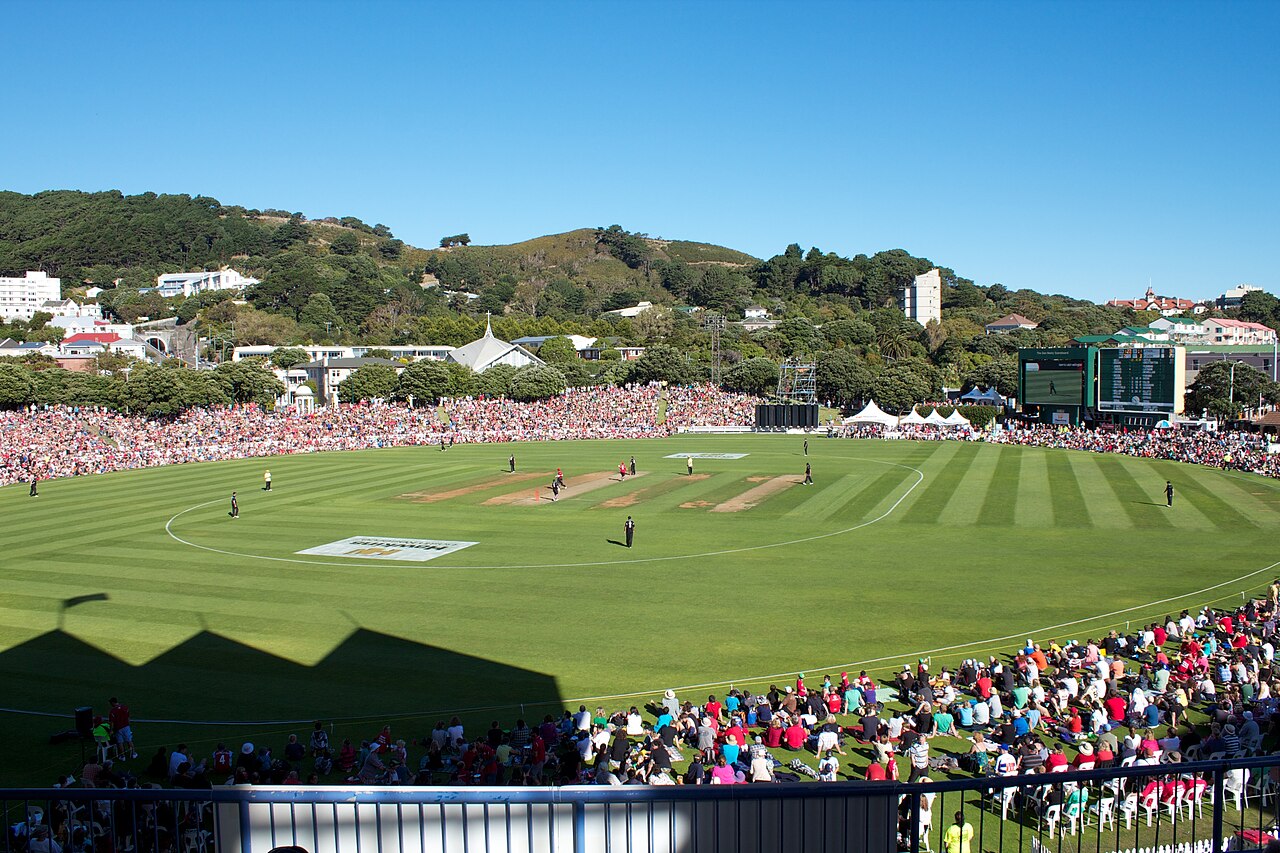
It is also, improbably, a roundabout. The ground sits inside the largest traffic circle in the Southern Hemisphere, ringed by State Highway traffic feeding the Mount Victoria Tunnel, with Government House and Wellington College just across the road. Test cricket, commuter traffic and a category-listed 1925 pavilion all share the same two kilometres south of the Wellington CBD.
Key Stats
| Opened | 1868 (first cricket match 11 January 1868) |
| Location | Mount Cook, Wellington, New Zealand |
| Capacity | 6,800 (for cricket) |
| Tenants | Wellington Firebirds (1873–present); New Zealand national team for Test matches |
| Sport | Cricket |
| First Test match | 24–27 January 1930, New Zealand v England |
| Heritage status | Listed with Heritage New Zealand; Museum Stand a Category II historic place since 1982 |
From Swamp to Test Ground
The Basin began life as water. Surveyor William Mein Smith mapped the site in 1840 as a lagoon that was meant to be deepened into a harbour basin and joined to the sea by a canal — an 1841 plan of Wellington literally labels the area “Proposed Basin and Canal.” The 1855 Wairarapa earthquake then lifted the land by nearly 1.8 m (5.9 ft) and drained most of the swamp, killing the canal scheme and handing Wellington a rare piece of flat ground in a famously hilly city.
Influential citizens proposed in 1857 that the uplifted land become a recreation reserve, and on 3 February 1863 prisoners from Mount Cook Gaol began levelling and draining it. A council meeting on 11 December 1866 made the Basin Reserve Wellington’s official cricket ground, and the first match followed on 11 January 1868. It did not go smoothly: the outfield was still littered with stones and thistles, several players were injured, and the umpire apologised. There was no ceremony, no music and no banners. Conditions stayed rough until horses were used to level the field in late 1872.
The Stands, the Gates and the Museum
The first grandstand was built in 1868 by the Wellingtonian Caledonian Society, which ran Highland Games on the ground, and was sold to the city council in 1881. It was demolished in 1925 and replaced by the pavilion now known as the Museum Stand, opened on 17 October 1925 with 1,300 seats, hot and cold water in the dressing rooms and a tearoom. That building has been a Category II registered Historic Place since 1982.
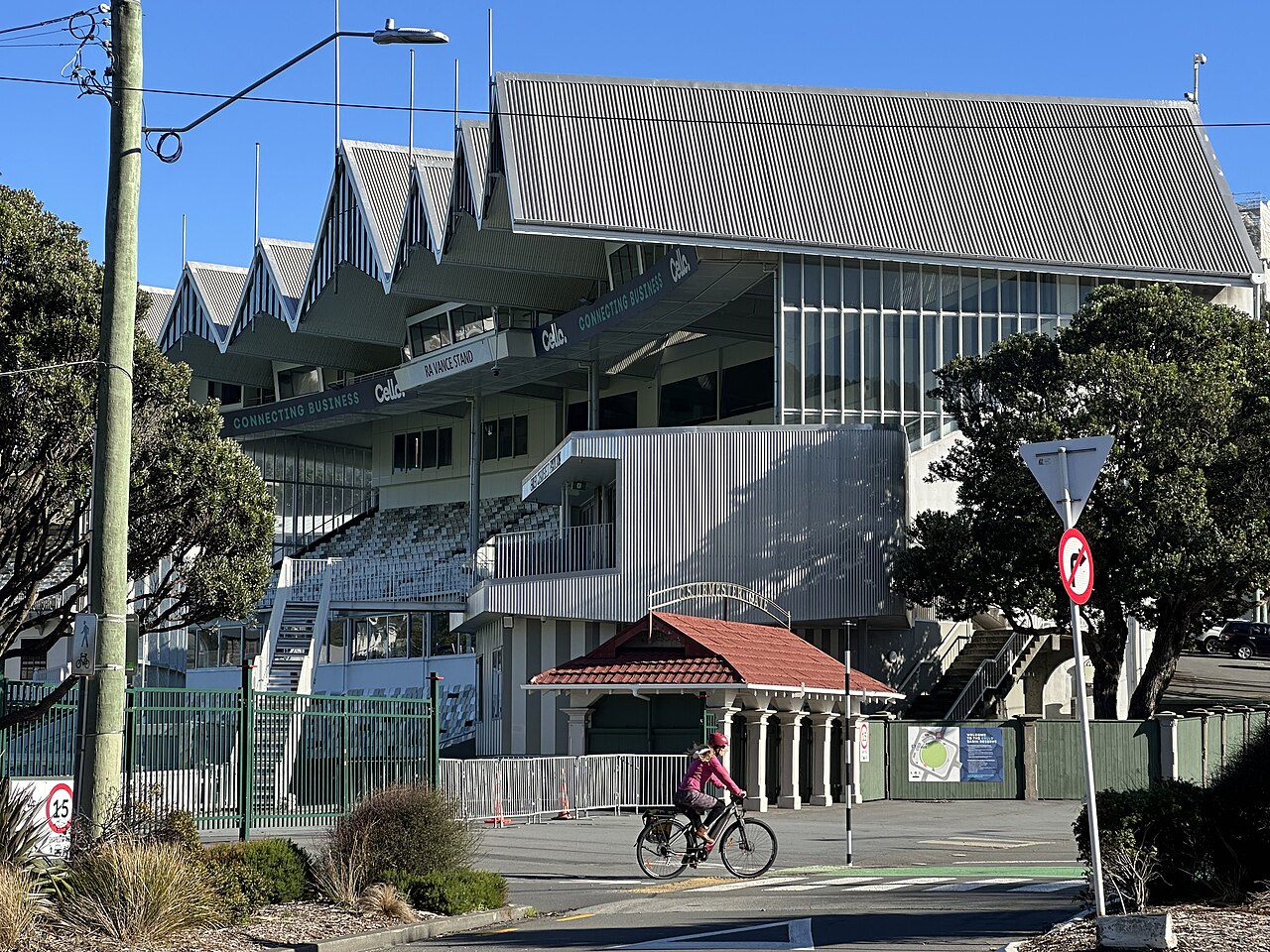
Declared earthquake-prone in 2012, the Museum Stand was closed, strengthened and refurbished in 2019 — work that won an architectural award in 2022 — and reopened with 994 seats for the Black Caps’ Test against India in February 2020. It houses the New Zealand Cricket Museum, which opened in 1987 and was relaunched in 2021. The larger RA Vance Stand, named for administrator Bob Vance, was completed to the north as part of the late-1970s redevelopment that reoriented the playing area into a proper oval, and was officially opened on 29 November 1980 with 2,000 seats.
Records and Famous Days
The Basin staged its first Test from 24 to 27 January 1930, New Zealand against England. Since then it has produced some of New Zealand cricket’s defining innings. Brendon McCullum’s 302 against India in February 2014 was the first triple century by a New Zealander, made in the same match in which the hosts posted 680 for 8 declared — the highest team total recorded at the ground. Martin Crowe’s 299 in 1991 had held the previous mark. Kane Williamson made his maiden Test double hundred here in 2015, and Tom Blundell scored a century on debut in 2017, then walked home in his whites because he lives nearby.
The ground’s leading run-scorers are Ross Taylor (1,279), Williamson (1,137) and Crowe (1,123); the leading wicket-takers are Chris Martin (60), Daniel Vettori (57) and Richard Hadlee (53). Beyond cricket, the Basin hosted five rugby league Tests between 1919 and 1953, was the main Wellington football venue through the 1950s and 1960s, and in May 1879 staged Wellington’s first public display of electricity when thousands turned out to watch a football match under lights. On 17 March 2019 an estimated 11,000 people filled it for a vigil after the Christchurch mosque shootings.
Visiting the Basin Reserve
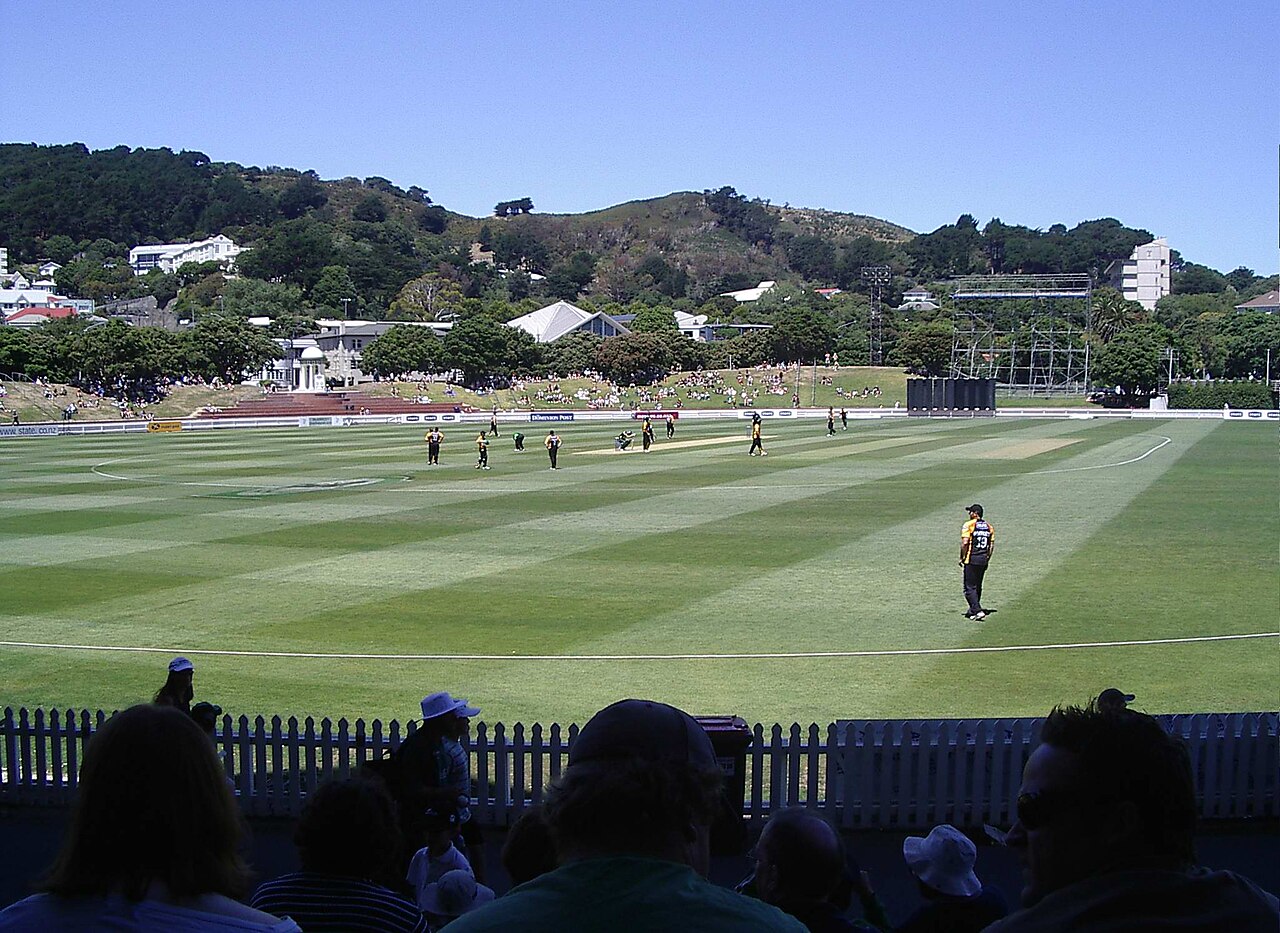
At 6,800 seats for cricket the Basin is small by Test-ground standards, and that is the appeal: the embankments built in the 1970s redevelopment let spectators sit on the grass bank with a rug, and the ground keeps a club-cricket intimacy that modern bowl stadiums cannot. Wellington’s one-day internationals largely moved to the bigger Wellington Regional Stadium after 1999, so the Basin’s calendar now centres on Test matches and the Firebirds’ domestic season.
USB-charged warmers for cold night games — no disposable packets.
Keeps chili hot from the tailgate to the fourth quarter.
Team-color face paint in a twist-up stick — no brushes, no mess in the car.
FAQ
How old is the Basin Reserve?
The first cricket match was played on 11 January 1868, after the site was formally designated Wellington’s cricket ground in December 1866. That makes it the oldest first-class cricket ground in New Zealand and one of the oldest sports venues anywhere still in continuous use.
Why is the Basin Reserve heritage listed?
Heritage New Zealand lists the ground in recognition of its status as the country’s oldest first-class cricket ground — it is the only cricket ground to hold that listing. The 1925 Museum Stand carries its own Category II historic place registration, granted in 1982.
Is the Basin Reserve really a roundabout?
Yes. The ground sits in the middle of the largest roundabout in the Southern Hemisphere, at the junction of Kent and Cambridge Terraces, Adelaide Road, the Mount Victoria Tunnel approach and the Arras Tunnel. Traffic once circulated in both directions until a one-way system was introduced in the early 1970s.
Photo: Roisterer ( talk ) ( Uploads ) via Wikimedia Commons (CC BY-SA 3.0)