
Thunderbolt is a wooden roller coaster at Kennywood in West Mifflin, Pennsylvania, that has been dropping riders into a forested ravine since it first opened as Pippin in 1924, designed by John A. Miller. The ride was reengineered and renamed Thunderbolt in 1968 by Kennywood’s head of maintenance, Andrew Vettel, who kept the coaster’s original ravine terrain while adding new helix hills to extend the layout.
What makes Thunderbolt famous is its unusual layout: rather than climbing a lift hill right out of the gate, the train first plunges into the ravine on its own, then works its way to a mid-course lift hill before unleashing its biggest moment — a 90-foot drop back down into the gorge that comes later in the ride, not out of the station. A 1974 New York Times feature dubbed it the ‘King of the Coasters,’ and it remains an American Coaster Enthusiasts Coaster Classic and Landmark to this day.
Stats at a Glance
- Park: Kennywood
- Manufacturer: John A. Miller (1924); rebuilt by Andrew Vettel (1968)
- Opened: 1924 (as Pippin); rebuilt as Thunderbolt in 1968
- Height: 70 ft
- Top speed: 55 mph
- Length: about 3,250 ft
- Max drop: 90 ft (comes after the mid-course lift hill, not the first drop out of the station)
- Inversions: 0
The Ride Experience
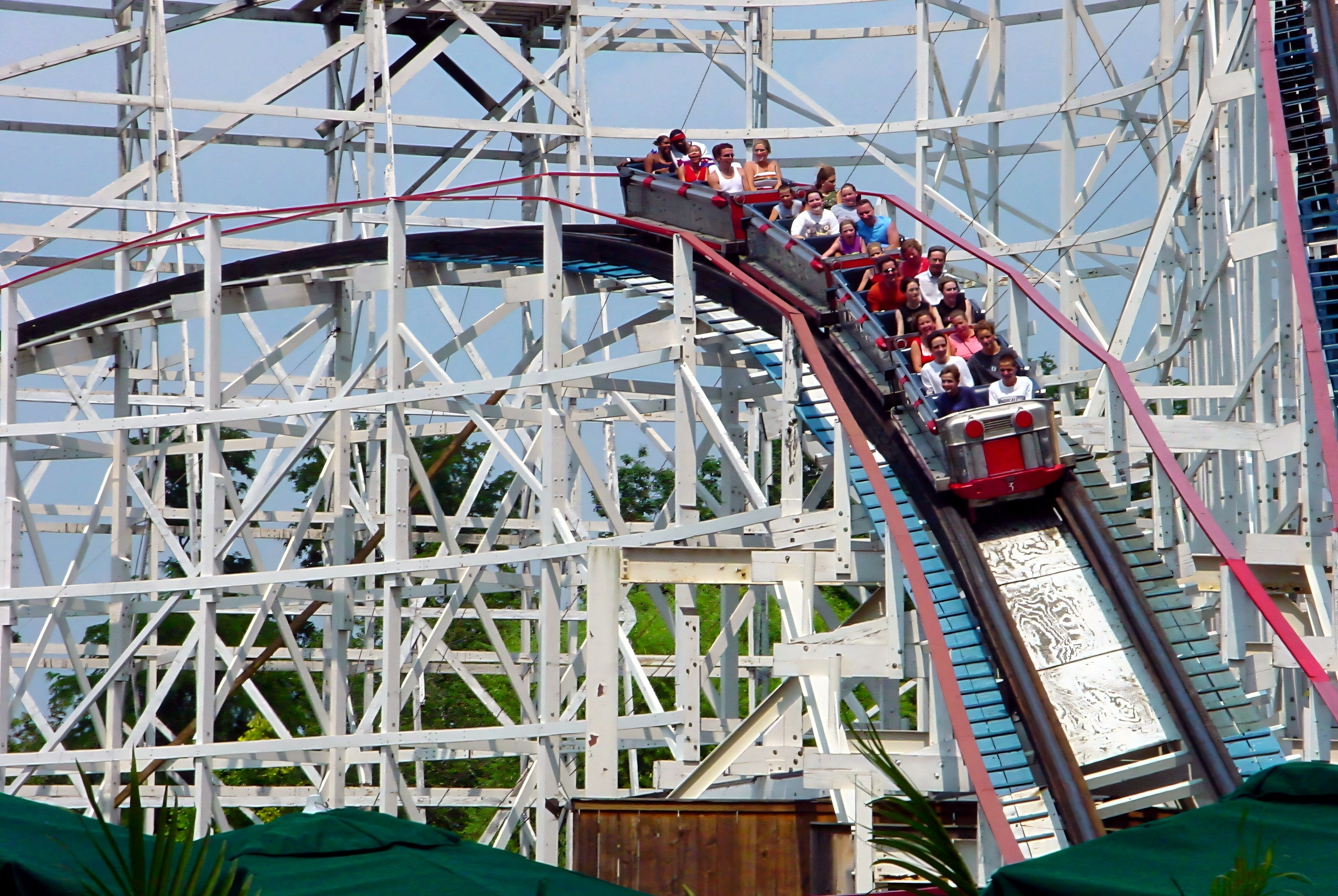
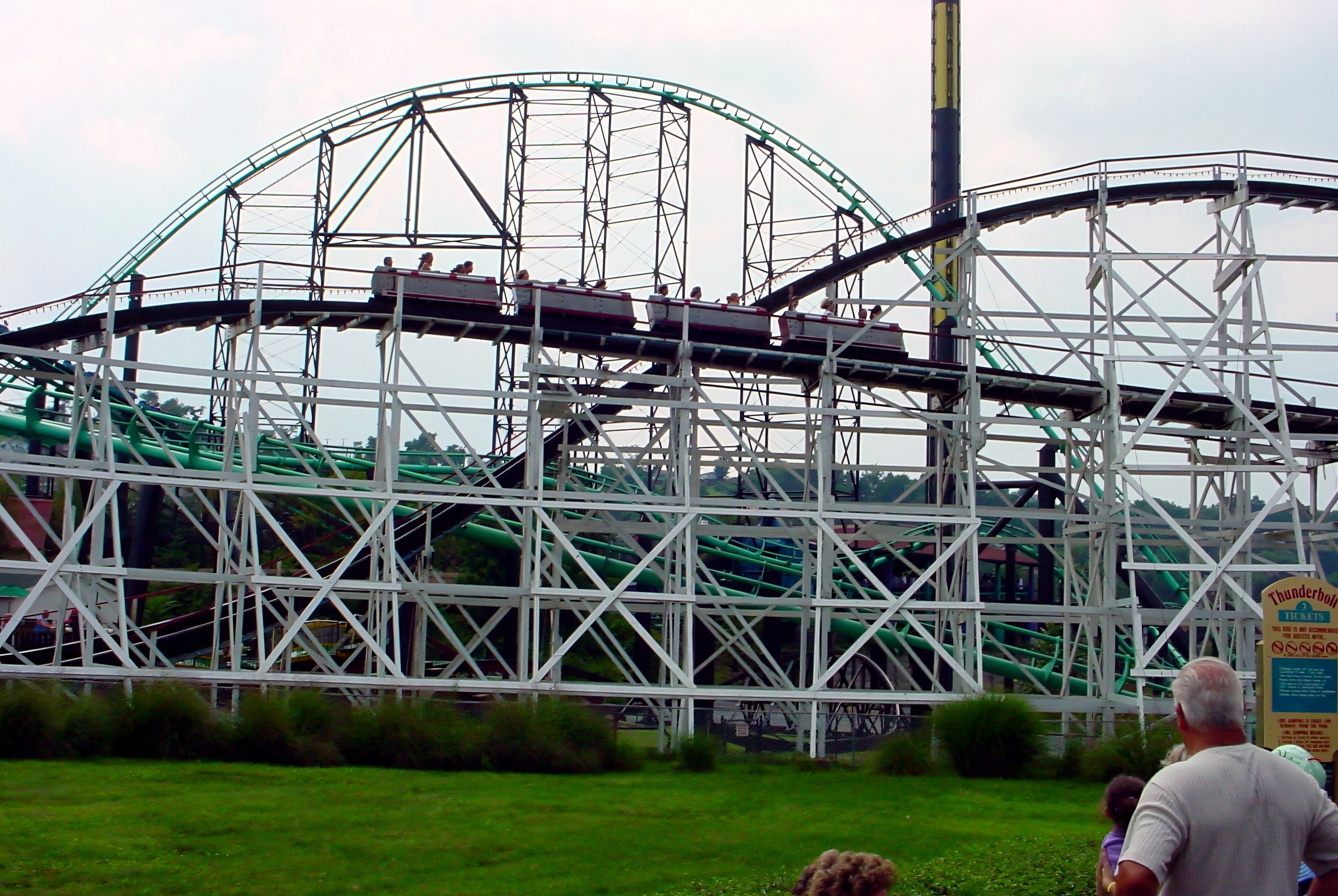
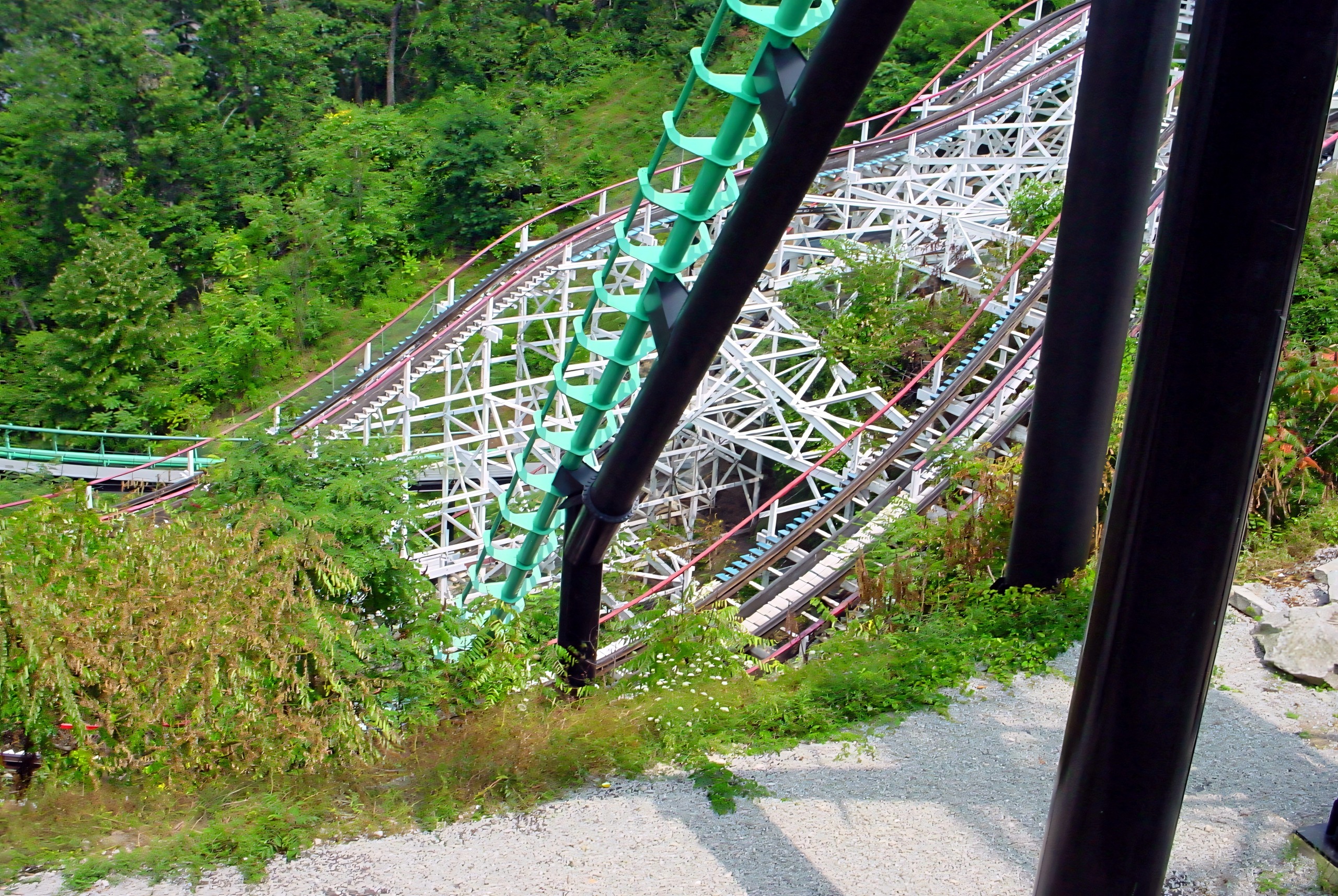
Thunderbolt breaks from coaster convention immediately: instead of climbing a lift hill out of the station, the train dives straight down into the ravine on its own momentum, passing beneath the nearby Phantom’s Revenge track. It then threads through the gorge and climbs back up to engage Thunderbolt’s unusual mid-course lift hill, roughly 70 feet tall.
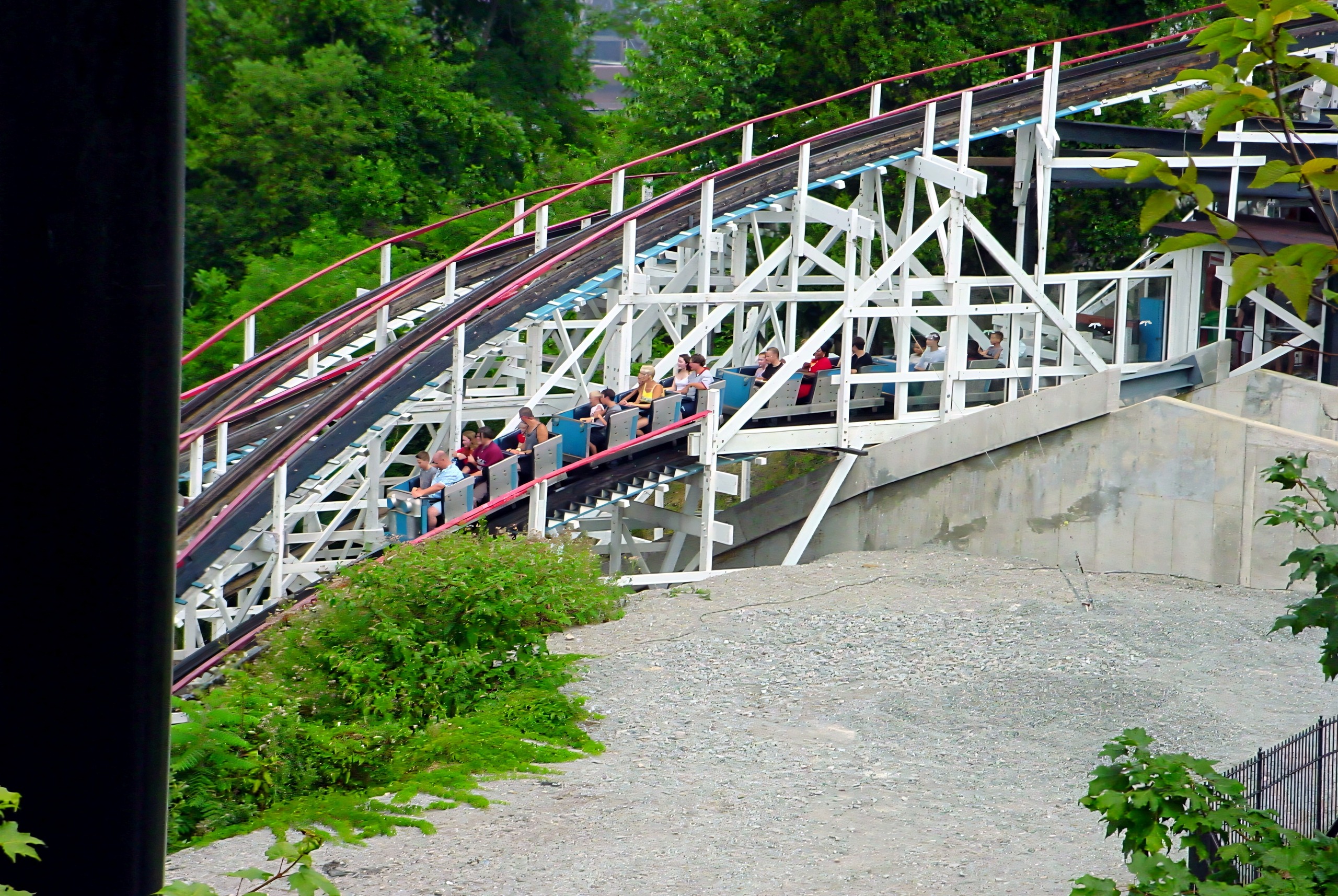
From the top of that lift hill, the ride delivers its signature moment — a 90-foot plunge back down into the ravine, the tallest and steepest drop on the course, arriving well after riders have already been through the initial ravine dive. The rest of the circuit winds through helix turns added during the 1968 rebuild, hugging the natural hillside for a rougher, more old-school wooden-coaster feel than newer terrain coasters, all completed in under two minutes.
A Ravine-Built Legend
The coaster’s roots go back to 1924, when John A. Miller designed it as Pippin, using the same ravine that still defines the ride today. In 1968, Kennywood’s head of maintenance Andrew Vettel reworked the layout into Thunderbolt, preserving the original drops into the gorge while modernizing the rest of the circuit with new helix hills.
That mix of vintage engineering and natural terrain has earned lasting recognition: a 1974 New York Times feature dubbed it the ‘King of the Coasters,’ and it continues to place among the top wooden coasters in the annual Golden Ticket Awards, decades after its debut.
Explore more: Explore more roller coasters.
Thunderbolt Photo Archive: July 2003
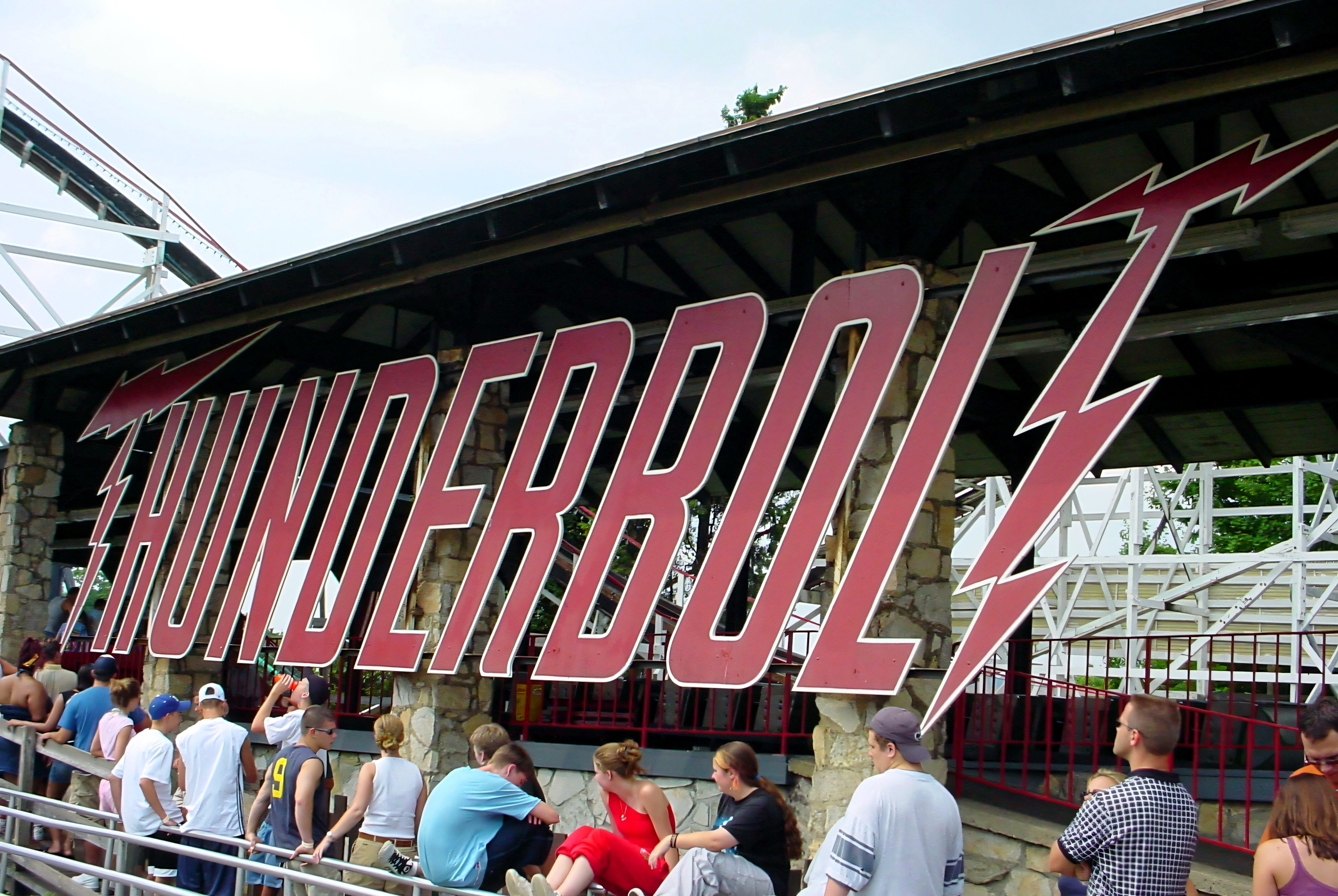
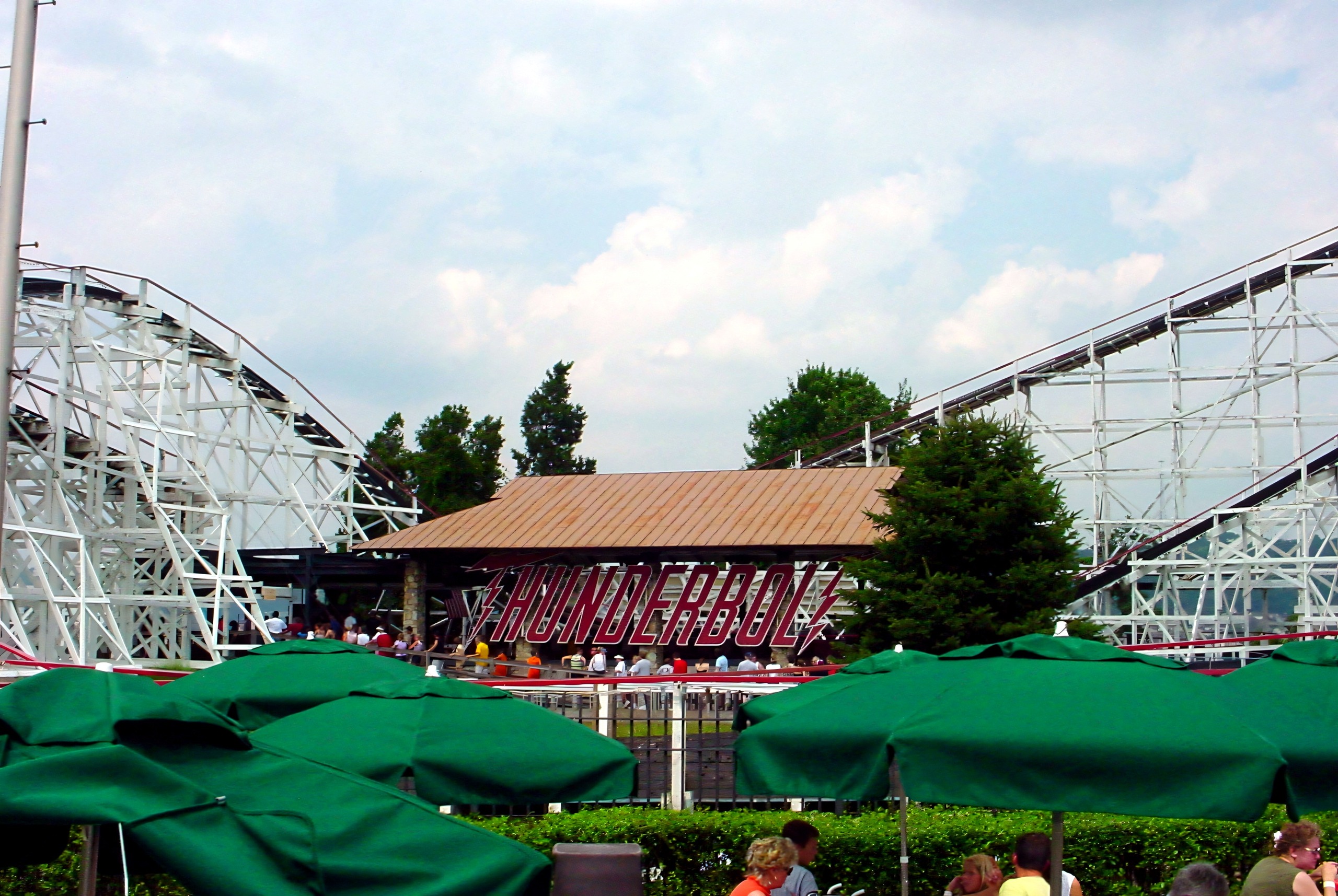
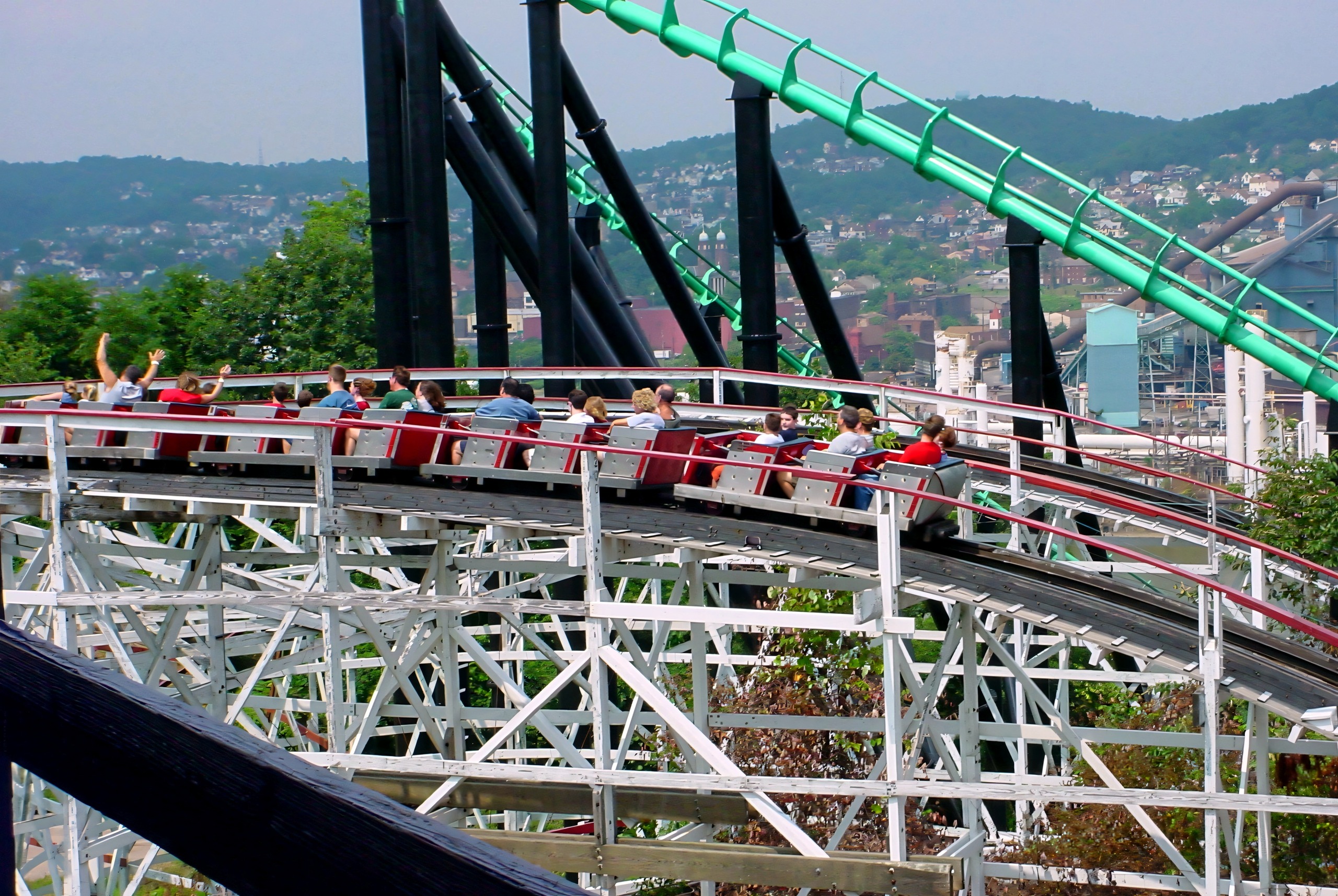
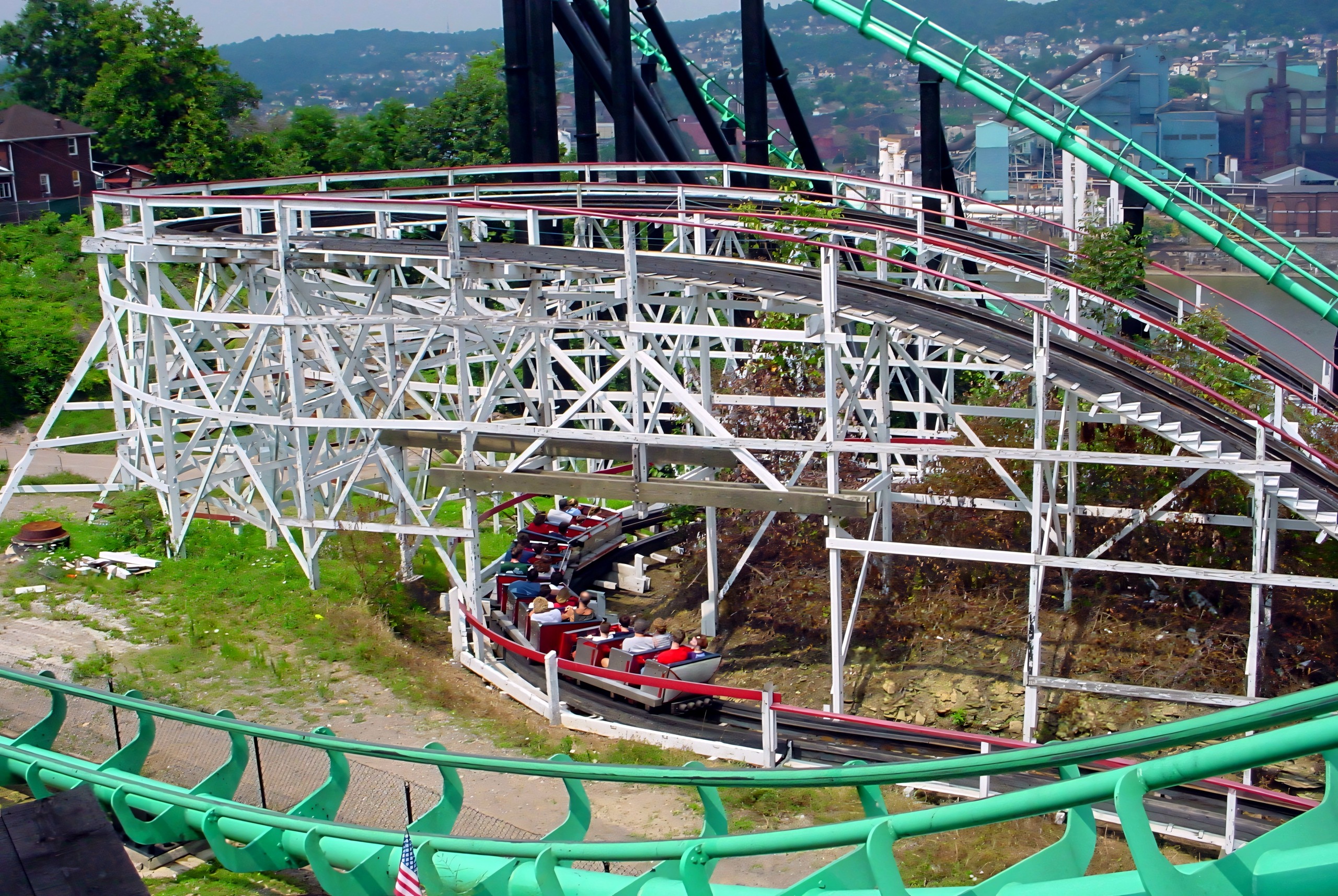
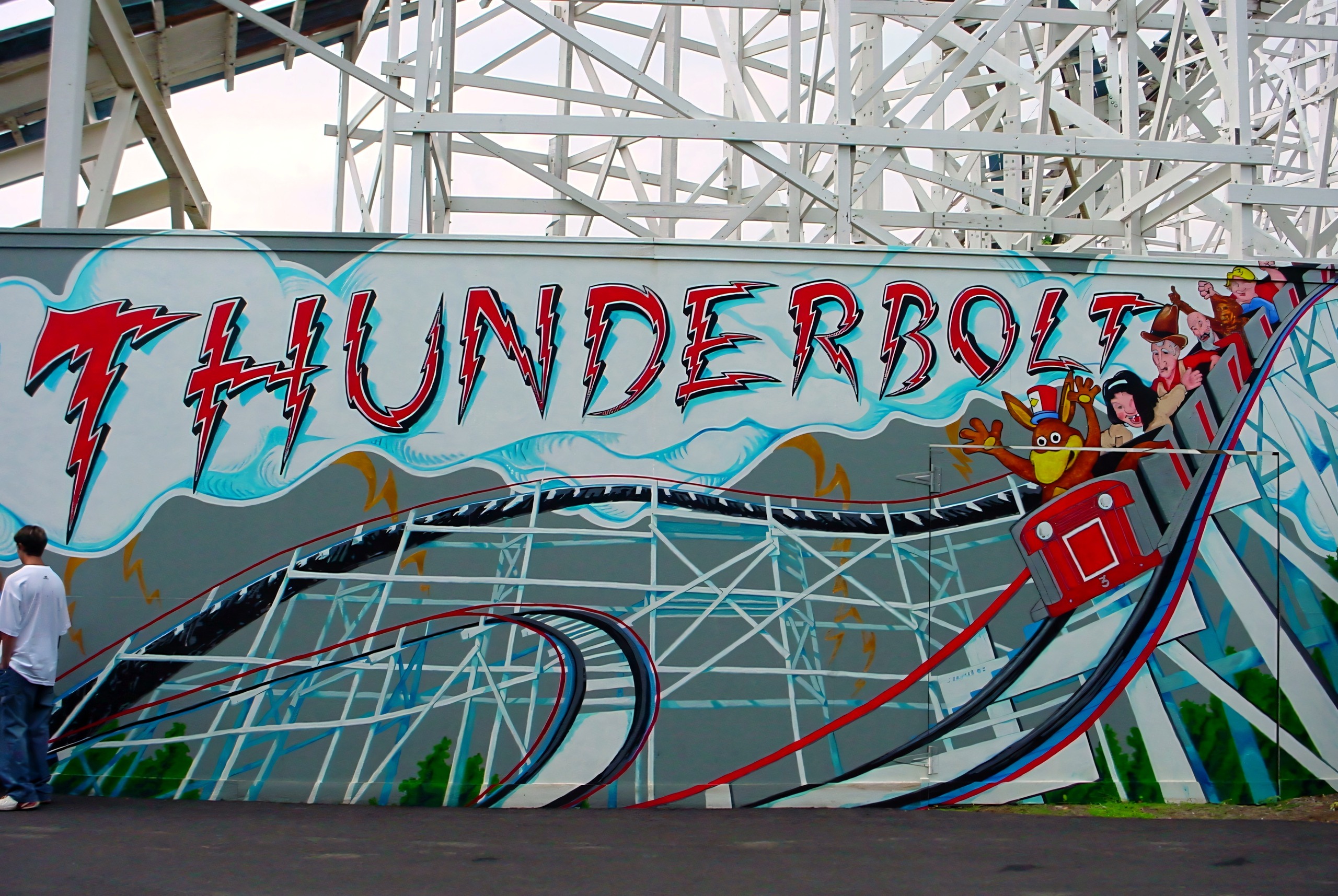
These are original ThrillZing photos of Thunderbolt taken at Kennywood on July 30, 2003, restored and upscaled from the original camera files. They show the 1968 wooden coaster’s entrance sign, its red trains on the white trestles and helix, the ravine drops, and the lift structure seen past Phantom’s Revenge. Photos are free to reuse under a CC BY 4.0 license with credit to ThrillZing and a link to this page, except the few marked all rights reserved, which show copyrighted characters or artwork.
Thunderbolt FAQs
When did Thunderbolt open at Kennywood?
It originally opened in 1924 as Pippin, then was rebuilt and renamed Thunderbolt in 1968.
How fast does Thunderbolt go?
Thunderbolt reaches a top speed of about 55 mph.
Where does Thunderbolt’s biggest drop happen?
Unlike most coasters, Thunderbolt’s biggest drop — about 90 feet — is not the first drop out of the station. The train actually dives into the ravine on its own momentum first, then climbs a mid-course lift hill before delivering that 90-foot drop later in the ride.
Get More from Thunderbolt
Log the coasters, stadiums, and venues you’ve experienced, rate Thunderbolt, and see what your friends thought. Get the ThrillZing app.
Photo: Larry Pieniazek, User:Lar, (primary) / CC BY 2.5, via Wikimedia Commons.