Storm Runner is a steel launched roller coaster at Hersheypark in Hershey, Pennsylvania, built by Intamin and opened on May 8, 2004. Using a hydraulic launch system, it rockets riders from a standstill to 72 mph in about two seconds — one of the hardest-accelerating launches on the East Coast.
As of the 2026 season, Storm Runner is still running, and it’s become something rarer than fast: one of only three hydraulic launch coasters left operating in the United States, and the last one on the East Coast. This guide covers everything riders ask about it — top speed, height requirement, what the launch actually feels like, how it stacks up against Hersheypark’s other coasters, and why its maintenance team treats it differently from every other ride in the park.
Quick Answer
Storm Runner hits a top speed of 72 mph (116 km/h) in about two seconds via hydraulic launch, climbs a 150-foot top hat, drops 180 feet, and threads three inversions in a ride that lasts around 50 seconds. The height requirement is 54 inches (137 cm).
It’s not Hersheypark’s fastest coaster overall — Candymonium tops out at 76 mph — but nothing else in the park accelerates anywhere close to as hard off the start line, and as of 2026 it remains open and operating.
How Fast Does Storm Runner Go?
Storm Runner’s top speed is 72 mph (116 km/h), reached almost instantly off the launch track. Rather than climbing a lift hill, the train sits in a hydraulic launch zone where a catapult system fires it from 0 to 72 mph in roughly two seconds — the acceleration is over before most riders finish their first scream.
That speed comes from an unusual mechanism: high-capacity accumulator tanks store hydraulic oil and nitrogen gas, separated by a free-floating piston. When the launch triggers, that stored energy surges through a hydraulic motor into a gearbox and winch drum, which yanks a steel cable attached to a catch car under the train, flinging the entire train up the launch track in about two seconds flat. That speed carries the train straight into the 150-foot top hat before the 180-foot drop back toward the ground. Because the speed is generated hydraulically rather than by gravity from a tall lift hill, Storm Runner delivers highway-speed acceleration in a footprint far smaller than most coasters with comparable top speeds.
Is Storm Runner the Fastest Ride at Hersheypark?
No — Candymonium, Hersheypark’s giant hypercoaster, has a slightly higher top speed at 76 mph. But Candymonium builds that speed gradually, over a long lift hill and sweeping first drop. Storm Runner reaches almost the same speed in about two seconds flat, which is why riders consistently describe its launch as the single hardest hit in the park.
In other words: Candymonium wins on raw top speed, but Storm Runner wins on acceleration by a wide margin. Nothing else at Hersheypark gets you from a dead stop to highway speed that fast.
Storm Runner Height Requirement
The height requirement for Storm Runner at Hersheypark is 54 inches (137 cm). Riders below that height are not permitted to board, consistent with most launched coasters that use over-the-shoulder restraints and pull noticeable force through the top hat and inversions.
Storm Runner uses over-the-shoulder restraints rather than simple lap bars — it was the first Intamin Accelerator Coaster model to use this restraint style — so riders should expect a snugger, more secure fit than on family-style rides. Hersheypark’s own guest guidance also flags Storm Runner among rides where guests approaching 300 pounds or taller than 6 feet may have difficulty fitting the restraints comfortably; ride entrances post sizing signage so guests can check before waiting in line. As with all Hersheypark attractions, exact measurement policies (shoes on, standing fully upright) are enforced at a height-check station near the entrance.
The Ride Experience
Storm Runner begins with a tense pause in the launch zone before a hydraulic catapult fires the train to 72 mph in about two seconds. The train blasts up the 150-foot top hat, where riders get a strong moment of airtime at the crest before dropping 180 feet back toward the ground.
Beyond the top hat, the train threads through three inversions in rapid succession: a cobra loop, a heartline roll, and a flying snake dive — a combination element that blends a heartline-style roll with a half-Immelman-style twist as the train shoots back toward the station past the park’s monorail track. Each element arrives with minimal recovery time, keeping the sensation constant from launch to brake run. The full ride lasts around 50 seconds — short, but relentlessly intense — with most of the time in line spent in the launch queue and restraint checks rather than in motion. The ride and station sit in Hersheypark’s Pioneer Frontier section, laid out so the top hat and inversions are visible from several neighboring attractions.
One of America’s Last Hydraulic Launch Coasters
Storm Runner isn’t just fast — it’s a mechanical rarity. According to Hersheypark’s own ride team, it’s one of only three hydraulic launch coasters still operating in the United States, and the last one running on the East Coast. Most modern launch coasters use linear synchronous motors (LSMs) instead, so Storm Runner’s catch-car-and-cable system is a genuine holdover from an earlier generation of launch technology.
Keeping that system running takes real specialization: a dedicated four-person crew handles Storm Runner’s upkeep, split between technicians who focus on the trains and technicians who oversee the hydraulics. During the off-season, that team fully disassembles the trains for cleaning, inspection, and non-destructive testing, craning each train off the track and into the maintenance bay below the ride platform. Once the park is open, crews run daily inspections covering restraint systems, track walks, hydraulic checks, and test launches before the ride opens to guests.
A Record-Setting Accelerator Coaster
When Storm Runner debuted in 2004, it broke new ground for Intamin’s Accelerator Coaster lineup. It was the first of its model to feature inversions, the first to use over-the-shoulder restraints, and the first to employ a dual-loading station with switch tracks — upgrades that boosted both ride variety and throughput to roughly 1,200 riders per hour across two 20-rider trains.
Designed in part by coaster engineer Werner Stengel, Storm Runner cost roughly $12.5 million to build, with construction starting in February 2004. It replaced Balloon Flite, a children’s ride that had operated in the same spot for over two decades, and opened to the public on May 8, 2004.
Planning Your Visit
Storm Runner is included with standard Hersheypark admission — there’s no separate charge to ride it, though single-day ticket prices vary by date, with lower rates on off-peak days and higher rates during peak summer and event weekends. Hersheypark also sells season passes, which make sense for anyone planning multiple visits in a year.
Parking is a separate fee from admission, cheaper when purchased in advance online than on arrival, and free for guests staying at an on-site Hersheypark resort. Operating hours shift seasonally — the park runs shorter hours in spring and fall and extended hours during peak summer — so check the calendar for your specific visit date. For current ticket prices, parking rates, and the day-by-day hours calendar, use the official Hersheypark site as the canonical source, since these details change throughout the year.
Storm Runner Photo Archive: June 2021
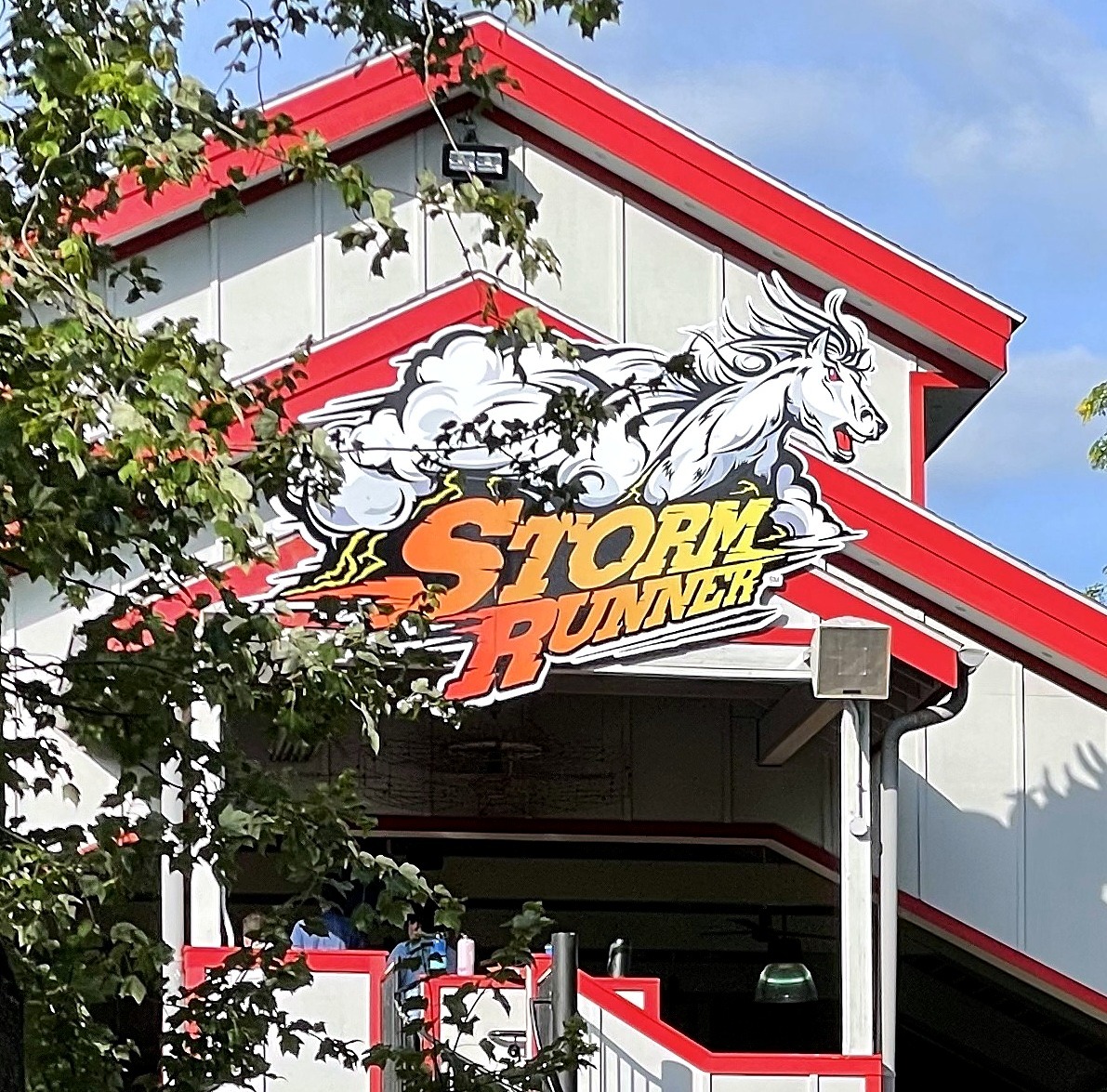
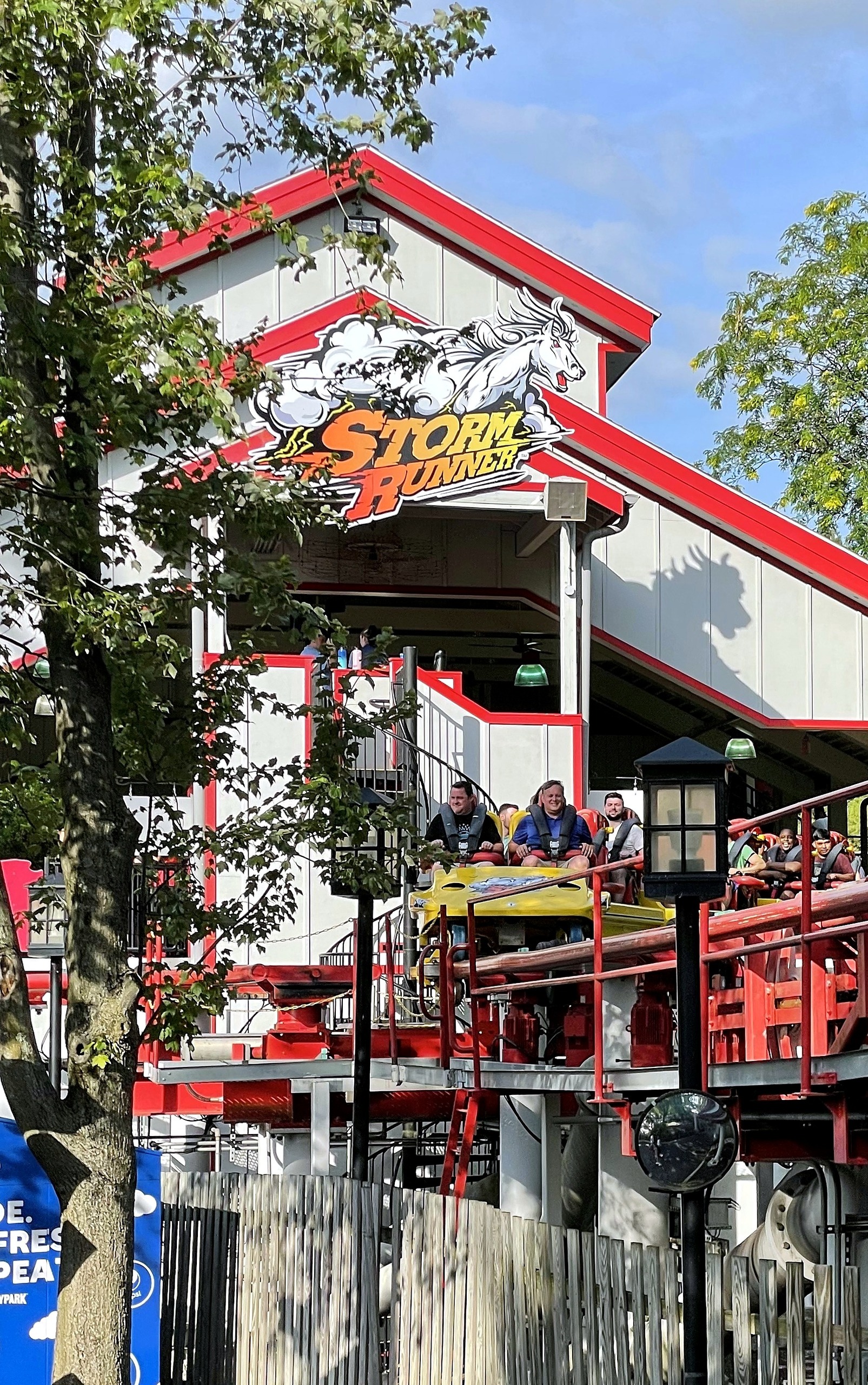
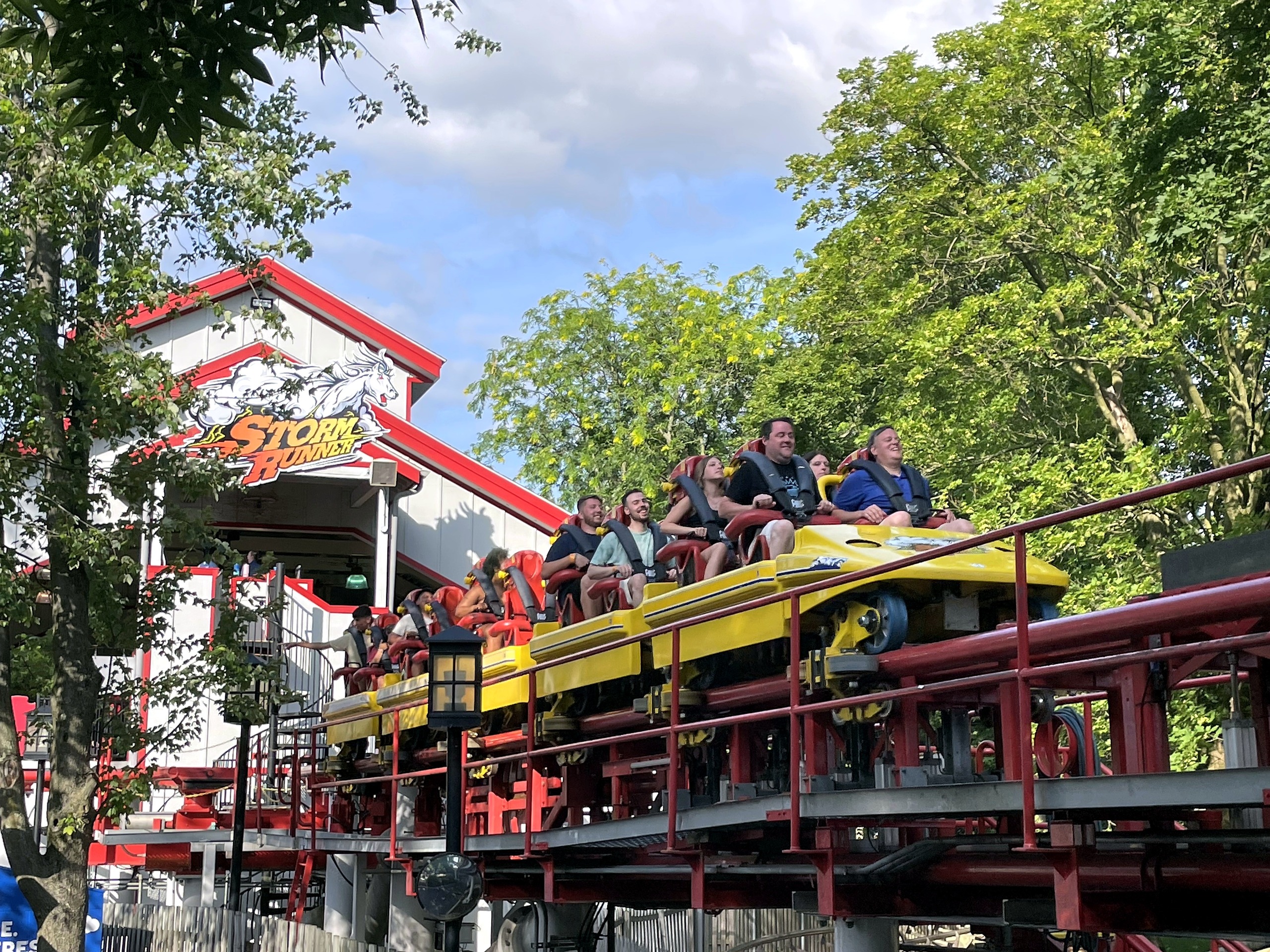
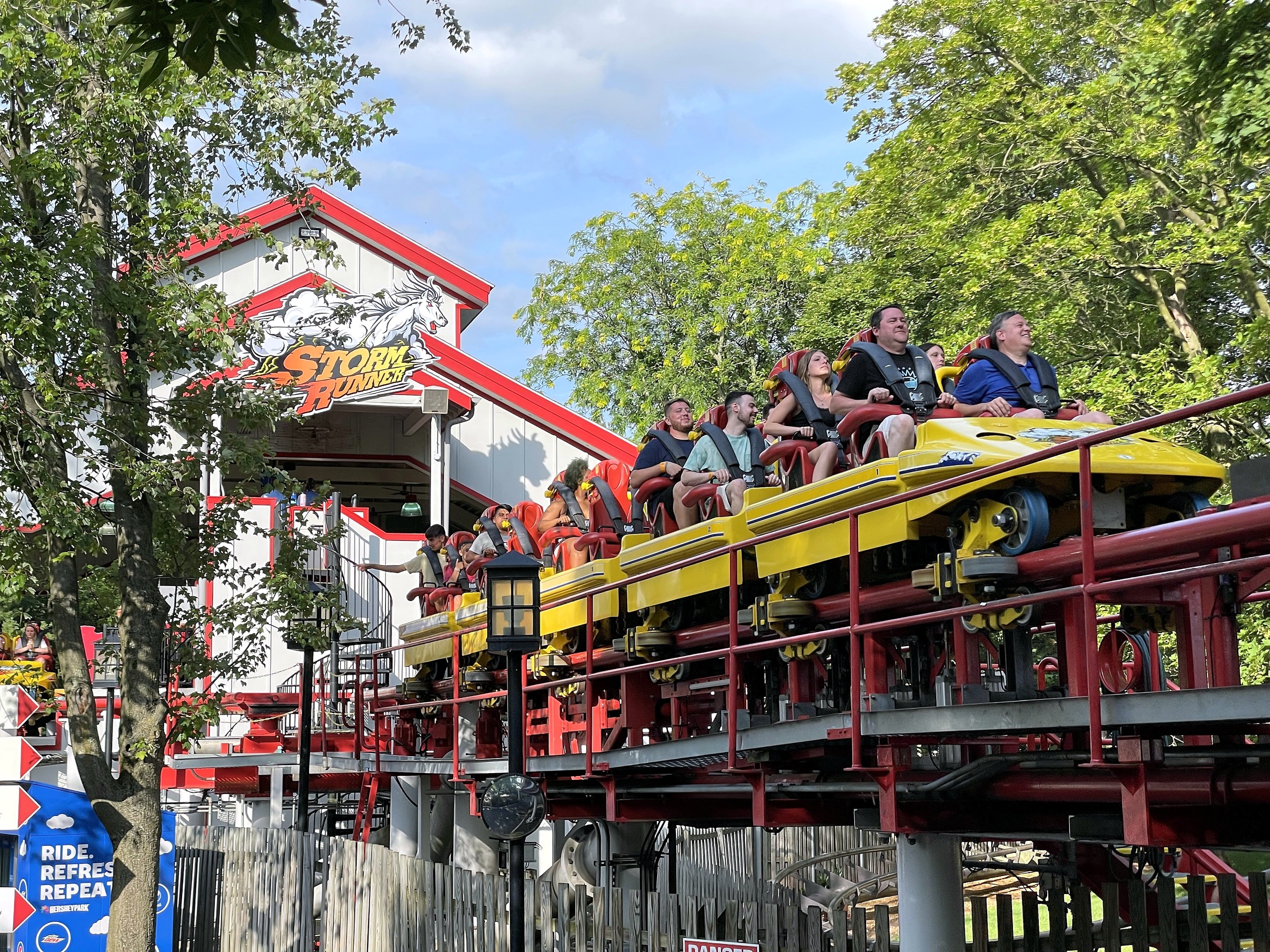
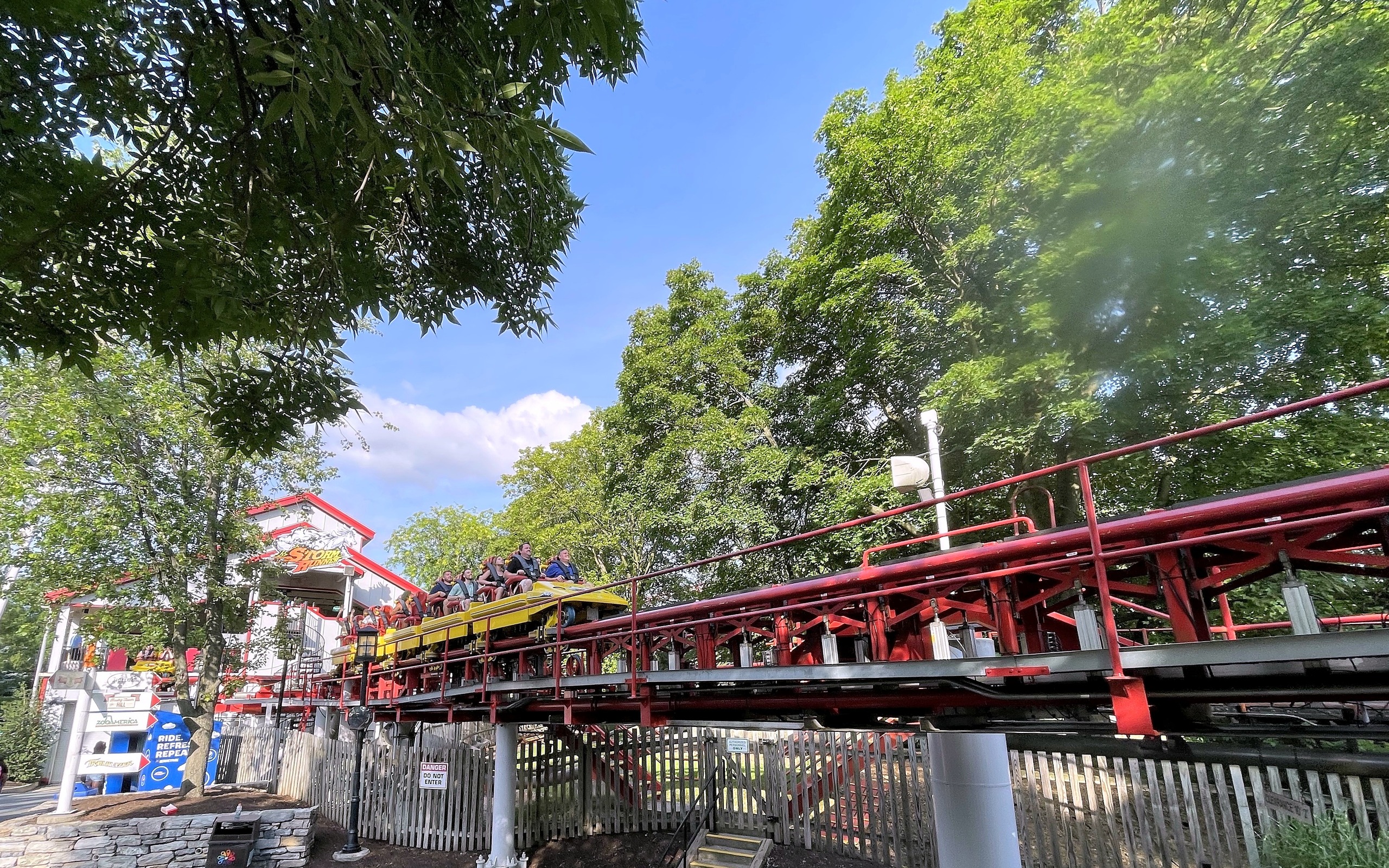
These are original ThrillZing photos of Storm Runner taken at Hersheypark on June 26, 2021, shot on an iPhone and published as taken. They show the Intamin launched coaster’s station sign and trains staged and leaving on the launch track through the trees. All photos are free to reuse under a CC BY 4.0 license with credit to ThrillZing and a link to this page.
Soak, snap and drape. A cooling towel takes the edge off a 45-minute midday queue in July.
Park apps, mobile ordering and photos kill a battery by 3 p.m. This one snaps on magnetically, so there's no cable to snag on a restraint.
Ride with your glasses on and keep them. Many parks allow glasses on rides if they're strapped, so check the ride rules first.


Storm Runner Hersheypark speed and height guide FAQs
Is Storm Runner still open in 2026?
Yes. As of the 2026 season, Storm Runner is operating at Hersheypark. It’s one of only three hydraulic launch coasters left running in the United States, and the only one on the East Coast.
How fast does Storm Runner go?
Storm Runner reaches a top speed of 72 mph (116 km/h), hit in about two seconds via its hydraulic launch system.
How tall do you have to be to ride Storm Runner?
Riders must be at least 54 inches (137 cm) tall to ride Storm Runner at Hersheypark.
How long is the Storm Runner ride?
The ride itself lasts around 50 seconds from launch to brake run, though most of your time in the queue is spent waiting in line and going through restraint checks rather than actually riding.
Does Storm Runner have loops or inversions?
Yes. Storm Runner has three inversions: a cobra loop, a heartline roll, and a flying snake dive, all encountered after the initial launch and top hat.
Is Storm Runner the fastest ride at Hersheypark?
No, Candymonium is slightly faster at 76 mph. But Storm Runner accelerates far harder, hitting 72 mph in about two seconds compared to Candymonium’s gradual buildup from a lift hill.
What kind of restraints does Storm Runner use?
Storm Runner uses over-the-shoulder restraints. It was the first Intamin Accelerator Coaster model to use this restraint style instead of a simple lap bar.
Why is Storm Runner considered rare among roller coasters?
Storm Runner uses a hydraulic launch system — accumulator tanks, a hydraulic motor, and a catch car and cable — instead of the linear synchronous motors (LSMs) most modern launch coasters use. It’s one of only three such coasters still running in the US.
Get More from Storm Runner Hersheypark speed and height guide
Log the coasters, stadiums, and venues you’ve experienced, rate Storm Runner Hersheypark speed and height guide, and see what your friends thought. Get the ThrillZing app.
Want the day’s theme park news in your inbox? Subscribe to ThrillZing Daily — free.