
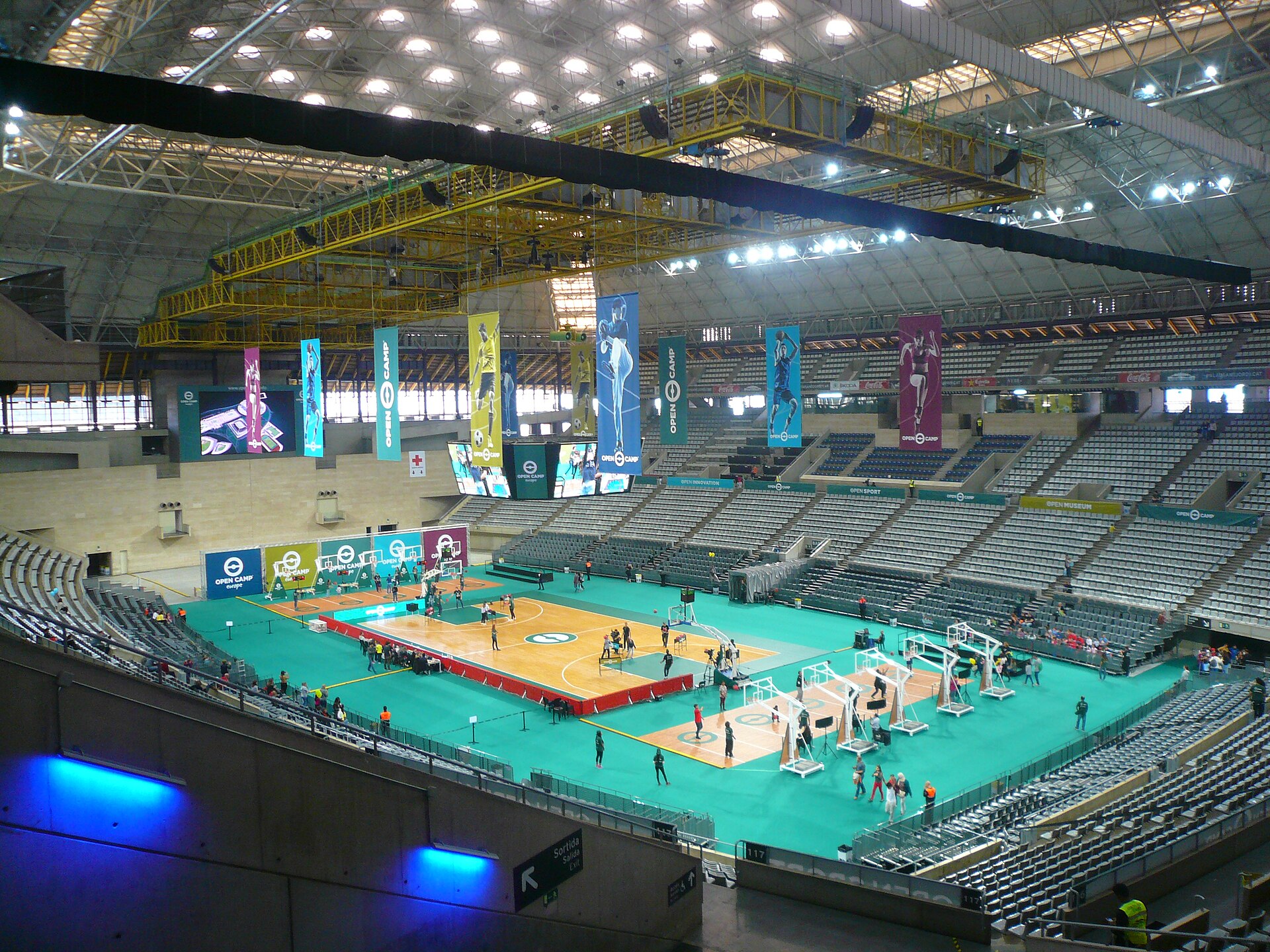
Palau Sant Jordi is a domed indoor arena in Barcelona, Spain, built as the centerpiece venue for the 1992 Summer Olympics. Designed by Japanese architect Arata Isozaki with structural engineer Mamoru Kawaguchi, the arena was constructed between 1986 and 1990 at a cost of around 54 million euros and opened its doors in 1990, two years ahead of the Games it was built to host.
During the 1992 Olympics, the venue staged artistic gymnastics, handball, and volleyball. In the decades since, it has become one of Spain’s busiest live entertainment venues, hosting everyone from Madonna and U2 in the 1990s to modern stadium-tour acts, while also welcoming world championships in athletics, basketball, and swimming.
Stats at a Glance
- Location: Barcelona, Spain
- Type: Indoor multi-purpose arena
- Opened: 1990
- Capacity: About 17,960 (main hall)
- Architect: Arata Isozaki
- Famous for: 1992 Olympic Games venue and major touring concerts
An Olympic Landmark Built to Last
Palau Sant Jordi sits on Montjuic hill as part of the Anella Olimpica, the Olympic Ring built for Barcelona’s 1992 Games. Its distinctive curved roof, an engineering feat for its time, was designed to cover a vast column-free space, giving the arena the flexibility to be reconfigured for gymnastics, handball, volleyball, and later a wide range of sports and entertainment uses.
Beyond the Olympics, the arena has hosted major sporting fixtures including the 1995 IAAF World Indoor Championships, multiple EuroLeague Final Fours, Davis Cup finals in 2000 and 2009, and the 2003 and 2013 FINA World Aquatics Championships, for which a temporary pool was installed inside the hall.
A Premier Stop for World Tours
With a concert capacity near 18,000, Palau Sant Jordi has long ranked among the largest indoor concert venues in Spain and has drawn a steady stream of global touring artists since the 1990s, including early bookings from Depeche Mode, U2, Madonna, and Metallica. It continues to host major tours, awards shows such as the Los 40 Music Awards, and large-scale entertainment events into the mid-2020s.
Its scale and central Barcelona location make it a natural fit for artists routing major European tours, while its Olympic pedigree gives it a landmark status few arenas of its size can match. Valencia’s Roig Arena, which opened in September 2025 with a configurable capacity of up to 20,000 for concerts, now rivals Palau Sant Jordi’s long-held status among Spain’s biggest indoor stages.
Explore more: Explore more iconic music venues.
Phone, cards and keys in front of you all night, hands free for the encore.
Packs smaller than a water bottle — a real seat for lawn shows and festival sets.
Protects little ears at concerts, fireworks and loud race days.
Palau Sant Jordi FAQs
What is Palau Sant Jordi used for?
It is a multi-purpose indoor arena in Barcelona used for major concerts, basketball, handball, gymnastics, and other large sporting and entertainment events.
How many people does Palau Sant Jordi hold?
The main hall holds about 17,960 people for concerts, one of the largest indoor concert capacities in Spain, alongside Valencia’s newer Roig Arena, which opened in 2025 and can hold up to 20,000 for concerts.
Was Palau Sant Jordi built for the Olympics?
Yes, it was built as a centerpiece venue for the 1992 Barcelona Summer Olympics, opening in 1990 and hosting gymnastics, handball, and volleyball during the Games.
Get More from Palau Sant Jordi
Log the coasters, stadiums, and venues you’ve experienced, rate Palau Sant Jordi, and see what your friends thought. Get the ThrillZing app.
Photo: Balou46 / CC BY-SA 3.0, via Wikimedia Commons.