
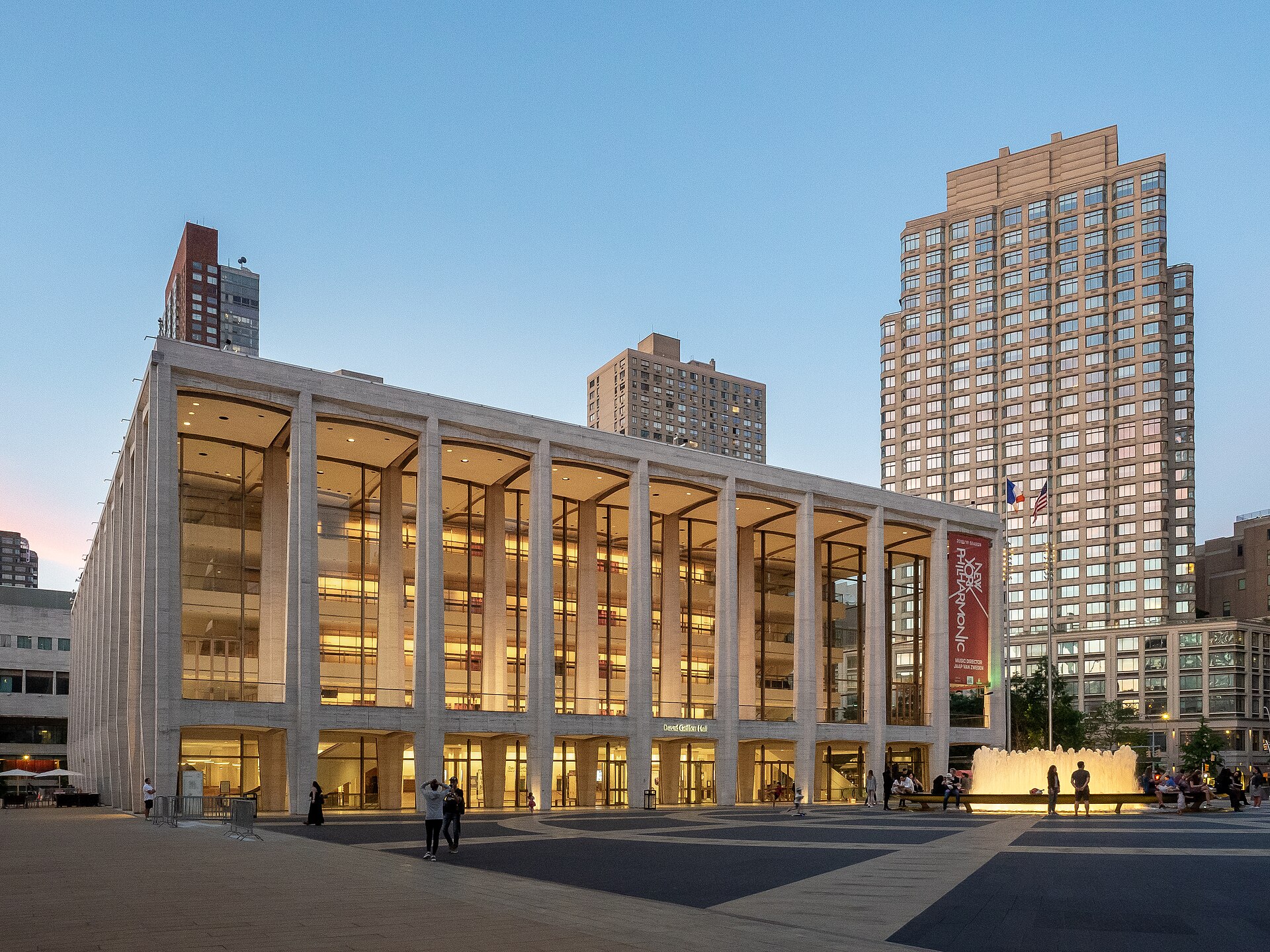
Lincoln Center for the Performing Arts is a sprawling 16.3-acre campus on the Upper West Side of Manhattan, built as one of the largest concentrations of performing arts venues in the world. Ground broke in 1959 under a redevelopment effort championed by John D. Rockefeller III, and the complex opened its first hall, Philharmonic Hall, in 1962, with additional theaters following through 1969.
Today the campus anchors more than a dozen resident organizations, including the Metropolitan Opera, the New York Philharmonic, the New York City Ballet, Jazz at Lincoln Center, and the Juilliard School. Rather than a single stage, Lincoln Center functions as a dense cluster of landmark theaters and halls arranged around a central plaza and reflecting pool, drawing an estimated 5 million visitors a year for performances, tours, and outdoor events.
Stats at a Glance
- Location: Upper West Side, Manhattan, New York City
- Type: Performing arts complex
- Opened: 1962 (Philharmonic Hall); campus completed by 1969
- Size: About 16.3 acres
- Largest venue capacity: About 3,900 (Metropolitan Opera House)
- Annual visitors: About 5 million
- Famous for: Home of the Metropolitan Opera, New York Philharmonic, and Jazz at Lincoln Center
A Campus of Landmark Halls
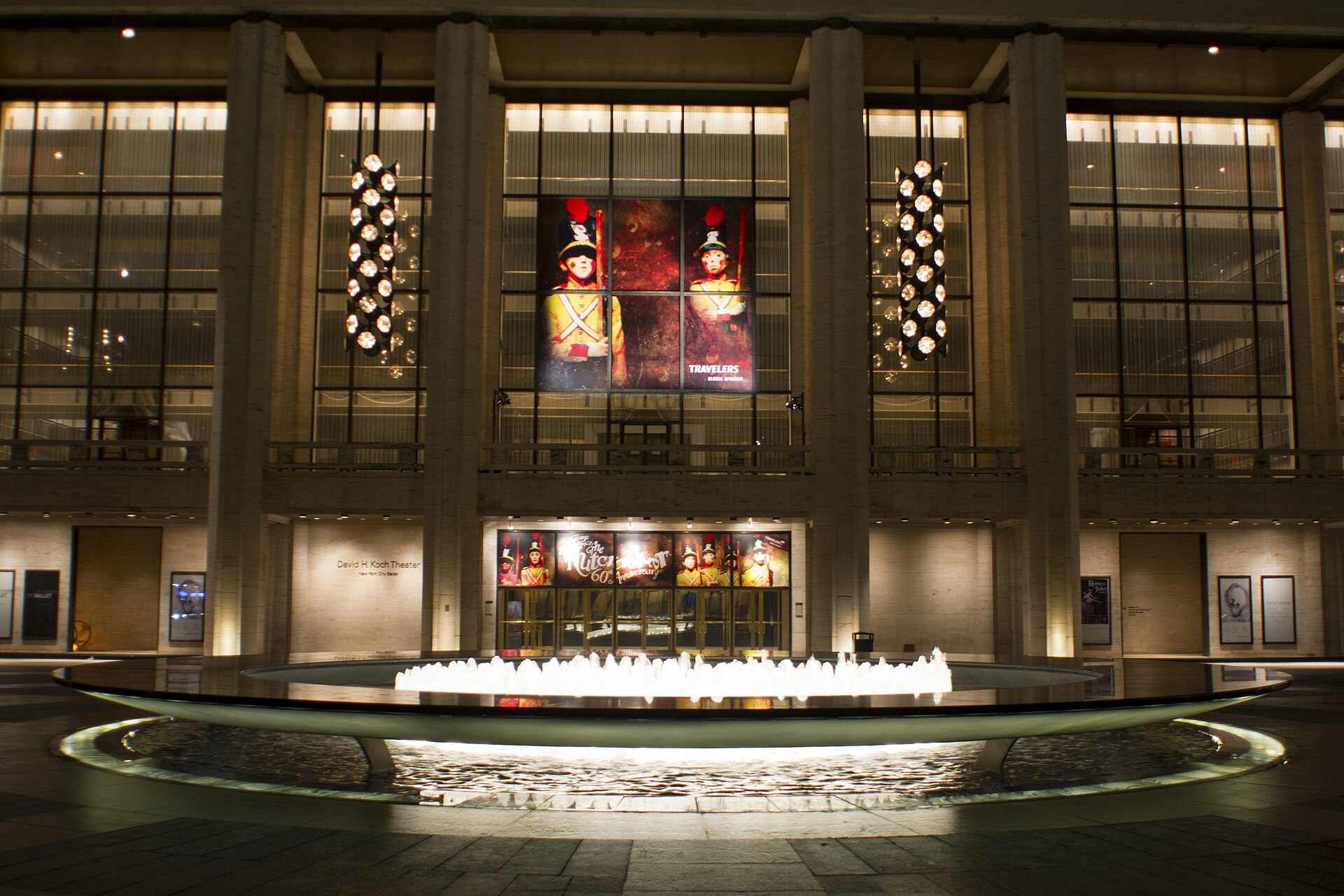
Unlike a traditional single-building venue, Lincoln Center is made up of distinct theaters, each built for a different resident company. The Metropolitan Opera House seats about 3,900 for grand opera productions, while the David H. Koch Theater (originally the New York State Theater) holds roughly 2,586 for the New York City Ballet and other dance companies. The Wu Tsai Theater, formerly David Geffen Hall and originally Philharmonic Hall, seats around 2,200 and serves as the primary home of the New York Philharmonic, undergoing a major acoustic and architectural renovation completed in 2022.
Smaller halls round out the campus, including the roughly 1,095-seat Alice Tully Hall for chamber music and the Vivian Beaumont Theater, Broadway’s only Tony-eligible house located outside the traditional theater district, seating about 1,080.
Jazz, Film, and the Public Plaza
A few blocks south at Columbus Circle, Jazz at Lincoln Center operates out of Frederick P. Rose Hall, where the Rose Theater seats around 1,100 for concerts spanning jazz, symphonic, and dance programming. The organization, founded with trumpeter Wynton Marsalis as its artistic director, extended Lincoln Center’s reach beyond classical repertoire into America’s jazz tradition.
Beyond its theaters, Lincoln Center’s outdoor plaza and reflecting pool have become a public gathering space in their own right, hosting free summer dance and music series that let visitors experience the campus without a ticket.
Explore more: Explore more iconic music venues.
Lincoln Center FAQs
What organizations are based at Lincoln Center?
Lincoln Center is home to more than a dozen resident organizations, including the Metropolitan Opera, the New York Philharmonic, the New York City Ballet, Jazz at Lincoln Center, Lincoln Center Theater, and the Juilliard School.
When did Lincoln Center open?
Its first venue, Philharmonic Hall, opened in 1962, with additional theaters opening in phases through 1969 as part of a broader Upper West Side redevelopment project.
How big is the Lincoln Center campus?
The complex covers about 16.3 acres in Manhattan’s Lincoln Square neighborhood and includes roughly 30 indoor and outdoor performance spaces.
Get More from Lincoln Center
Log the coasters, stadiums, and venues you’ve experienced, rate Lincoln Center, and see what your friends thought. Get the ThrillZing app.
Photo: Ajay Suresh from New York, NY, USA / CC BY 2.0, via Wikimedia Commons.